
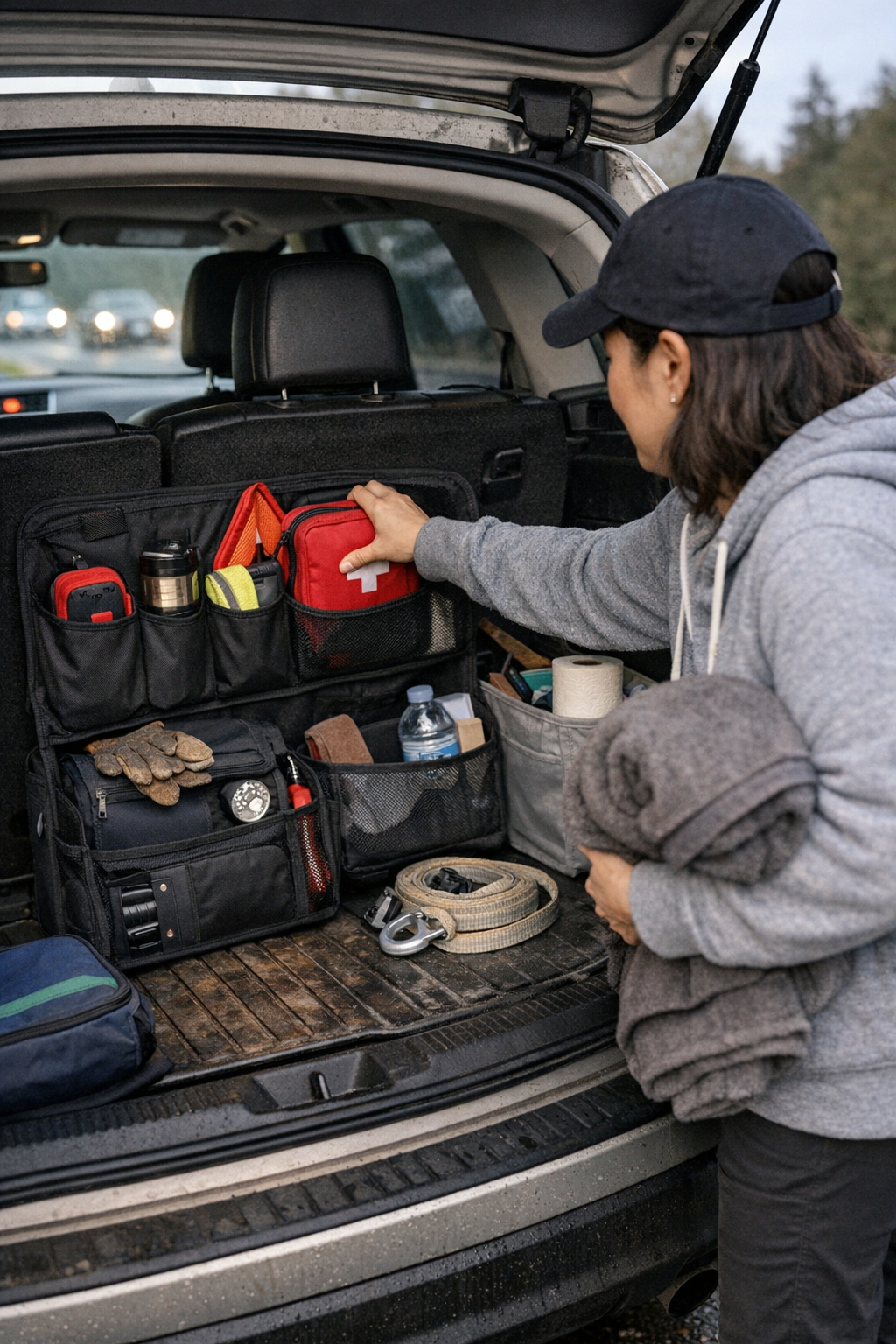
A car that looks perfectly organized can still leave you stranded when it counts. Daily driving brutally exposes the difference between “neat” and actually usable: you return to your vehicle, everything appears sorted, but the gear you need is blocked, buried, or somehow harder to grab each week. That’s when you realize—tidy bins and hidden compartments aren’t worth much if it means fumbling under pressure, especially during rain, darkness, or a roadside stop.
When Order Hides a Hidden Weakness
Picture the everyday return: you open the door after a grocery run or shift, floor mats are clean, bags look squared away, maybe the trunk is even lined up for show. Then your low-battery warning pings, and the charger is wedged between jackets and old receipts. Next drive, you spot a tire light—only to remember the pump is sitting beneath soccer gear and last week’s reusable bags. Tidy looks don’t help while you’re hunched in awkward reach, kneeling in a puddle, or groping in the dark for a tool that should be in hand. And just because nothing is spilled onto the seats doesn’t mean you won’t be stuck moving three things just to find the fourth.
Repeated Friction in Normal Routines
This is not a rare disruption. Routine parking, reloading, and car-sharing expose the pattern week after week—setup that looks settled but makes common actions clunky:
- You re-enter the car after errands, bumping aside a tote to get to a supposedly “easy-access” bin—never as smooth as intended.
- You return jumper cables one day, only to bury them under the next load of bags or groceries—so the “organized” trunk becomes a slow trap at the next battery scare.
- Your seat-back organizer brims with useful stuff, but a mix of paperwork and emergency tools slows you down more than if they had been left in a pile.
With every loading and unloading, the system becomes harder to trust. The more you “sort” and tuck away, the more likely your next urgent grab means kneeling on the driveway, digging past extra layers.
Why Visual Calm Doesn’t Guarantee Smooth Access
Minimal-looking cabins and clever stowage are tempting—until a real situation demands speed. Every hidden compartment or jammed center console is just one more layer spoiling your flow: cords twisted beneath water bottles, tire kits lost behind snack packets, the first-aid bag shuffled under a hoodie. It only takes a midweek cargo shift for what “looked organized” to become three added steps before you get to the useful gear.
Pressure Reveals the Real Structure
The gap shows up fast: rain hammers the roof, you’re stranded at night, or a kid’s scraped knee demands first-aid—and your system’s flaw is exposed. Suddenly, unfolding half the trunk to get a warning triangle feels like a failure. Even thirty seconds lost to searching ups your frustration, or keeps you out in the cold, or turns an easy fix into a nerve-wracking pause for everyone on board.
The Core Problem: Overlapping and Shared Storage
Catch-all bins and multipurpose organizers create more subtle friction than obvious piles. Any spot that collects unrelated stuff—the trunk side bin, the floor bucket, the seat-back pouch—gets clogged after ordinary weeks:
- A floor bin fills with chargers, then absorbs empty bottles, umbrellas, and shoes—until your actual cables are buried out of sight.
- A seat-back pocket started for roadside tools, but now carries parking passes, leftover snacks, and random gloves—making emergency access indistinguishable from glove-box clutter.
- “Hidden” spaces become both harder to check and easier to block, meaning every real emergency kit gets lost behind three daily items.
Even with regular cleanup, it takes just a handful of trips to reset all your effort—turning “order” into a new kind of slowdown.
Consequences in Real Use
This all shows up as delayed access: that split-second pause, the sift through wrappers, shuffling bags just to find a light or tool. If it happens during mild weather, it’s an annoyance. Add rain, darkness, or a roadside rush, and the difference between “neat” and “actually ready” becomes a risk not just to your nerves, but your time and safety. Hidden friction makes everyday trips feel manageable, but exposes its cost the moment routine fails.
How Single-Access Zones Change the Routine
The real fix isn’t stacking more clever organizers; it’s separating true essentials from daily drift, using single-use, zero-compromise spaces. That might mean a side-pocket for jump packs and flashlights, a trunk divider for flares and the inflator, or a seat-back slot for medical gear—and nothing else ever invading that space. The seat might look busier, but now, during anything from a flat tire to a sudden storm, your hand finds the right item instantly, not with a desperate search.
Field-Tested Adjustments that Stay Reliable
Recently, switching my jump pack from the trunk bin (every week it disappeared under groceries) to a seat-side pocket meant one grab—no delays, no wasted searches, no arguing with awkward trunks during a downpour. Even after loading the back for sports or errands, I still reach directly for a flashlight and glucose kit, knowing nothing else blocks the way. What once involved unpacking, rechecking, and second-guessing now takes less than six seconds. It’s not theory—it’s fast action, week after week, chaos or calm.
Small Daily Trade-Offs Add Up
No, the car isn’t “showroom neat” this way. The dedicated emergency spots stay visible, sometimes a little cluttered. But every time you re-enter under pressure—a late-night stop, kids needing a bandage, or hands full of bags—the payoff is obvious. You can chase visual perfection any time, but the seconds lost fumbling for gear aren’t coming back. Function always pays you back faster than appearance.
Practical Tweaks that Outlast the First Impression
Try the real test: assign one trunk-side bin or seat-back pocket to actual emergencies only. No receipts, no snacks, no “extras.” When you’re parked on a shoulder after dark or hustling everyone in from a rainstorm, you’ll see why the change is worth it. Reset the system each week if you have to, but always let essentials stay separated from daily overflow. The gap between easy access and slow reach is not small—it’s the difference between stress and smooth handling.
From Tidy-Looking to Trustworthy Under Pressure
Emergency readiness isn’t about a spotless dashboard or spotless trunk. It’s about knowing your access points survive real-world chaos—multiple drivers, changing cargo, the mess after a road trip, or daily stop-and-go. Ignore this structure, and you’ll cycle through the same old friction: each “organized” drive ends with one more thing in the wrong spot. When car storage finally matches access—when every essential has a fixed, single-use home—routine driving feels lighter, and even actual emergencies become less of a disruption. It’s not perfection; it’s predictability under pressure.
No setup stays flawless. But when you trust your car’s layout, every return, loading, and stop goes smoother—and what matters most is never out of reach.
Find more practical car organization solutions at DriveWellSupply.