
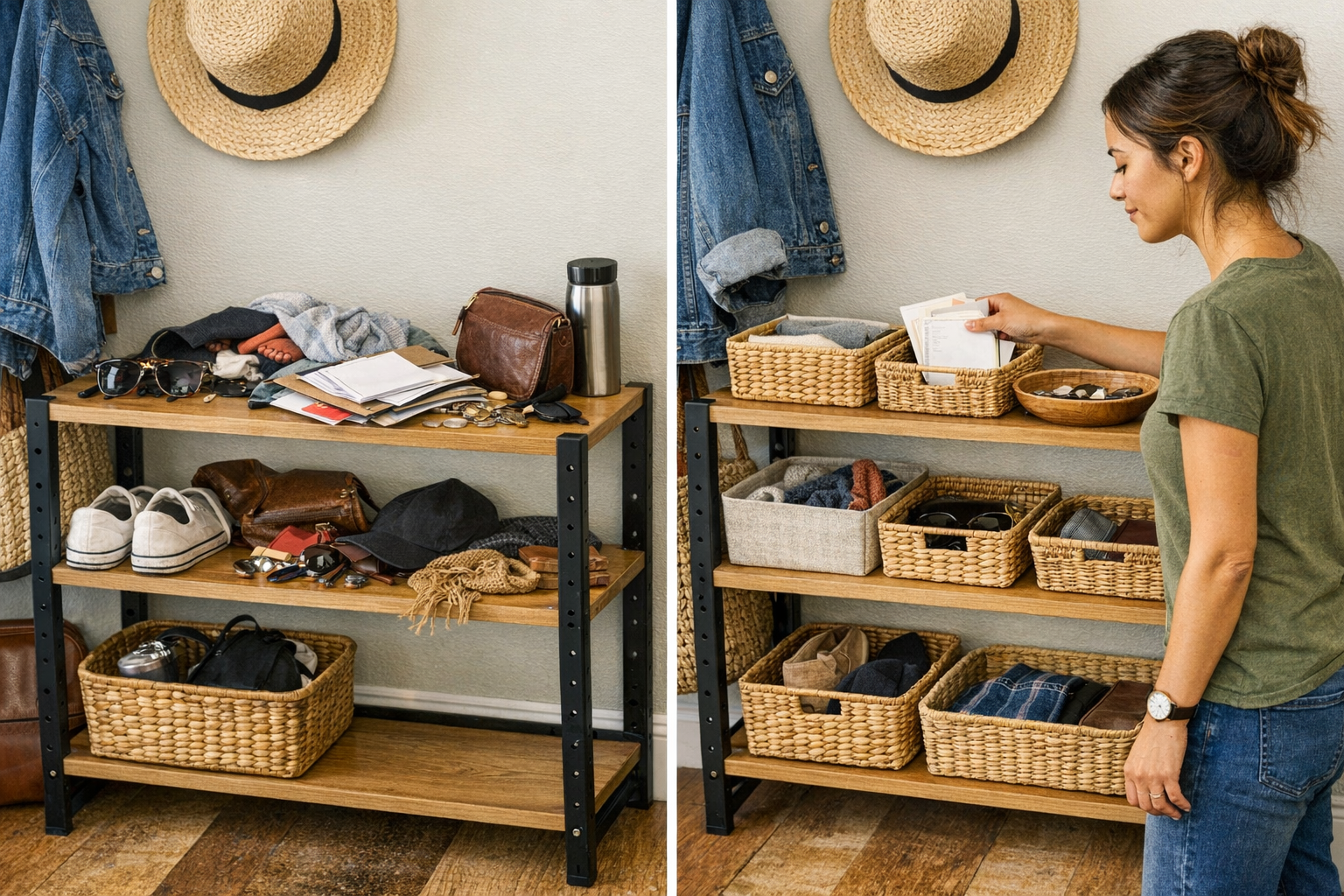
The “I’ll put it away later” zone is real—and almost every shelf, closet, or entryway is haunted by its spread. Scarves tossed midweek, unread mail that lingers, gym bags wedged into open corners—these floaters pile up precisely where boundaries are missing. One day you glance up and the shelf that once looked streamlined is now an awkward mash-up of half-handled routines and quick drop-offs. Every shelf left open is an invitation for small messes, and over time, those messes multiply—even in spaces you swore you’d keep clear.
Open Shelves: Showroom on Monday, Chaos by Friday
The allure of open shelving is immediate: everything visible, everything in its place—for now. On day one, you might line up shoes in a crisp row, fold towels into a sharp stack, or assign a corner to your work bag. But real life rarely respects these invisible lines. By Wednesday, last night’s scarf is tossed in with the hats, today’s mail is slid behind an umbrella, and one stray water bottle hijacks prime space. With nothing to hold categories in check, it takes only a couple of rushed evenings before “temporary” turns permanent and the shelf’s logic unravels.
It sneaks up quickly. Folded shirts lose their edges as you dig for a favorite tee. Shoes creep sideways as you reach for a pair in the back, knocking others out of order. By the weekend, the vision of order has collapsed into overlapping piles, and one quick grab means moving a whole stack just to access the thing you actually need. It’s not dramatic—just subtly draining, every single time you reset.
Containment: Where Boundaries Make Every Item Easier to Find
Bring in baskets or slim dividers and the entire shelf dynamic shifts. Now, mail lands in its own tray instead of wandering, scarves claim a basket instead of drifting off the edge, gym shoes finally stay in their appointed lane instead of squishing the lunch bag. These aren’t just cosmetic barriers—they’re physical reminders of what goes where, saving you from micro-decisions and pointless shuffling every time you add or retrieve something.
The effect isn’t just visual neatness—it’s functional clarity. Instead of negotiating for extra space or reshuffling every pile, resets become instinctive: toss the charger in one bin, sunglasses in another. The boundaries do the work automatically—no mental effort required to restore order, because clutter can’t sprawl where there’s nowhere left to sprawl.
Entryway Reality: Two Approaches, One Obvious Winner
Picture the classic entryway shelf. Throughout the week, you drop off keys, mail, sunglasses, the bag you promised yourself you’d repack. On an open surface, all of these blend into one slippery layer by Thursday. Now you’re shuffling mail just to reach your spare keys, chasing after a missing glove crushed beneath a flyer, or rummaging through a tangle of cables for the garage remote. The shelf is “organized”—but only in theory. Daily access is clumsy, resets are slow, and “just put it back” never quite works.
Try the same routine, but insert two baskets and a divider: mail is immediately corralled, keys stay visible up front, sunglasses and other small essentials have their own zone. Suddenly, nothing stacks or gets buried. Grabbing what you need takes seconds, not minutes, and after a week the category boundaries remain intact. Resets aren’t a big project—just a matter of straightening a basket or tossing an item into the right bin before you head out the door.
The Hidden Cost of Missing Boundaries
The slow spread of clutter on open shelves rarely feels urgent—until the mess stacks up. Uncontained items sneak into any available gap, turning a space meant for shoes or books into a dumping ground for everything without a home. Before long, you’re shuffling stacks just to free up usable surface, hunting for the lost sock or missing charger wedged behind unrelated items. Restocks take twice as long because every pile needs to be moved, and vertical space goes wasted as stacks tip and expand horizontally instead of upward.
Categories quietly dissolve: folded shirts end up in the towel pile, one loose belt migrates into active-wear, and soon you’re not sure where to look for anything. Instead of single-step retrieval, you’re always reaching around, moving something else first, or giving up and letting the pile grow. The cost isn’t just visual—it’s wasted minutes and repeated irritation every single week.
Clear Categories, Quicker Resets: Why Containment Wins
Physical barriers change the daily rhythm. When bins are full, you notice—and edit. When dividers keep small items separate from bulky ones, you clear or tidy a specific group without everything sliding together. Each reset is a fast nudge, not a time-consuming overhaul.
Practical tip: For items you reach for every morning, opt for open, low-sided baskets that make spotting and grabbing quick. Reserve solid dividers for categories prone to chaos—cords, hats, belts, or small accessories that disappear in deep bins. This way, you sidestep buried clutter and prevent those “where did I put that?” scrambles.
How Quickly Does Clutter Return?
Most open shelves start strong, only to backslide in less than a week if boundaries are absent—especially in high-frequency areas like entryways, bedroom corners, or closet shelves. The moment daily items lack a true, contained spot, new clutter sneaks in and categories blur. In contrast, contained setups reveal their value every day: quick retrieval, intact groupings, and a surface that resists the usual creep toward mess.
Looking Organized Isn’t Enough—Function Keeps It That Way
You can’t will away “later piles” with good intentions. After every big reset, it’s tempting to tell yourself this time will be different, but lived-in open shelves rarely hold their order without help. Bins and dividers aren’t shortcuts—they’re insurance. They create default boundaries that keep storage functional during real-world use, so your routine speeds up instead of hitting friction every time something is added or retrieved.
No single fix turns a shelf into perfection, but these adjustments move the dial from chronic reshuffling to long stretches of calm. Instead of bracing for another tedious reset, you fix what you need in seconds—and get on with the rest of your day.