
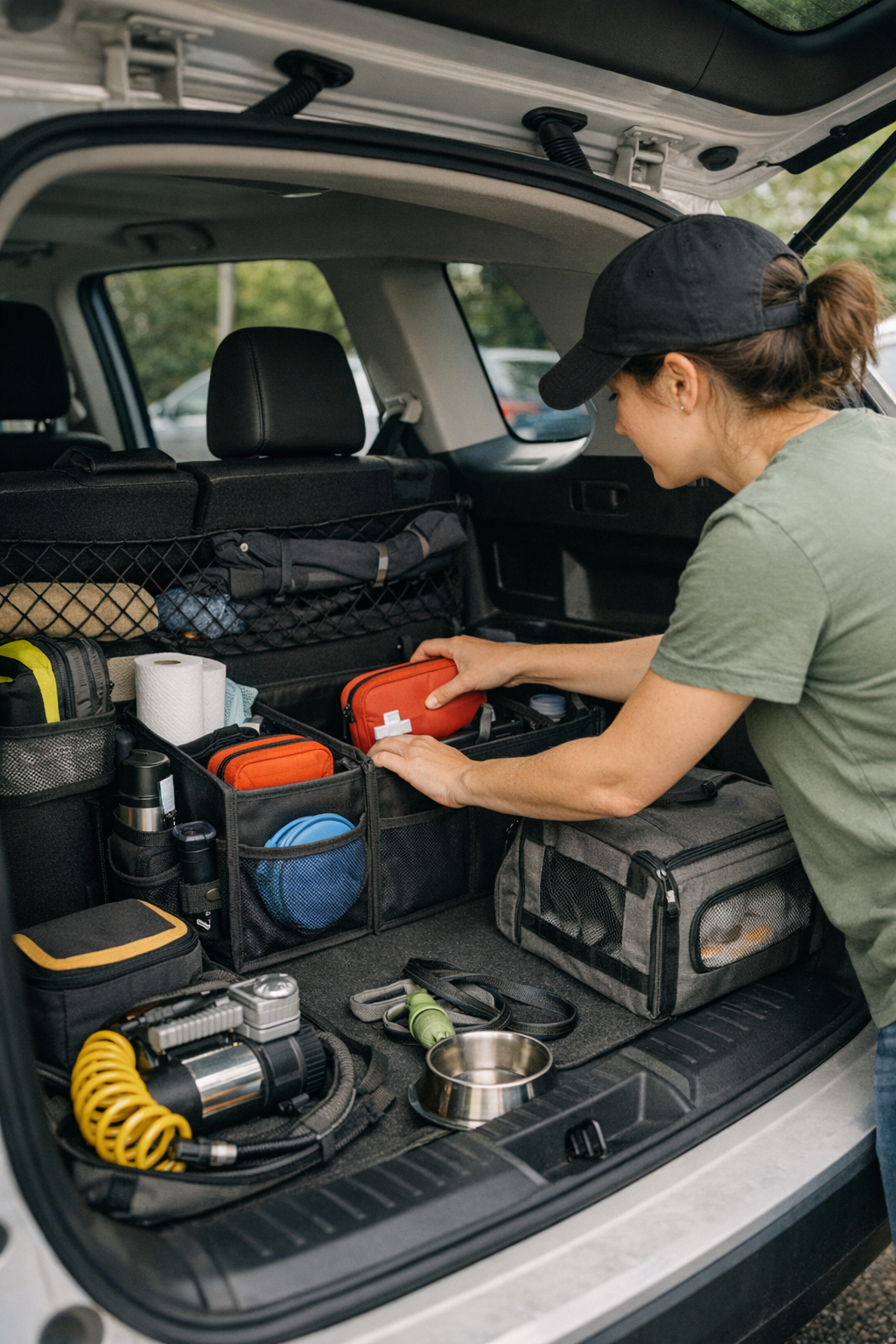
Your car looks organized—until you actually try to use it. You sit down, and the friction starts up: the phone charger is tangled beneath a jacket, a container of wipes has slid out of reach, or you end up rummaging in the door pocket for a pen, coming up with nothing but fast-food napkins. The myth is that order equals usability, but most setups break down under normal driving—the quick errand, the rushed morning, or any day you expect the interior to simply work. In practice, “organized” stops meaning “easy” as soon as your routine pressures the system. This is where DriveWellSupply’s practical car-use world becomes visible: it isn’t about how tidy your car looks, but how quickly you can actually use what’s in it.
The Illusion of Tidiness: When Neat Doesn’t Equal Usable
Surface neatness fools you only once. Chargers tucked behind a seat, wipes hidden in an organizer, an emergency kit wedged out of sight—these moves pass the quick-glance test. But drive a normal week, and every supposedly “hidden” item turns into a minor scavenger hunt. Pull into a parking lot, reach for a charging cable, and realize you’re stretching awkwardly to unthread it from under the seatbelt. Or brush crumbs from your feet just to uncover yesterday’s spill because wipes never stay where you need them. An organized car is not automatically a functional one: the gap shows up quickly when you reach, retrieve, or return an item under any kind of real-world pressure.
Hidden Storage vs. Assigned, Visible Zones
Most car organization loses traction because “putting away” gets mistaken for “usable later.” Hide enough essentials in generic “it fits for now” spaces, and the car becomes a collection of tiny retrieval hassles. The difference is clear on any rushed day:
- Phone slips—again—into the gap beside the seat, a move you thought your organizer had solved.
- Charger cable, no longer looped, curls beneath a layer of bags or clothing, making every attempt to grab it another detour.
- The wipes, missing from the center bin, are now buried under a snack pouch and spare mask, nowhere to be found when you hit another carpool spill.
Every search, detour, or awkward reach stacks up, reminding you: unless every item has a visible, habit-friendly spot, you’re just repeating the same friction with new clutter.
What Real Routine Reveals About Your Setup
The real test comes after a stretch of everyday drives. A freshly cleaned setup unravels quickly: cables wander back into footwells, floor bins fill with paper trash, and an emergency kit slides into new territory every time you brake. The more your routine flexes—errand stops, school runs, grocery loads—the more each “temporary” item becomes a permanent speed bump. The bin meant for wipes turns into a magnet for receipts and wrappers, and anything without a deliberate return zone gets left behind, wedged in odd corners, or worse: migrated to the passenger side to be “dealt with later.” What feels acceptable out of the driveway becomes another round of minor obstacles by week’s end.
Assigned Spaces: Transforming the Everyday Struggle
Specific zones for essentials flip the script from stretch-and-search to grab-and-go. Slotting wipes upright in a dedicated caddy, threading your charger cable through a fixed console pass-through, or mounting an organizer within easy reach replaces random clutter with repeatable, muscle-memory access. Over a normal week—school drop-offs, errand loops, after-work reloading—items actually stay put, and the seconds wasted on retrieval shrink. You stop finding snacks in the footwell or cables in your jacket sleeve. The car doesn’t need to look like a magazine, but now the friction that distracted you vanishes in most routines. Re-entry, quick departures, and “where did that go?” moments all become sharper, less draining parts of the day.
Where Setup Friction Lingers: Limits You’ll Still Bump Into
No layout is flawless. Refining access in one spot can create a new hiccup elsewhere: an organizer tray might edge too close to the seat-belt buckle, a sturdy floor bin keeps grocery bags upright but requires you to shift it every time you load something bulkier, or a sunshade well-placed for heat actually blocks the glove box when you need registration documents. Hidden emergency kits, once out of sight and safe from everyday jostling, still get covered over by fresh clutter if you forget to reset them after a busy week. You can shrink friction, but never erase it completely. The point is not perfection, but minimizing these trade-offs: turning lost minutes and muttered searches into near-invisible, recoverable seconds.
Not Just Looks—But Lasting Usability
A car interior that’s genuinely usable is built for what happens after Drive #1—and Drive #25. Build your storage zones for what you actually reach for, not just what you want to hide. After a string of real uses—a frantic school morning, a fast grocery run, an unexpected spill—test the system: where are you still slowed down? Which item keeps drifting back into the wrong space? Where do you hesitate or have to reach twice? The setups that work with routine, not against it, are the ones that persist—and the difference in drive-time stress is obvious. It’s never about a permanently “neat” car. It’s about a vehicle that stays ready, doesn’t make you start over after every use, and quietly absorbs the rush instead of amplifying it.
Practical tools and storage solutions for real, repeated car use are available at DriveWellSupply.