
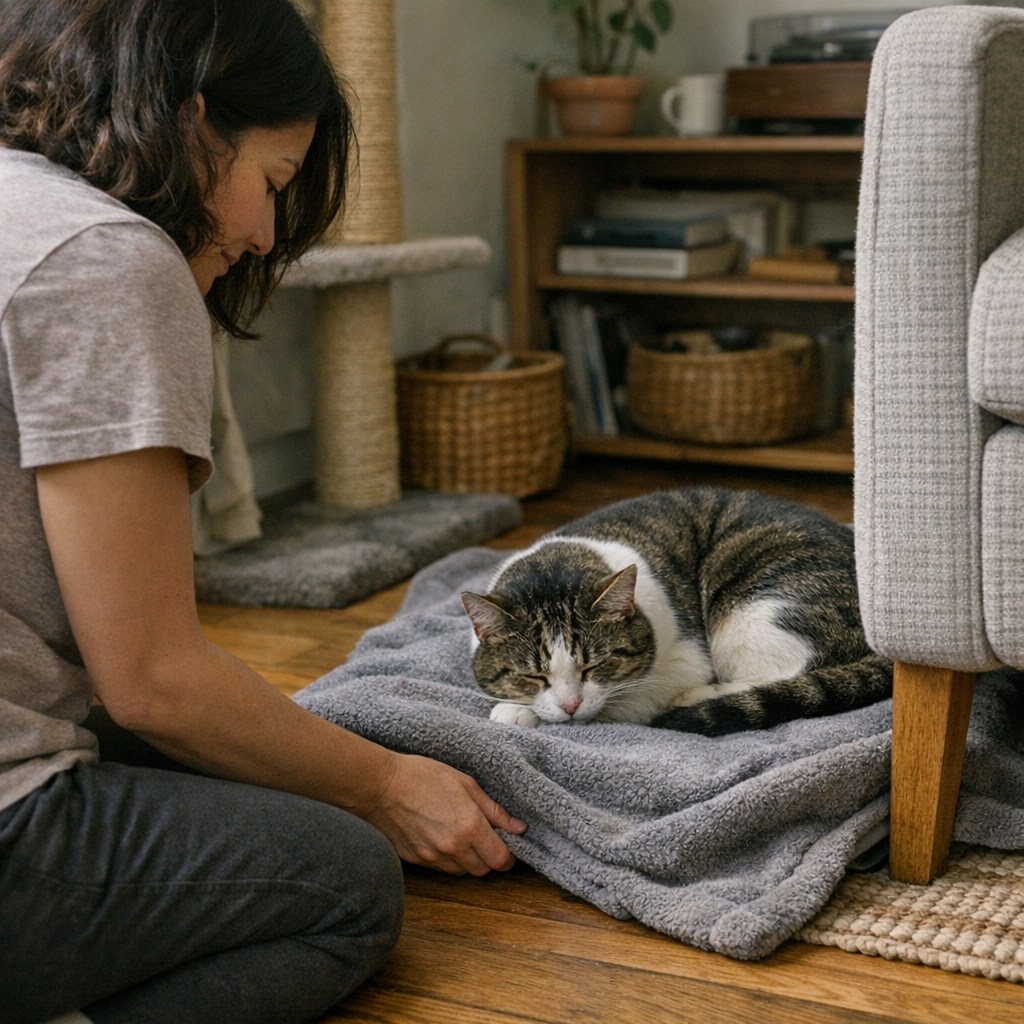
If you’re tired of fixing your cat’s bed or untwisting a blanket that keeps creeping off its corner, you’re not just fussy—your cat’s rest area is failing at its one real purpose: staying put through daily use. Instead of simply resetting each morning, you’re pulled back into the same minor mess by afternoon—blanket halfway off, mat curled, rest setup blocking the walkway or collecting fur where it shouldn’t. These aren’t harmless habits—they signal a structural problem that slows you down and quietly pushes your cat into less comfortable, less stable rest. Most setups start to show their weakness not on day one, but once you’ve repeated the same tidy-up routine for the third or fourth day in a row. Each interruption compounds: you lose minutes in correction, your cat gets a lighter nap, and the “tidy” area keeps adding invisible work to your week.
Why Do Rest Areas Drift Out of Place?
Standard cat beds, mats, and throw blankets often look fine after a quick fix, but they’re rarely built for the way cats actually use them. Cats circle, dig, and paw until their spot feels just right, and each movement tugs at lightweight bedding until it edges across the floor or bunches up against a table leg. If the rest zone isn’t anchored or is too light, every adjustment sends the entire setup sliding—within hours, the corner you straightened is undone and the mat is curling again. The area might look “fine” when nobody is watching, yet by evening, fur gathers in new places, the bedding’s underfoot, and the rest zone that should be static drags you back into another quick fix before you can even relax.
Small Shifts, Big Distraction
Correction isn’t just a five-second job—in practice, you find yourself breaking your own routine to fix lumpy corners or to push mats back out of walkway zones. It’s easy to ignore the early signs. But repeated resets add up quickly: straightening bedding, nudging out a mat blocking a closet, or even hunting for that missing toy hidden under a drifted blanket. Meanwhile, your cat’s supposed “settled” nap gets shallower, because the ground keeps shifting. Even with a tidy setup at noon, by night you’re back to the same starting point—interrupted, again.
The Missed Difference Between “Tidy” and “Actually Stays Put”
It’s the classic routine trap: you make a setup look right, but by the time your cat reclaims the space a few times, all your minor corrections unravel. It only takes a single jump or a late-night dig to send lightweight bedding sliding into a walkway or overturn a carefully placed mat. The gap isn’t about neatness—it’s about stability. A rest corner that “looks” ready but collapses on contact forces you into a loop of cosmetic fixes, slowing your own pace and undermining any sense of lasting order.
How It Disrupts Daily Flow
A loose bed or mat doesn’t just look sloppy—it expands its mess and gets in the way. Mats slip into shared walkways. Blankets land underfoot when you’re carrying groceries. Fur clusters appear along seating or near doorways. Over and over, you dodge around a shifted corner on your way to refill a bowl, or reroute just to avoid a wrinkled rest setup that was “fixed” only hours earlier. Every minor misalignment adds a pause, breaking your flow and eating into whatever little free time you did have.
Spotting the Underlying Friction
If you keep bending down for the same realignment, or your cat skips its old spot to curl up behind the couch, you’re seeing the lived cost of a setup that can’t stand up to repeated use. Displaced bedding pushes cats into odd, less-cleanable corners—under tables, behind doors—turning a simple reset into a multi-step process each week. When the right spot won’t stay put, fur and dander migrate where you least want them, and you spend more time re-chasing mess than actually improving comfort or order in the room.
Recognizing When a Setup Is Failing
- You catch yourself fixing or repositioning bedding almost every day
- Your cat naps in new, less convenient (even awkward) places
- Mats and beds keep reappearing in paths where they get stepped on
- Resets take longer than a simple straightening—sometimes you’re refolding, moving furniture, even vacuuming extra spots
- Rooms stay “photo-tidy” but never actually feel predictable or easy to use in daily movement
If any of these keep repeating, it isn’t clumsiness—it’s a setup that’s costing you time and your cat comfort.
How to Anchor Rest Setups That Actually Stay in Place
Solving this isn’t about clever folding or more frequent resets. You need setups that stand up to repeated use, not just one “good” photo. Simple changes that add stability—either through weight, anchoring, or placement—cut routine interruptions and prevent drift from becoming a daily side job.
Use Heavier Mats or Beds
Ultra-light mats and fluttery blankets are a top culprit. Cats digging in instantly move them. Opting for a mat or bed with extra weight means it resists paw tugs and recovers after circling or jumping. This basic physical change means the setup doesn’t travel every time your cat tries to settle—so you straighten less, and your cat gets a genuinely “fixed” spot.
Anchor Bedding with Nearby Furniture
Blankets and covers don’t need complex solutions—just tuck one edge under a table leg, shelf, or couch foot. The difference is immediate: even one anchored side keeps everything in place, so routine corrections drop, sometimes to zero for days at a time.
Real-World Example: When the edge of a mat was anchored beneath a reading chair in a shared living room, the blanket stayed put for a full week—no more creeping into doorways or collecting fur where guests sit. It didn’t just look better; routine wipe-downs got simpler, and naps weren’t cut short by a moving bed.
Pick the Right Rest Zone—Avoid High-Traffic Paths
Location matters far more than it seems. Place the setup in a corner or alcove where it gets “supported” on multiple sides by walls or furniture. Avoiding walkways keeps mats from migrating and eliminates half the reset work—fewer interruptions for both you and the cat, with less fur creeping into main room zones.
Reducing Repeated Corrections in Real Use
The target isn’t permanent perfection—it’s less wasted energy. The best setups aren’t just “clean-for-now”—they remain functional after a normal, messy week. Anchored, stable bedding means you get back your time and your cat gets true consistency.
Side Effects of Anchored Rest Areas
- Fur stays localized—less scattered across main floors or furniture
- You’re not hunting for a missing cat bed under the coffee table
- Cats nap longer in one place, instead of relocating after the setup slips
- Shared spaces look calm and function predictably, even on chaotic days
- You’re not circling back to redo the same five-second “tidy” every time you walk past
Common Pitfalls—and Why Minor Adjustments Matter
It’s tempting to let a “good-enough” setup stay, but every day you spend correcting or detouring around a drifting bedding area is another day starting at a disadvantage. Even routine extra steps—bending to unroll a mat, vacuuming where fur shouldn’t be, detouring with a laundry basket—wear down your routine and attention. Fixing the true anchor point turns a repeated labor into a background non-issue: you hardly notice, but your week gets measurably smoother.
Stability over Surface Tidy-Up
Lasting difference comes from setups that actually resist movement: a denser mat, an anchored corner, a rethought nook that doesn’t compete with home traffic. When the rest corner stops wandering, everything around it—cleanup, routines, cat comfort—feels easier and less chaotic. Practical stillness, not just a neat look, is what smooths out the living-with-a-cat routine for good.
Explore practical setups for easier indoor cat life at StillWhisker.