
If grooming your indoor cat feels like a small battle each week—tense shoulders, cat inching away, fur clinging everywhere—it’s rarely about the brush or the cat’s “mood.” The real friction starts with the setup itself: a spot that looked convenient at first, but puts you and your cat at odds every time. Most owners repeat the same pattern without seeing the structural trap—awkward height, tight space, slippery floor, and tools just out of reach. This isn’t just about organization; it’s about how much extra reaching, shifting, and cleanup you accept as “normal” until it wears you down. The StillWhisker world isn’t about showpiece cat areas—it’s about spotting where repeated home setups quietly slow you and turn routine grooming into maintenance that lingers long after the brush is down.
When a “Tidy” Grooming Spot Turns Into a Repeating Headache
An armchair by the window or a small patch of hard flooring can look polished in a photo, but these “tidy” setups often hide daily friction. The cat grows wary well before you sit down. Each session, you nudge a chair, reach around a lamp, slide a bin closer with your foot—minor moves that stack up. Your cat, sensing your shifting or looming posture, starts tensing or ducking away right from the approach. Suddenly, something that looked controlled at first now takes longer, leaves more mess, and feels more draining every week you repeat it.
The posture you fall into—twisted, half-standing, or always reaching over something—creates invisible pushback. Each session, that strain leaks out: a hand steadying the supply basket while holding a squirmy cat, fur drifting toward the hallway, cleanup supplies buried behind yesterday’s attempt at “swift reset.” The tidy look disappears as each awkward reach or incomplete wipe-down adds to the residue you spend weekends fighting off.
How Setup Choices Quietly Derail Cat Grooming Routines
It’s easy to miss how much surface and posture shape a grooming session. Sit on a chair, and almost every move becomes an “overhead” gesture—your cat shrinks away or bolts at the hint of your shadow. That two-foot height gap is all it takes to flip a calm brushing into a standoff. When the setup pits gravity against you, fur escapes under couches, brushes tumble off laps, and you find yourself running cleanup along baseboards days after “finishing.”
These patterns aren’t random. Over weeks, you notice your cat sidestepping the supplies, or holding a tense posture the moment you approach the “grooming corner.” You clean up fur in odd corners, notice the brush is never where you left it, and spend more time prepping or resetting than actually brushing. The session now feels like a two-part job—get through the struggle, then sweep up the aftermath.
The Accumulated Burden of an Almost-Right Setup
Almost right is where the pain accumulates. Your cat won’t settle, so you keep “fixing” by shifting towels, moving baskets, or tackling stray fur a day late. Little by little, grooming starts to invade the rest of your space, spilling fur into entryways, storing supplies in random corners, and demanding repeat cleanups. Finishing the session doesn’t clear the slate—you’re still tripping on hair or tools hours later, staring at a supply bin wedged next to the TV stand because it never quite has a stable spot. Over time, this slow friction feels heavier than a simple reset ever should.
Changing the Pattern: The Impact of Sit-Down Level and Surface
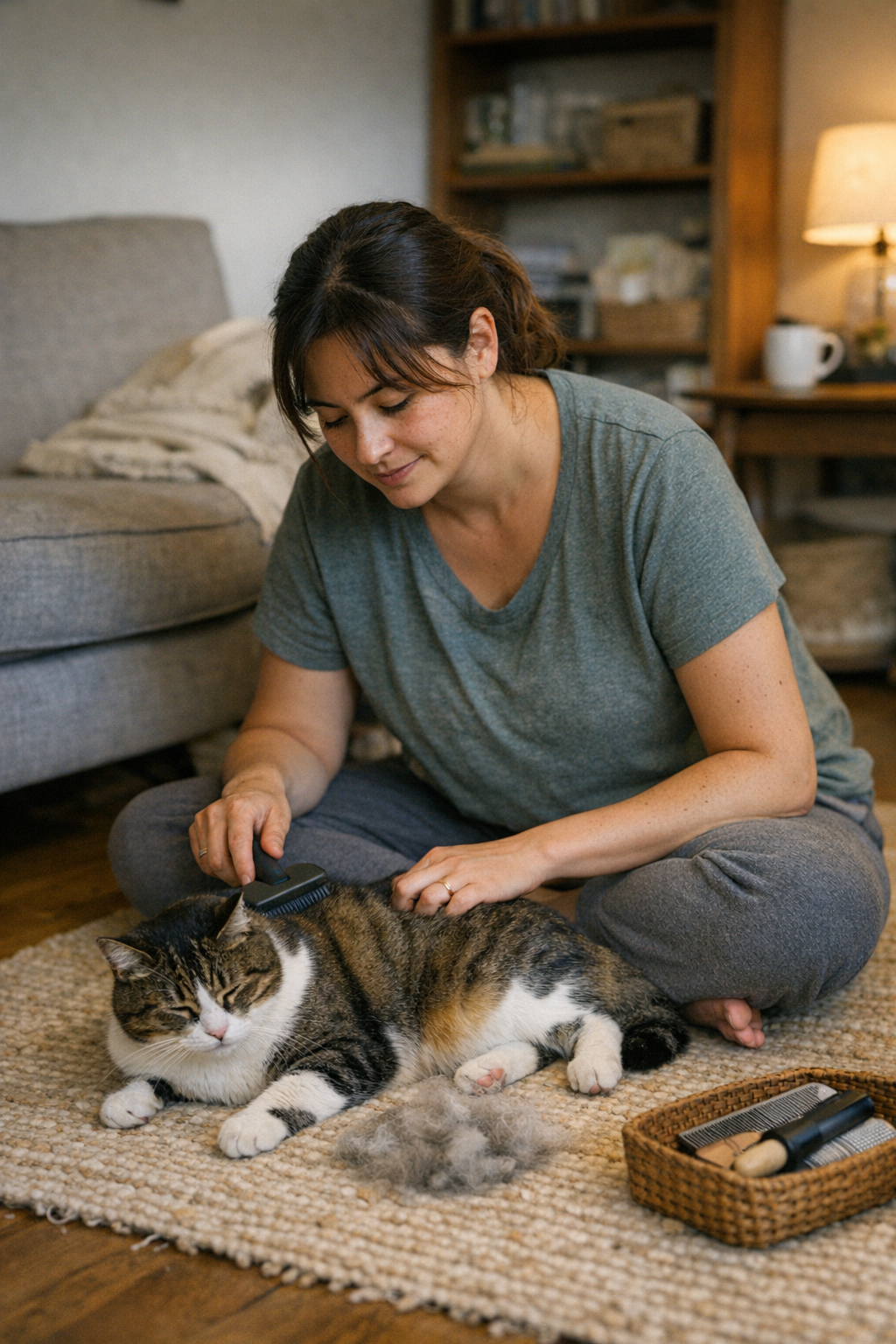
The routines that work long-term share one pattern: your posture lets you meet your cat at their level, and the surface under you supports a clean finish. Dropping from a chair to the floor isn’t just symbolic—it removes the looming threat, halves the reach, and hands back control of the moment to you both. A proper mat or rug breaks up floor chill, keeps fur contained, and makes cleanup part of the session—not a separate hassle an hour later.
At floor level with a stable mat under you, several changes hit immediately:
- No more looming overhead—your cat stays calmer, less triggered by sudden reach-ins
- Fur lands on the mat, not across the whole floor or under every leg of furniture
- Shorter, direct reach—steadying and brushing is easier for both sides
- Cleanup becomes one movement—shake out the mat, tools back to caddy, session finished
This adjustment—low, stable seating with a surface that contains mess—often flips grooming from “get it over with” to a quick, low-stress part of the day that doesn’t bleed into every other room.
Routine in Real Life: A Typical Grooming Scene, Improved
Picture the standard scramble: your cat’s on the sofa, you climb a chair, tools balanced on one knee, hoping for cooperation. What actually plays out? Twisting, reaching, the brush slipping, your cat repositioning before you can finish, fur falling everywhere but the spot you intended. Now picture: you pull over a solid mat, sit cross-legged on the floor, align at eye level. Suddenly, your hands move naturally, the session runs quietly, and fur stays on the containment surface—not the wooden floor or halfway under a cabinet. Your cat’s tail stays soft, body uncoiled, and you don’t need five “almost done” resets as the session drags on.
Clean up? The mat collects it all. One shake, done. The tools tuck away without a scavenger hunt. You’re not rerouted by stray hair or a supply pile later in the day. The difference isn’t dramatic until you repeat it for a few weeks—and then it’s hard to go back.
What Routine Strains Really Tell You
The warning sign isn’t in dramatic resistance—it’s in the tiny cues: the cat weaving away from your reach, fur gathering under the spot you “fixed” last weekend, the supply bin never truly finding a home. Each workaround—throwing down a towel, moving the ottoman, leaving out the brush—works for one day, but multiplies the cycle of micro-fixes. Every small inefficiency grows in weight because it keeps coming back, making each session harder to start and slower to finish. This is the real cost of a setup that looks fine but works badly when routines repeat.
How Lowering Yourself Changes Cat Comfort—and Your Maintenance
Sitting lower with your cat—kneeling, cross-legged on a solid mat—does more than calm them. It also shrinks the radius of cleanup and resets maintenance into a simple step. There’s no more chasing fur under bed frames or fishing for a lost brush; everything lands where you and your cat are aligned. The “looming” effect that made each approach a new struggle simply fades, and the post-session burden is now a quick shake, not a hidden project for later. This split-second reset is the difference: setup and finish are finally part of a cycle you don’t avoid.
The Difference Between Presentable and Livable
A basket of supplies sit neatly by the chair. The mat looks fresh. But if you’re untangling tools, repositioning yourself three times, or sweeping up fur in every corner, then the setup is passing for “presentable” and failing at “livable.” Setup isn’t just what looks good after a reset—it’s what doesn’t disrupt routine every time you repeat it. True grooming comfort shows up in the aftermath: cat relaxed, quick reset, no lingering project left behind, and nothing out of place in the rest of your home. That’s the StillWhisker setup—minimum friction, repeat-use payoff.
Small Shifts, Lasting Effect: Rethinking the Grooming Zone
If you’re stuck in a grooming routine that always leaves you adjusting, look for structural sticking points. Don’t hunt for more gear—trace the cycle instead: where you sit, what’s beneath you, where fur ends up, and how easily everything packs away. Watch the small resistances—a restless cat as you loom, a mat that slips out from under you, a caddy that never lands within arm’s reach. Change these, and routine maintenance shrinks down. Over a few weeks, you’ll find cleanup simpler, your cat calmer, and no slow-creeping supply pile invading joint space.
The best sign? Your cat doesn’t bolt when the brush comes out. You handle what’s needed, reset in a single movement, and your space doesn’t betray every session with fresh little messes. It’s not about perfection or single-session magic—it’s about setups that vanish friction, session after session. That’s where practical indoor-cat life shifts from small defeats to quiet, lasting comfort. See more practical setups at StillWhisker.