
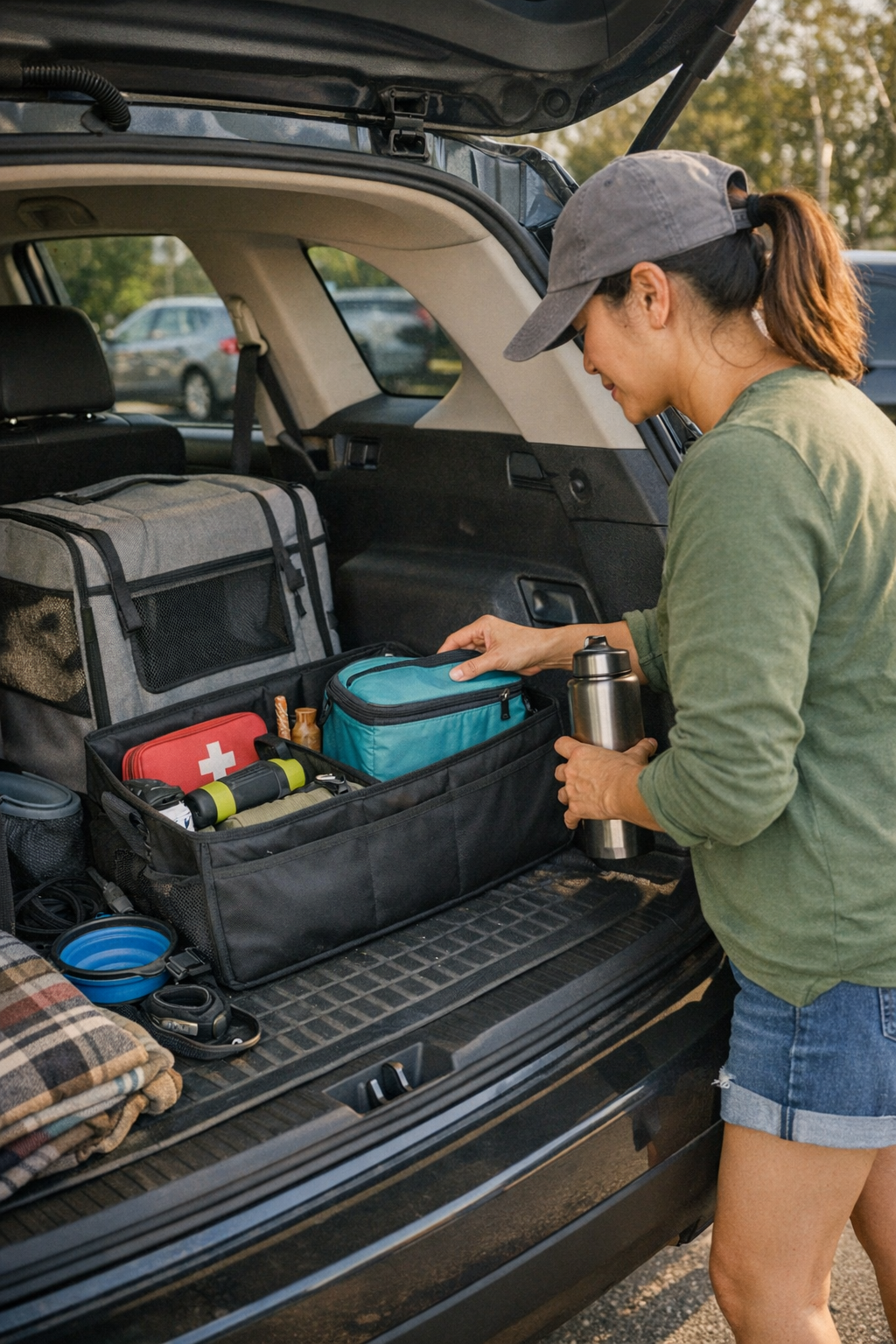
You clean your car, snap everything into place, and two days later it’s already back: the same charger snags under the seat, keys wedge into the console gap, and your sunglasses have vanished into a pile of receipts. Looking organized isn’t enough. The constant micro-mess—cables tangled with bags, sanitizer knocking loose, phone sliding into the passenger footwell—means each drive or errand run forces you to hunt, shift, or rescue basics just to get moving. The frustration isn’t surface-level mess; it’s the cycle where every trip rearranges your setup, erasing yesterday’s clean slate before you’ve even finished your coffee. Solutions that work for a parked car often unravel after your first stop. In the world of repeated return-to-car routines, the wrong setup adds friction fast—making your car feel less like a tool and more like a puzzle to solve with every re-entry. If this hits too close to home, you’re living in the real DriveWellSupply world.
How Clutter Creeps Back into “Organized” Cars
Clutter in cars isn’t a one-time fix—it’s a daily reshuffle that comes back, even after a deep clean. Each drive adds new loose objects; each extra passenger means another seat-edge pile or under-mat slip. You don’t notice it building up until you’re suddenly reaching under the seat for your ID or wrestling a grocery bag free from a knotted cord.
Concrete cycle: on Monday, everything’s in its place. By Wednesday, keys are wedged beside the seatbelt latch, a charging cable loops under the bag you just tossed, and receipts have drifted under the edge of the floor mat. Door pockets hide napkins and wipes, but now you can’t grab what you actually need without digging. You can stack items in cup holders and console trays, but one hard brake or a quick bag shuffle and half your system is back at your feet. Function slips under the radar while clutter invades by habit.
Why “Temporary Zones” Change Car Routines
The shift isn’t about more containers—it’s about a reliable, repeatable spot for those high-touch essentials that always float around: chargers, access cards, sanitizer, sunglasses. When you add a specific open tray or bin within easy reach—right beside the driver’s seat, or between the seats—you stop the constant hunt by giving every routine item a short-term address.
A true temporary zone absorbs the chaos before it starts. The charger and phone don’t drift into bag-trap territory and you’re not raiding cup holders for loose change or scrambling after a sanitizer bottle rolling under the pedals. The friction drops: no more untangling cables from snack wrappers or emptying a cup holder just to make room for coffee. Controls stay open, essentials don’t get buried, and the scramble before every drive fades.
What Happens During Real Drives
- Errand loops and stops: Instead of lap-loading your essentials or tossing items blindly onto a seat, a deep tray or slot right by the shifter keeps keys, sunglasses, and phone in place. Return trips mean grabbing from habit, not searching via touch.
- Post-parking re-entry: You don’t have to brush aside wrappers or dig through the center console to reach your charger. It’s always in your temporary zone—same spot, every time, even after a friend rides along and shifts the rest of your system.
- Shared vehicles: Designated drop-zones mean everyone knows where to unload their pocket horde—less finger-pointing, no “accidental” gear borrowing, and faster trade-offs when swapping seats.
Even the tidiest car starts showing cracks once it’s back in use. Cargo organizers might hold their shape, but loose receipts and quirky pocket gear migrate to active zones after one or two drives. Without a dedicated catch-all tray, small objects clog the footwell, wrappers sneak under floor mats, and charging cables threaten to trip you up every time you slide into the seat.
When “Organized” Still Feels Inconvenient
- Cup holder crowding: Stack too many tools in your cup holders and you can’t use them for cups—or worse, water bottles start pinching cables, cables snag bags, and the whole thing jams up mid-trip.
- Door pocket overload: Door bins meant for convenience become layered with wipes, wrappers, extra masks—so when you grab for sanitizer, you’re really pulling out a handful of everything else you didn’t mean to keep.
- High mats, low payoff: Even expensive floor mats don’t stop the migration—snacks, coins, or travel wipes still burrow underneath and out of sight after sudden stops or seat shifts.
The cabin’s tidy look doesn’t survive in motion. What seems orderly parked in your driveway collapses into mess as soon as your real driving routine resumes. The gap between a space that looks under control and one that actually works never goes away if you keep treating storage as a once-a-week job.
Making Your Temporary Zone Work in Practice
You don’t need new bins cluttering every inch. One low-profile tray—wedged against the console, slipped beside the seat, or tucked under the armrest—is enough to corral “floater” essentials. The goal isn’t more storage; it’s a friction filter for the 3–5 things you always hunt for, toss aside, or end up retrieving mid-drive.
Live test: After two weeks with a shallow, flexible organizer beside the passenger seat—big enough for a phone, charger, and sanitizer—nearly all footwell clutter, including stray wrappers and receipts, stopped piling up. Reach for a charging cord or sunglasses, and it’s already there. Even running quick errands, the time spent clearing space or reorganizing before a trip dropped so sharply that post-trip cleanup became a non-issue—routine mess shrank to a minute at most, even after multiple errands or passenger swaps.
One Cable, One Bin, No Fuss
Routing just a single charging cable into the temporary bin, with enough slack to follow seat movement, can eliminate daily knots and tugged wires. You stop fighting the seat track every time you return. The overall look stays tidy, but now reach-and-retrieve isn’t a repeated battle—essentials sit ready, not hiding, and your setup finally stops sabotaging itself.
Why Most Cars Need This, Not Just Tidy Ones
Most cars, even once spotless, develop a “passenger drift” effect. Day by day, spare change, badge holders, toll slips, and charging accessories walk their way into cracks, door pockets, and under mats. You can clean every Sunday, but by Friday you’re back to fending off the same clutter invasion.
The upgrade isn’t about perfection or showing off a showroom floor. It’s about building a routine guardrail: a tiny, reachable zone that quarantines the troublemakers—mentally and physically—before they invade the high-use lanes you actually need clear. Get the right temporary zone right once, and you’ll feel the difference at the stoplight, after work, and especially when you’re reloading kids, groceries, or next week’s dog travel setup. In the end, less routine friction isn’t about more gear or shinier surfaces—but about a layout that holds steady, no matter how many times you run the daily loop.