
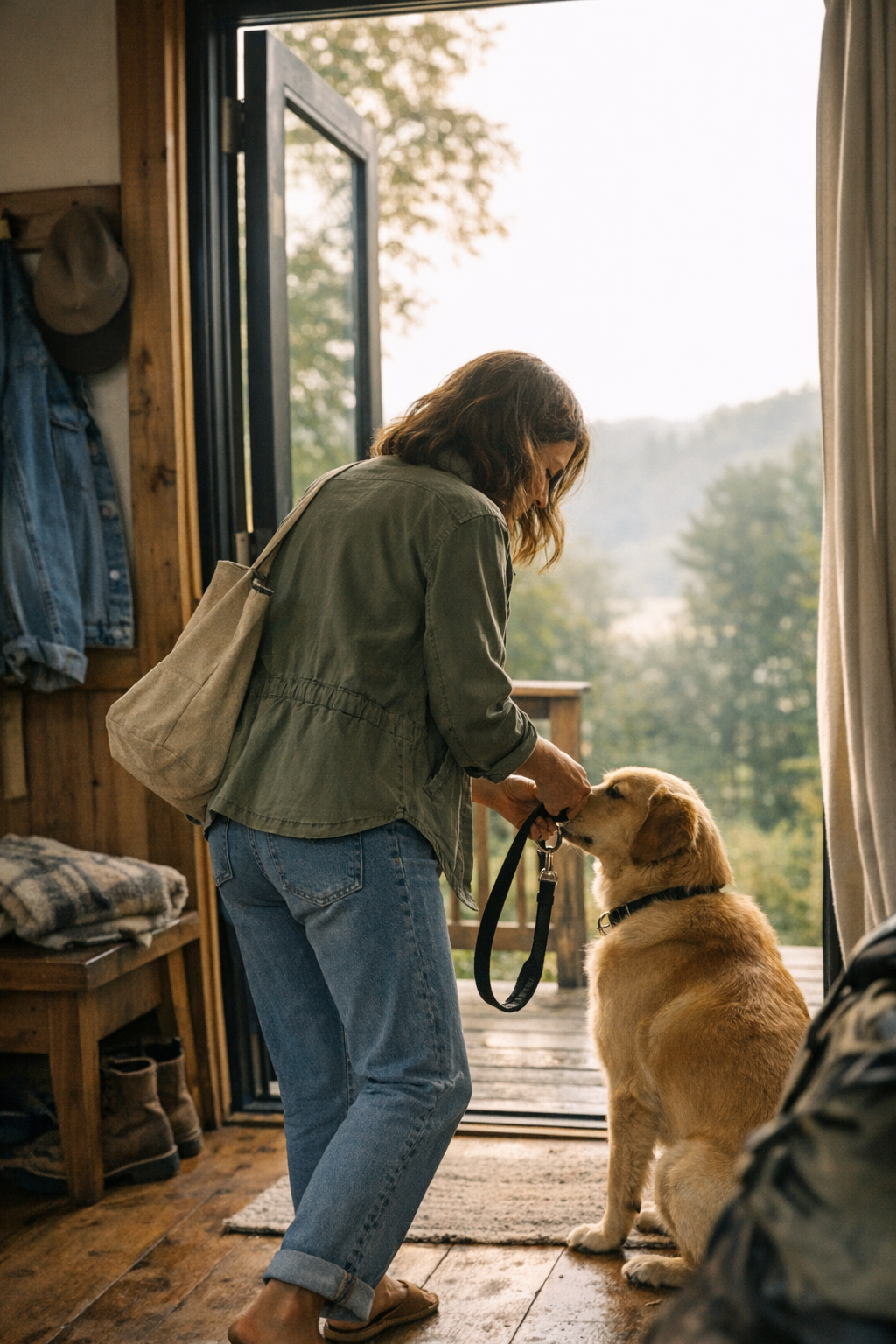
You’ve just finished feeding your dog. Bowls are rinsed, surfaces wiped. But as you try to get your own morning started, your dog plants himself near the door—half-expecting, half-waiting, blocking the hall as you grab your shoes. It’s a predictable friction point: routine says breakfast is over, yet your dog hasn’t fully “switched off.” Instead, he silently interrupts the next steps, shadowing your movements, sneaking back for crumbs, or staring at door handles waiting for a cue. Whatever setup you use—a tidy feeding station, baskets for toys, bed in the sun—the trouble keeps coming back: the space might look organized, but it doesn’t run smooth.
That Post-Breakfast Door Hover: More Than a Quirk
We tend to dismiss after-breakfast pacing, door-hovering, or kitchen patrols as random dog behaviors. But these are signals—signposts that your morning routine still has an unfinished seam. As you move on to your own tasks (coffee, emails, getting dressed), your dog lingers directly in your path, drawn by the absence of real closure. Ignore it, and the cost is easy to spot: a paw on your calf while tying shoes, bursts of interest at the smallest sound, water bowl visits with no thirst—each a micro-interruption that drags out the “settling down” window. These aren’t isolated quirks. They stack up and reset your morning around the dog’s limbo.
Identifying the Routine Weak Point
This isn’t about burning off extra energy. It’s a logistical miss: when the morning routine lacks a visible seal, neither dog nor owner can settle. Look for these daily clues:
- Your dog does hallway loops or shadows you from room to room after breakfast
- Detours back to the bed or feeding spot before finally giving up and lying down
- The softest household noises snap your dog’s attention right back to you, as if he’s waiting for the “real” next step
Even if the rest area is plush and bowls are lined up, a missing signal means the underlying cycle repeats. You get the illusion of order, but the hidden work never ends: restlessness, unnecessary retracing, and constant resetting for both sides.
The Small Frictions Add Up
The real pain isn’t dramatic—it’s the quiet grind of daily inconvenience. Shoelaces blocked by a hovering dog. Leash hooks perfectly placed—but you’re fumbling keys and gear because you never actually grab them in flow. Cleanup wipes live one room away, always a few steps late for muddy paws. A tidy feeding corner might be visually calm but is stranded far from the quickest exit, forcing awkward double-backs. Rest corners look luxurious, but their position means the dog pops up mid-transition, never getting into deep rest before the next interruption.
Looking tidy isn’t the same as living easy. Visual “order” can even mask bottlenecks: items are technically put away, yet leak right back into main walkways, or require detouring back for something forgotten. The result? More shuffling, more mess, more tension—just out of the spotlight.
Signs the Routine Isn’t Really Over
So what do incomplete routines look like in real life? Not chaos—just constant, low-grade friction:
- Bowls need a “surprise” second rinse when the dog circles back after you thought feeding was finished
- Water splashes, kibbles, or tracked crumbs turn up repeatedly as the dog patrols the bowl area
- Paws make it deeper into the living room before you remember the towel is still out of reach
- The leash sits untouched, even as your dog hangs by the door, unsure whether to ask for a walk or return to bed
Put together, these moments puncture any chance for either of you to fully shift gears. The morning that “should” bring calm instead scatters into small resets and fetches. Both you and your dog end up more alert than at ease—routine becomes disruption, not anchor.
Creating a Reliable Closing Step
You don’t need a flashy solution. The fix is a practical, physical marker that tells both you and your dog: “routine closed.” This could mean:
- A short pause at the door every time after breakfast (even if you’re not heading out)
- A deliberate “all done” sound or gesture at the water bowl as you put things away
- Delivering a chew or comfort toy straight to the dog’s regular resting spot—so he knows that’s the next move, not more patrol
- A repeated, predictable phrase every time you finish the feeding routine
It’s not novelty—it’s consistency that works. When that ending step stays the same day after day, your dog learns what signals the shift from “morning action” to “rest mode.” The more clearly you mark the transition, the less strain on both sides.
Real-Life Example: The Leash Pause Trick
Here’s how a tiny adjustment resets real friction: after weeks where the dog circled back to the bowl and hounded the hallway, one owner tried a post-breakfast “leash pause” at the door—not for a walk, just as ritual. Clip leash on, dog stands by, leash off, and both pause together for a beat. The result? No nagging need to patrol the kitchen, no ramped-up waiting energy. The dog began heading for his rest spot right after, and the owner could finish her own prep without side-stepping or backtracking. Seven days in, the “background” problem simply stopped repeating. Both sides landed their mornings faster and more cleanly.
Why These Endings Work—Even When the Routine Looks “Good Enough”
Organization alone misses something crucial: actual, daily closure that holds up under repeated use. Your setup can look staged for Instagram—bowl, leash, basket, pads (even labeled), nothing left out—yet if you skip a defining “end,” unwanted resets creep back in. Visual neatness does not mean flow. In fact, over-tweaking for aesthetics alone can make sequences longer or more awkward if the routine isn’t backed by a strong signal that says, “We’re done.” The gap hides until a spill, a missed wipe, or another morning spent tracing your dog’s path instead of your own.
It’s a pattern most owners recognize: you move the supplies for cleanliness or reach, only to realize you’re still retracing your steps two weeks later—friction survived the shuffle.
Tweaking Your Setup: Spot the Single Weak Point
Dog routines rarely need a “makeover.” One stubborn kink—one bowl that’s always one step too far, or a towel you never remember to move before the exit—can drive most of the visible trouble. To break the cycle, look for where routine stalls:
- Does your dog hover where he can’t see you prepping, because the rest spot is out of sight?
- Do your feeding and door zones force back-and-forths, so cues blur together and neither task really finishes?
- Is cleanup gear actually reachable in the moment or just “stored” conveniently out of play?
Pick one tweak—move the bowl, shift the bed, keep the wipes within reach, or add a pause at the door—and measure if the after-breakfast shadowing drops by the third or fourth morning. Most setups need only this: a micro-adjustment to break the loop of constant resets.
The Difference a Consistent Finish Makes
When you land the routine with a concrete closing act, the payoff is immediate: your dog gives up anxious following, you stop losing minutes to looping tasks, and the post-breakfast window finally supports the rest of the day. It’s not about perfection—it’s about a repeatable step that holds up in practice, even when mornings run late or your hands are full. That’s when the hidden friction evaporates, and “settle” becomes something both sides actually feel.
What If Restlessness Persists?
Persistent door-hovering or trailing can mean one last kink is hiding in your sequence. Try reviewing the full flow for a few days: Does the water bowl stay accessible? Have you accidentally skipped a needed outdoor trip? Are you jumping from food to silence too abruptly? Extra pacing, tracking, or new messes usually flag a missed transition, not a misbehaving pet. Small, structure-based changes—not big lifestyle overhauls—almost always resolve it within a week.
Morning Calm Isn’t an Accident—It’s Built In
Dog-life friction doesn’t have to be tolerated: it’s a symptom of a setup that doesn’t support repeated use in real time. The difference between “looks good” and “works under pressure” is where small daily adjustments matter most. Catch the hidden weak point, tweak the closure, and the result isn’t just a better organized space—it’s smoother, more trustworthy mornings built from the ground up.