
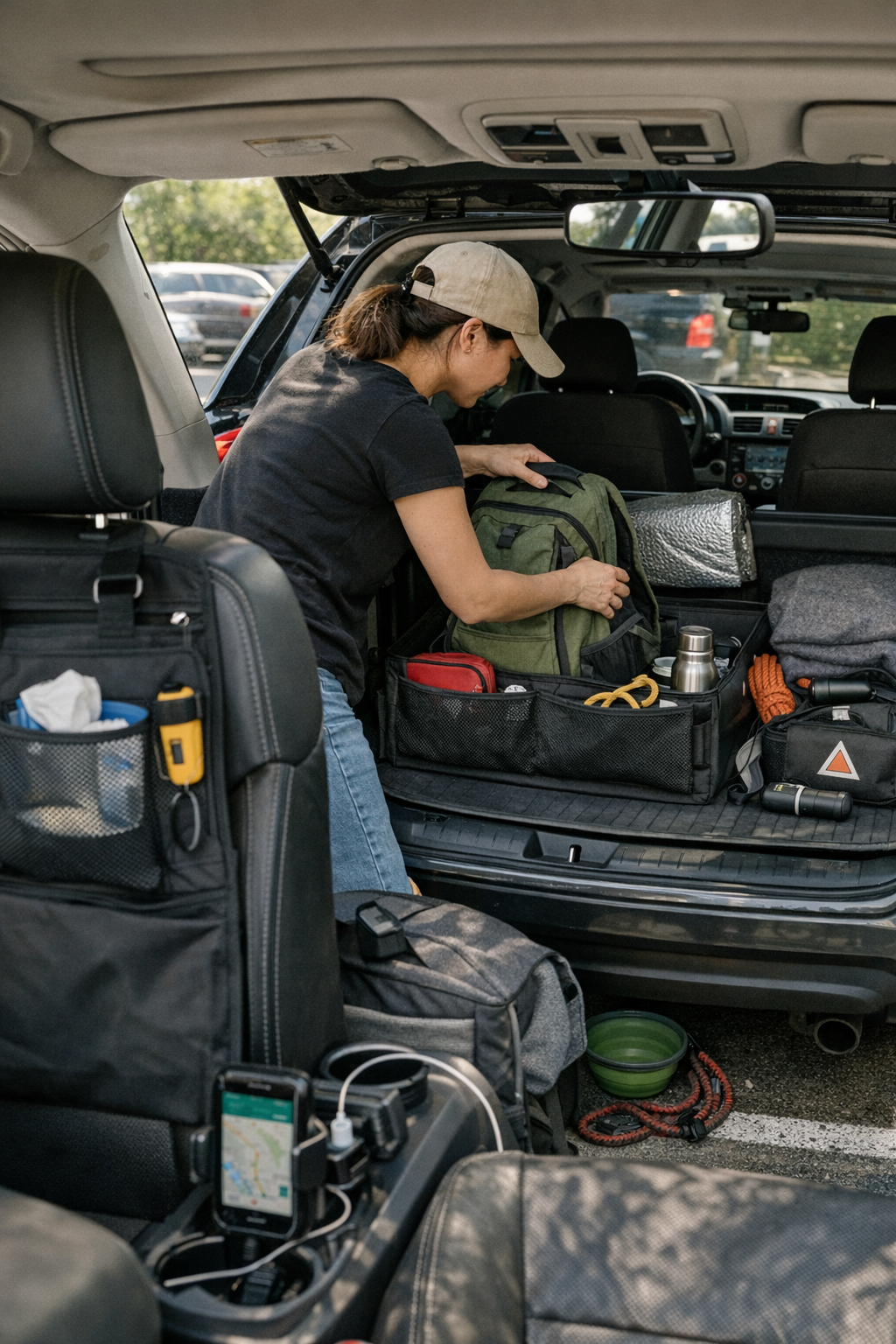
Every return to your car is a test of your interior setup. The car might look nearly spotless from the outside, but one quick glance inside—dust on the console, coffee streaks near the cupholder, a tissue half-stuck to the gearshift—shows how easily surface-level order collapses. It doesn’t take much: a week of errands, a spilled water bottle, a single afternoon with drive-thru receipts stuffed in cupholders. The real hidden variable? How—and where—you store your only reliable cleaning tool. If your must-have wipe or cloth is buried, drifting, or missing, cleanup friction builds. Instead of a car that’s ready, you’re stuck repeating small rescue missions between every drive. This is where setup beats intention, and the DriveWellSupply world gets visible fast: what you grab, where you grab it, and how that shapes the entire routine.
Why Messes Multiply When Cleanup Isn’t Instantly Reachable
The cycle starts quietly. Maybe you wedge napkins in the console, trust tissues in the glovebox, or assume you’ll just grab what’s handy. But the first sign of real-life pressure—a phone buzzing, a damp gym bag tossed in, a coffee jolt on a rough turn—sends those “stored” napkins sliding under seats or buried under shopping bags. Find a sticky spot on your shifter or a streak on the screen? Most people hesitate, then decide to deal with it “later”—which never comes before the next trip.
With each skipped cleanup, messes spread outward. By Friday, dust reaches door handles, wrappers edge onto the floor, and your “organized” car now shows loose items that keep reappearing. What’s really lost is not just cleaning time—it’s the pause every time you search for a cleaning tool, the frustration of discovering it’s missing, and the mental backlog of tiny jobs stacking up with every entry.
First Glance vs. Real Use: Where Setup Falls Apart
A car stacked with tissues or napkins in easy sight often feels “prepared.” But after two days, those napkins are crushed, drifted, or torn apart when you need to wipe up anything more than a dry crumb. A backpack thrown in the passenger seat scatters everything further, and the entire stash migrates—sometimes out of reach, sometimes onto the floor, often torn or unusable on the next real mess.
The pattern is predictable: areas like console edges, seat sides, and door handles pick up grease, prints, and fine debris. You feel the dirt with your fingertips, reach for any tool, find nothing, and let the spot go one more day. Every “looks fine” setup decays under routine: more surfaces go untouched, more buildup collects, and cleanup soon means a full-field cleanup session—just when you’re least likely to have time for it.
One Motion, One Cloth: How Fixing the Access Point Shrinks Cleanup Time
The single biggest change comes not from buying more products, but from assigning a single, reusable microfiber cloth a permanent, visible home. Kept in the driver’s door pocket or center console—not loose, not under the seat, not mixed with trash—it is ready on your first reach. Always dry—or slightly damp only if you wiped up a spill—it’s only useful if it’s never on the floor or missing entirely.
What this unlocks: a one-motion cleanup flow. As you drop into the seat or exit after a snack run, your hand lands directly on the cloth. Drips from a cupholder, sweat marks along the door, screen smudges after a GPS check—each gets removed before it becomes “that” spot you ignore for the next week. The difference isn’t just visible; it’s structural. The routine speeds up. You find yourself touching up five messes in twenty seconds—or none at all, because buildup never starts.
Real Scene: After Errands, Before It Spreads
Picture this: You return with hands full—keys, takeout bag, phone—and notice a new slick patch on the console. If you rely on tissues, they’re usually shredded, lost in the door, or dissolved in last week’s rain. If your microfiber cloth lives exactly where your hand reaches, cleanup is single-motion. The mess disappears on the spot. You never face last week’s grime, and you don’t carry new streaks to the next drive.
The Weak Points Most Setups Miss
Loose disposable napkins, old tissues, and floating paper towels always migrate, fall apart, or disappear under pressure. Each missing-tool pause—crouching to reach under the seat, fishing behind the center stack, scanning every pocket—breaks the cleanup rhythm, and most small messes have already dried by the time you’ve found anything that works.
Even “organized” systems—like a neat starter kit of folded towels or wipes—usually drift from their first perfect spot. By the third drive, items shift, wrappers are mixed in, and tools vanish into corners you never meant to clean. The original setup looked promising, but each unplanned distraction proves it wasn’t as stable as it seemed. Fast correction turns into slow double-backs, and the interior feels demanding, not effortless.
How One Assigned Cloth Changes the Routine
What actually shifts is repeatability: A permanent cloth spot—whether the left edge of the driver’s door or the console’s front pocket—breaks the cycle of lost tools. You reach in the same spot every time, use the cloth without searching, and never create new frustration while fixing the old one.
Over a series of typical routines—school drop-offs, lunch runs, late errands—the cloth gets used automatically. Smudges never settle, stains never set, and wrappers don’t build up because there’s never a pause to wonder where the tool went. Every drive feels just a touch smoother, with cleaning so woven into the motion that you stop dreading return trips. The interior stays ready for use, not waiting on another round of “I’ll fix that later.”
Small Changes, Big Usability Gains
This isn’t just surface cleaning. Assigning one tool to one reachable location strips out glitchy, interruptive friction. Your drive flow improves. The car feels less fussy, maintenance drops to seconds, and “it looks organized” finally matches “it actually works.”
Where Should That Cloth Actually Go?
The prime location: driver’s door pocket or center console, right where your hand travels as you enter or settle. If you need to lean, twist, or fish, the tool will get skipped and the cycle restarts. For shared cars or frequent passengers, double up: one main cloth, one backup within their reach, both with a fixed home. Clarity matters more than quantity—if a cloth loses its place, it’s as good as gone the next time you need it. Item drift beats the best intentions every time.
What Happens Over Time: The Real Test of Setup
Most setups shine on day one, but drive cycles expose weaknesses. After five commutes, a soccer weekend, or a single coffee spill, a permanent, visible cloth doesn’t just keep working—it keeps you from needing to stop and fix mistakes at all. Instead of stacking small jobs for “someday,” you stay ahead of interior friction and stop thinking about cleanup as a chore at all.
The clearest proof isn’t just a neater car—it’s when you stop noticing problems stacking up, and start reaching for your seat or phone without rerouting around stray tissues, wrappers, or traces of old mess. The setup proves itself by getting out of your way.
Find practical cleanup kits and car-use organizers at DriveWellSupply.