
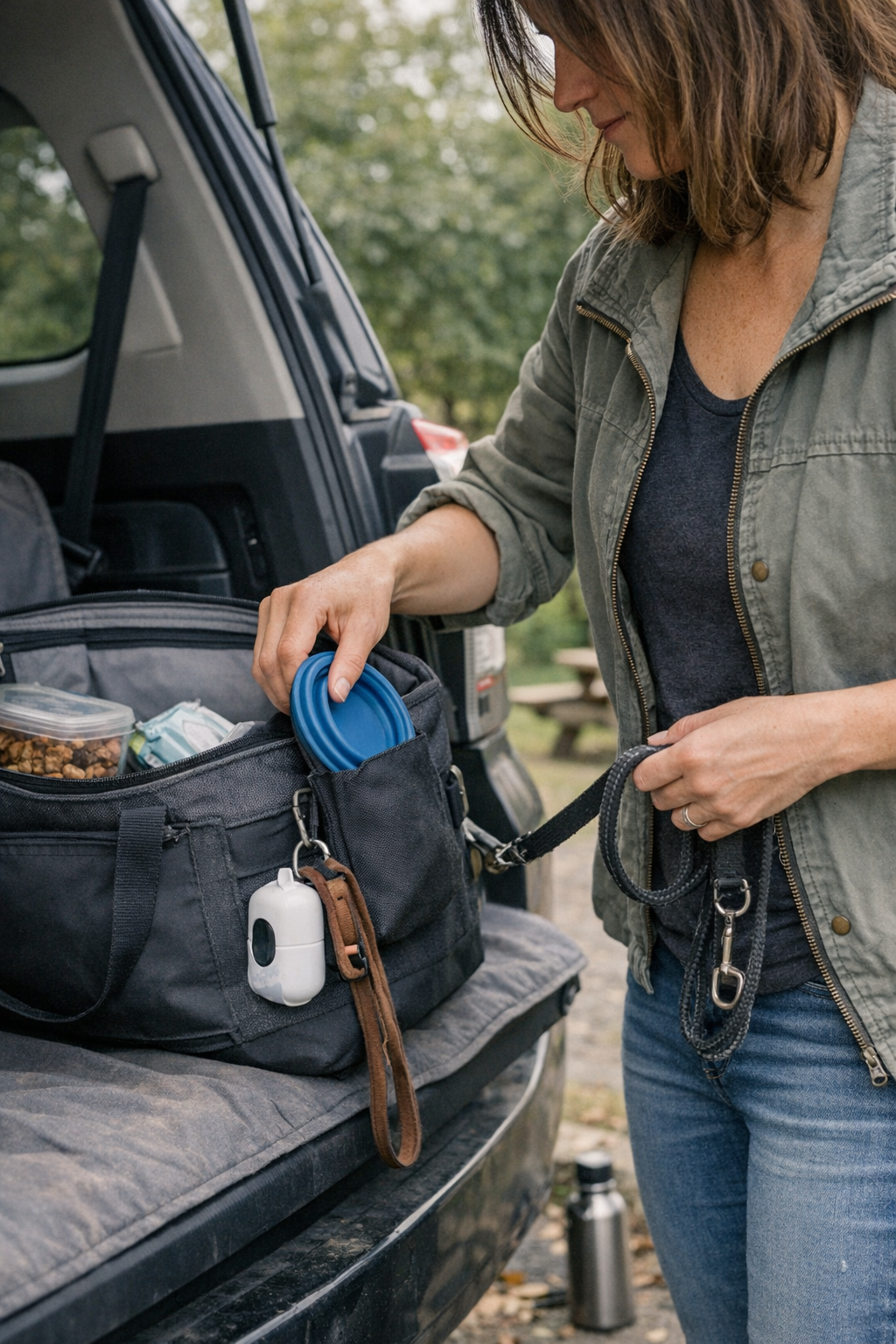
Every pet owner recognizes the pattern: you leave home thinking your travel bag will keep the routine smooth—treats in one pouch, wipes in an outer sleeve, everything zipped and separated. But by the third stop, access clogs up where you least expect it. That outer wipes pouch now sags beneath treats you moved aside “just for a second.” A leash clip that worked on the first grab now dangles, tangled in a loop meant for cleanup bags. Each short stop—leash on at the curb, pause for cleanup, quick seat-side swap—scrambles your organization, until a bag that looked prepared becomes a slow-motion hassle: same tools, twice the struggle, every time you repeat the cycle. This is where PawGoTravel setups show their difference—not in looking organized, but in feeling simpler after five stops, not just one.
The Real Wear and Tear: Where Organization Breaks Under Repetition
Most pet travel bags can pass for “organized” when you load them at home or set them on the ground. The problem isn’t static order—it’s what happens in movement. Walk your dog on a short city loop, or run two errands with your pet in tow, and the first signal of trouble appears: gear that started separated blends into a pile, leash hooks clash with bowl loops, and quick-grab wipes are only quick the first time. Almost instantly, what looked like careful prep is undone by reaching, tugging, and juggling through stop after stop.
Friction creeps in at every pause. A bag that opened with one pull in the parking lot takes three motions later. Each unnecessary fumble isn’t about lost minutes—it’s about breaking your flow, splitting your attention, and forcing you to work around the same structural weak points over and over. By the fourth or fifth stop, easy access is gone—replaced by the low-level grind of having to outsmart your own bag, while your dog grows more restless by the minute.
What’s Actually Slowing You Down?
Looks Ready, Feels Off
The struggle isn’t missing gear; it’s items overlapping in the wrong pocket at the wrong moment. “Owner” stuff (keys, phone) and “pet” stuff (leash, bowl, wipes) drift into each other’s space after two or three uses, forcing awkward reach and reshuffling. Outer pouches vanish under loosely stuffed toys. Zippers that once closed neatly now resist after a quick, distracted grab. Most setups are built to look complete, but a clean photo doesn’t guarantee fast returns when you’re rushed, handling a distracted pet, and one wipe or treat has already slid out of its perfect spot.
Quick-Access: Promised, But Rarely Delivered
“Easy reach” pockets rarely match real movement. That quick-access slot for wipes? It slips under a shifting pile in the first ride or bump. Treat pouches get trapped behind comfort gear. With a leash in one hand and a dog tugging in the other, you wind up prodding, digging, or opening the wrong pocket first—while essentials hide just out of sight beneath a layer meant for another item. The setup didn’t fail; repeated use just revealed where it slows you, again and again.
How Routine Friction Compounds with Each Stop
Minor delays add up fast. A two-second fumble grabbing wipes at every pause? Multiply by eight quick stops: that’s the rhythm of your walk, not the rhythm of your pet. At the curb or park bench, you wrestle with the bag while the dog tugs, shifting gear left and right just to find the right pouch, never mind keeping your hands free enough for the actual cleanup. Once order is broken, the only reset is a full reorganization—usually rushed, incomplete, and ready to frustrate you again at the very next stop.
This is the consequence most owners don’t notice at first. It’s not about whether you planned well or have enough pockets; it’s about how often you must repeat the same inefficient motion to recover gear. After three or four interruptions, the line between “organized” and “easy movement” shows up—clear as the leash running across your phone charger, or the wipes pouch collapsing back into the bag at the wrong moment.
The Micro Loop: Solving the Most Repeated Small Movements
There’s a reason seat-side “micro loops” and built-in quick return points are quietly transforming smart pet travel setups. Unlike deep zip pouches or fully lidded pockets, these let you re-stow a leash clip, drop in a used wipe, or return a treat pouch in a single, frictionless motion. Their value isn’t about keeping the bag photo-perfect. It’s about making repeated grabbing and returning—fifth, sixth, seventh stop—take zero mental effort. Owner items stay separate, pet essentials land right where your hand expects, and movement never stalls for more than a blink.
Suddenly, the same gear just fits your rhythm. That leash clip? It finds a seat-edge loop instantly—no rooting, no double-back. Used wipes are corralled in a slip pocket, not left tumbling under snacks. Treats stay outside the main gear loop, ready to grab with a thumb and re-stash in a second. The more you repeat the cycle, the less you notice what you aren’t reaching for—and the less your dog has to wait while you untangle organization that failed one stop too soon.
Why Structure Details Rule for “Every Stop” Essentials
The biggest improvements don’t come from more pockets or a fancier design. They come from one well-placed loop by the seat, or a return spot that’s actually where your hand lands on re-entry. By the end of a real day—errands, back-and-forths, city walks—you notice what’s vanished: interruptions, multi-step resets, and missing essentials that would have turned into another restart. Instead of cleaning up your system after every pause, the flow just recovers itself. Collapsible bowls, leash clips, and wipes belong where movement is already paused for a second—no digging, no overlap, just one touch.
Visual order looks good in a still photo. Functional order shows up when you need to start moving again, not managing a pile of gear. Valuables still belong zipped away—but most movement-dominant gear, like wipes and leashes, works best where friction is lowest and the reset is automatic.
Practical Scenes: Where the Wrong Setup Slows You Down
“Wasn’t That Just There?”
You know you packed the wipes, but the last grab forced you to move the treat pouch—and now, at the messiest stop, the wipes are wedged under your own phone. Juggling a cleaning job with a twisting leash hand, you lose fifteen seconds and that crisp reset is gone. For a distracted or energetic pet, that’s the interruption that makes every curbside pause feel longer, messier, and less manageable.
Seat-Side Shuffles and the Failed Quick Return
Returning to your car isn’t the end of the juggling. The leash comes off, but now the clip has nowhere to go: do you stuff it in a side pocket, or just let it dangle off the handle? Without a true quick-return spot, you end up shuffling the bag, dropping treats, misplacing a spare toy or wipes. Every misplacement creates one more adjustment once you’re ready to move. What looked settled an hour ago now needs re-taming before your pet is ready for round two.
The Real Value of a Well-Placed Micro Loop
You’re not aiming for showpiece organization—you’re looking for the friction points that keep costing you time, resets, and missed beats in real travel. On days of errands, parks, or repeated stops, one visible change—an exterior loop replacing a fussy zipper—lets you reclaim all those seconds and all that attention lost during “little” shuffles. For any owner with a stop-and-go travel pattern, even a tiny structural upgrade means halving the cycle of annoyance that sneaks back with every repeat. It’s the low-profile fix that actually makes each outing feel easier, not just neater to pack.
When Should You Rethink Your Setup?
If you find yourself pausing to reshuffle at every quick stop, untangling a leash or forced into the same awkward pocket search between otherwise smooth transitions, you’re running straight into a common pet travel trap. Especially as your stops pile up or the routine gets tighter, the difference between “looks organized” and “actually moves with you” becomes impossible to ignore. Micro loops aren’t status upgrades—they’re the quiet structural corrections that finally drain the friction out of repeat use, turning the handoff from pet to owner back into a one-step reset, even after a string of ordinary interruptions.
For those essentials that never stay packed away—leashes, wipes, a collapsible bowl—putting a one-second return exactly where you use it isn’t an add-on. It’s the missing core of travel that actually lets you move without carrying the old mess forward. That’s the difference that builds with every restart, and why so many practical upgrades are hiding in the smallest details nobody spots the first time around.