
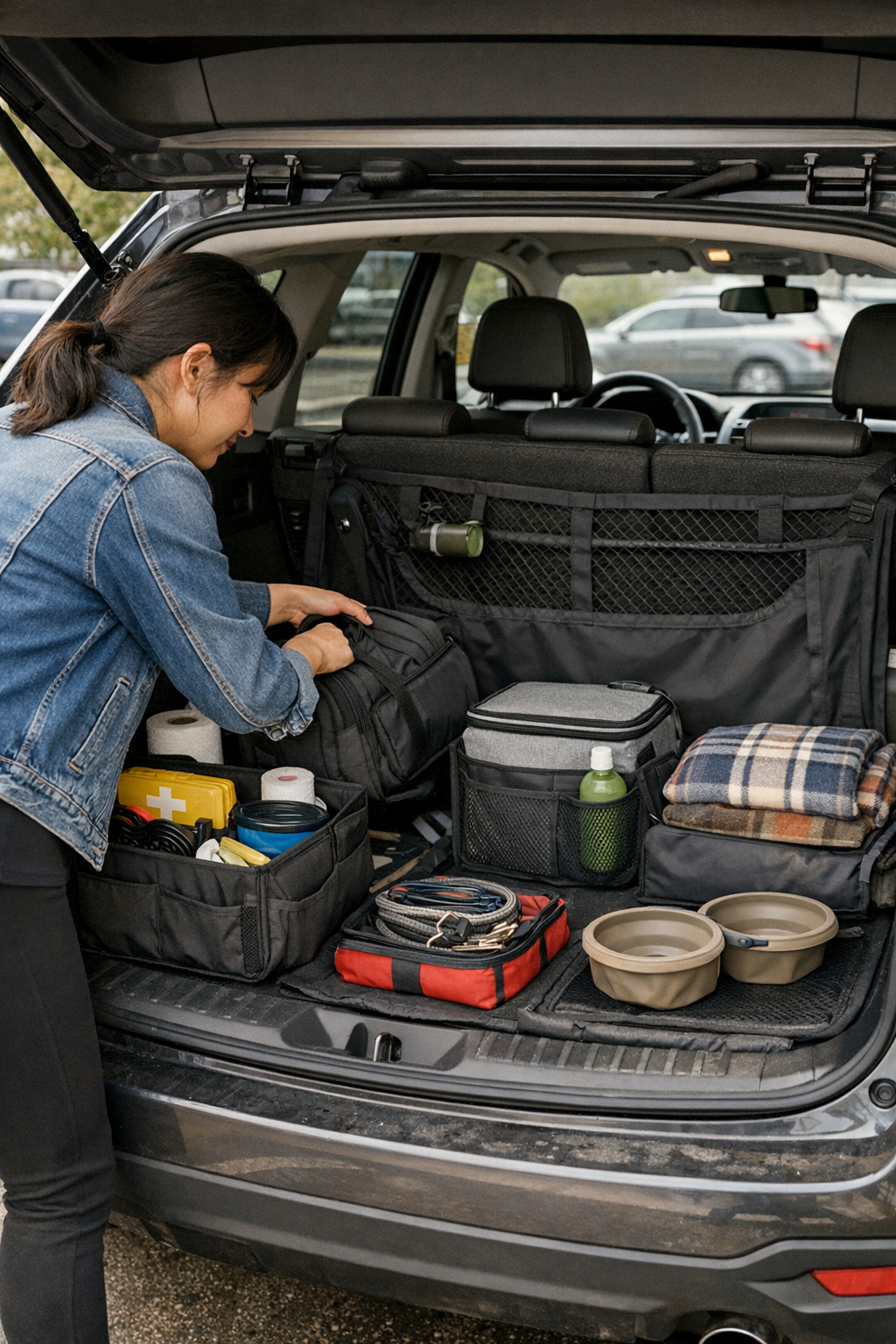
A car that looks organized can still slow you down. You notice it when reaching for your charging cable means untangling a “tidy” bundle, or when your most-used wipes are stashed three steps away—present, but never actually at hand. This is the real break between a car that just appears under control and one that actually flows with your day: small, repeating obstacles show up in the places you grab, reach, drop, and reset.
The Real Cost of Over-Organizing Your Car
Sleek interiors and storage hacks promise stress-free drives—until routine use reveals a twist: visual calm comes at the price of daily friction. Suddenly, your drive is filled with subtle disruptions:
- Stopping to unclip or slide a phone out of a too-tight slot while traffic waits behind you.
- Forgetting which out-of-sight bin hides the sanitizer, forcing a one-handed search at red lights.
- Pulling at a cable routed too cleverly behind trim when your battery drops before a call starts.
This kind of “order” doesn’t collapse in a single moment. Instead, it creates persistent slowdowns—small blocks that break your focus and clutter your route, every single day.
When Presence Doesn’t Equal Usefulness
After days of errands or commutes, the car’s interior can look stable—mats lined up, no visible trash, organizers neat. Yet every time you get in, the same roadblocks repeat: a bag left on the seat blocks your quick reach, a charger hangs just out of range, or you find your elbow jams into a center console add-on that never flexes when it counts.
The “hot spots” tell you where setups fail, despite appearances:
- Seat Sides: Protectors bunching up, making fast entry or exit awkward and hiding anything slipped alongside the cushion.
- Console Stuffing: Extra trays or holders crowd essential items, so receipts get lost or drinks have to fight for room.
- Charger Setups: Cable runs stay flat in photos, but bend or pull loose by week’s end, meaning you’re fishing under accessories mid-drive.
The cabin’s “ready” look hides the actual drag: each trip forces small fixes, turning confidence into a low-level scramble no organizer can erase.
When Micro-Delays Add Up Fast
No one cares about spending five seconds searching for wipes once. But after a week—ten stops, five recharges, three cargo loads—you know exactly how much routine drag your setup creates. It’s not about dramatics, but about real, repeating cost:
- After groceries, arms full, you stop and shift a storage bin that blocks direct access—so bags get wedged or sit in your lap while you clear space.
- The phone rings, but the universal mount angle won’t budge until you unplug everything—missed calls become routine, not rare.
- Rain blows in, but wipes stored two compartments away mean dirt lingers on the dash after each entry.
Over a few days, you’re no longer noticing the lack of trash—you’re noticing how much time you spend turning “organized” into actually reachable.
Order Isn’t Enough—Access Decides Flow
The real target for car setup isn’t a blank slate—it’s “zero-access friction.” Streamlined interiors only help if essentials—phone, wipes, cards, cables—remain instantly usable. Don’t pull compartments open or trace cables by touch. The objective: one motion in, one motion out, with clear view and reach the entire time.
- Keep top-used items in open zones directly at hand, especially near seat edges and within arm’s reach of the center console.
- Allow charging cables to live openly in active-use areas instead of routing them fully out of sight; power should never hide behind a mat or beneath a trim piece.
- Pick organizers that grip where needed but do not lock, block, or require hunt-and-peck steps when you get back in the car.
The less your hand has to pause, search, or reset, the more the car feels adapted for real life—regardless of whether it’s showroom-ready.
Pain Points: Where Organization Crosses Into Obstruction
Clutter Hides, But Over-Hiding Slows You Down
If you routinely double-check, dig, or pause to access even one key item, your cabin structure might be tightening the wrong feedback loop. This shows in:
- Phones sealed under straps or docked in a way that traps the button.
- Wipes or tissues “organized” under an extra flap, so the first smudge goes untended every time.
- Keys or small chargers zipped away for aesthetics but never grabbed smoothly on the first try.
The setup looks intentional—until you live with the built-in hesitation.
Protection That Needs Protection From Itself
Floor mats, seat covers, and liners are supposed to prevent mess, but only if they move with you, not against you. When mats creep near the pedals, or covers block pocket access, each climb in or out becomes a workaround: shift, tug, lift, then finally grab what you need. Every delayed entry or blocked grab is a reminder that “protection” can slip into “obstruction” with just a week’s use.
Are You Stuck in a Reset Loop?
If returning the cabin to “ready” becomes a process—multiple resets per day, items migrated back to their slots, organizers snapped closed repeatedly—your system is taxing your attention more than protecting your gear. The sign: you catch yourself managing your setup instead of just driving.
Flip the Priority: Visibility and Single-Step Moves
Minimal doesn’t mean hidden to the edge of unreachable. Setups that hold up after dozens of trips keep essentials visible and ready for single-step grab-and-go. A few practical corrections pay off:
- Wipes placed openly at seat edge or a dedicated clip, not buried in a multi-pocket caddy—no more stretching, twisting, or passing up quick cleanups.
- Cables kept in a front-facing tray—enough organization to prevent a tangle, but never hidden so deeply you forget where the charger starts or ends.
- Movable organizers in the center console or cup holder, never fully locked so the search for small items is a sweep, not a dig.
This isn’t about tolerating new clutter; it’s about ditching routines that demand patience for minor actions. The best setups let you keep moving without adding new steps.
Function Over Appearances: Letting Structure Show Its Value
The real test is after a dozen ordinary trips. The cars that stay easy to live with aren’t always the tidiest at rest—they’re the ones where every seat entry, hand reach, and cable grab happens in one natural motion. Owners who quit chasing full concealment in favor of practical placements (like a phone mount in direct sightline, a charger lead always in reach, a cargo tray ready near the liftgate) stop losing seconds to small-scale friction. The “before and after” is obvious: less backtracking, fewer items lost to organization, and a cabin that feels helpful, not demanding, even after the gear sets in.