
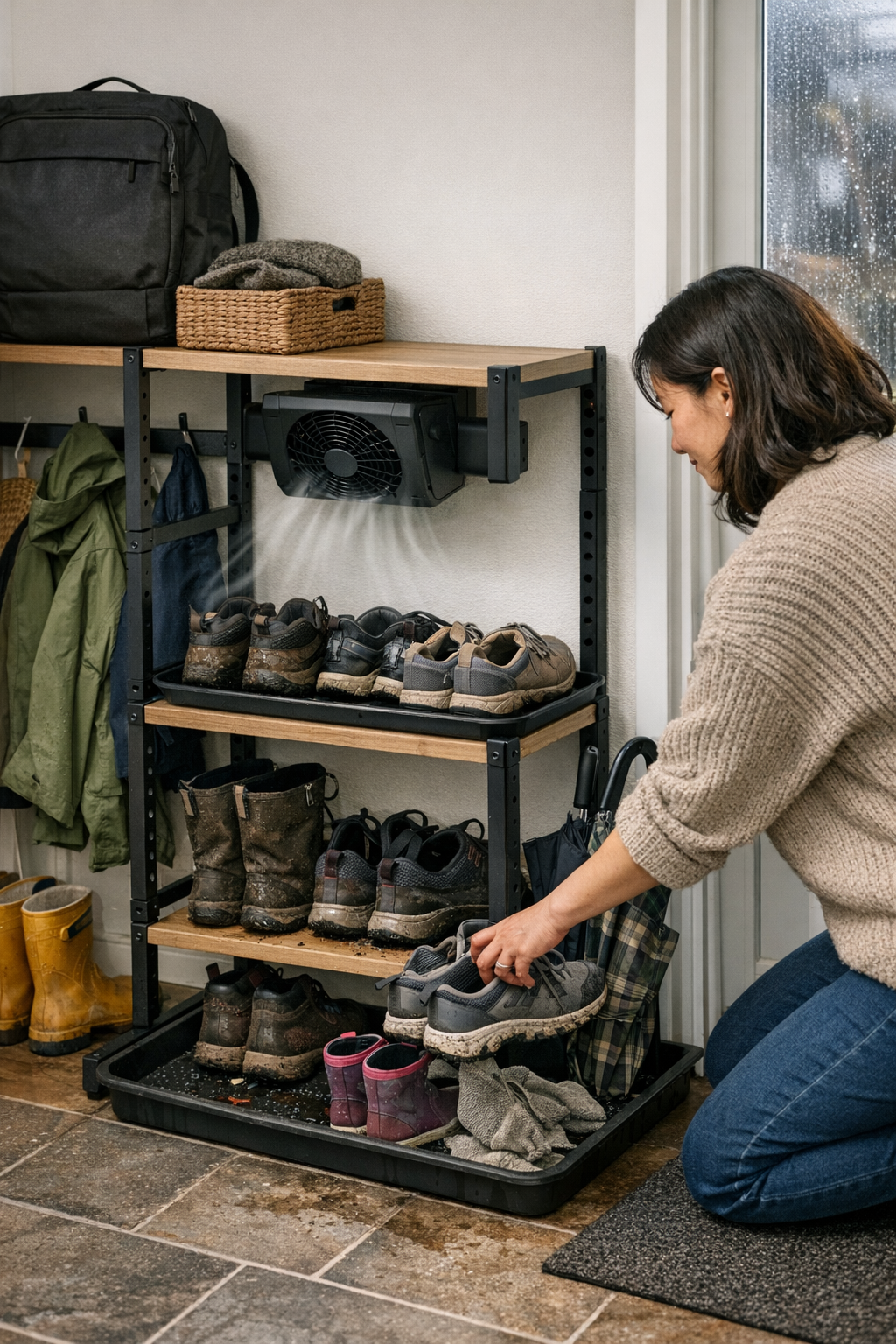
Wet weather exposes entryway setups fast. After just one rainy day, shoes cluster in uneven rows, umbrellas sprawl over every open edge, and the narrow space by the door blends into one damp, crowded zone that never quite recovers. Mats collect puddles, but that “quick reset” slips away: what begins as organized turns into a cycle of slow-drying gear, blocked movement, and a constant feeling that each return home leaves the entry less usable than before. The true breakdown doesn’t start with lack of bins or racks—it starts when drying speed falls behind real use, and every drop zone becomes a backlog instead of a buffer.
When Storage Falls Behind: Showing the Limits in Repeated Use
On paper, most setups look under control—a bench for sitting, a tray for mud, hooks for coats. But the routine under pressure tells a different story. Each return drops new gear in the mix: a wet bag lands on the last clear spot, shoes from yesterday are still clammy, and the bench ends up covered instead of cleared. By the third or fourth round of comings and goings, the original “neat” footprint shrinks: mud slides past the tray, corners pile up with abandoned gloves, and the only dry path narrows to a tight squeeze. Instead of a transition zone, the entry clogs up—a visible sign that even the most solid racks lose ground when recovery lags behind the real pace of life.
Stationary storage doesn’t solve for repeat dampness. As humidity and weather compound, resets drag out. Shoes that looked dry hours ago feel cold underfoot. Water sneaks under mats. Temporary bags and coats turn into ongoing obstacles because nothing ever fully dries before it’s needed again. The entry isn’t messy, exactly—it’s stuck, outpaced by daily flow, and each pass through tightens the zone further.
What Fails First: Not the Storage, But the Reset Cycle
Hooks, trays, and racks control the outline, but when weather repeats, the real test is whether the zone is usable before the next arrival. If boots or coats are still wet when it’s time to leave again, the “fix” becomes improvisation: extra shoes drift into hallways, damp jackets migrate to bedroom doors for better airflow, and the bench—designed for sitting—ends up as a drying rack. Everyone starts sidestepping new piles, moving carefully to avoid slipping, or staging gear where it doesn’t belong, just to buy enough time for things to dry. The visible flaw isn’t clutter, it’s a return flow that gets slower and less predictable with every cycle.
Repeated Friction You Can See and Feel
- Bags dropped at the pathway’s edge, pinching the route from outdoors in
- Shoe rows doubling back, spreading past the mat and pushing the “clean zone” deeper inside
- Bench surfaces lost to overflow—wet coats, helmets, or sports gear where people should sit
- Temporary “later” spots that become semi-permanent hangouts for towels, gloves, or gym bags
- The repeated routine of shuffling soggy items toward bedrooms or laundry just to finish the drying that the entry can’t handle
All signal the same core problem: storage keeps the structure, but slow reset leaves the space stuck—what looks orderly is actually stuck in a slow drift to less usable.
Active Airflow: The Shift That Unlocks Real Reset Speed
Adding targeted airflow—a compact drying fan above the drop point or hidden in a slim storage column—does more than dry shoes. It breaks up logjams, turns hours-long resets into quick turnarounds, and stops the routine from slipping further behind with each wet arrival. Instead of waiting for damp shoes to air out, a well-placed fan pushes humidity out of the gear and the space, clearing puddles and prepping surfaces before the flow returns.
With real airflow, the ritual resets: damp gear leaves sooner, so there’s no need to spread shoes or bags deeper into the house. The “walkable path” returns overnight instead of mid-morning. Benches return to seating instead of storage. Odors don’t settle in. The difference isn’t superficial—it’s in the pace: people return to an entry that’s ready, not lagging behind the routine.
After the Switch: Entry Behavior Unclogged
Picture it after a full week of rain. Three homecomings in half an hour: one person sheds running shoes dripping water, another drops a mud-streaked bag, and the last squeezes through with an umbrella and groceries. Before airflow, puddles claimed half the mat all night and the bench was just another place for damp heaps. With active drying always running, shoes actually dry and gear cycles back into use in a couple of hours—no more morning “where’s the driest pair?” maneuver, no overflow in the hallway, and, for once, somewhere to sit that isn’t half-covered in wet jackets. Every reset happens without having to think about workaround solutions in other rooms.
Where It Works: Fitting Active Airflow into Tight or Busy Entryways
Most entries are not built for endless gear or sprawling benches—they’re narrow, used from multiple sides, and often crowded on a regular morning. That’s why real-world airflow solutions stay compact and out of the way, focused on the bottleneck, not just the open wall. The effective placements are:
- Mounted just above the drop area, blowing across the main “gear zone” without shooting air at doorways or faces.
- Tucked inside a side storage element, angled to reach across two or three rows of shoes and bags without eating up floor space.
- Kept clear below: no boxes, cables, or spillover shoes cluttering airflow where it counts most.
Pair this with easily washable trays, mats, or racks: active drying can’t keep mud from landing, but it makes washing up less frequent, keeps surfaces ready, and stops grit from turning into permanent mess.
Long-Term Use: Real Changes, Real Limits
With repeated use, the split is clear. Shoes that once took all night can be ready in two or three hours. The bench stays available, so sitting down to tie laces isn’t a hassle. The “just for now” drop spots lose their hold, because gear genuinely resets in place. Yes, heavy mud and deep dirt still need occasional attention—no fan will erase the mess entirely. But the drag of dampness and slow build-up of odor no longer hangs around as a daily anchor. The threshold returns to function instead of friction, even through consecutive storms.
No entryway solution erases every problem: airflow quickens recovery, but it can’t scrub scuff marks or replace floor mopping. Still, changing the pace of drying turns the entry from a weak link into a working threshold—a space on pace with daily movement, not always one reset behind.
Day-in, Day-out: A Transition Zone That Keeps Up
The result isn’t a showroom—no transition space ever is. It’s a front zone that keeps up: clutter detours shrink, the reset burden drops, and the cycle of overflow and drying backlog finally breaks. Active airflow isn’t decorative; it’s the quiet difference between a path you can use and one that always slows you down, between a bench as occasional seating and bench as permanent overflow.
The improvement is in the details: a dry patch where you can finally step, shoes you can slip on without the squelch test, a bench that’s ready instead of buried. Active reset keeps the entry functional—real gear, real weather, and real repeated use, not just a tidy moment after the first setup.
See more practical transition-space storage options at Betweenry.