
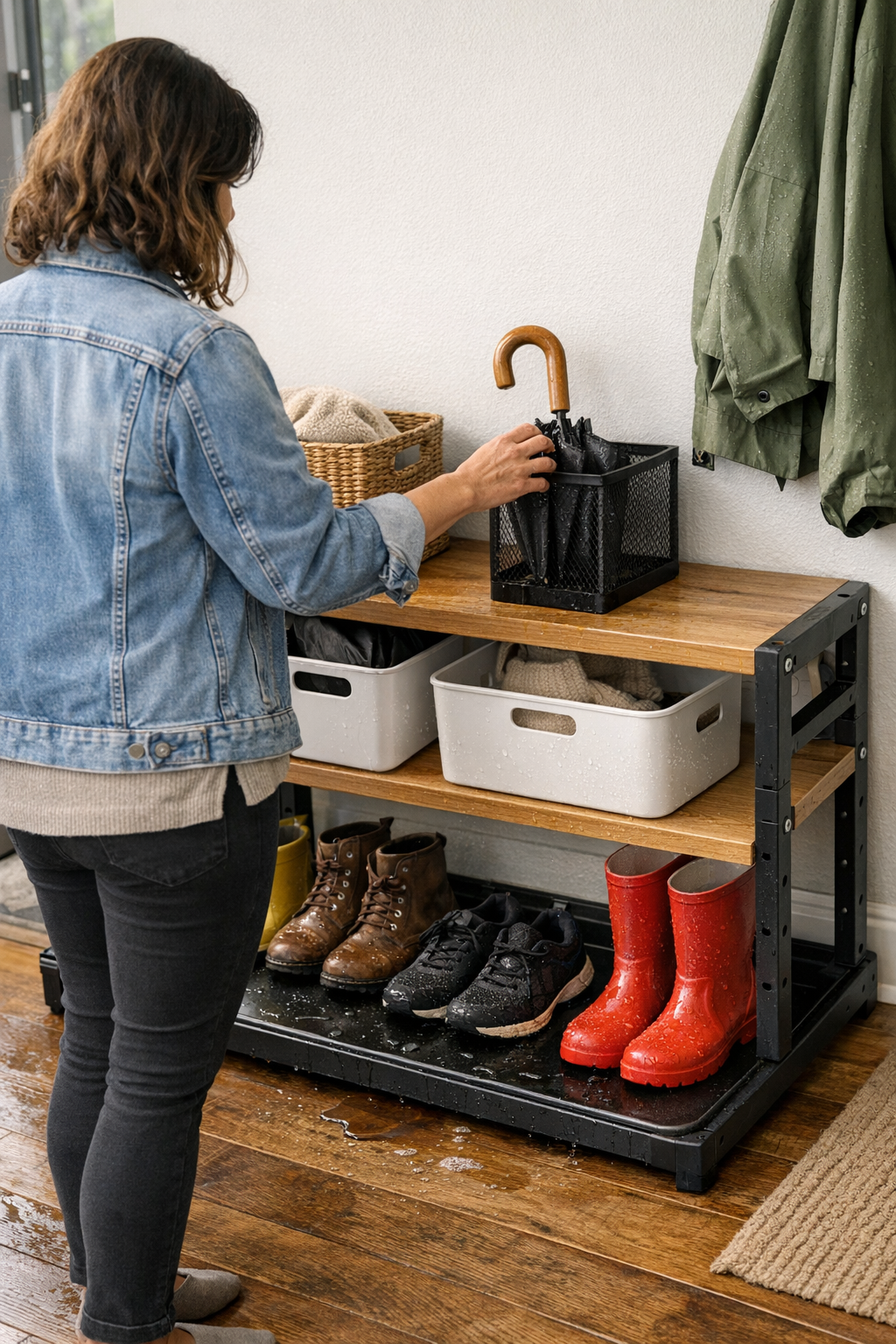
Most entryway messes don’t announce themselves—they slip in quietly as foot-tracked puddles, damp bags, and the slow march of clutter the moment wet shoes cross the threshold without a working drip edge in place. What looks controlled on a dry afternoon can unravel in days: suddenly, that so-called organized entry zone demands endless wiping, squished shoes huddle away from soggy edges, and the whole space starts echoing with the steady friction of repeated cleanup. For anyone trying to defend real order at the door, the wrong setup quietly guarantees you’ll be battling the same avoidable mess again next week.
The Hidden Drama of Water in Everyday Entryways
Three rainy mornings in a row, and the pattern becomes obvious: shoes that started in a perfect row now edge away from wet patches. The area under the bench turns sticky and dark. You catch yourself nudging bags further out, trying to dodge the next creeping pool before it finds the wood grain. Suddenly, every return triggers a micro-reset—shifting things, absorbing runoff, and noticing the invisible lines where water slips past the supposed “storage boundary.” No matter how sharply designed, the absence of a true drip edge means constant low-level maintenance: mopping, re-spacing, rescuing floor seams from swelling as each day resets the mess.
What a Drip Edge Actually Does (and Why It Matters)
A drip edge blocks and channels water the second it tries to escape, stopping it at the boundary—before it has a chance to creep under trays, move along the wall, or seep beneath your containers. This detail feels minor on paper but is decisive in use: the moment water is routed away, entryways stop quietly degrading with every soggy return. In weather-prone drop zones—benches, shoe stations, bag catch-alls—closed bins and crisp shelves can’t compete if runoff finds an unprotected route. Telltale signs: warping along seams, dark patches at corners, shoe edges softening midweek. Install the right drip edge, and water collects where you expect. Floors survive weeklong storms with a single towel instead of repeat interventions.
Looks Tidy, Stays Messy: Where Setup Gaps Sneak In
Clean lines invite confidence, but function is defined by what happens after real use. A bench or bin without a drip edge seems controlled—until runoff slips underneath and stains start creeping in by Thursday. Temporary solutions pile up: shoes get shifted, bags are stacked further from the zone, but each workaround scatters the flow and strains the reset. The more you shuffle, the more the “organized” layout becomes a game of chasing the same wet footprints, rearranging items around a moving damp spot instead of truly containing it.
This breakdown isn’t rare. Wet weeks expose every gap: shoes stack up near the door, umbrellas lean precariously, jackets drape to dry, and by Wednesday, water tracks appear beneath containers. Bags pressed too close soak through. Each fresh drop means slowing down the reset—each item needs hunting for a dry place, blocking the path or spreading water further. Even systems with decent capacity can fall apart when water isn’t checked at the border.
Real-World Use: The Ongoing Entryway Reset
Picture the actual routine: a family arrives, shoes off, jackets shed, backpacks dropped. Someone claims the bench—just as their seat hits a puddle where yesterday’s rain stopped spreading but didn’t dry. Bags, now half-blocking the pass-through, slip to avoid the latest damp patch. Kids dodge the swelling edge. The daily flow—supposed to be smooth—turns into a tight shuffle. What began as an “organized” entrance is now an obstacle course five minutes into re-entry.
This isn’t about major spill disasters. It’s slow, compounding friction: puddles reappear, the reset gets slower, and access narrows as each new deposit blocks another path. A storage zone that looks fine on paper can turn into a routine disruptor if water travels unchecked—eroding the one clear division between clean and messy.
Small Detail, Big Difference: Drip Edge in Action
If you’re tired of rotating towels, finding mystery stains, and scrambling after each rain, a drip edge changes the daily reset. Swap a flat tray for one with a molded edge: water now stays pooled, shoes and flooring beyond don’t need urgent wiping, and the whole area resets in seconds instead of long minutes. The relief isn’t just visual—less mopping, less warping, less blocked access—but functional: movement stops being interrupted by another round of invisible seepage. For the first time, you can trust that wet gear will dry without invading every other surface.
Matching Drip Edges to Your Setup (and Getting It Right)
One-size-fits-all doesn’t work. The benefit lives or dies by placement and fit:
- Edge location matters most: The drip edge must extend fully past where shoes, bags, or jackets actually land—not just as a decorative accent. Miss the true drop zone and water escapes into the zone you’re trying to protect.
- Controlled channeling beats just blocking: Good drip edges have a lip or groove that collects and pools the runoff, away from seams and direct walkways. A flat blocker merely sends water elsewhere.
- Materials shape the reset cycle: Stick with molded plastic or sealed rubber—they don’t swell or stain and can be cleaned fast, even after repeated wet weeks. Softer materials cling and turn sticky, dragging out the chore loop.
Adaptation Tips for Existing Setups
Most entry setups weren’t designed with a drip edge in mind—but if you’re living with the consequences, retrofitting is usually possible. Clip-on lips, adhesive edges, and modular tray extenders transform most benches, racks, or shoe trays into actual collectors. The trick is deliberate placement: create a stop where water naturally travels, making cleanup a planned routine instead of crisis management. DIY modifications won’t be perfect, but even basic barriers often outperform ignoring the issue and accepting creeping floor damage as the cost of using the space.
Answering Common Setup Questions
Is a drip edge essential for every threshold?
Not everywhere—but in any entry zone where shoes, umbrellas, or outdoor gear land during rain or snow, a drip edge dramatically reduces cycle cleanup and surface decay. Occasional-use or decorative areas might manage without. If the space sees real traffic, skipping the edge all but guarantees more frustration with every wet return.
Can I add a drip edge to open or flat storage?
Usually, yes. Stick-on lips or extenders often fit most trays or benches. The key detail: add only where water is likely to leak or pool, not just where it’s easiest to install. Even minimal changes can give back much bigger control over week-to-week maintenance.
What’s the best drip edge material for high-use or wet areas?
Prioritize sealed, non-absorbent materials—molded plastic or substantial rubber. They don’t pull up water, stain, or slow resets, making them reliable for the unpredictable rhythm of daily use and shifting weather.
Contain Water, Hold Order—Every Time
A drip edge isn’t an aesthetic upgrade—it’s the one detail that separates functional order from an endless reset loop. Shoes stay dry, the cleanup shrinks, and your floor stops quietly absorbing every storm’s aftermath. The real takeaway: organized entryways only work if the setup directs water, not just items. Ignore that reality, and the chore cycle rarely ends. For high-use thresholds, a drip edge is what bridges the gap between tidy intentions and true, repeatable function—one small edge at a time.