
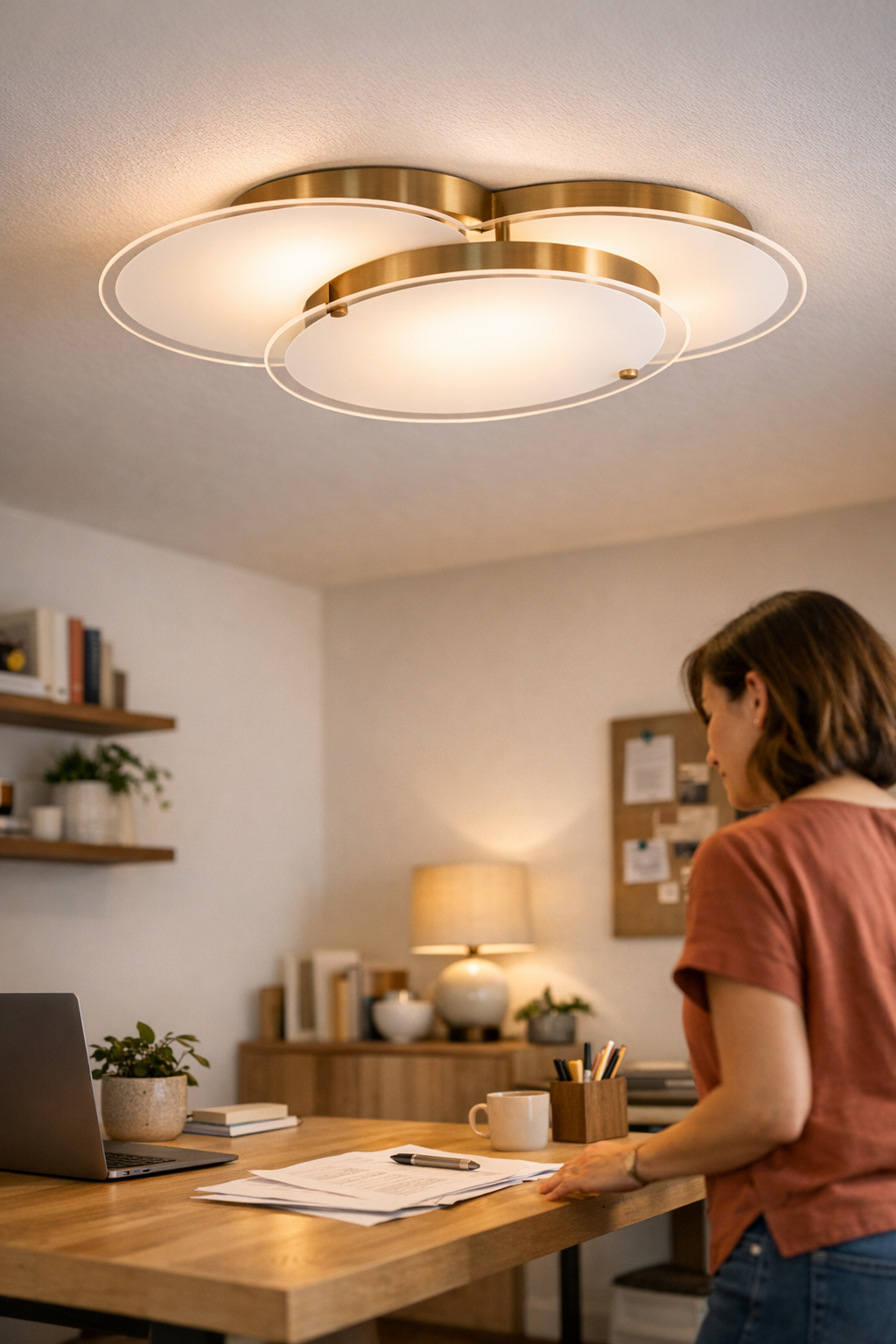
Lighting setups break down at the edges—fast. That ceiling panel looked perfect when you stepped back on install day. But a week later, one bracket has slipped, and now the light throws glare across your desk while leaving your keyboard in shadow. Instead of blending in, a sagging cable starts competing with your monitor for attention. One dim shelf edge, one dangling wire, and your “finished” room turns into a tangle of quick fixes and small daily annoyances. These aren’t cosmetic irritations. Misaligned lights, exposed cables, and loose brackets make clear surfaces harder to use and routines slower to finish.
The Subtle Impact of Uneven Lighting Support
Perfect symmetry rarely survives real life. A row of slim LED panels, level on day one, shows the first weak spot when a bracket sags half a centimeter and throws your walkway into uneven shadow. Cable channels come loose the moment you add a new device or slide a shelf. The result: you’re shifting chairs to avoid glare, reaching for the brightest spot just to read a label, or pausing mid-task because a cable blocks an outlet you need. The smallest misalignment multiplies over time, slowly turning easy routines into repeated, visible friction that never fully disappears.
From Install Day to Real Use: What Changes?
Visual neatness rarely survives contact with real use. Symmetry and clean lines fall apart the first time you unplug a charger, dust a shelf, or nudge a lamp for a project. What looked flush now tilts. Cables that once hugged the wall droop or slide out of place, especially when anything plugged in gets moved. One bracket, out by a washer’s width, starts a chain reaction: the fixture leans, the cable pulls unevenly, and you start compensating—shifting your things, tweaking the light’s angle, stacking objects to block the worst glare. The promise of ‘finished’ wears off with every small adjustment you make instead of just using the room.
Small Shifts, Big Frustrations: Real Examples
Picture a shared desk edge where one under-cabinet light sags lower than the rest. Now one side glares into your eyes, while the opposite corner is barely lit—forcing you to keep moving papers just to work comfortably. Or that slim task lamp you measured by eye, only to realize it throws a persistent shadow over notes every time you reach for them. Even compact spaces strain under these details: an exposed cable dangling under a shelf means your supplies no longer fit or a charger constantly slides out of reach. Instead of the setup working for you, you’re adapting around every minor flaw—and feeling them multiply with use.
The pain is physical as much as visual. Plugging in a laptop becomes a two-hand job so the cable doesn’t drag another fixture off center. Sturdy boxes and objects get conscripted to block glare or hide a drifting cable. That ideal reading spot? Now you avoid it because the light splits the surface too sharply. The original sense of order collapses under the reality of what you see and reach for every day.
Cable Clutter and Support Weakness: Problems That Multiply
It’s easy to ignore a loose cable clip or a bracket slightly out of line—at first. But in daily use, these small errors refuse to stay small. Every unplugged device tugs a cable lower, leaving a telltale bulge across what was a clean wall. Once the fixture tilts even a little, you lose reliable coverage: half the shelf gets light, the rest sits in vague shadow. Wires cut across access to the outlets you actually use. Over time, all those “just barely” misaligned pieces turn a space that looked resolved into one you have to work around, again and again.
The Difference Precise Support Makes
Getting back to a usable space rarely means starting over—details just need adjusting where repetition breaks them down. Shimming a bracket to achieve a real, stable level (not just straight by eye) reclaims an entire shelf edge. A two-centimeter adjustment in cable route changes where clutter accumulates—and what surfaces stay clear. Replacing a chunky power brick with a low-profile adapter frees an outlet and lets cable lines stay tight to the wall. The fixes take minutes but shift the whole logic of the room—moving you from constant workaround to reliable, repeatable use.
Tips for Keeping Lighting Even and Cables Calm
Guesswork fails at the first move. A bubble level and tape measure are not optional; they’re essential. Measuring from fixed points like ceilings and walls—for every fixture, in every zone—prevents gradual drift and misalignment that wasn’t obvious at install. Adding a washer where a bracket leans sharpens the angle and stops the whole row from falling out of sync with surface lines.
Cables demand their own logic. Direct, straight, and anchored routes with sturdy adhesive clips stop wires from slipping into sightlines, blocking access, or bulking up in unexpected places. After the third or fourth time cleaning or rearranging, you’ll know whether the support holds, or if you’re battling the same drooping line and tangled cables week after week.
Living with Lighting: The Real Test is Repetition
Lighting support wins or fails outside the installer’s view. If a setup blends in first but makes you adjust your seat, squint, or walk extra steps every day, that’s not working light—it’s a surface problem hiding behind a sleek fixture. When task zones demand compensation—stacking objects to block a glare patch or dodging a shadowed corner—the limits of your support system show through. Evenness, bracket stability, and cable order aren’t aesthetic extras. They decide whether your desk, shelf, or room edge stays actually usable or keeps quietly undermining your routine.
Noticing and solving these repeat breakdowns isn’t for show; it’s the only way to protect the comfort and clarity of spaces used all day, every day. Taking an extra five minutes to check bracket level and cable logic means a surface that welcomes work, reading, or shared use—without the next dropout, distraction, or dim edge sneaking back in.
Find practical products and better lighting support at LightSupport.