
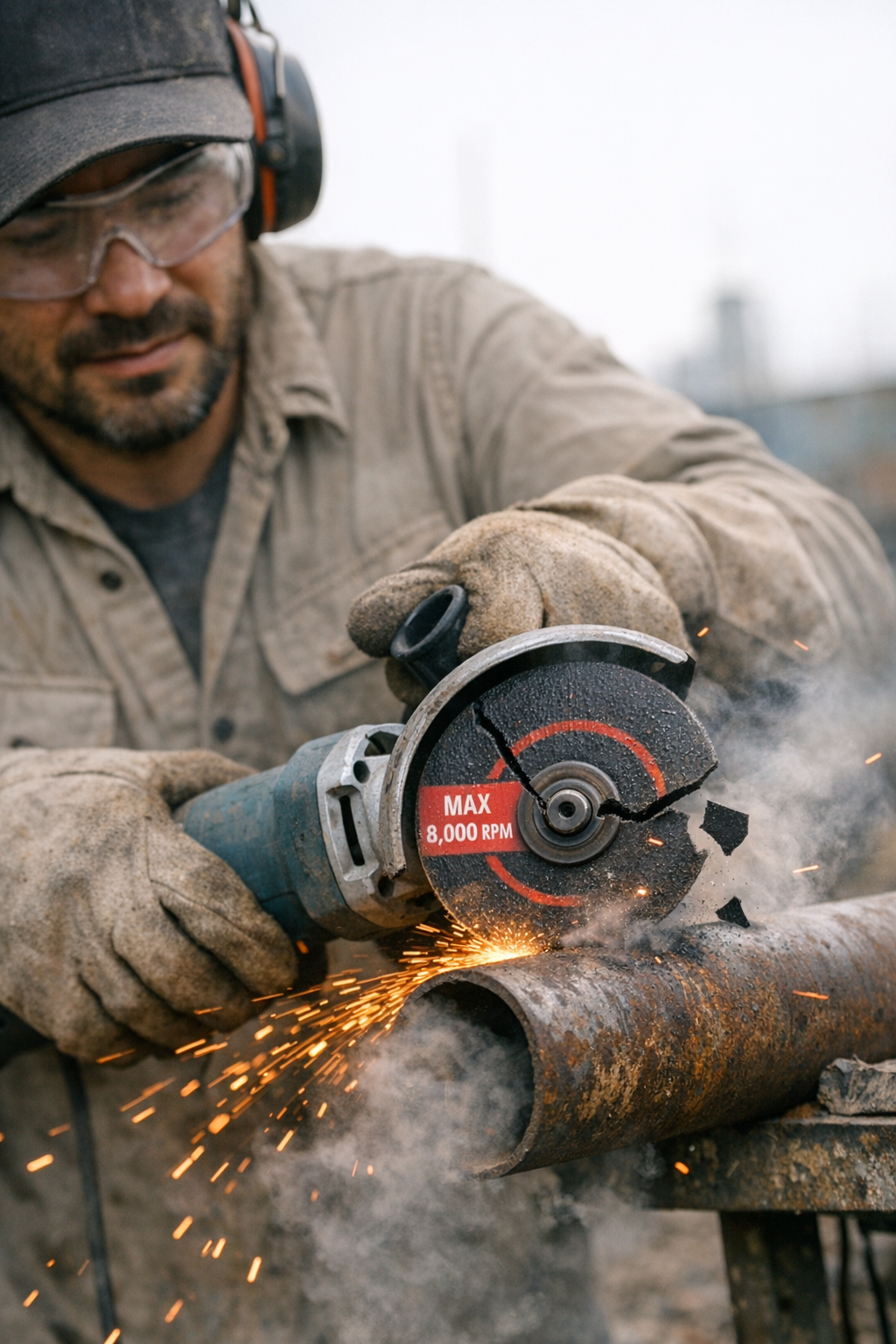
There’s a moment every angle grinder user dreads—the telling jolt as your tool starts to buck and chatter halfway through a cut. You brace harder, but the wheel judders and the edge you meant to keep clean scorches and splinters instead. That instant, you know: something’s off, and it usually comes down to one thing—your disc’s speed rating versus your grinder’s power. This isn’t a small detail. Making the wrong match between disc and tool creates a drag on every part of your process. The fallout shows up everywhere: rough finishes that won’t sand smooth, discs reduced to shreds in half the lifespan, and that background frustration as your workflow breaks down while you double-check—or redo—your last pass. In actual shops and out on job sites, overlooking this spec isn’t a one-off mistake; it’s a recurring time-waster and quality killer.
How Disc Speed Ratings Affect Every Cut
Grab the wrong disc from your overcrowded tool bench—a disc rated for 8,000 RPM instead of the 12,000 your grinder’s built for—and you might not notice a difference at first. The disc mounts. The sparks fly. But the instant you start a real cut—grinding down thick welds or shearing through steel studs—a subtle shudder creeps in. That vibration is new, the tool’s control isn’t as tight, and you can feel your progress stalling.
Heat comes next, radiating through your gloves. The grinder’s tone changes pitch, edging on a rattle. Instead of a sharp, clean edge, you end up with blue streaks, scalloped gouges, and a finish you’re going to have to rework—if the disc doesn’t crack or melt first. Ignore speed ratings, and suddenly every job feels like walking through mud, wasting both discs and patience in the process.
Slices of Real-World Friction
The Five-Minute Fix That Wrecks an Afternoon
Picture a cramped fabrication shop: bench space is at a premium, sawdust and filings cake every surface, and your project list is backed up. You’re in a rush, need a new cutting disc, and grab the first one that fits. Midway through the cut, the grinder’s vibration ratchets up—you grit your teeth and finish, but what was supposed to save you time actually chews up the material and leaves a ragged, burnt edge. Now you’re stuck sanding out mistakes or cutting a replacement piece, all because a mismatched disc turned one quick task into a time sink.
The Relief When Specs Align
You swap to a disc rated well above your grinder’s RPM. Instantly, the difference is physical—the wheel flows through steel or aluminum, your hand stops cramping, and every line comes out straighter and cooler. Grinding welds takes less effort, the residue is minimal, and your shoulders aren’t aching from wrestling the tool. Stack up a dozen of these small saves on any job and you finish hours sooner, not stuck behind on punch-list fixes.
The Fallout of a Wrong-Speed Disc
Loss of control and extra effort. Push a disc past its max RPM and you feel it—a grinding resistance, sudden warmth, and odd debris hitting your wrist. The grinder wants to veer off track, you feel forced to compensate, and precision goes out the window. The sense of fighting your own tool multiplies wear on both the disc and your patience.
Premature breakdowns and bigger messes. Discs that can’t handle your grinder’s speed wear into odd shapes fast. You’ll see chunks fly, edges burn, or even discs chip or delaminate mid-job. Every pass leaves more dust and an uneven surface that needs a second go-around. For big projects—long seams, thick angle iron, tough masonry—a mismatched disc can shatter outright, taking your workflow (and maybe your nerves) with it.
How To Spot—and Prevent—A Speed Mismatch
Same size, same thickness, similar packaging—two discs can look identical until you check the fine print. RPM ratings, tucked into a label’s edge, make all the difference. In a busy shop or during back-to-back jobs, it’s easy to let muscle memory guide you, reaching for the familiar package instead of double-checking the rating. But the result shows up fast: shaky cuts, rough finishes, and the feeling that you’re stuck redoing your best work for reasons that aren’t always obvious.
If you move between different materials, swap discs often, or share equipment, these mismatches get more likely. The habit of grabbing “what’s closest” will cost you in headache and wasted effort, especially on days where you can’t afford surprises or second-guessing your tools.
Make the Right Match—Every Time
Always Start with an RPM Check
It takes less than ten seconds: read the disc’s max RPM—usually stamped right on the label, sometimes edge-printed on the wheel. Cross-check it with your grinder’s top speed (found stamped near the handle or in the manual). If the disc’s max RPM is lower than your grinder’s output, don’t risk it—grab a different disc.
Give Yourself an RPM Cushion
Don’t just match specs—build in some margin. Ideally, use discs rated at least 2,000 RPM above your tool’s top speed. That buffer absorbs inevitable overpressure when you lean in hard, and protects both tool and finish when you’re pushing through tougher material or angle cuts.
Handle Larger Discs with Real Caution
Switching up to a bigger disc? Only safe if your grinder can slow down to well under the disc’s max RPM. Fixed-speed grinders with big, slow-rated discs are a recipe for cracks, shrapnel, and blown project timelines. Do the math and let specs—not just convenience—guide your setup.
Your Disc-Speed Questions, Answered
What if I toss a low-RPM disc on my high-speed grinder?
You’ll feel it: sharp, chattery vibration, fast edge wear, and before long—hairline cracks, burning, and chips flying off. You risk damaging your tool, your workpiece, and your fingers. It’s not worth the gamble.
Where can I check disc speed ratings?
Look directly at the wheel’s label for printed or stamped max RPM. Your grinder’s specs should be easy to spot near the handle or in your manual—know them by heart if you want to work smarter.
Can I run big discs at low speeds for delicate tasks?
Only if your grinder is variable speed and set below the disc’s rating. There’s no safe shortcut to make a slow disc spin faster. Always match tool, disc, and task—the time saved in clean, fast progress is worth it.
Small Habits, Major Payoff
When you keep disc speeds matched to your grinder, everything improves—the tool feels lighter, your lines get cleaner, and hours lost swapping burnt discs or sanding out mistakes come back to you. It isn’t magic. It’s a simple, repeatable step that means less fatigue, fewer near-misses, and finished work you don’t dread showing or installing. Take the extra half-minute. Your future self—and anyone relying on the finished product—will thank you.