
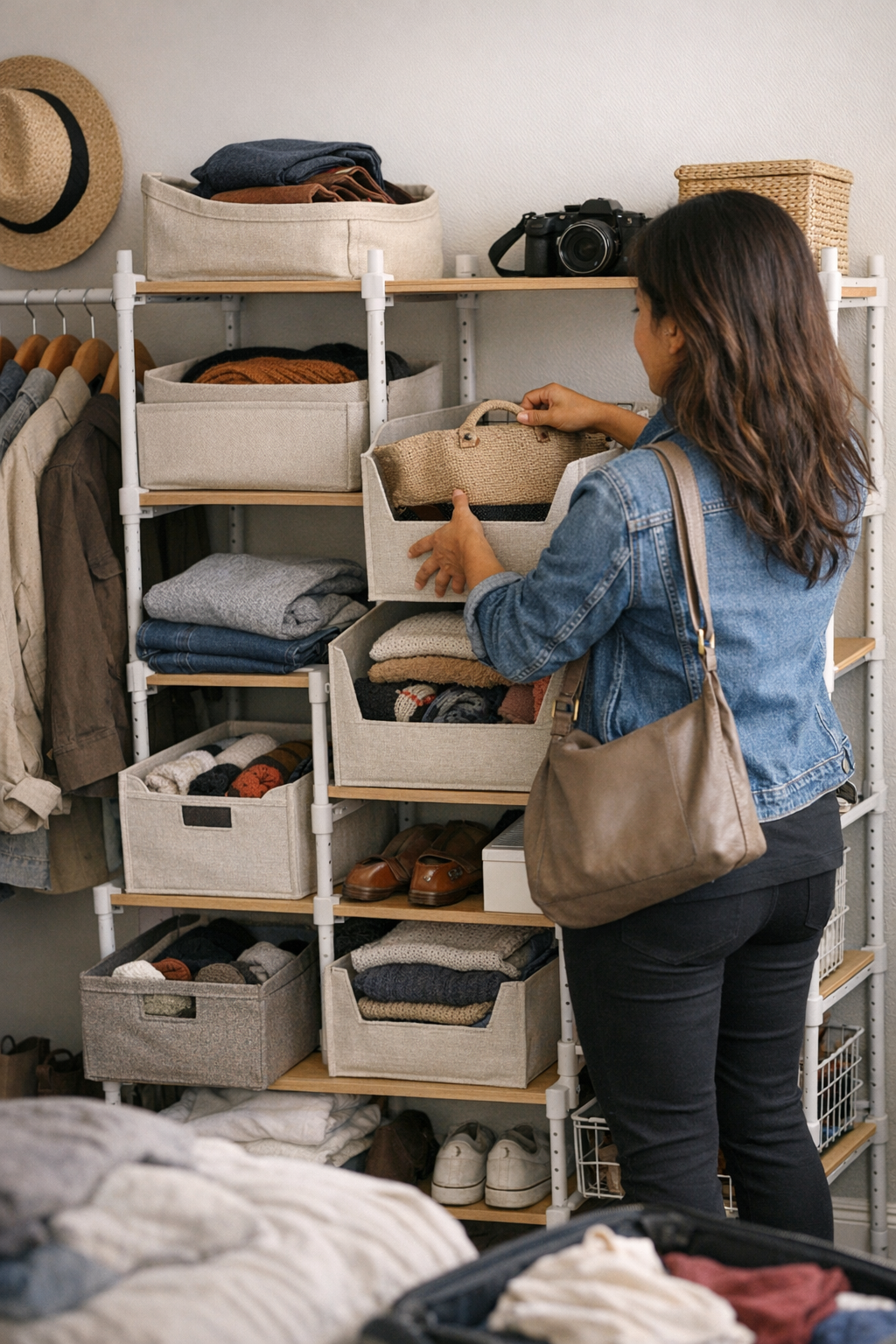
When an “Organized” Closet Still Saps Your Time
You can measure and arrange, stack and label—but those perfect closet photos fade fast against the pressure of daily life. The real test comes not on organizing day, but in those unruly, low-energy moments: you’re getting home late, juggling bags, unzipping your jacket with one hand, and already feeling the dread when you see scarves sliding off the shelf edge and two baskets you’ll have to move just to put something away. That’s storage friction: the subtle ways even well-intentioned setups slow you down, trip you up, and leave clutter multiplying where you swore it wouldn’t.
Why Closets Gradually Wear You Down
Clutter creeps in, not with one disaster, but with a hundred small annoyances. You reach past a gym bag crammed in the front to dig out your only winter hat from behind. You try to slide one sweatshirt out of a stack, and the pile droops or slides, half the items now off-balance. Within days of a weekend reset, categories blur—workout tops in with pajamas, shoes squeezed alongside things that aren’t footwear at all. The problem isn’t your discipline; it’s a design that looks crisp when untouched but can’t cope with the habits and messiness of real routines.
Most closets are built to perform on their first day, when everything is lined up, sorted, and perfectly folded. But real life isn’t steady or careful. Morning rushes, midnight wardrobe changes, laundry that isn’t folded right away—these are when you learn which part of your system demands constant reshuffling or quickly gives up its structure. The bins that swallowed everything, the shelf that always looks crowded, the corner that quietly hosts a pile of bags you forget about until you’re late.
Death by a Thousand Small Setbacks
A closet’s appearance can disguise daily grudges. When every retrieval means dislodging a stack, pulling out a bin, or moving items aside “just for now,” you start skipping the reset. The floor becomes a holding area for what you don’t want to deal with. Lidded bins that started off organized morph into black holes of mixed scarves, cords, and off-season gear. Shelf edges sag under the weight of half-used piles, and soon, your “system” starts to feel like an obstacle course.
It’s not household chaos—it’s misplaced effort. The price is paid in seconds: each time you avoid fixing a pile, each time you leave something out because you can’t face upending a bin for it. The friction accumulates, and with enough repetition, even the most promising closet slips into disarray not from neglect, but from poor fit with the way real mornings—and exhausted evenings—unfold.
Where Real Closets Let You Down
Bins That Never Show You What’s Inside
Large, deep bins with lids seem like peak organization—until you’re fumbling for a single missing glove and wind up spilling workout bands, old electronics, and out-of-season accessories everywhere. The more stuff they can hold, the more categories merge, and the less likely you are to put things away where they belong. Over time, these bins shift from “sorted” to “avoid opening at all costs.”
Piles That Go Sideways (Literally)
Stacks of clothes look sharp only as long as no one touches them. Thin shelves and too-tall towers can’t withstand the simple act of grabbing a T-shirt from the middle. Soon, you’re bumping half a pile onto the nearest chair, promising you’ll fold it later. With each grab-and-go, the stacks get messier, and the time to reset climbs, so often you just don’t.
Shelves That Crowd Out Your Options
Shelves suggest abundant space, but too often they become catch-alls. Without clear boundaries or divisions, purses migrate into sweater territory, gym shorts spill over on top of shoes, and “overflow” transforms what should be a single layer into a two-deep confusion. Every attempt to grab what you need means moving unrelated things—wasting precious minutes and fraying your patience.
Entryways and Corners That Lose Their Boundaries
These problems aren’t locked in your closet. The bench by the door gets buried under coats that outnumber the hooks, a “neat” basket slowly fills up with dog leashes, mail, and shoes that have lost their pair. What started out as a landing zone becomes a permanent clutter display. Every six weeks feels like a reset, but nothing really changes—because the setup isn’t designed for constant use, just occasional tidiness.
From Surface Order to Real-Life Function
The best closet stays steady—even when you’re running on empty. A smarter storage setup isn’t about flawless alignment. It’s about designing for your tiredest self: clear categories, open returns, and no “hidden” zones that trap the things you use most. Consider swapping lidded, deep bins for open-front, shallow ones at arm’s reach—no more stacking three heavy bins to get at a scarf. Drop in a simple divider: suddenly, folded pants don’t drift into T-shirts, and what goes where is unmistakable, even for a distracted mind.
You might find the nightly “reset” transforms from a two-minute shuffling session into a few direct movements. The shelf edge stays clean, stray items are less tempting to leave out, and your organizing rituals start to shrink in both time and frustration. There’s less to fix, and less lost in the shuffle.
What Actually Improves Daily Closet Use
- Use shallow, open-front bins on your most-used shelves. You’ll see everything at a glance, and vertical reach becomes useful space, not wasted air above a buried pile.
- Add dividers at the front of shelves or inside bins to keep categories from bleeding together. Every item gets a clear slot—which means you don’t undo a whole shelf to return one thing.
- Leave some empty space by design. A shelf that’s 80% full absorbs temporary overflow and leaves breathing room, so one rushed laundry day doesn’t derail your whole week’s order.
- Watch for friction you keep repeating: Is there a corner where things pile up, or a stack that never stays stacked? These are signals to revise—not signs you failed.
Spotting and Solving Hidden Closet Trouble
You won’t always notice storage problems until you live with them awhile. Signs you’re due for a tweak include:
- Piles always leaning, even a day after you fold
- Baskets where unrelated items keep cycling back together
- Drop zones forming in the exact place you wish were always clear
- Rummaging to find something you just put away (it’s there, but buried)
Each minor snag is a clue: a warning that good intentions alone don’t build a closet you can actually live with. Smarter storage isn’t about a prettier surface, but about recapturing those seconds lost to avoidable mess.
What a Real-Use Closet Feels Like
When bins, shelves, and hooks match your everyday habits instead of aspirational plans, you stop dreading tidying up. Fewer traffic jams. Faster returns. You find what you need without having to re-stack or excavate. Your space settles into a rhythm—order that holds even in your rush, or on days you’d rather ignore the piles. The result isn’t perfection. It’s relief: a living system that actually makes your day easier, not just nicer to look at.
For more practical solutions that make your storage actually work, visit ClosetWorks.