
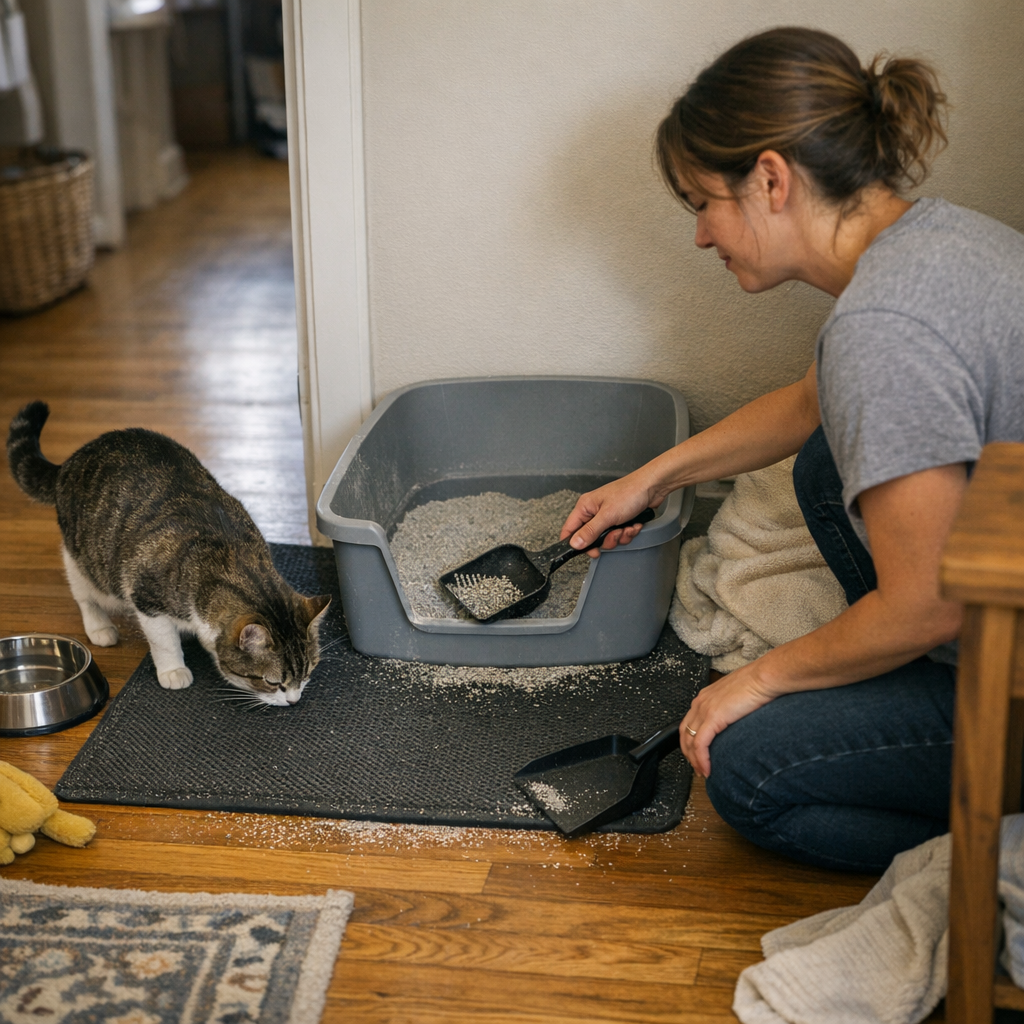
Most hidden litter box “solutions” get exposed within days—not by cats, but by repeat use. A setup that feels neat on day one—tucked away, mat flush, box out of sight—quietly unravels under routine. After a couple of days, you notice a fine line of litter sneaking beyond the mat, a dusty trail that didn’t exist when you first set up the corner. Now you’re crossing the same patch of floor, bare feet catching stray grit you thought would stay contained. Even if the box looks invisible, the real test is how much it interrupts you every time you walk, reset, or clean. In the StillWhisker world, every arrangement has to survive more than its first impression.
Orderly Looks vs. Friction Underfoot
Placing the litter box in a remote corner, out of traffic and away from guests, seems like the obvious answer. On day one, it holds—a backdrop of calm, mat squared up, all visual noise hidden. But by week’s end, the illusion fades. “Looks tidy” only gets you so far when your routines rub against it. Suddenly, every crossing leaves a trace: a granule skating off the mat, a faint, repeated streak where paws and feet overlap. What seemed organized starts generating its own friction—a low-level irritation as you realize you’re chasing crumbs into other rooms or doubling back to sweep corners you thought were “solved.” No guest ever sees it, but your socks and floors do.
The Daily Reset: Where Theory Meets Reality
Small misses add up fast in a real home. Hiding the box doesn’t reduce upkeep—it just delays your response. Every cat visit, every escape route after a mad dash, sheds another sprinkle you don’t see until later. Miss a reset, and the edge of the mat becomes a border zone—this is where “contained” turns into “spreading.” Litter lurks under the kitchen table, the trail shows up under shelves, or you spot a new dust patch sliding toward the hallway. The out-of-sight setup seems clean, but it’s only building up backlog—small messes multiplying, tension rising until your next reluctant big clean.
The more the box drops out of your line of sight, the easier it is to let debris linger. Hidden corners aren’t protected from mess—they’re protected from your attention until it’s too late.
A Familiar Mess: How Small Problems Travel
The spill always starts inside cat space, but it only takes one toy dragged across the mat, or one rushed scoop when you’re distracted, for the line to shift outward. “Just this once” skipped cleanup? Now that’s a recurring patch of odor and debris, traveling wherever you do chores, fold laundry, or try to relax. Even cats that usually keep it tidy will outpace a good mat by the third unaddressed spill. Containment quickly becomes catch-up, and the frustration accumulates in little, visible signals: a pile under a side table, crunches where you walk barefoot, mat edges pushed askew.
Timelines That Actually Work: Anchoring the Routine
What separates a maintainable setup from a recurring annoyance isn’t clever hiding—it’s a daily checkpoint that fits your real movement through the home. Choose a fixed, visible moment: late afternoon before the kitchen gets busy, or at the transition to evening routines. Forced consistency—anchoring scooping and reset to a predictable time—keeps the load small and visible. Skip it, and the space quietly fills up; stick with it, and you never have to chase the problem through the house.
If the litter box sits just far enough from your normal path that you have to detour or mentally bookmark “go clean up later,” you’ll postpone. The space starts to betray you: mat off its mark, litter at the threshold, a faint hint at the doorway. Bringing it into semi-view—within your daily field but not crowding every step—means you spot and control mess fast, not react days later.
How Small Tweaks Shift the Cycle
Two practical shifts drive the biggest difference in routine:
- Choose a spot visible enough to monitor, but not in the direct way— when you see a misstep or spill in real time, grabbing a broom or wipe for three seconds is manageable. Left unseen, a mess sprawls out until weekend effort is inevitable.
- Anchor the daily scoop and sweep— make it a lock-in with some other task you already do. Don’t leave cleanup to “when I notice,” or you’ll always be a day behind your cat’s best scattering effort.
Over a few cycles, the space stops pulling you out of routine and merges with it. Instead of being a zone you resent or scramble to hide, it becomes just one more reset in your ordinary path.
When a Setup Looks Clean But Feels Slow
The most misleading setups pass a visual check but fail every actual use. That clever box behind a chair, mat flared just-so, supplies tucked away—it’s a visual win. But the moment every sweep or scoop interrupts two other tasks, or a cleaning tool is just far enough out of reach to make you mutter, the system burns time instead of saving it. An “invisible” box that sends litter into living spaces or forces you to twist awkwardly for each reset exposes its real weakness: it doesn’t fit your flow, so you keep working around it instead of through it. “Organized” can still mean “always one step slower.”
Repeated small barriers become patterns. You reach for a scoop hidden in the wrong bin, nudge supplies out from behind a planter, or edge around a scramble zone to avoid tracking more grit further. Everything is where it “should be” but still not where you need it in the second mess happens. Like a kitchen drawer you never actually use, the setup works on paper but grates in practice.
Shared Space, Shared Stress
Indoor-cat items leak—blankets, mats, scratch posts—creeping into shared rooms and high-traffic lanes. A box that looks camouflaged to guests is irrelevant when you’re the one stepping around micro-crunches, repositioning mats that always drift, or picking out litter-flecked toys from under the couch. Over time, these small, repeated interruptions add a background pressure—one more thing to adjust each day, pushing the area from “neat enough” to “never quite in sync.”
Practical Fixes That Change the Outcome
No arrangement escapes all mess, but routines reward a few key upgrades:
- Pick a mat at least several inches larger than the box opening. A tight fit looks sharp, but a few extra inches on every side catch surprise landings and daily scatter. Go wider—early, not after the first missed cleanup.
- Make wipe-down and sweep tools truly at hand. Keep them within literal arm’s reach of the box and mat—not tucked in a closet—so extra friction never delays a quick reset. Cleanup inertia vanishes when the gear stays parked right where micro-messes happen.
- Reposition for fast visual checks, not only for aesthetics. If the first signal of trouble is litter in the next room, the box is too hidden for your habits. Try inching it closer to the natural path through your space, then watch whether cleanup speed improves.
What to Adjust When the Cleanup Cycle Lags
If grit keeps cropping up late or shared areas look less clean at day’s end, don’t rely on a future “big fix.” Instead, double down on the daily pattern: move reset times earlier, keep mats wide and anchored, and make the boundary zone impossible to ignore. Payoff comes not just in a tidier corner, but in less friction across the routines you didn’t expect to get interrupted by a litter mess.
The Repeatable Setup That Gets Out of Your Way
The best litter setup fades into the background—because it makes quick, daily resets possible without forcing extra work or blocking your rhythm. Once scooping and sweeping cue off your home’s real flow, stress drops: mats quit migrating, debris stays boxed in, and your living spaces stop accumulating micro-cleanups you never signed up for.
Small flaws still surface, but easy access and clear lines beat any hidden arrangement that lets messes linger unseen. Build your setup to fit your routine as it actually happens, not just as it looks ideal, and the recurrent hassle finally slips out of daily life.
For more indoor-cat setups that work in real homes, visit StillWhisker.