
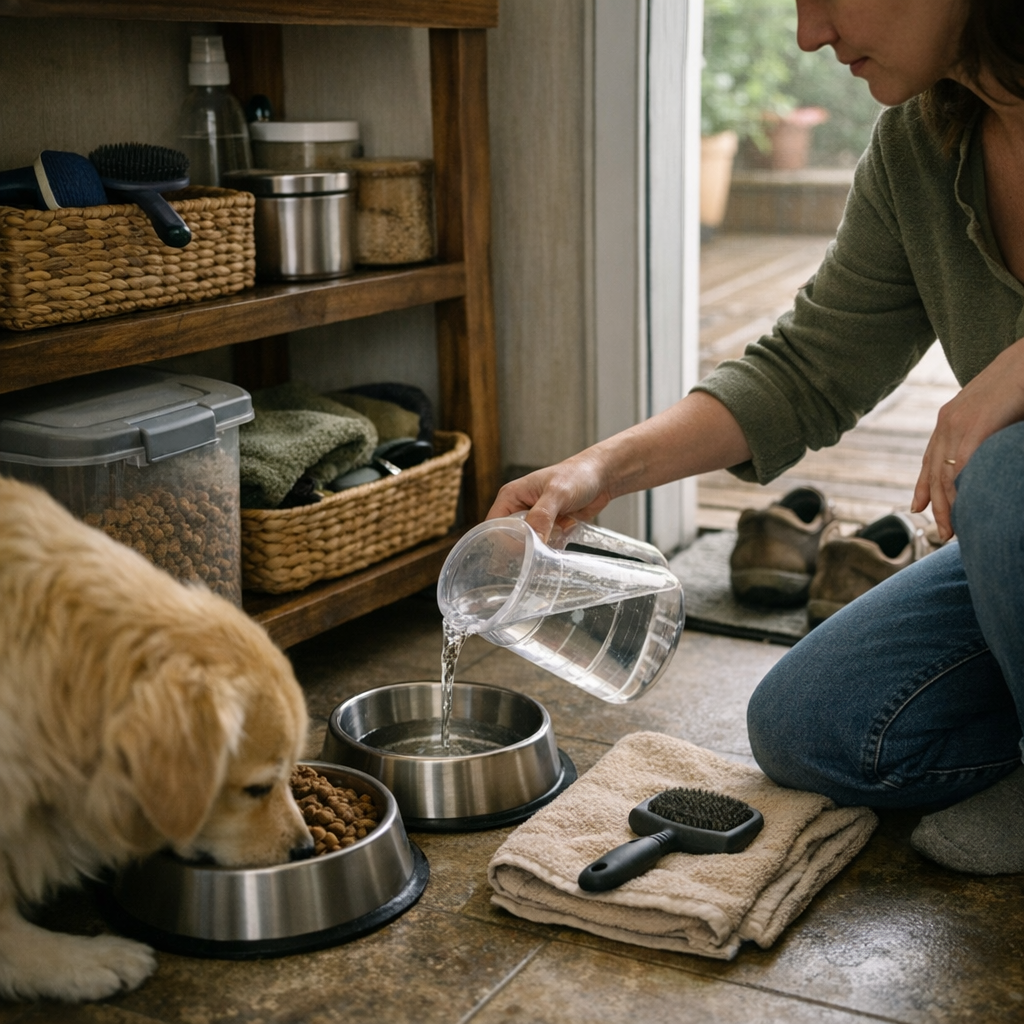
The real pressure points in daily pet care don’t show up as big messes—they slip in as interruptions during basic routines. You go to refill the water bowl and have to shift the food bin just to reach the sink. The brush meant for a quick pet touch-up is wedged behind wipes and a treat jar, adding two more steps every single time. These aren’t dramatic problems, but their effect adds up fast: every blocked reach, every extra shuffle, gradually turns an “organized” setup into a routine that drags. With the wrong layout, looking tidy masks the real friction. The CalmPetSupply world pays off not in how your space looks right after organizing, but in how little your everyday flow gets interrupted afterward.
The Hidden Weight of Tightly Packed Pet Areas
Efficiency disappears fast in a pet zone set up to be tight but not actually usable. The bin sits perfectly against the bowl—until you need both at once, and one scrapes the other every refill. That brush you grabbed easily last week now requires shifting a loose towel and restacking two backup bottles. Late-night you’re balancing the water dish, searching for a wipe, and cursing a storage container blocking your reach. At first, these tiny collisions don’t register; by midweek the hassle is hard to ignore. Repeating these fractured steps day after day is what wears down even the most streamlined setup.
Real Home Scenes: Where The Routine Slows Down
- Blocked Access: Evening feeding means digging under a treat jar for the scoop, or knocking the water bowl into a wedged bin before you can lift it free.
- Missed Wipe-downs: Spills linger because the wipes are at the bottom of a stack. By the time you notice, the mess is set and takes triple the effort to clear.
- Supplies Out of Reach: The grooming brush sits “close by” but always trapped under kibble bags and a backup blanket, turning a 10-second job into a two-minute hunt.
- Shared Space Interruptions: Leashes, towels, and carriers drift or pile into walkways or shelves. Small detours and blocked grabs break up the routine and slow you down.
- Repeating the Shuffle: After every meal or walk, you’re stuck moving multiple objects to return just one—clutter gone from sight, but not from your daily reset.
Breathing Room Means More Than Looks
A pet area that looks neat may still throw off your routine if items are packed too closely. The problem isn’t “clutter”—it’s the friction created by every lid, edge, and stack left with no margin. Refilling water, you nudge something else; wiping a counter, you have to move scattered gear for each pass. The friction isn’t a pile of mess—it’s a steady leak of time and patience.
Practical setups make a noticeable difference when they allow a buffer—enough space to handle one thing without jostling another. Even a single inch of clearance around a bowl or container cuts down the bump-and-reset cycle. You lose a bit of compactness but gain a routine that works as intended: quick, one-step, and low-stress.
One Change Can Unlock Flow
The fastest upgrade is often just moving one low-importance item out of the “action zone.” Take the extra bottle you only use weekly and put it one shelf up—or stash backup towels out of arm’s way. Suddenly, refilling water or grabbing the brush doesn’t involve a balancing act or domino effect; each tool comes free in one smooth motion.
The space won’t look dramatically different, but the process tells the real story. Regular jobs—lifting bowls, quick brushing, small wipe-downs—stop causing small delays. Wipes are ready at arm’s reach, not just “stored nearby.” After routine care, you’re done with one movement instead of resetting the same trouble spot again.
When Looking Organized Isn’t Enough
Tidy setups can hide daily annoyances: bins that always need shifting to scoop food, treat jars that save space but slow your reach, containers that line up but break the flow. The real friction isn’t space—it’s in the split-seconds you lose to repeated nudges, lifts, and workarounds.
Even “perfectly organized” can feel exhausting in practice. If you delay a wipe-down, reach awkwardly for a tool, or find the reset dragging late at night, you’re seeing the gap between looking good and running smoothly. The tension stays under the surface until every repeat action reminds you of what’s not working.
Simple Steps to Maintain a Smooth Routine
Give every high-use pet care item about an inch of breathing room—space enough to pick it up or put it back without hitting, stacking, or nudging anything else. Ask: do spare bottles or towels need to live here, or can a less-used item go higher or further away? The right move isn’t more storage—it’s clearing the path for the basics you use multiple times each day.
With each routine—feeding, grooming, fresh water, wiped counters—watch the reset: can you cleanly finish with a single motion? If not, spot the frequent blocker and move it once. This isn’t about tidying up for guests—it’s about reclaiming time and calm during real daily flow.
Why Minor Adjustments Matter Over Time
The heavier routines don’t start heavy—they accumulate friction from tiny, repeated detours. Hesitate, shuffle, or reach each round, and wasted motion grows invisible but real. The difference between “organized” and “truly easy” is as small as letting an inch of space stay open for what gets used the most. Don’t wait for mess to signal a problem. Watch where you move the same object twice or get slowed down after a walk, and protect that space as the start of an unbroken flow.
For a pet-care area ready for the interruptions of real life, look for one small fix that will open up your most-used path. The daily ease you gain isn’t about appearance—but in how many chores quietly finish themselves. Find what works in practice—not just on paper—at CalmPetSupply.