
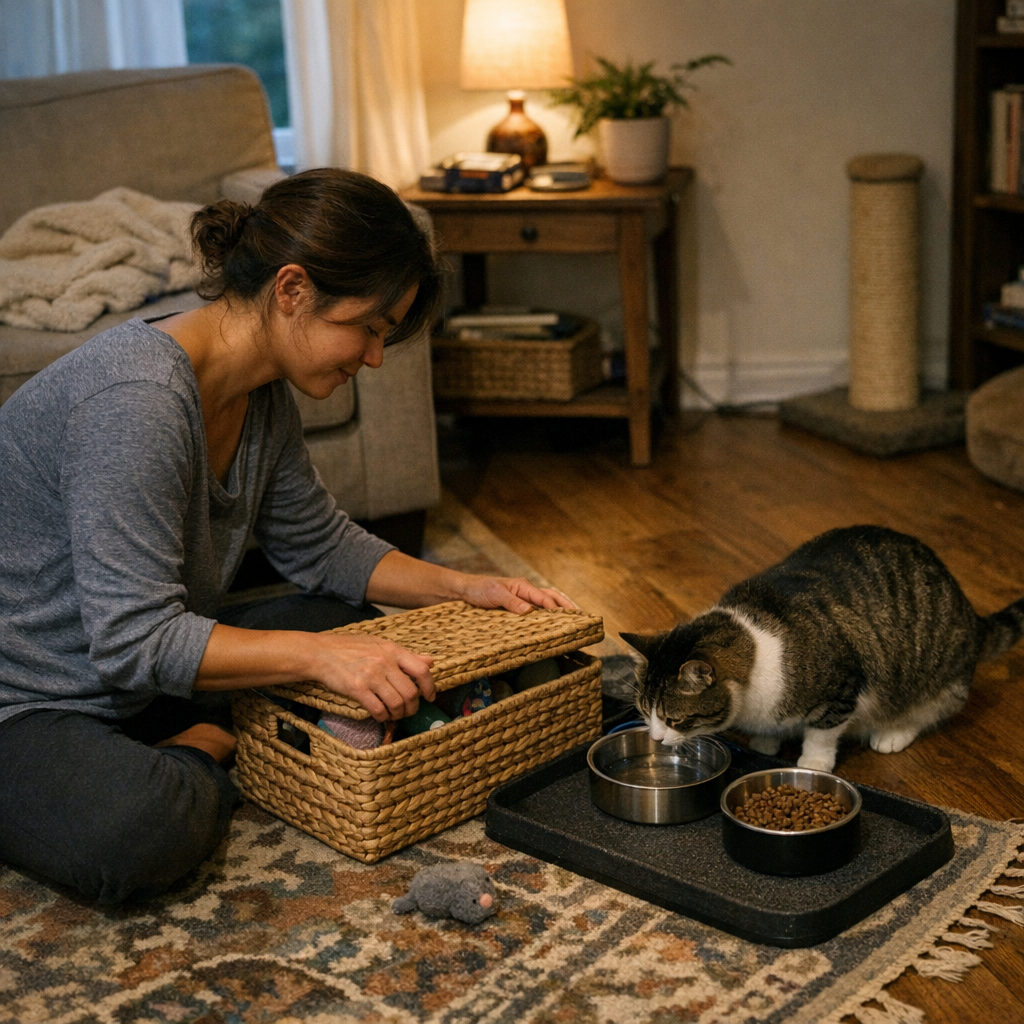
If you share your home with indoor cats, it doesn’t take long for the difference between a room that “looks” clean and one that actually works for daily life to hit hard. What seems like a tidy feeding corner or a contained play zone at breakfast has already come undone by late afternoon: bowls migrate just far enough to block a quick refill, toys wedge themselves under the chair right where your foot should go, and water puddles slide just past the edge of your mat, pooling by the baseboards. By day’s end, you’re not just eyeing old mess—you’re contending with dozens of small, unsolved friction points that pile up, slow down resets, and make tomorrow’s routine harder before you’ve even started. StillWhisker knows that what traps cat owners isn’t the big mess—it’s the repeat interruptions and small design flaws baked into daily living.
Where Tidy Looks Don’t Hold Up: The Reality of Indoor Cat Maintenance
Most indoor-cat setups are divided into familiar zones: feeding and water in one corner, a scratcher by the wall, a scattering of toys, maybe a rest blanket in the sun. But these lines only last in theory. The real stress is how quickly the space drifts—how a felt mouse ends up jammed next to the food bowl, or how water always finds new routes off the mat and onto the floorboards. You notice the difference not during a deep clean, but in daily shortcuts or slowdowns: stubbing your finger grabbing at a blocked water bowl, pausing to spot-clean a “mystery smear” while trying to pour food, or nudging a ball from under the couch with your foot mid-task.
The pressure point isn’t the mess you see—it’s the weight of friction you stop noticing until upkeep becomes a drag. The more you depend on setups that only “look” finished, the more your routines turn into a cycle of uneven resets: toys push further beyond reach, bowls slide further out of position, and a rest blanket ends up twisted and unusable by morning. The gap between visual calm and actual function widens every night.
Why End-of-Day Upkeep Matters More Than It Seems
A pre-bed sweep may seem optional—a bonus if you remember. In real use, missing it lets small messes snowball fast: a pair of toys vanish deeper under furniture, crumbs and water marks spread into shared space, and the blanket that could’ve been shaken out now demands a bigger reset next day. These aren’t cosmetic issues; they’re invitations for next morning’s routine to grind or double in effort. One missed reset, and suddenly “tidy” unravels, right when you’re half-awake and toeing cat toys out of the hallway, scrambling to clear a spot for your work bag, or having to wash your hands before you’ve made it to coffee.
Patterns That Signal Deeper Setup Problems
Most homes repeat the same slip-ups once the rhythm sets in. Track which pain points keep coming back, and they’re almost always the same few: one or two toys that always end up under the TV stand, a food mat that never sits tight against the wall, litter tracked just past the point you planned to vacuum, a blanket needing an extra shake but never lying flat for long. These details matter—they’re signs your layout quietly works against itself, forcing you into late, fragmented resets instead of quick, reliable cleanup. Feeding, play, and rest are supposed to support each other; without the right containment or separation, each overlaps and compounds the next problem.
The Late-Night Scramble: Common Real-Use Scenes
Most cat owners end their day improvising: hauling a toy basket out from behind the sofa, blotting a widening water patch despite putting the mat “back” earlier, smoothing a blanket again only to see it bunch back up as soon as the cat jumps down. Each move seems minor in the moment—but they add up, reshaping bedtime from a wind-down routine into a series of maintenance steps you can’t avoid. The real culprit isn’t a sudden mess—it’s a setup that allows little errors to build, like a bowl mat sliding just enough to leak food off the edge or a storage bin that quietly overflows so nothing goes all the way back. Instead of supporting your nightly reset, the space quietly multiplies small failures that need fixing again tomorrow.
Containment and Placement: Structuring for Fewer Surprises
The turning point isn’t working harder; it’s choosing structures that actually do their job. Containment and placement are the difference between a space you chase after and one that holds steady on its own. Once you assign a clear, stable home for each major zone—feeding, water, play, and rest—routine friction starts to fade.
A Practical Reset: What Actually Shifts the Routine
Set a single, low-profile lidded basket in the path between living room and hallway: toys now get collected in one obvious spot, recovered quickly, and less likely to go missing under larger furniture. The basket acts as a checkpoint—cleaning becomes a one-step action, not a search party. For feeding and water, swap out a prone-to-slide mat for a washable mat with just enough raised, grippy edge to hold crumbs and trap splashes quickly. The small rim keeps pooled water contained but doesn’t catch cat paws, letting you lift the whole thing in seconds and clean the underlying floor less. With structure in place, the nightly reset stops feeling like improv. That “just-in-case” towel can finally disappear from your daily landscape.
The Real-World Impact: Routine Improvements You Can Feel
After a week of living with new containment, the start of your day changes: fewer surprise toys in walkways, feeding areas need a one-minute pickup rather than a full scrub, and cleaning spray stays upright under the sink instead of in your hand every morning. The blanket on the ledge still needs a shake, but it stays ready for use—no constant rearrangement necessary. The visible difference isn’t that cat mess disappears; it’s that the routine becomes repeatable and quick, and each zone “holds” better between resets. The nightly sweep now feels like returning to baseline, not fighting drift from three directions at once.
Recognizing Weak Points Before They Grow
No setup prevents all mess. But certain signals demand early action before they sink into your routine as “normal”:
- Shifting mats or pads: If food or litter mats continuously slide or curl, move to a heavier, textured, or raised-edge mat that grips harder and stays put under paw pressure.
- Multiplying toy spread: If the same toys always end up out of bounds, tighten play areas to sit within arm’s reach of storage or use subtle barriers to limit how far they can bounce.
- Slow resets in high-traffic zones: If rest corners or window-sill blankets come undone daily, swap for a pad or fleece that folds or shakes out fast, not one that needs constant reshaping.
- Cleanup supplies out of sync: If wipes or spot sprays are never where you need them, dedicate a slim, reachable caddy to each main zone, saving the walk to another room and speeding each reset.
Ignore these points, and you guarantee yourself more work, not less, by next morning.
How Small Tweaks Maintain Momentum Across the Week
Getting ahead of cat-life maintenance doesn’t mean zero mess—it means your setup contains problems and makes recovery fast. Shifting energy from chasing disorder to supporting order is the real win. A basket positioned in the right place, a mat that anchors itself, cleaning wipes where you reach first: these changes mean the room stops needing constant guidance, and your routines stop running late or backing up behind new obstacles.
More Than Looks: The Feel of a Room That Works For You
A visually clean space isn’t the same as one you can reliably live in. The right home structure absorbs mess, separates cat zones, and keeps essentials within reach, so every reset is lighter and less frequent. If returning to “tidy” gets harder with each night, it’s almost never a discipline problem—it’s a setup that just can’t hold the load. Reliable order depends on better structures, not more effort. Shift
See what makes StillWhisker setups different for real indoor-cat routines.