
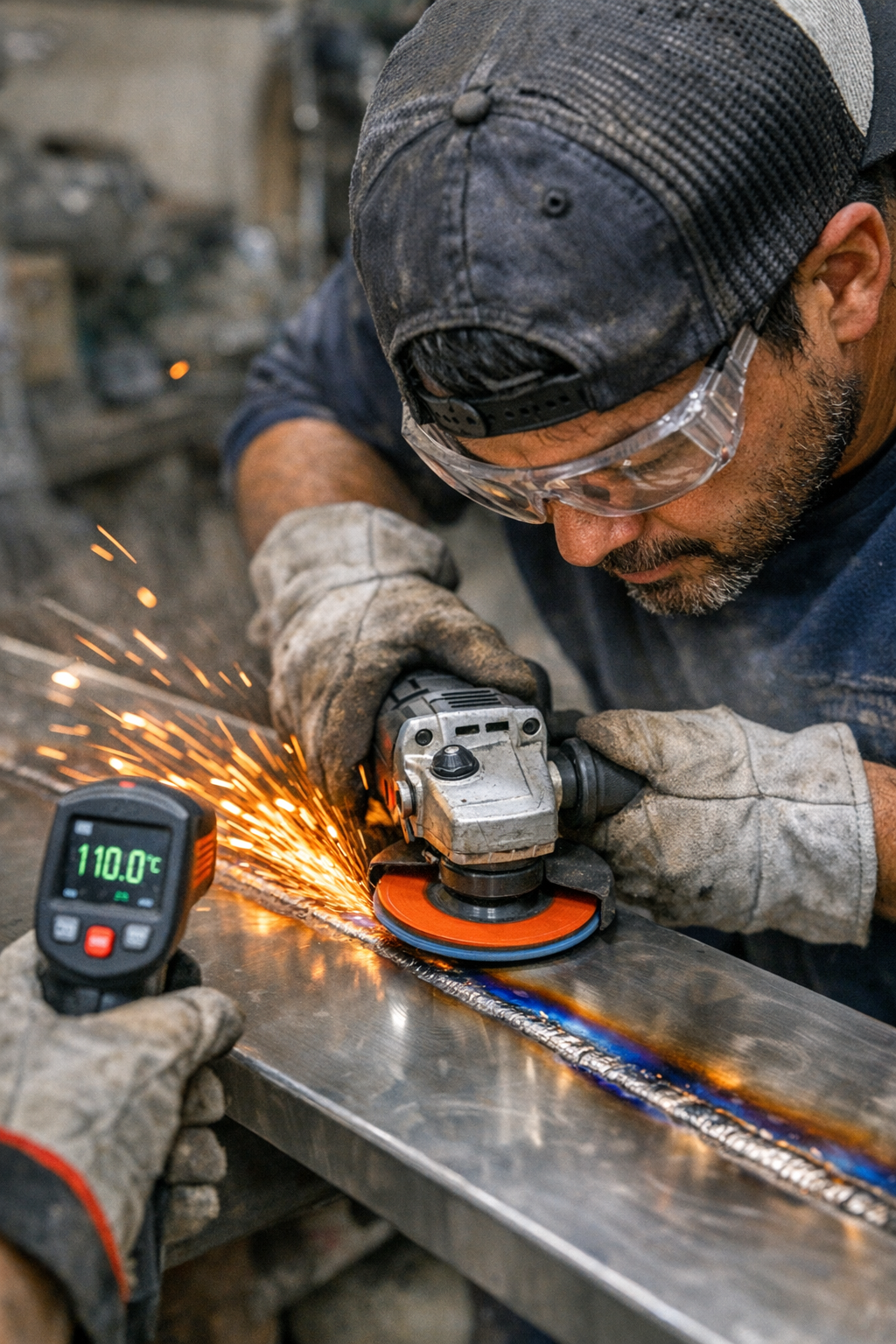
If you’ve ever clocked a real shift on the grinder, you know how quickly the best-laid plan can unravel. What’s supposed to be a fast touch-up—a weld smoothed here, a sharp edge dressed there—suddenly turns into a marathon of chasing ugly, splotchy streaks. Out of nowhere, that familiar blue or gold haze creeps across the metal. It barely looks like damage at first, but you know exactly what comes next: stubborn temper marks that won’t buff out, more abrasive changes, more sore wrists, and a whole lot more wasted time at cleanup.
When Discoloration Becomes a Shop-Slowing Hassle
Most have ignored an early patch of blue or brown and figured it would vanish with a couple quick passes. But optimism fades fast. Each time the wheel dwells too long—or you push a little harder out of impatience—the colors cut deeper, and you’re left with ugly spots that just won’t budge. Now you’re juggling disc changes, breaking out finer grits, or even backtracking to rework a finish that should already be done. In a real shop, workflow matters. When you’re grinding a bunch of pieces for a rush job or trying to get welds uniform across a rail, those “small” stains turn into real production bottlenecks.
Hidden Heat: The Real Source of Your Color Troubles
Discoloration on steel and stainless isn’t just a cosmetic nuisance—it’s the calling card of heat gone wild. Every grinder operator has felt how fast heat builds up under a coarse disc or when you try to muscle through with a tired, overloaded wheel. You might not see anything on the first pass, but keep circling those seams or long edges and suddenly the rainbow arrives. With thin material—sheet metal, boxed sections, pre-cut rail—it’s even more dramatic: temperatures climb with each pass, and just a moment’s lapse sends you deep into cleanup territory.
It’s not just about looks, either. Once heat-discolored patches take hold, they anchor oxide layers and sometimes even shift the metal’s structure, making every bit of follow-up work that much slower.
The Stainless Steel Test: Why Errors Cost More
Grind on stainless and the stakes climb. There’s no hiding from your mistakes—rainbows develop fast and set in deep. Anyone who’s worked a continuous weld on a stainless bracket or countertop knows the panic of watching subtle blues turn into stubborn brown shadows. In a busy kitchen build, you’ll see welders pausing, swapping out for higher-grade ceramic discs, and dropping RPMs, all just to keep those telltale colors from haunting the surface and multiplying touch-ups at the tail end.
When Disc Choice Translates to Real Work (and Less Frustration)
Mid-grind, the difference between a run-of-the-mill aluminum oxide disc and a purpose-built ceramic blend changes everything. Side by side, a standard wheel throws lots of long, hot sparks—great for speed, brutal for heat. The ceramic disc’s sparks are tighter, the touch is cooler, and your grip doesn’t buzz with the same warmth after a few passes. That means your hands, wrists, and nerves last longer, and so does the uniformity of the metal itself.
It’s tempting to reach for whatever’s in the drawer, but every shortcut here shows up later. Cheap, coarse discs carve fast but lay waste to the finish. The slightly stiffer resistance of a ceramic disc, especially in the 60-80 grit range, rewards you up front: fewer blue burns, less lost time switching abrasives, and a lot less surprise at the sander before paint or TIG.
Reality Snap: Running a Rail in the Field
Picture it—the sound of grinders, one hand bracing a rail section fresh off a structural weld, earplugs buzzing against steel hum. The plan: blend quickly, keep things moving, stay cool. But as you press in and that rail heats under your glove, you catch the first glint of blue, gold, and purple curling out by the weld. If you plow forward, the stains get more assertive—even a new abrasive can’t rescue it all. Instead, stopping for a disc check, easing off on pressure, and letting the metal cool off—even for a minute—can keep your workflow tight and your finish uniform without the endless spiral of “just one more pass.”
Backing Off: Why Moderate Speeds and Better Discs Are Game-Changers
This is where a smart setup pays off, every single time. Drop your variable-speed grinder’s RPM from max (10,000) to a controlled 5,500, lock in a quality 60-grit ceramic disc, and the chemistry changes instantly. In daily shop use, a quick test with an infrared thermometer showed a dramatic shift—110°C at moderate speed, compared to the punishing 160°C you’d hit at full throttle with a basic disc. It’s the difference between a shop that tucks up at the end of the day and a shop that spends overtime sanding out mistakes.
That slower, smoother approach feels strange at first. Maybe it challenges your “get it done” instincts. But suddenly, blue heat signatures barely appear, edge uniformity stays tight, and your grinding time drops—you’re not fighting to erase the aftermath of impatience.
Micro-Adjustments: Small Tweaks, Big Results
Three habits make a powerful difference in daily grind work:
- Work in short stints—don’t try to push one surface or weld nonstop. Let the metal breathe, and so will you.
- If heat builds under your hand, don’t push harder—swap in a finer or ceramic disc to cool things off mid-session.
- Stay alert during batch work; if you see rainbow patterning start to creep in, pause and reset before it escalates.
Even just swapping to a better abrasive mid-job or taking a one-minute break can stop an ugly finish from spiraling. It’s habit, not heroics, that makes cleanup easier later.
FAQ: Beating the Blue, Job After Job
How can I actually prevent blue staining?
Back the RPM down, use ceramic or high-quality abrasives, and chunk big work up into manageable, quick sessions. Catch color early and pivot before it cascades—think of the stains as an early warning, not a final verdict.
Why does stainless steel punish mistakes so quickly?
Stainless not only heats faster but holds onto that heat longer, spotlighting every slip in dwell time or pressure. Don’t rush—pace your work and stay vigilant about what your hands and eyes are telling you.
Is grinding slower always worth it?
Not if all you’re doing is rough prepping mild steel for framing. But for visible, precision work—or anything touching final finishes—lower speed and better discs always save time on the back end. It’s never wasted when the end goal is clean metal ready for the next step.
Grind Smarter, Save Your Workflow
Heat shimmer, blue streaks, ugly brown halos—they’re more than enough to ruin a long day at the bench or on-site. Every choice, from your RPM to the disc in your hand, can cut or compound cleanup. The best shops know: small, conscious adjustments now mean less arm strain, better finishes, and fewer late-night do-overs. Don’t aim for perfect—just aim for fewer unwelcome surprises when the grinder powers down for the day.
Shop Gumboll for workshop-ready grinders, discs, and tool gear