
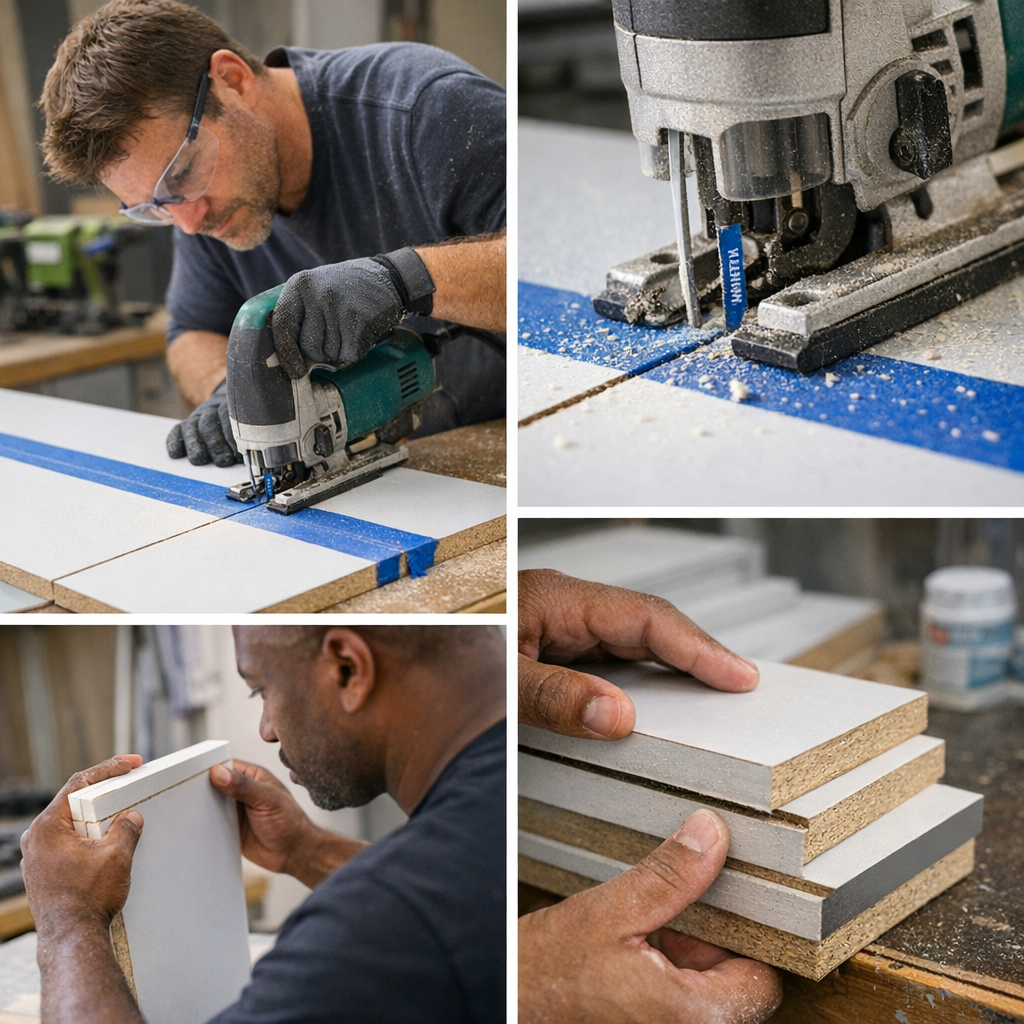
The first few cuts almost lull you into confidence. You clamp down a sheet of melamine, snap your go-to jigsaw blade into place, and the cut feels smooth. The edge looks decent—no glaring chips, no tear-out. You lay out a second panel for shelves or closet inserts, and again the kerf seems tidy. The trap is right there: the belief that your “standard” wood blade is all you need. But that easy start rarely holds. Soon enough, the flaws creep in—invisible at first, then impossible to ignore as the project drags on, panel after panel.
Misleading Beginnings—When Trouble Starts
Anyone shaping a batch of laminated boards knows the pattern. The first cut feels fine, maybe the second. But by the third, the shallow confidence wears off. Small chips appear along the laminate face. Corners look uneven, and the cuts stop lining up flush. A project that started clean is now a patchwork of sanding, manual alignment, and masking mistakes. That “good enough” blade quickly becomes the root of a pile of small, time-sapping headaches—glue lines that flake apart, edges that no longer match, and visible flaws along what should be a crisp finish.
Why Standard Wood Blades Fall Short
It’s easy to think any blade labeled “fine finish” will handle sheet goods—after all, wood is wood, right? But if you’ve ever watched a jigsaw hesitate or snag through melamine, you know better. A general-purpose wood blade, even when sharp, bites too aggressively into hard laminate. Instead of slicing, it chews: you feel the jigsaw fighting your hands, teeth rattling and wandering. The cutline gets ragged, vibration travels up your arm, and you’re forced to steer harder just to keep a straight path. Each pass sounds harsher, sometimes even burning or melting plastic at the edge. Suddenly, you need to spend extra minutes sanding or stash the panel somewhere the damage won’t show.
Switch to a purpose-built laminate blade—think upward-facing teeth, 10+ teeth per inch, marked for sheet goods—and those flaws fade fast. The blade slides through the face layer, not under it. The jigsaw hums at a steady pitch. You finish a board and move right to the next, not bogged down by cleanup. The difference is in the feel: less resistance, more consistent control, and a near-complete end to edge crumbling. It isn’t a miracle, but it’s a very real shift in the quality of every cut.
The Stack Test—Where Consistency Falls Apart
Where blade choice matters isn’t in that first satisfying slice—it’s in repeatability. Imagine trimming a run of eight white melamine panels for a home office build: the difference really shows on cuts four, five, and six. With a standard wood blade, heat builds, the teeth dull, and you’re fighting to keep the jigsaw straight. Each successive board has a little more chip-out than the last. Stack the finished pieces and edge alignment goes off—the tight, square shelf corner you had in mind shifts into a gap you’ll be filling with caulk or wood putty later.
All of this chips away at more than just the results. Fatigue sets in. Hands tense up against vibration, wrists absorb the jigsaw’s kickback, and concentration drifts after wrestling through uneven resistance. By the end of even a short batch, you end up chasing blade errors across every downstream task—filing, gluing, compensating for inconsistent kerf, or re-marking panels that should have just fit in the first place.
The Mid-Project Blade Swap
No one wants to stop mid-job, reach for the blade case, or break their stride. But if you’re honest, there’s always a moment—usually after the third disappointing cut—where you know a change would save you far more time in the long run. Replacing a worn general blade with a dedicated T-shank laminate blade (10 TPI or higher, reverse-tooth if possible) isn’t just a fix. It’s a reset. Suddenly, cuts regain that first-pass quality, the jigsaw follows the line, and the edge holds up even after you’ve run a dozen boards. Post-cut sanding turns into a two-swipe routine, not a major production. And you get clear, predictable results the whole way through—no need for confidence checks after every panel.
Field trick to keep in your pocket: For especially slick or high-gloss laminates, lay down a strip of painter’s tape over your cut line. You’ll see chip-out drop even more. Blade and tape together, you can hold edge fraying under a millimeter—enough to avoid fillers or paint touch-up, even on show faces.
Recognizing Cut Quality—And When to Intervene
Laminates rarely scream disaster after a single cut. But when you find yourself reaching for the sanding block after every board, or nudging corners to fake a flush fit, stop blaming the tool or the board. The culprit is almost always the blade. If cut speed slows, vibration ticks upward, or edge damage shows—even in the slightest—treat it as your end-of-blade warning sign. These moments are clues: blade fatigue creeps in slow, then ruins three panels in a row before you catch it. Changing blades or bits isn’t wasted time—it’s prevention, trading thirty seconds now for hours saved correcting flaws later.
The lesson holds for drilling, sanding, even driving screws into particleboard: when results start slipping, don’t just push through with more force or faith. Trust your senses. If an accessory feels off, intervene before the mistake repeats across your entire batch.
Consistency Beats Perfection
What proves a tool setup isn’t the beauty of a single cut—it’s what happens when you work through the eighth, the tenth, or your tired, last panel of the day. Repeatable, controlled results stack up into real progress. The right jig saw blade, made for laminates, keeps projects moving predictably. Clean edges mean fewer repairs later. Less vibration means energy in your hands, not lost to the tool. Instead of wrestling for every good board, you’re lining up panels that fit, simply and reliably. No magic, just the difference between fighting your material or letting your tools help you win.
Small changes—like swapping blades before issues build—don’t just upgrade your cut lines. They improve every phase of the job, from first layout to final install. When cut quality matters, switch early. You’ll spend less time fixing, more time building, and every panel will prove the payoff in your hands—not just in the sales pitch.
Visit Gumboll for tools, accessories, and upgrades for the jobsite and workshop.