
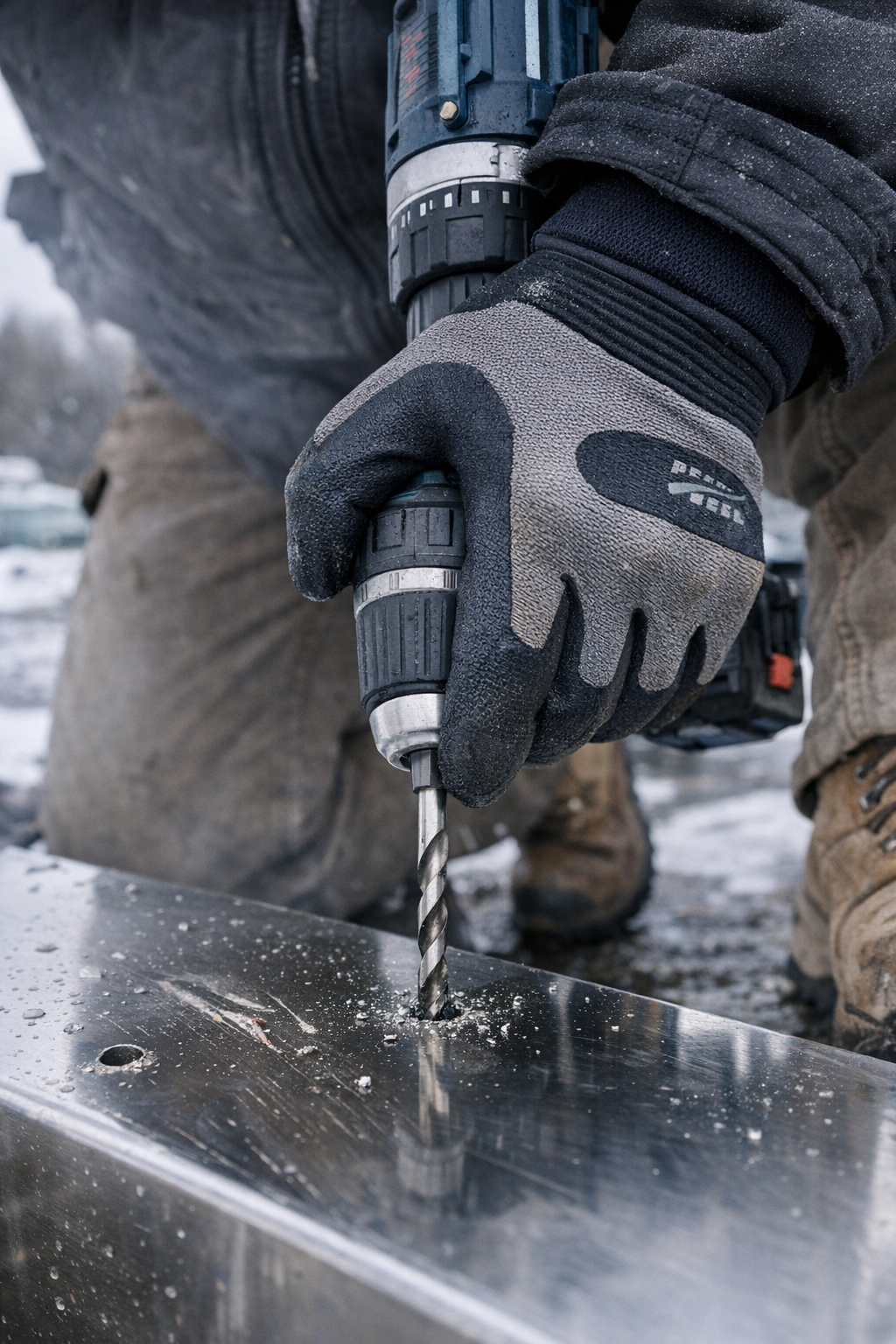
You line up your bit, brace your shoulder, pull the trigger—and in an instant, it slides. Bit walk. The metal fights back, the drill rattles, and there’s your mark gone sideways: scuffed paint, a crooked gouge, the start of a long, frustrating repair job. If you work with portable drills on-site—punching through angle iron, strut, painted panels, or any spot where you only get one shot at a clean hole—this scene isn’t new. Bit walking can feel inevitable, especially mid-project, but what throws you off isn’t always cheap bits or rushed pilot marks. Sometimes, the real culprit is the gear that’s meant to help you—especially your gloves.
The True Cost of Bit Walk: Fatigue and Frustration Add Up
At first, you might get away with it. The first few holes punch clean. But by lunchtime—or on ladder work and over your head—the drill bit stops tracking straight. Each time the bit slips off mark, you wrestle it back, leaning harder, burning through energy and patience. This isn’t just about ugly holes. Sloppy edges and deflected bits lead to burrs, weak fastenings, even micro-cracks you won’t spot until weeks later. Worse, every correction costs time: you slow down, fight the tool, and finish sore, always filing or reaming the damage. All the while, you start to wonder: what keeps tripping you up?
Not All Gloves Are Created Equal: Where Grip Fails the Test
Gloves are supposed to protect, but some actively work against you. They promise dexterity by the box, but when drilling into cold steel—especially after sweat, dust, or a slick of oil from earlier—the differences show up fast. One pair locks in your palm, giving you confident pressure as the motor rattles. Another offers only a thin promise; the moment you apply force, the synthetic lining squawks and your knuckles strain as the bit skates off course.
This isn’t the kind of thing you catch in the aisle at the hardware store. It shows itself three hours deep, surrounded by shavings, when you’re tired and the angle isn’t friendly. If you’ve ever drilled a pilot hole with wet gloves in a freezing subpanel, you’ve felt it: you squeeze for control, the bit wanders, and suddenly you’re compensating with muscle instead of grip. That’s not just inefficient—it’s how routine jobs slow to a crawl and injuries creep up unnoticed.
The Nitrile-Dipped Difference: Subtle, But You’ll Feel It
A glove upgrade rarely feels revolutionary during a test-fit. But swap in a nitrile-dipped palm—thin but tacky, with just enough flex—and suddenly, that tiny 0.2 mm layer changes everything under workplace vibration. The drill stays planted when you line up, whether the bracket is oily or bone-dry. After a full job day, the marks tell the story: the ragged 2 mm run-off edging becomes crisp, the fixes at the grinder disappear, and you notice your elbows aren’t screaming from bracing so hard.
The shift is subtle but real. Your workflow becomes less about fighting the tool and more about getting actual work done—less fatigue, less wasted effort, more holes on target. And on longer installs or punch lists, that steadiness is the edge that keeps you running till the last screw gets set.
Finding the Weak Link: Your Technique or Your Gear?
Bit walking often gets pinned on dull tips, sloppy layout, or the wrong speed settings. But if you’ve retraced your steps—checked your marks, swapped bits, managed RPMs—and you’re still struggling to keep your line, start with your hands. Ask yourself:
- Are your gloves letting your grip flex or slip under load?
- Do they get slick when exposed to oil, metal filings, or even just sweat?
- Is the surface glazing over after a few sessions, robbing you of purchase?
- Are you constantly shifting how you hold the drill, chasing precision instead of relying on it?
These are field cues, not just product specs. The right glove doesn’t just cushion; it holds sharp, dry, and tacky through mess and repetition. Upgrading might sound minor—but in a patch of thirty holes overhead or a batch of bracket mounts in an unheated warehouse, your hands notice fast if the PPE helps or hinders.
Real Jobsite Scenarios: When Gear Makes or Breaks the Outcome
The difference never appears in tidy spreadsheets. You see it in cramped corners, where the shop vac missed metal shavings and oil is floating on the surface. That third or fourth fastener—jagged, off-center—signals your glove’s lost its bite and your drill is wandering, even when your eyes and knees are locked in position. Instead of powering through, you tense up, the work slows, and the weight transfers to your wrist and shoulder. By the end of the shift, the accumulated strain is real—one more job that took longer than it should have, and didn’t look as clean as you’d hoped.
Sometimes it’s the boots: swap a flexible sole for a stiffer one and realize your stance isn’t solid on a ladder or while pressing against awkward ducting. Small differences in gear ripple out over days and weeks, quietly stealing efficiency and increasing fatigue—nothing that jumps off a label, but everything that matters in practice.
Keep Gear Honest: Clean, Replace, and Stay Sharp
Even premium gloves wear out quickly in the dust and grime. If your palm looks shiny, feels slick, or flexes easier than it used to, don’t wait—swap them out. Wash off oil and filings between jobs to keep friction up and grip reliable, not just “adequate.” What seems like a small task can mean the difference between a smooth hour of drilling and a long, aggravating slog through fixes.
The Real Fix: Habits Matter, But Gear Sets the Ceiling
Technique is half the battle. Pilot marks, tool control, pressure—you refine those with practice. But your gear defines your ceiling. The right gloves mean the bit stays put, wrists last longer, and your work actually lines up the way you planned. When you don’t have to fight your own equipment, you move faster, make fewer errors, and end the day with something closer to satisfaction than exhaustion.
Perfection’s a myth, but progress is real: less chasing run-out, less cleanup, more predictable results. In this world, what you wear on your hands matters more than brochures suggest—and the right upgrade means more jobs done right, the first time.
Get the gear that actually stays put—see what works at Gumboll.