
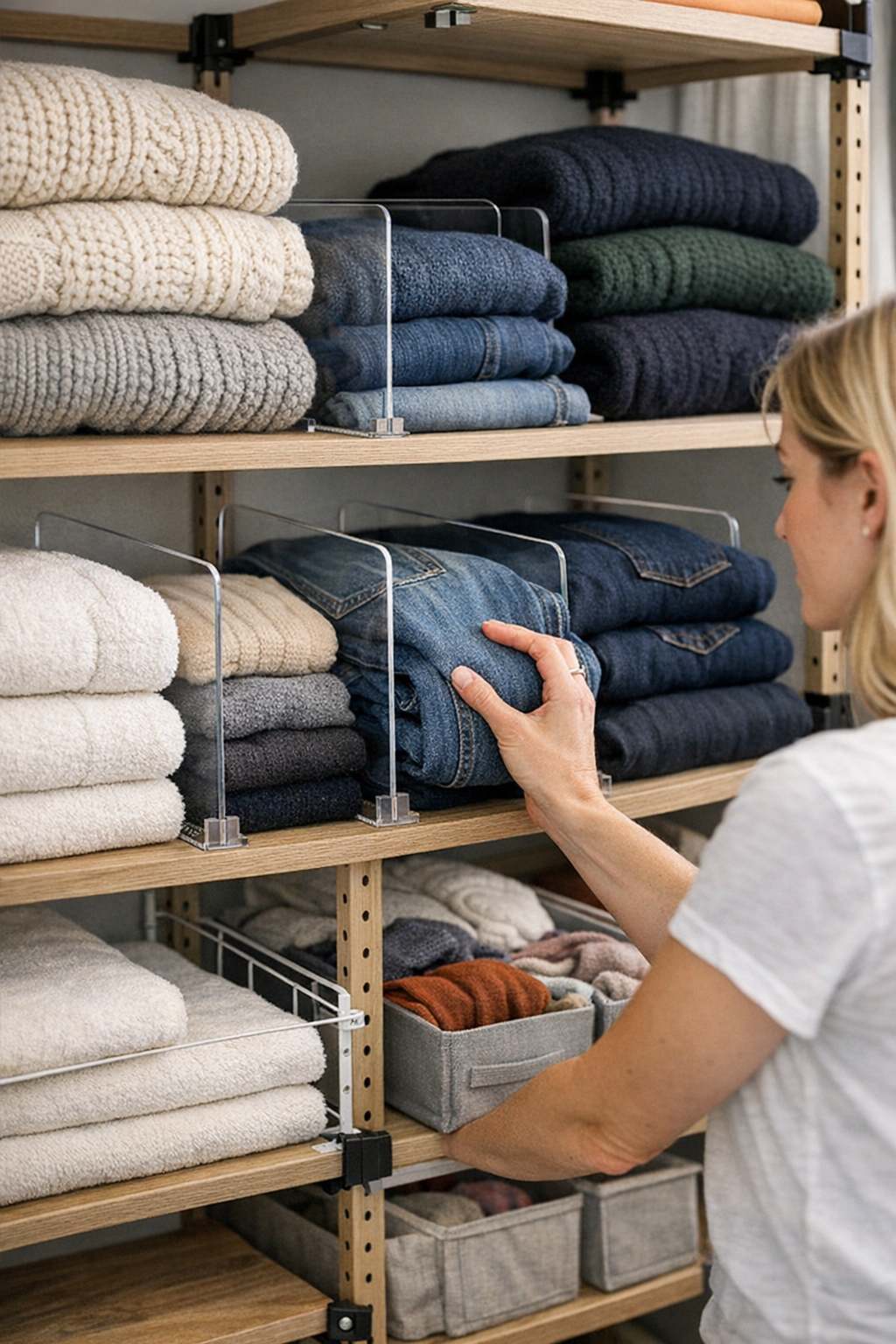
The deep shelf in your closet promises more space—but in real life, it rarely lives up to that hope for long. At first, bigger shelves seem like the answer. You line up fresh dividers, maybe set some bins, and pile in your sweaters, sheets, or off-season clothes. But a few weeks later, you’re right back to frustrated digging. Stacks slump and spread, categories dissolve, and the simple act of grabbing a t-shirt can send an entire row sliding forward. The real challenge isn’t finding “storage solutions”—it’s creating a setup that actually keeps up with the chaos of daily living, rushed mornings, and the constant coming and going of real stuff, not showroom props.
The Trouble With Deep Shelves: Space That Hides More Than It Helps
On paper, deep shelves mean you never run out of room. In practice, they encourage overpacking and forgetting. Every extra inch lets piles stretch—and that’s when clothes start spilling over or drifting backward into the darkness. Need the towels you stuffed in the back? Prepare to unstack half the shelf to reach them. Reach for a single pullover and three more come along for the ride. If you’ve ever found a month-old sweater hidden behind a wobbly row, you know how quickly generous space turns into a black hole.
Most deep shelf layouts ignore how we actually use our closets. Even with dividers, the wrong setup crowds things so you’re constantly shifting stacks, chasing runaway piles, or straightening after every “just one thing.” What started as a fix becomes a recurring annoyance—and most products only half-solve the problem.
Why Most Shelf Dividers Stall (Or Fail) in the Real World
Try a few types and the differences reveal themselves within a week. Acrylic dividers make the shelf look neat, but if you stuff soft sweaters next to those hard edges, the stacks turn curved, and grabbing one piece often bumps the rest out of shape. Wire frames flex—great for jumbled towels or bags—but their give means jeans or heavier piles sag and spill, and the boundaries you set start to blur. Bins group things nicely for the first day, but become clutter collectors with hidden socks, tangled scarves, or forgotten accessories buried below. You trade visible clutter for invisible overflow.
Over a typical month, here’s what happens: categories merge, stacks tip or blend, and what used to be “grab and go” now means digging, restacking, and quietly cursing that one divider that shifts every other day. Routines slow down. You spend more time resetting the shelf than actually using it. Daily storage is constant friction, not the streamlined experience you hoped for.
The Real-Life Test: Where Dividers Work (And Don’t)
Imagine you’re late, reaching for that one shirt behind a high pile. The acrylic divider keeps its line, but as you tug, the whole stack wobbles—now you’re smoothing everything just to close the door again. With wire dividers, the rows look fine on Sunday, but by Friday, T-shirts and jeans have drifted over the lines, and you’re mushing piles together “just for today.” Bins organize on day one, but by day three you’re hauling down entire boxes to find a single pair of gloves, making the closet feel more like a puzzle than a tool. Each fix handles one issue but brings a new wrinkle into play.
Small Changes That Make a Real Difference
Big improvement doesn’t necessarily require a total overhaul—or another long afternoon spent reorganizing. Sometimes, switching from three narrow dividers to just two wider, sturdier ones makes your stacks resist sideways drift. A well-notched, grippy acrylic divider planted two inches behind the front edge creates easier grab zones—folded shirts stay upright and you can scan what’s there without re-stacking. Spacing is crucial: cramming too many dividers blocks access, but too few let things lean and blend.
One practical shift: Instead of packing in dividers, aim for about 18-inch zones. This forces you to limit each section to what actually fits, keeps piles stable, and means resets after a hectic morning are as simple as nudging things back into place—rather than re-doing an entire system.
Bins: When They Work, When They Don’t
Bins seem like the ultimate shortcut—they tidy up stray items in one move. But unless the bin fits the shelf’s depth and your actual items, problems show up quickly. Small things sink out of sight or slide under larger pieces, and over time, the “grouped” system turns into a hidden jumble. Bins help manage seasonal gear, but for everyday essentials, they can make things harder to see and slower to grab—especially when you need something at the bottom or back. Instead of solving clutter, the wrong bin just changes where the mess collects.
Wire Dividers: Flexible Friends With Short Memories
Wire dividers flex for bulky or odd-shaped items—think floppy duffel bags, extra linens—but that very flexibility is their downfall for anything heavy or stacked tall. A few days in, heavy jeans start to bow the wires, sections blend, and your quickly folded “separate” piles become indistinct. Wire is forgiving, but not strong enough to hold the line where you need reliable zones most.
How Anchoring and Spacing Beat Shelf Drift
Whether you choose acrylic, wire, or another style, the key is how securely each piece stays put under daily stress. Locking, slip-resistant bases anchor dividers so you’re not finding them halfway down the shelf by Friday. Consistent spacing—enough that clothes breathe, but not so much they tip—keeps the system from unraveling into “miscellaneous” by the end of the week. And even the best divider can’t defeat overstuffing; once you try to force in “just one more,” lines disappear and disorder creeps in again.
Routine tip: After restocking laundry or switching out seasons, take ten seconds to check divider positions—and resist cramming in extras “just until next time.” That short pause keeps everything aligned longer and prevents the slow slide back to chaos.
Looks Organized? Or Feels Organized?
There’s a difference between a shelf that looks sorted after setup and one that makes sense in the thick of your week. It might photograph well on Sunday night, but if by Wednesday you’re straightening stacks or repacking bins, the system isn’t working for your real routine. Functional storage means each section stays tidy with quick, imperfect resets—no shuffling, no silent collapse when you grab that last T-shirt before work.
The point isn’t showroom perfection. It’s lasting clarity—visible categories, fewer disrupted stacks, and a closet you can trust when you’re in a hurry. You know it’s working when you can grab what you need and return it without fuss. Anchored dividers, thoughtful spacing, and realistic limits help your shelf support life as it actually happens, not how you wish it would go.
Solve the deep-shelf shuffle for good—see daily-use storage options at ClosetWorks.