
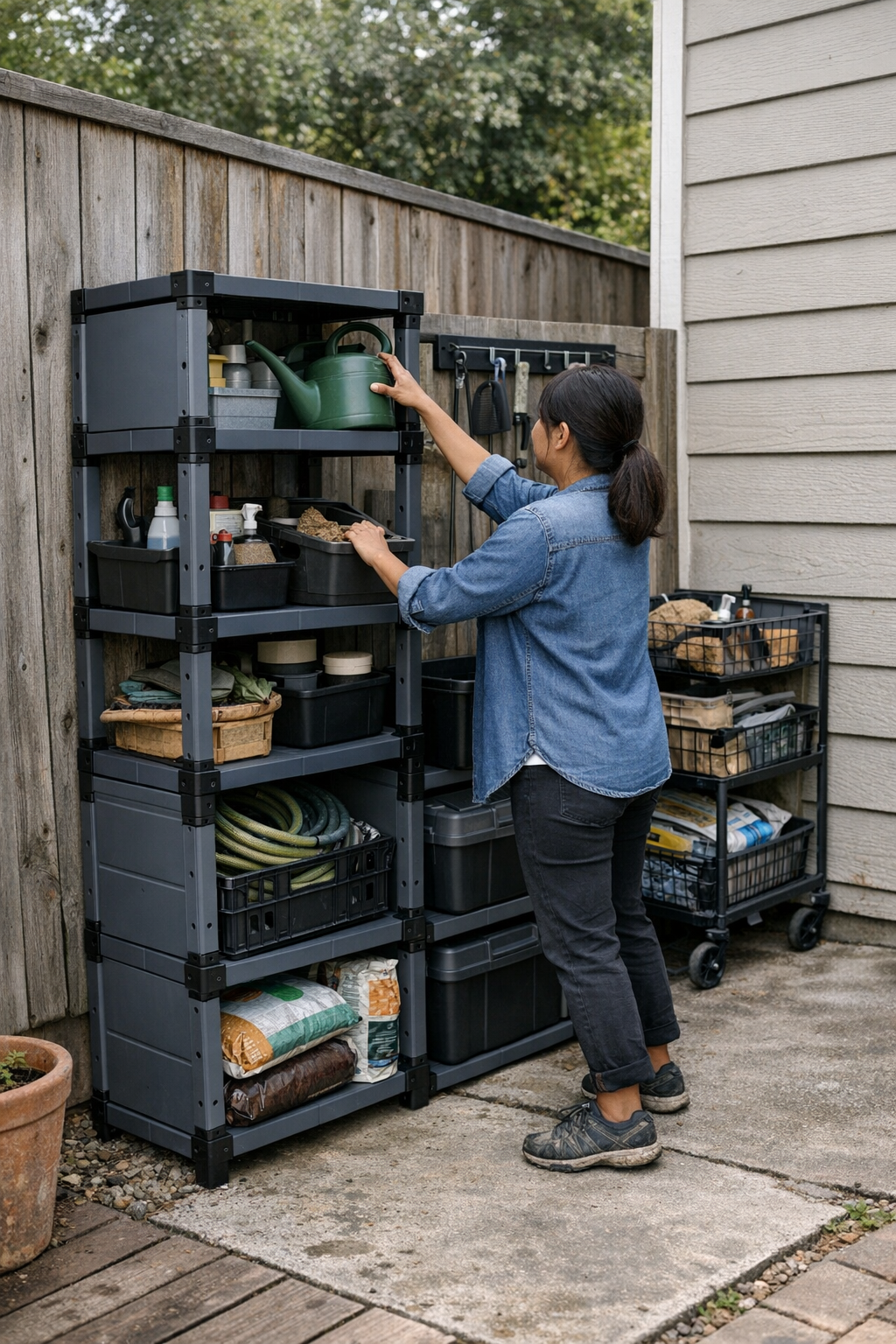
The difference between a good outdoor storage setup and a bad one isn’t just space—it’s what happens the fifteenth time you try to move through it. The side yard that looked “sorted” two weeks ago is now an obstacle course of half-returned gear, stray bins wedged just out of reach, and a shovel that’s back in your way, again. You know the drill: you meant to create order, but each rainy day, extra trash bag, or spontaneous clean-up exposes where your system quietly breaks down. In real backyards, garage thresholds, and narrow utility strips, the gap between “fits your stuff” and “fits your routine” shows up fast—and the friction piles up even faster.
The Real Impact of a Storage Mismatch
No one buys a shed or organizes a utility corner expecting daily annoyance. But layouts chosen mainly for looks, or by measuring boxes instead of habits, almost guarantee slow-motion trouble. What begins as one tool out of place becomes a sequence: bins blocking the path, bikes leaned against the wrong wall, and overflow that never finds its way home. The big clue isn’t the mess after a busy Saturday—it’s how many steps you add to put anything back on a regular day.
- Walkways that pinch down as tools compete for wall space, refusing to fit hooks meant for something else.
- The gate area earning a permanent pile of yard waste bags, “just for now” until next week slips by.
- Bins supposed to hold tools filling with unrelated clutter, because actually opening the shed for a small return feels like overkill.
Individually, these moves are small. But over a month, the structure starts dictating where you step, what gets used, and how much energy you spend redoing what you “fixed” last time.
Wall, Modular, or Fixed: What Happens Over Time?
In almost every backyard, side strip, or garage edge, storage fits into one of three worlds—in theory. In practice, each fails and flexes differently when real-life use stacks up:
Wall-Mounted Systems
Good wall systems pull brooms, bikes, and hoses out of the walking path. But the strength is measured by return flow. If your most-used rake is forever half off its hook, or fat rails eat up wall space without matching your actual stuff, you haven’t gained ground—you’ve created new dead zones. Over time, “I’ll just lean this here” becomes a small heap that grows whenever you’re busy.
Modular or Movable Setups
Bins and caddies promise flexibility. Movable units seem perfect for changing seasons or adjusting after a cleanup. But watch the edges. When the boundaries between bins fade, the clutter migrates—tools and toys spill onto the floor or cluster in tight walkways. Mobility is only an upgrade if the parts actually defend their zones instead of blurring them.
Fixed or Traditional Sheds
Sheds hide piles and keep patios tidy—until you need anything from the back. Boxes bury each other, “occasional use” supplies eat up reachable space, and simple swaps (move the mower, grab the hose) become mini-projects. Post-storm or after big jobs, the slow, sweaty reset means more is left outside “just until tomorrow,” and the cycle sets in.
Where Return Friction Shows Up Fastest
Return friction always reveals the weak link. You notice it in these moments:
- Finishing up outside and realizing every “quick return” turns into a stash pile by the back door.
- Finding hoses and hand tools leaning against the fence because the storage bin is too far, too buried, or too annoying to open.
- After a busy weekend, seeing the garage or side yard threshold jammed with stuff no one wants to carry back “all the way.”
Most small-yard or side-area layouts already feel tight. When bins and hooks start repelling more returns than they absorb, your outdoor routines pay the price: detours around fresh clusters, squeezing past overflow, or forgetting what’s stored where until the next forced tidy.
How Setup Choices Really Shape Routine
It’s not just about dust or clutter—it’s about the rhythm you’re forced to adopt. If bike hooks are angled wrong, bikes end up parked on the mat. When “modular” bins have no clear purpose, tools migrate off-base and play musical chairs across the patio. In classic sheds, the row of things left out after the first seasonal shuffle tells the real story: resets are draining, and staying “organized” costs more energy than it saves. Suddenly, every walk through the zone is an obstacle course of yesterday’s quick fixes.
Scene: The Daily Blockage Loop
Picture the side yard: wall rack lined with small tools, while the big rake leans (again) in the walkway because nothing fits. Muddy gear after rain? Too much hassle to hang, so it joins the stack. Each messy day pushes you further off-track, until walking to the gate requires sidestepping a melting cluster that grows rain by rain.
The Reality of Overflow and Awkward Zones
Some outdoor corners just won’t play along. A bin shaped for balls and scoops doesn’t fit a folded chair, so both end up awkwardly off to the side. When garden gear invades general storage, neither routine works well—each grab-and-go needs a shuffle, and every tidy-up reroutes tomorrow’s movement. A spot that should make the yard smoother becomes a trap, only looking organized after a big reset, while the real-life routine keeps wearing uneven paths through the area.
Everyday Example: Reset Fatigue
You haul the trimmer out to mow, but later, the bin’s already overloaded. Lean it against the shed “for now.” Within weeks, a ragged row of “temporaries” claims the footpath. The frustration isn’t just lost space—it’s realizing every chore ends with an extra round of navigating the unintended obstacle course you didn’t plan for.
When To Rethink—and What to Look For
If a space gets reset more than it gets used, something’s off. The clues are everywhere:
- Paths narrowing until you walk sideways.
- Garage or shed doors that can’t swing open because overflow blocks access.
- Unused wall hooks while pathways get packed.
- Every attempt at “putting things away” becoming an all-Saturday event instead of a simple step.
These are not minor frictions—they’re setup failures that ask too much in exchange for so little order.
Fixes That Actually Change Flow
A truly workable setup puts movement—not just capacity—first. That usually means a few key changes:
- Switch in heavy-duty, right-shape hooks—solve for your gear, not for someone else’s list.
- Break one overcrowded zone into smaller wall units or modular bins, each with a clear “home base,” ending the pile-up of everything at once.
- Shift the drop spot for overflow bins away from routine paths, so stray returns don’t choke the walkway every time the weather turns.
- Stop combining seasonal storage and daily-use gear in one traffic jam—let each zone serve one purpose clearly so routines don’t compete.
Quick tip: After any “busy” outdoor day, walk the area. Which items always get left out? Which bins or hooks get skipped? Target the fail points next—not the place that merely looks the cleanest after a round of sorting.
The Payoff: A Space That Actually Works With You
The right setup doesn’t make you work to keep it working. You feel it in little wins: nothing blocks the gate after guests leave, the sidewalk stays open even after a kid’s game, and returning a tool doesn’t mean moving four others or sidestepping a pile. Boundaries stay predictable. Resets shrink to a sweep, not a project. Function outlasts the “just organized” look; the space supports your rhythms, instead of resetting after every busy day.
Find real-world storage ideas—from wall racks to modular bins—built for actual backyard, side yard, and patio utility, at TidyYard.