
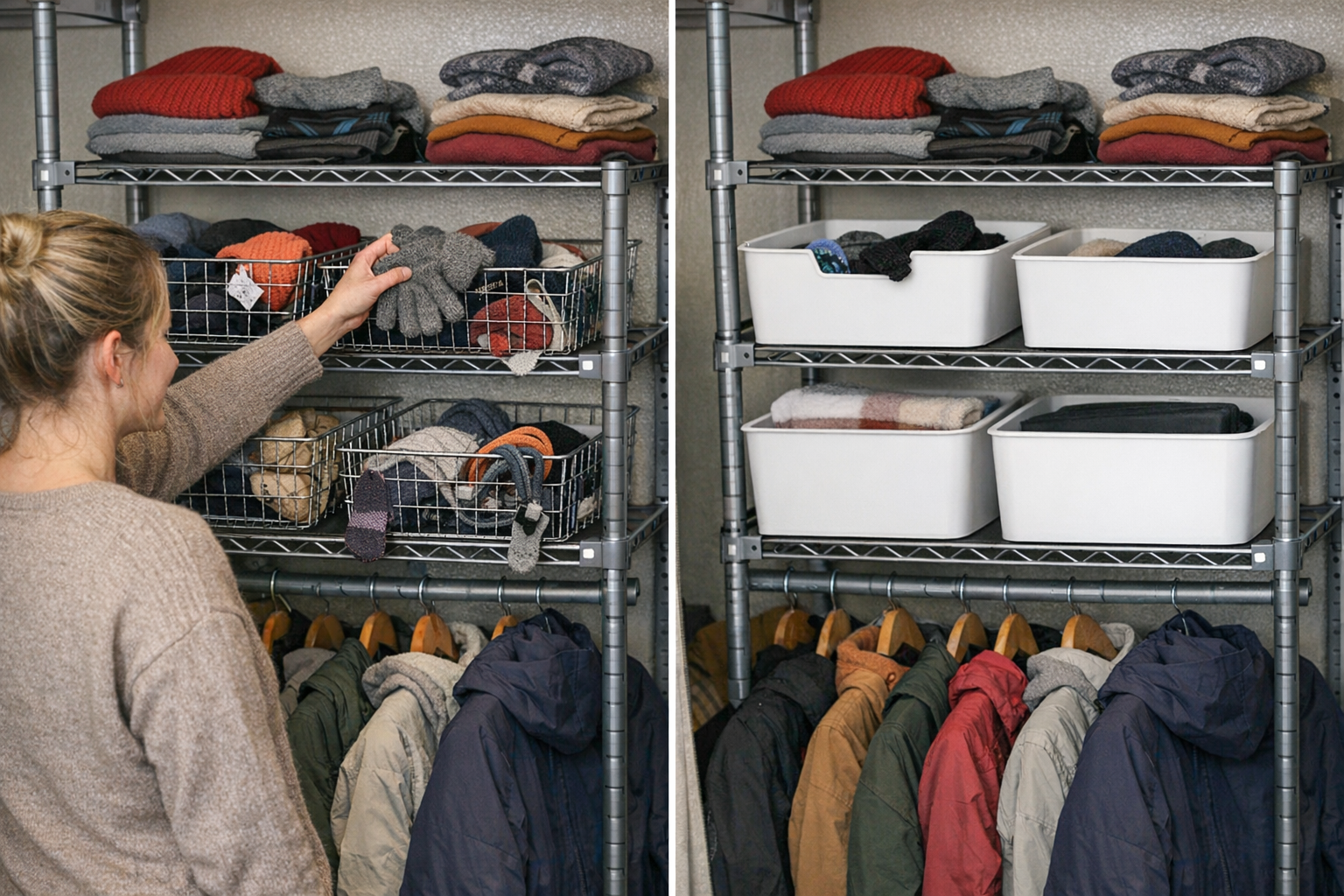
There are two closet moments that tell you everything: grabbing something in a rush, and putting it back later—half paying attention, half balancing groceries, coats, or bags. That’s when your storage setup reveals its true character. If every reach is smooth, if every return is obvious, you barely notice the shelves. But when your bins and baskets fight your habits—items tipping, piles collapsing, odd socks slipping out of sight—order unravels fast. The choice between wire shelf baskets and solid shelf bins doesn’t just shape visual neatness; it shapes whether your routine flows or silently grinds to a halt.
When Routines Collide with Storage Reality
Most bins and baskets look fine the first day. You sort, stack, and close the door on tidy lines. But daily life has other plans: you reach for gloves on a freezing morning, toss hat and scarf after school, dig for a missing charger in a rush. This is where small frustrations stack up. Wire baskets start to sag with socks poking through or belts slipping out the side. Solid bins stack high, and suddenly you’re lifting out two just to get to the third. The test isn’t how it looks after a reset—it’s whether you can maintain that order through unplanned grabs, returns, and family traffic.
Wire baskets make everything visible and aired out—until smaller pieces refuse to stay put. Bagged snacks, kids’ mittens, or hairbands drift through the gaps or wedge in odd corners. It’s workable if you only store big, steady items—towels, extra linens, chunky sweaters—but the moment your setup faces real-life clutter, things start showing up in the wrong place. Resetting that shelf means a hunt: socks hiding behind frames, scarves tangled through the wires, category boundaries blurring every busy morning.
Solid Bins: Tidiness That Can Cost You Time
Solid bins promise containment. No gaps for clutter to escape, just a lineup of matching calm. Everything looks in control. But what’s hidden is also easy to forget. You label, maybe, but after a week you’re guessing: which bin has extra shopping bags? Where did those winter hats end up? Each retrieval becomes trial-and-error—lifting two bins, then a third, until you finally find the right roll of tape or the lost glove, while stacking and restacking the rest.
As bins multiply, access slows down. In a jam-packed entryway closet, suddenly it’s not mess you see, but time slipping away. Getting out the door means moving bins just to get to the one you need. The surface stays neat—but the routine underneath quietly bogs down. If every small access requires a reshuffle, you’ll eventually start skipping resets. Soon, towels and gym gear start mixing, and yesterday’s order erodes from the inside.
Scenes from a Closet: The Repetition Trap
Picture a hallway closet built for everything: reusable bags, hats, baseball mitts, soccer socks. On a Monday, both bin and basket arrangements seem workable. By Friday, the story is different. Wire baskets reveal a trail of gloves, singles peeking through railings, one sock wedged behind where it’s fallen out. Solid bins, meanwhile, protect order—until you need the bottom bin and wind up pulling out most of the stack, arms full, items landing in new piles each time. Every restack jumbles categories, and by the end of the week, you’re rerouting the same stray items, never quite sure where they belong.
That’s how “organizing” falls apart: not from one big mess, but from a dozen tiny misalignments between containers and daily routine. Suddenly you’re reshuffling—stacking, restacking, finding homes for things that drift—and the irritation quietly builds. The system stops serving you and starts needing service.
A Smarter Mix: Using Both to Match Real Life
The real answer isn’t a single solution—it’s recognizing what actually gets used, and how. Swap out deep, solid bins for shallow, open-top bins in your most-used spots: gloves, hats, scarves now live in easy-to-grab trays. Instead of digging, you see and snag. Wire baskets? Limit them to what behaves: spare towels, clean jerseys, or any item that won’t slip through or tangle. The point isn’t showroom perfection, but realistic speed. Your closet looks maintained because it’s easy to reset—not because you obsessively restack after every rush hour.
Small Tip:
Don’t just trust memory. Label bins, or use translucent options—a one-second glance cuts five steps of trial-and-error. No more pulling out bins only to find them empty or off-track. This tiny habit slows future chaos before it starts.
Stacking Up: Shelf Space and Sustainable Order
Solid bins stack sturdily—reclaiming vertical real estate on packed shelves. But as the column grows, so does the access cost. Digging through three bins for the bottom item means more disruption, and with overloaded bins, shifts get heavier and sloppier. Wire baskets can’t really stack: tiered, they shed small items or leave unstable gaps. Yet a wire basket at the top—holding light, rarely-used items—makes use of airspace without inviting daily wrestling matches.
Ask yourself honestly: Will you actually restack three bins each time? If not, one layer of bins—even if it means sacrificing some vertical capacity—delivers speed and repeatable order. Convenience isn’t just saving space; it’s saving your routine from slowing down.
Category Discipline: How You Assign Space Is Everything
Don’t let any container—wire or solid—turn into a random catch-all. When every basket and bin has a single job, your closet answers back fast: hats are here, scarves there, sports gear gets its own home. The more you mix or overfill (half hats, half socks, emergency odds-and-ends), the messier the shelf resets get—and soon, the old cycle of lost time returns. Sharp categories, not just sharp-looking bins, are what actually save you minutes every week.
Real-World Tip:
If you’re shuffling extras between bins or watching categories migrate, it’s time to split them. Two purpose-specific bins will always be easier—and faster—than one overstuffed “miscellaneous” bin you keep avoiding.
Beyond Looks: How Small Storage Swaps Reshape Everyday Flow
No bin or basket redesigns your habits on its own. But matching container choice to your real categories—depth, visibility, how often you reach—quietly shifts a closet from staged “after” photo to a system that holds up week after week. The true test? Whether you can reset your closet in seconds after a chaotic morning, or whether every reset just adds to your resistance. A shallower bin at eye level here, a wire basket for gym towels there—these barely-noticed tweaks are what keep order alive in busy homes long after the first organizing spree fades.
Looks might fool you, but function never does. The system that survives five busy Mondays is the one you’ll trust, use, and repeat. That’s how storage becomes background calm, not a source of daily tension.