
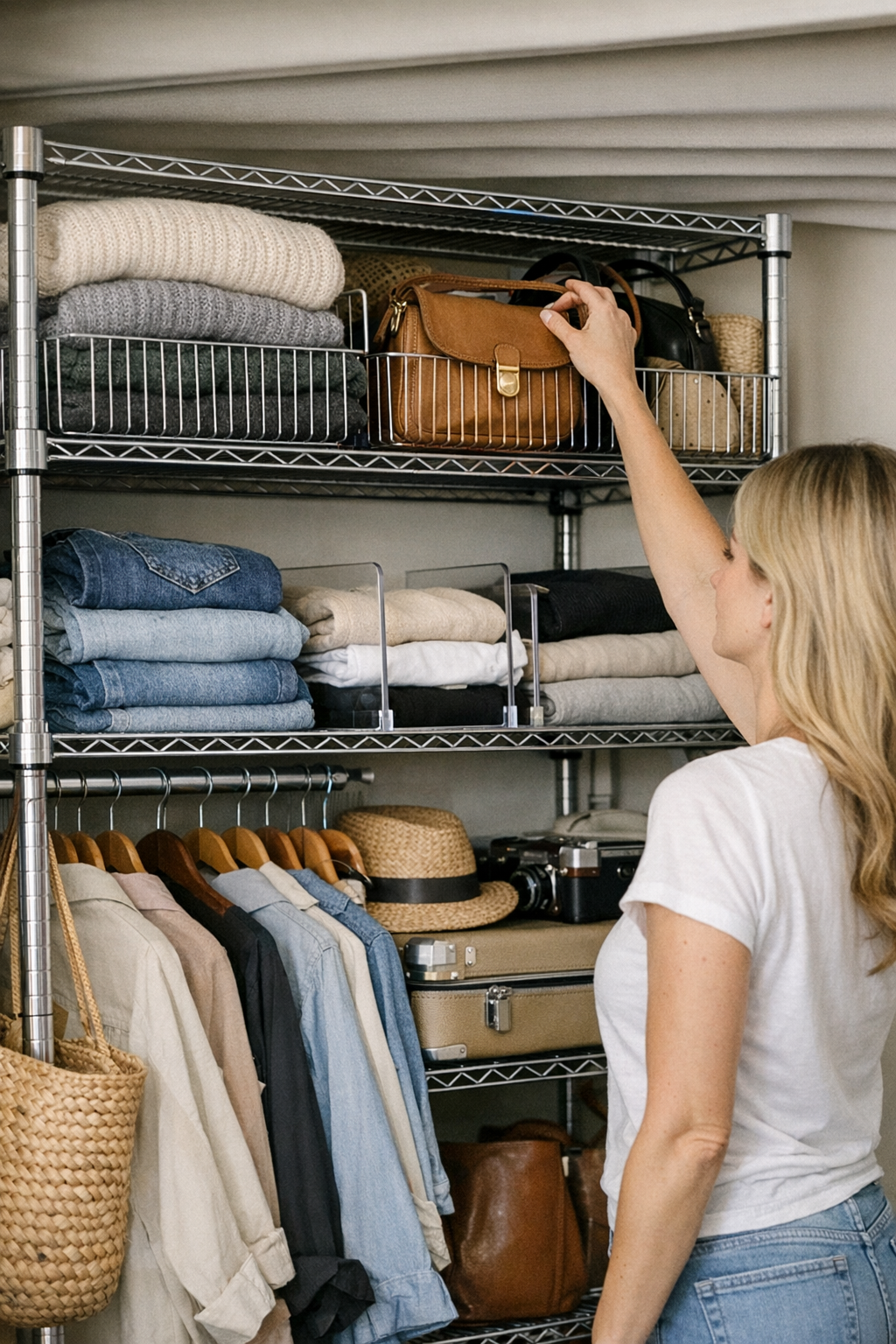
Closet shelves never stay fixed for long—no matter how perfect they look on reset day, real life exposes every flaw fast. Maybe you fight through a tangle of bags every morning, or dig for a sweater buried beneath a toppled stack. You spend time reorganizing, but within a couple busy days, shelf order crumbles. Categories blur, grab-and-go is gone, and you’re back to reshuffling. That’s where the choice between wire shelf baskets and dividers really matters—not in how they look on day one, but in how they hold up against your actual, imperfect routines.
The Recurring Messes That Break Most Closet Setups
Closets fail right at the stress points: reaching behind a pile for your favorite shirt, pulling out towels from underneath a teetering heap, shoving a purse back into a crowded corner. Even after a full reset, stacks lose shape fast. Shirts slump, jeans squash lighter items, and anything not perfectly folded migrates. By midweek, the clean rows you created melt together, and the “sections” you defined are lost.
The core problem is reliability: Can you keep categories separate—and reach what you want—without a nightly reset or constant frustration? Both wire shelf baskets and shelf dividers claim to solve this, but their limits surface the moment you need speed or make less-than-careful moves.
Shelf Dividers: Order That Works—Until It Doesn’t
With shelf dividers, there’s an immediate visual payoff. Folded shirts, stacks of jeans, even towels look tidy and split into clean, logical zones. You feel like you’ve carved out permanent space for every type of clothing. Lines are crisp, boundaries obvious—a snapshot of organization.
How Dividers Let Clutter Creep Back
But the first busy morning usually wipes out the photo-ready look. Pull a shirt from the middle? The stack slouches and spreads beyond its allotted lane. Grab jeans in a rush, and the pile next door shifts. Dividers can’t stop stacks from changing shape or clothes from losing definition. If your family shares the closet, a careless reach multiplies disruption. By the end of the week, “divided” shelves look like a bad Jenga game—lots of vague, overflowing piles to rescue yet again.
The Everyday Scenarios
Picture the top shelf in a busy entry closet: scarves, hats, towels, all positioned between clear dividers. It works until someone’s looking for their missing beanie, or digging for guest sheets at the back. In seconds, dividers are bypassed as items fall over, forcing new stacks into old spaces. Dividers are at their best only when everything stays stackable and nobody’s in a hurry—but real closets rarely run that way.
Wire Shelf Baskets: Containment with a Side of Inconvenience
Wire baskets transform messy shelves by drawing firm lines: odd-shaped bags, slippery knits, and all the loose accessories finally have a corral. Baskets stop items from drifting or spilling into each other, even after a week of use. The difference is visible—categories stay put, and you don’t spend your evenings herding sweaters back into their zone.
The Catch: Retrieval Isn’t Always Instant
But baskets come with their own quirks. Looking for the clutch at the bottom? You’ll need to lift or unpack what’s on top, or pull out the basket entirely. This works for items you use occasionally, but if you’re reaching in each day, it slows you down. Baskets reduce shelf chaos, but they trade the luxury of fast, at-a-glance access for the discipline of stronger containment.
Everyday Basket Realities
Envision a laundry shelf lined with baskets: socks, dryer sheets, stray cleaning cloths all packed together. Items never wander off, but “grab and go” becomes “root around and repack.” It’s neater—your shelves don’t dissolve during the week—but now you introduce a mini sort-out ritual whenever you use them. The mess is contained, but your routine includes new steps.
Mixing Baskets and Dividers: Building Real Resilience
Closets rarely stick to one category per shelf—most have oddball mixes: stacks of jeans beside loose workout gear, guest linens next to bags. No single system can cope with this shifting terrain. Dividers keep shirts and pants from sprawling—but can’t cage loose or hard-to-fold items. Baskets handle the wild cards, but slow down access to everyday pieces.
The most durable setups blend both: Line up shirts or pants between dividers for quick scanning and pulling—reserve baskets for soft, lumpy, or slippery items that rebel against stacking. This not only keeps roles and categories clear but also absorbs the inevitable chaos of rushed mornings, sharing with family, or odd-shaped belongings. The result? Your shelves function, even when your routine doesn’t stay flawless.
Simple Storage Tweaks That Actually Help
- Put baskets where things creep: Place them in overflow zones—where extra purses, scarves, or workout gear tend to invade neighboring stacks.
- Use dividers where stacking works: Reserve them for shallow shelves or rows meant for like-sized items—shirts, towels, jeans—where all you want to prevent is sideways spread, not total separation.
- Leave breathing room on your shelves: Resist the temptation to pack every inch. Giving each storage zone just a bit of slack cuts down on knocking things over and means less frequent major resets.
From “Organized” to Actually Easy
Overstuffed shelves aren’t fixed with a single product or a single reset. Real organization lives in the day-to-day: reaching for what you need without reshuffling half a closet, sections holding their meaning, and clutter staying where it belongs. It’s not showroom perfection—it’s a system that gets knocked around all week and still works.
Wire shelf baskets and dividers each target different storage headaches. Neither is a miracle on its own—but the right mix, grounded in the reality of your routines, gives you a closet that stays useful after the photos are taken. The best setups aren’t about impressing guests, but about making the morning rush less frantic and reset duty a quick task—not a chore that eats up your Sunday night.
Shop ClosetWorks closet organization systems, baskets, and dividers