
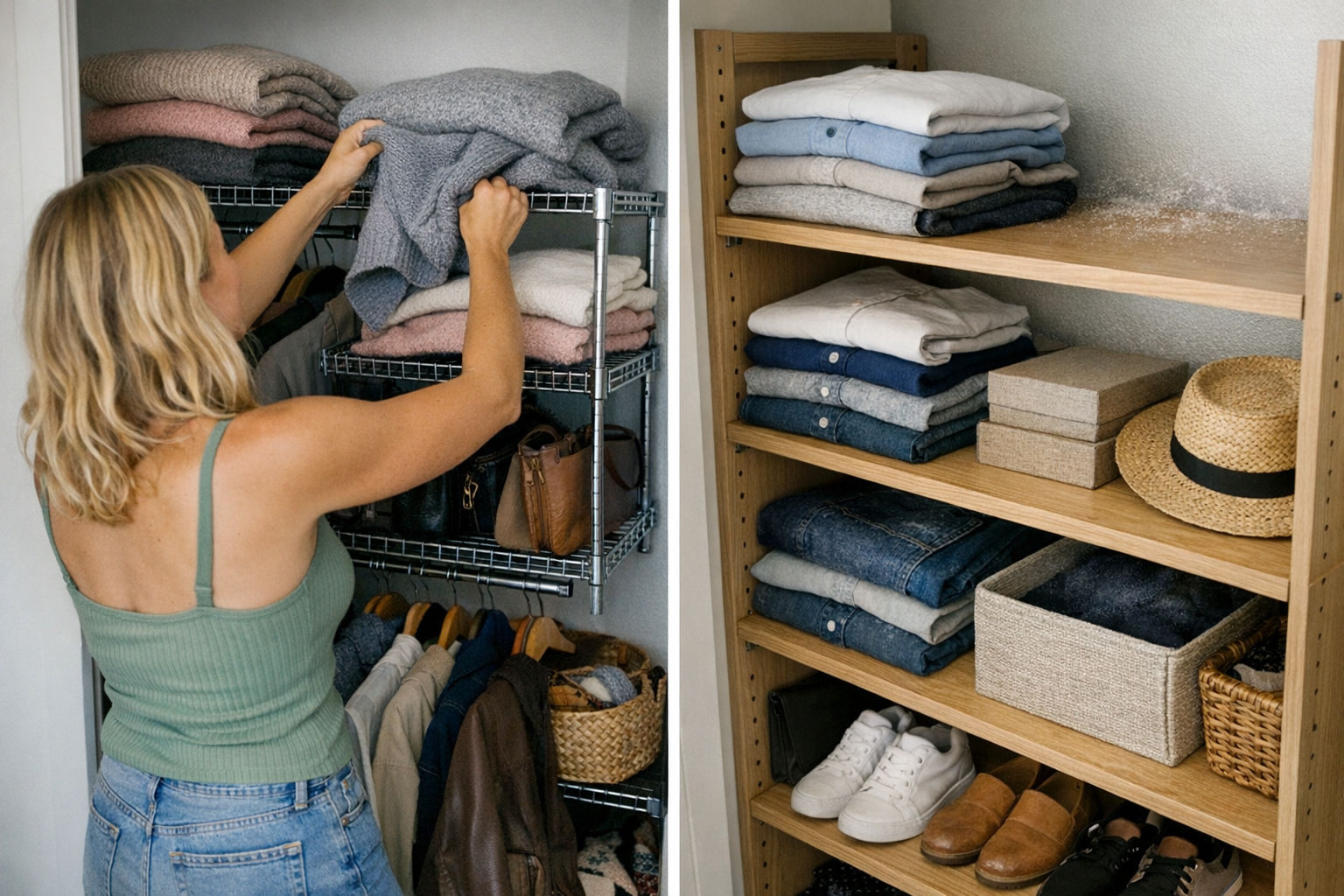
The real test for closet shelving comes long after installation—once life and clutter move in. Right away, a wall of wire or solid shelves looks crisp, promising control. But within days, the surface you trusted starts pushing back: stacks listing sideways, shirts smudged with dust or with sleeves sagging through metal grids, accessories blurring categories, and bins morphing into drop zones instead of keeping anything contained. It’s never just about what looks neat in photos. It’s about the hidden everyday friction—those micro-delays and constant mini-resets that either make storage feel manageable, or make every closet visit another round of tidying up something that won’t stay put.
Shelf Surfaces Shape How (Un)Organized Your Routine Feels
Shelving choice is hardly background—it sets the rules for how you interact with your stuff every morning. Wire and solid shelves aren’t just structure; they dictate access, encourage or fight disorder, and quietly shape the daily rhythm of getting dressed, grabbing linens, or corralling entryway clutter. Their tradeoffs don’t show up in a static snapshot—they emerge through repeated, ordinary use.
Wire Shelving: Light, Flexible, and Relentlessly Imperfect
Wire shelves win points for their open look and easy adjustability. In a crowded hallway closet or laundry nook, the airiness and instant visibility feel like relief—until real routines expose the sneaky drawbacks:
- Stacks fall apart with every grab: Tug out a shirt in the middle, and the neat pile turns slouchy. A sweater sleeve threads through the grid, pulling the rest off balance. By the second laundry day, lines that looked so disciplined slouch, droop, and slide toward the gaps.
- Soft clothes lose shape—fast: Thicker sweaters, knits, or scarves take on the wire indent pattern. Piled high, they start to bulge and sag, refusing to stay square. Those tidy folds you painstakingly made Sunday night? Gone by Thursday morning.
- Small things tumble or vanish: Rolled belts, light shoes, even gloves or beanies migrate through the shelf gaps or slip behind bins—creating hard-to-see, hard-to-reach mess zones that clutter the floor or get lost in the shadows.
If everything lives inside sturdy bins, wire shelving copes. But try stacking soft piles directly, and you’re forced into constant touch-ups. The result: every “quick grab” becomes a little project—straightening stacks, fishing a lost sock, or re-lining up collapsed rows just to keep some order alive.
Solid Shelving: Predictable Support, New Problems to Solve
Solid shelves seem to promise a fix: one smooth, gap-free surface under every stack. Shirts, pants, bins—everything sits level, categories look crisp, and piles hold their shape. But the trade-off is slower, subtler:
- Dust sneaks in and stays: Especially behind stacks or under baskets, dust and lint collect in dead spots you barely notice. Pull out one item and discover a film, or worse—have to wipe down the whole shelf before adding clean laundry.
- Sections can clog and lose distinction: Fill solid shelves edge-to-edge and airflow drops; the “back zone” becomes out-of-sight, out-of-mind. Suddenly, work pants stretch into casual jeans, stray socks drift behind storage boxes, and you’re not entirely sure where the off-season pile stops.
- Cleaning becomes a recurring chore: Unlike wire, where most dust falls through, solid shelves demand attention. Miss a cleaning cycle, especially with pets or open windows, and lint builds in corners—and gets subtly ground into fabric as you retrieve clothes.
The upside is obvious: you can pull out a shirt mid-row and—so long as you fold reasonably well—the rest of the stack remains upright. Categories are easier to hold firm. But unless you’re someone who regularly wipes down surfaces, solid shelves quietly collect the invisible grime that transforms “organized” into “stale.”
Routine Friction: Where Real Closets Really Lose Ground
Mornings expose the gap between shelved optimism and real use. You reach into a wire shelf for a favorite sweater—the sleeves have wriggled through the grid, dragging out half the pile. Now there’s a scarf trying to escape through the back, and two t-shirts are wedged under a basket. By Wednesday, you’re taking time to rebuild the stacks, just to keep the closet looking passable.
Or maybe it’s the entry shelf for kid gear: on a solid shelf, hats and gloves stay stacked—until dust starts nesting behind out-of-rotation mittens. You’re forced to lift every basket just to swipe up the dust bunnies, and fleeting organization mixes with that subtle, stale feeling by the weekend.
The friction isn’t abstract. It’s visible: stacks topple, bins become junk drawers, and designated shelf sections lose their borders. Category lines blur and resets get slower—not dramatic, but persistent enough to matter.
Small Tweaks That Shift the Whole Closet Experience
Sometimes, a weekend tweak makes hours of weekly maintenance vanish. Add a felt or fabric liner atop solid shelving and suddenly scarves and tees stay square—edges stop drooping, piles resist sliding, and you don’t have to rebuild stacks on the fly. It’s not perfect, but core categories hold longer between resets. Each reach retrieves the item you actually want, rather than unleashing a minor avalanche.
Wire shelves benefit from shallow bins or semi-rigid baskets, containing the worst spillovers. Still, the wire’s structure means loose piles want to sag and splay. You nudge one thing and another shifts—and there’s no hiding the reality: wire surfaces make you manage the mess more actively, with less payoff for every round of tidying.
The real strain isn’t purely visual—it’s cumulative. You burn extra minutes hunting a sock dropped behind a bin, re-folding shirts slipped off the pile, or wiping up that lint patch before setting down fresh bedding. When “organized” turns into “lots of extra steps,” every reset feels less worthwhile.
The Mix-Match Method: Designing for Your Actual Routine
Most closets can’t—and shouldn’t—be all wire or all solid. The best routines come from mixing surfaces and adjusting for use:
- Dedicate solid shelving to daily-used, stackable items like shirts, sweaters, and linens—anywhere a stable, flat zone slows the collapse of piles and keeps categories clear between washes.
- Reserve wire shelving for out-of-the-way or high-up storage, overflow jackets and shoes, or as base surfaces for baskets and bins—where visibility and airflow matter more than perfect stack discipline.
- Layer in soft liners, fabric pads, or low dividers if certain sections—especially for delicates—keep sliding into disarray or attract dust.
Your closet doesn’t need to be showroom-perfect—it just needs to work better on Tuesday morning than it did on Monday. You notice the improvement not because it always looks perfect, but because you’re no longer forced into constant reshuffling, rescue missions for lost items, or fighting categories that collapse overnight. The rhythm becomes: reach, grab, move on—with a reset that actually lasts longer than a week.
Storage That Actually Keeps Up With You
Both wire and solid shelves start with a promise: a closet that looks and feels under control. But daily frictions—tilted piles, slow resets, sneaky dust, unruly bins—quickly reveal what works and what doesn’t. Build around how you use each shelf: what needs more support, what can handle more airflow, and what just can’t afford to get neglected. The best setup is the one that adapts alongside your actual routine, keeping categories visible, piles steady, and resets quick enough to feel like progress instead of another round of chores.
Shop ClosetWorks for more practical closet systems and shelving solutions