
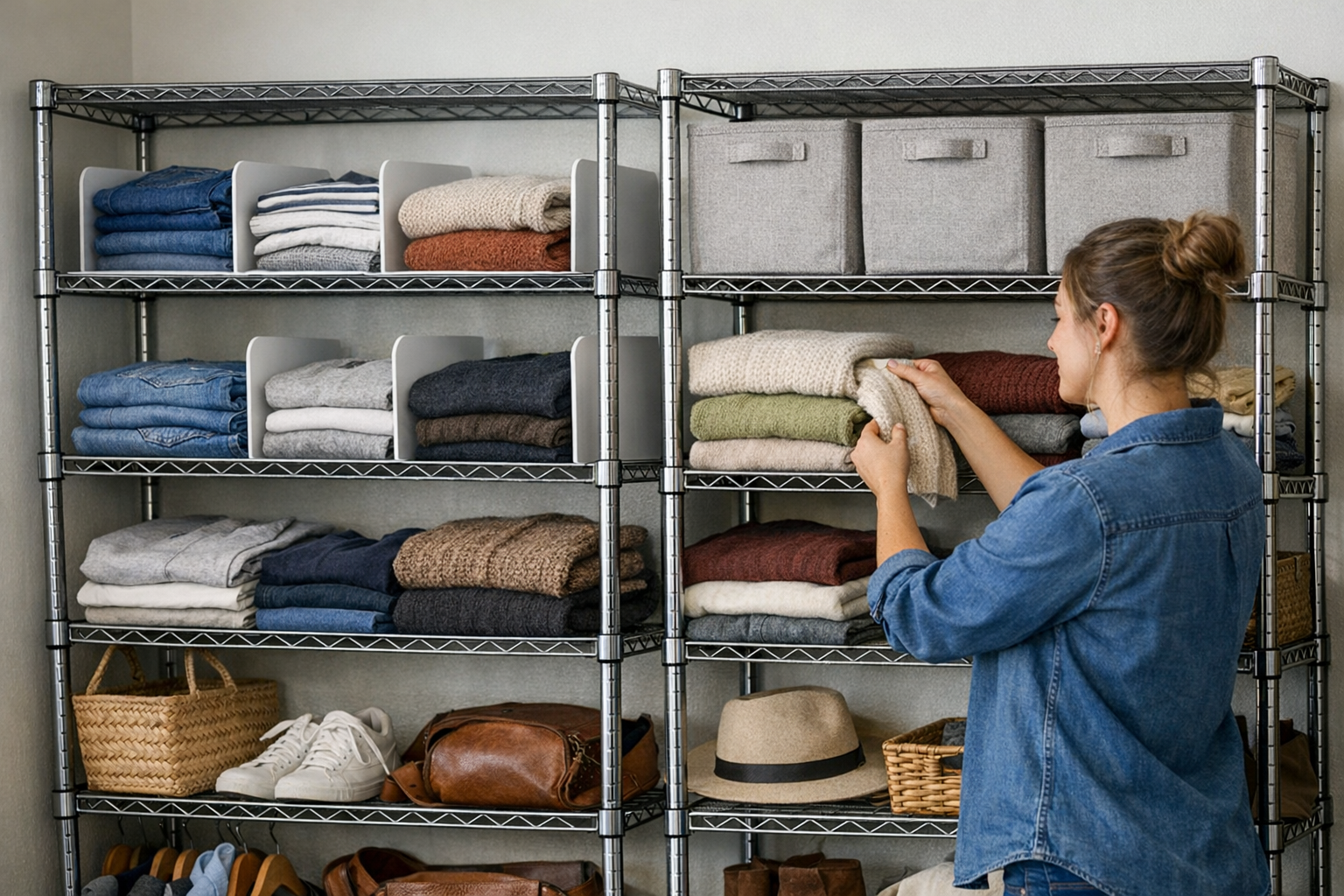
Nothing drags down a bedroom routine faster than stumbling through your own closet. A row of sweaters sliding into chaos, stacks collapsing by Wednesday, bins packed with who-knows-what—it’s these daily micro-frustrations that quietly decide whether your closet is a real help or a hidden stress. Sure, shelf dividers and storage bins both promise an “organized” look on day one. But the real proof comes after seven days of rushed mornings, reused jeans, and laundry piles that never quite reset the same way twice. This isn’t just about tidiness—it’s how your closet holds up to constant, unpredictable use.
Closet Order That Survives: Why Setup Is Everything
At first, any shelf can look tidy. But after a few hectic mornings—when you’re reaching past one shirt for another or tugging at the stack for your go-to sweater—neat lines slide and mixes creep in. Shelf dividers and bins both claim to bring order, yet each brings its own headaches. Their weak spots don’t show until you’re actually living with the system, not just admiring it post-organize.
Shelf dividers promise clarity: jeans start here, knits belong there, dress shirts have their own turf. But as soon as someone grabs from the middle or shoves in a fresh pile without care, those zones blur. Stacks flatten or tip sideways, the boundary fades, and suddenly you’re hunting for socks in a slope of T-shirts. Dividers slow down the chaos, but unless you refold like a machine, stacks will stray.
Bins contain, but at a price. They hide mess out of sight—for a while. Accessories, keepsakes, and off-season hats stay put, but finding one thing means digging through all of it. Bins absorb clutter, yet make it easy to lose track of what’s inside. Each hurried search upends yesterday’s careful sorting, and soon you’re stacking odds and ends on top “just for now.”
Where Closets Fall Apart: Daily Friction Points
Shelf Dividers: The Lean, the Drift, the Disappearing Zones
Picture laundry day. Stacks return, each within its divider’s slot. By midweek, reality hits: you’re in a hurry, reaching for something at the bottom. Stacks shift, sleeves sneak into neighboring piles, and by the time you need that favorite top, the divider’s just marking where order once was. When shelves are too crowded, every tug threatens the whole row—dividers become little more than speed bumps.
Bins: Where “Sorted” Turns Into “Somewhere in There”
Move up a shelf—neat, matching bins look like control. But after a few days, the search begins: gloves, scarves, belts, memorabilia, all in one bin. Pulling out what you need means upending everything above it. Bins that once created calm now become landfills for whatever doesn’t have a home. If you’re forced to unstack bins or rearrange two just to access the third, the process starts to feel less like storing and more like shuffling.
The danger? Overflow migrates fast—when it’s easier to dump than to dig, the “temporary” piles grow on dressers, floors, any surface nearby until your closet’s chaos seeps into the whole room.
The Core Tradeoff: Access Versus Containment
What do you need more: quick visibility or tight control? Shelf dividers are perfect for clothing you use daily and want to see at a glance—think shirts or jeans you grab from the front. When you only pick from the top, dividers usually hold the system together. But with slippery knits or bulging sweatshirts, stacks never keep their shape for long, and every reach disrupts the equilibrium.
Bins, on the other hand, conquer sprawl—nothing falls off the shelf and the mess stays disguised. But every time you need something specific, you’re slowing yourself down: pull out the bin, rummage, repack, and play Tetris to fit everything back in. The more a bin is used, the more its contents tangle. Suddenly “organized” just means “out of sight.”
The real solution is smarter mixing: use dividers for high-frequency clothing you reach for most, with a little breathing room between each section. Turn to bins for the items you pull less often—off-season gear, mementos, spare accessories—and keep those bins higher up or out of the main traffic lane. This way, essentials remain open and easy, while only the real “clutter catchers” get sealed away.
Storage in Action: A Week Inside Your Closet
Morning Rush: The Hidden Costs of “Almost Organized”
Rushed weekday mornings have no patience for a fragile system. You’re reaching for a specific shirt—blocked by a leaning heap. Forced to restack, you mutter about whoever last shoved things back carelessly. Within days, what started as “work shirts here, weekend shirts there” devolves into a single mess stuffed wherever space appears. Instead of saving time, the dividers now mean an extra step to access anything buried in the back.
Laundry Day: The Make-or-Break Reset
Come laundry night, the trap of mystery bins is clear. Bins labeled “accessories” turn out to be a medley: gloves, spare hangers, a mismatched sock, that winter hat you forgot you owned. The quick reset you wanted becomes half an hour of sorting—and a temptation to just toss everything back and hope for the best, knowing you’ll dig for it later anyway.
Small Shifts, Real Results: How to Keep Order Alive
Build in slack—not just separation. Give two inches (or more) between stacks under each divider. Crowding kills organization fast; just a little space lets you grab what you need without wrecking the row.
Keep daily clothing in open territory. Stash bins up high or in deeper shelves, but let the items you use all the time stay visible and in reach. Label bins, or pick clear ones, so you know what’s lost inside before you dig.
Never treat bins and dividers as rivals—combine them on purpose. Dividers corral your everyday wear, while bins capture what you only touch occasionally. Always leave a gap between the two systems on each shelf. The boundary is what makes category separation stick, and what saves you from “re-sorting” the same things week after week.
What True Closet Organization Actually Looks Like
Anyone can make a closet look neat for a day. But true progress shows itself in the messy moments: when you grab what you need without shifting everything; when resetting after laundry is a five-minute job, not an hour-long slog; when dresser tops and bedroom corners stop collecting the items your closet should handle. The real victory isn’t how your closet photographs, but how much smoother your daily routine feels.
No system fits everyone the same. The right balance of dividers and bins depends on your habits, your space, and whether you want to spend your evenings organizing or actually living. If you find yourself reshuffling the same stacks, or fishing through bins for things you can’t see, don’t be afraid to tweak—sometimes a little more space, or one bin swapped for an open slot, is the difference between ongoing frustration and a closet that finally works for you.
Shop ClosetWorks for practical storage solutions that fit your daily routines.