
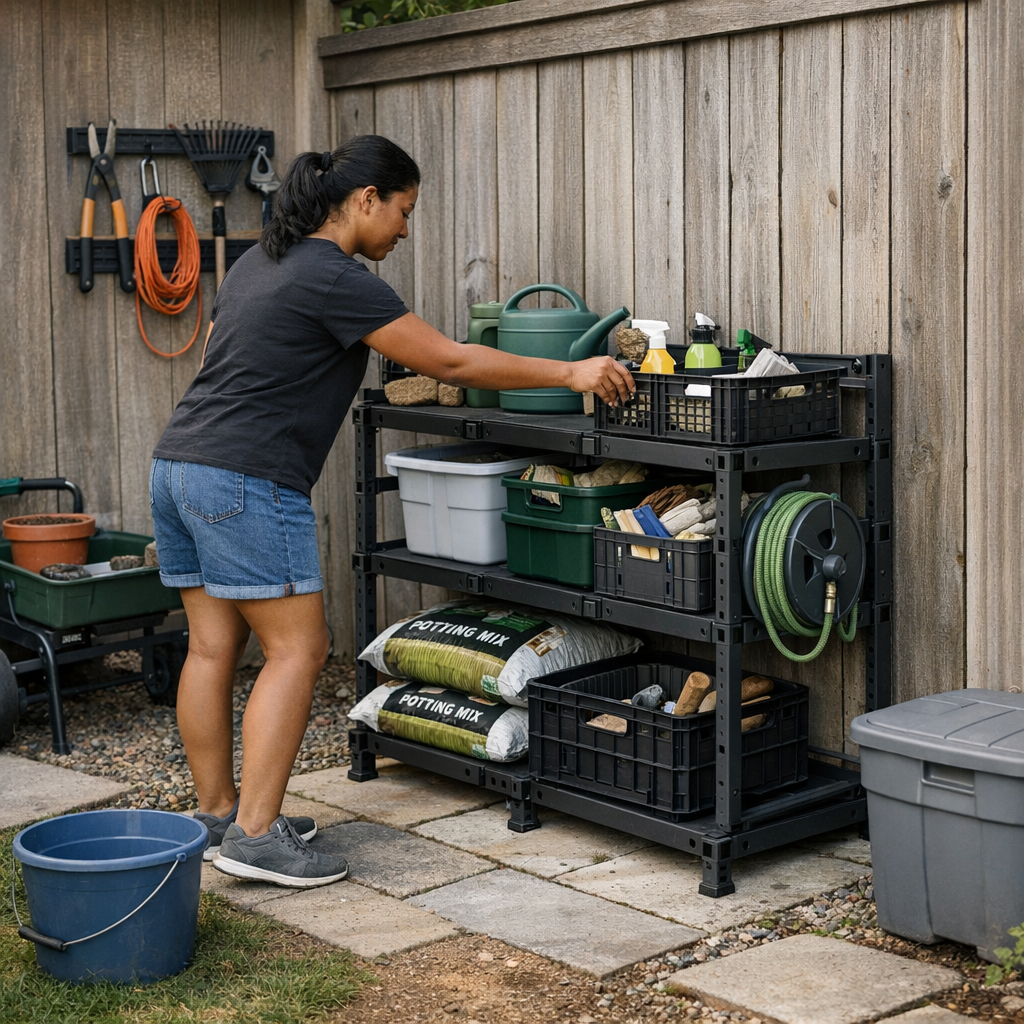
Most backyard storage setups look organized right after installation. The truth comes later, when the daily shuffle begins—wrestling a shovel back after a long day, wedging the mower past stacked tubs, or tracking down gloves with muddy hands only to find them buried again. What seemed like a perfect layout on paper quickly collides with the stubborn friction of everyday return flow, pinched walking space, and gear that drifts right back into your path.
The Real Friction: Why Setups That Look Tidy Still Trip You Up
Order hardly lasts in a backyard or side yard that gets real use. That spark of control—floors swept, bins lined up, tools perched on rails—vanishes the moment your routine collides with the setup. Swap out sports gear for garden tools? You pull two bins out and wedge them somewhere wet. Stash pruners before the rain? Now you’re shifting heavy bags just to clear an inch of shelf. If “putting things away” means playing storage Tetris or moving the same tub twice to walk the path, the obstacles multiply. Each quick fix becomes another slight reroute—until even small jobs drag out or get skipped.
Most setups break down in the squeeze-points: side-yard strips that double as storage and walkway, patio corners hijacked by overflow, or fence zones you never intended to block. A container that looked reasonable for hoses and planters suddenly eats too much space when one late project means everything gets stacked, half open, right in front of what you need next. What passes for organized after a Saturday reset is often just the starting line for next week’s shuffling routine.
Floor Units: A Catch-All That Eats Its Own Space
Floor boxes have the same flaw: there’s always something in front of what you actually reach for. That big deck bin swallows loose gear easily—until you’re knee-deep pulling out garden shears and tangled hoses to get at the one trowel you want. Every season, new layers form: last year’s boots, sports cones, the garden sprayer you needed yesterday. The more you pile inside, the less likely anything returns to its original spot—so overflow clusters in front, then at the corners, until you’re circling the bin instead of moving through the yard.
Awkward Footprints and Clogged Corners
Storage units promise order but routinely create dead ends. The fence-side box turns into a magnet for quick drop-offs: a soccer ball, garden stakes, a bucket with tools that never quite dry out. Left for convenience, these extras block the main route from garage to garden. Soon your well-planned footprint becomes a slow detour, with growing piles forcing you to pick a new path every week.
Wall Systems: Clear Floors That Quickly Fill and Blur
Wall-mounted racks and hooks seem ideal for narrow yards—room to walk, tools on display. But practical reality is messier. Hooks fill in a week, rails get loaded with more than they’re meant to handle, and shelves become catch-alls for whatever needs to be hidden fast. The first month, you find the right shovel with a quick glance. By the third, you’re peering behind a row of tangled rakes and odds and ends, unhooking two things to get at one, or knocking a pail to the patio each time you reach for snips.
When two people share a zone, the blur gets sharper. New items land wherever there’s empty space. What looked streamlined Saturday is a wall puzzle by Wednesday, with gloves wedged behind a bag of potting soil and clippers left hanging sideways, never making it to their “spot.” The wall stays “organized”—but every return gets harder, and the pile encroaches on your walk every time the weather turns fast and cleanup is rushed.
Invisible Choke Points
Wall systems usually fail at the interaction points: the most-used hooks get overloaded, the far corners collect the long-term clutter, while the spots you need in a hurry get buried first. Roll a wheelbarrow through a tight passage—another rake snags the handle. Try for a quick cleanup with muddy hands—stuff falls from the shelf or blocks the next shelf up. The appearance is neat from a distance, but the value drops with every layered return.
Modular Systems: Flexible, Until Everything Moves at Once
Modular bins and rolling carts feel like a solution for changing demands—until the flexibility backfires. Bins migrate from the patio to the fence; shelves overlap, half-full, purpose lost; carts slide into the main route because the side zones are blocked. In the confusion, basketballs end up in the yard bin, sharp tools drift into the kids’ cart, and you’re left with a system that needs a reset almost every weekend just to keep basic function available.
When Adaptable Systems Become Slippery
Sudden weather, guests, or a busy week shove mobile units out of sync faster than you imagine. That cart prepped for fertilizers finds a new home in the only open corner, now directly in the path from gate to garage. A single added item—boots, balls, garden ties—means the path is blocked until you find time for a full reshuffle. Modularity works in theory, but without strong zones and anchors, the setup drifts fast, and your daily routine is the first casualty.
Spotting the Red Flags: Where Setups Break First
If you’re regularly stepping over gloves at the patio edge or losing hand tools to a random bin, your storage is pushing back on your routine. The smallest neglected items—pruners, hose nozzles, even bags of bulbs—show where the system interrupts, not supports, your flow. Frequent pileups aren’t just mess—they’re evidence that return routes are blocked and your setup is missing critical access points.
- Standard units: Overflow piles at the far edge; rarely used things block daily essentials; belongings creep outside the original footprint.
- Wall rails: Hooks crowded out by frequent-use tools; fiddly gear stuck behind what won’t move; mental fatigue just locating what’s needed.
- Modular zones: Bins re-sorting themselves by accident, with play gear and sharp implements sharing space for lack of a boundary.
Resets take longer, pathways clog, and your “organized” setup is only a few days away from chaos—visible in every forced detour and gear pile you didn’t plan for. If you’re spending your weekend restoring order instead of working or relaxing outside, capacity is meaningless without functional return flow.
Habits That Quietly Strengthen the Setup You Have
- Designate an easy landing zone: An open bucket or tray at the most-used transition (patio-to-yard, garage-to-garden) for tossing gloves and hand tools. Shift these to their homes in one go, not every trip.
- Re-label, color-code, or visually mark bins and shelves at each season change: Resetting small signals slows gear migration and keeps boundaries “live” before the system gets blurry.
- Give mobile carts a marked home base: Chalk a patio corner, stake a side patch—the goal is to turn “wandering” storage into purposeful pivots, not obstacles mid-path.
Monitor for repeat overflow. If every week the patio edge, side gate, or specific fence spot attracts stray piles, that’s your clue: the return flow isn’t working. Reroute, carve a shortcut, or adjust access. Don’t just tidy—rework the pinch point so you’re moving forward, not circling the same mess.
The Real Test: Does the Setup Disappear Into Use?
A functional outdoor setup earns its keep not by staying neat after one big reset, but by almost disappearing—everything flows naturally back to its spot, piles stay small, and walkways remain open week after week. Whenever you find yourself hesitating over a return, shifting three things to put away one, or dreading yet another mini-reset, that’s not inevitable—it’s feedback. Adapt the zones, not just the gear, until your storage matches the way you actually use your outdoor space.
Setups that pass the real test don’t fight your routine. They shrink friction, dampen clutter, and leave room to move—so you reclaim the space for what you actually want to do, not just for managing the system. Let your own rhythms guide what and how you store, and expect the setup to evolve with your habits—not just with the seasons.