Category: Pet Life

  • How Small Changes in Pet Care Can Prevent Daily Cleanup Chaos

    Where Daily Pet-Care Routines Break Down

    Most pet owners think their setup is “organized”—bowls lined up, container nearby, towel within sight. But daily pet care rarely collapses from obvious mess. Instead, routines stall when a basic item isn’t where it needs to be: a water bowl that’s almost dry after work, a wipe stashed behind groceries, a brush tangled with unused leashes. Every small miss, every second spent hunting down the right thing, adds up to slower mornings, repeated double-backs, and cleanup tasks that get pushed off—until they’re no longer quick fixes. If your system looks fine but fails the daily reach test, you’re not alone. This is where CalmPetSupply’s practical setups start to matter.

    Micro-Messes: Easy to Miss, Harder to Undo

    It seems harmless to delay wiping the feeding area—until sticky bits dry before lunch, and “one swipe” turns into a full soak later. When wipes live on a top pantry shelf or behind a stack, cleanup gets skipped, then postponed. Multiply this across feeds, days, and pets, and you’re left correcting buildup that could have been handled in seconds earlier. Each missed moment—one soaked bowl edge, one abandoned towel drying somewhere unseen—drags out the reset. This isn’t about sloppiness; it’s how skipped steps, repeated, quietly turn into more work and visible clutter the next time you circle through.

    When “Organized Enough” Isn’t Enough

    Pet-care stations reveal their real gaps during busy weeks, not on setup day:

    • You reach for the water bottle only to find pots blocking the way under the sink.
    • The brush lives “in the drawer,” but now it’s wedged under dog toys and treats.
    • The quick-clean towel vanished, leaving only kitchen towels you avoid using on fur or paws.

    These aren’t one-time annoyances. They return—when you’re running late, have company coming, or just want to finish and move on. What started looking orderly turns into half-finished jobs, awkward reshuffles, and five-minute chores that sprawl into ten as you keep tracking down supplies that never actually stay ready.

    Shared Spaces, Repeated Interruptions

    Items migrate. Grooming tools left by the sofa block a cabinet later. Bowls inch into busy walkways, ready to trip someone in the hallway. Toys scatter into sightlines and land on kitchen counters simply for lack of a basket. These shifts force extra resets—bending to move bowls again, collecting misplaced towels, hunting for brushes that no longer live by the door. Even “neat” solutions can undermine routines: a lidded storage bin looks clean, but if it requires effort or is stored out of reach, the basics end up left out again, reintroducing friction and visible clutter.

    Real Scenarios: Small Friction, Big Impact

    It’s usually these moments that break the flow:

    • Back from a walk: paw towel missing from the hook, so dirt tracks in and needs later sweeping.
    • Dinnertime: scooping kibble means moving bags, crumbs end up scattered instead of contained.
    • Night check: the water bowl has a sticky ring, but the cleaning cloth is in the laundry, not the drawer.
    • Early morning: kibble container not refilled the night before, so now you’re juggling it between coffee and the door—more crumbs, less time.

    “Clean setups” don’t always solve this. If any step adds time or blocks access, the friction surfaces—slowing routines, raising frustration, and making every task demand more attention than it should.

    Smoother Routines Rely on Certain Details

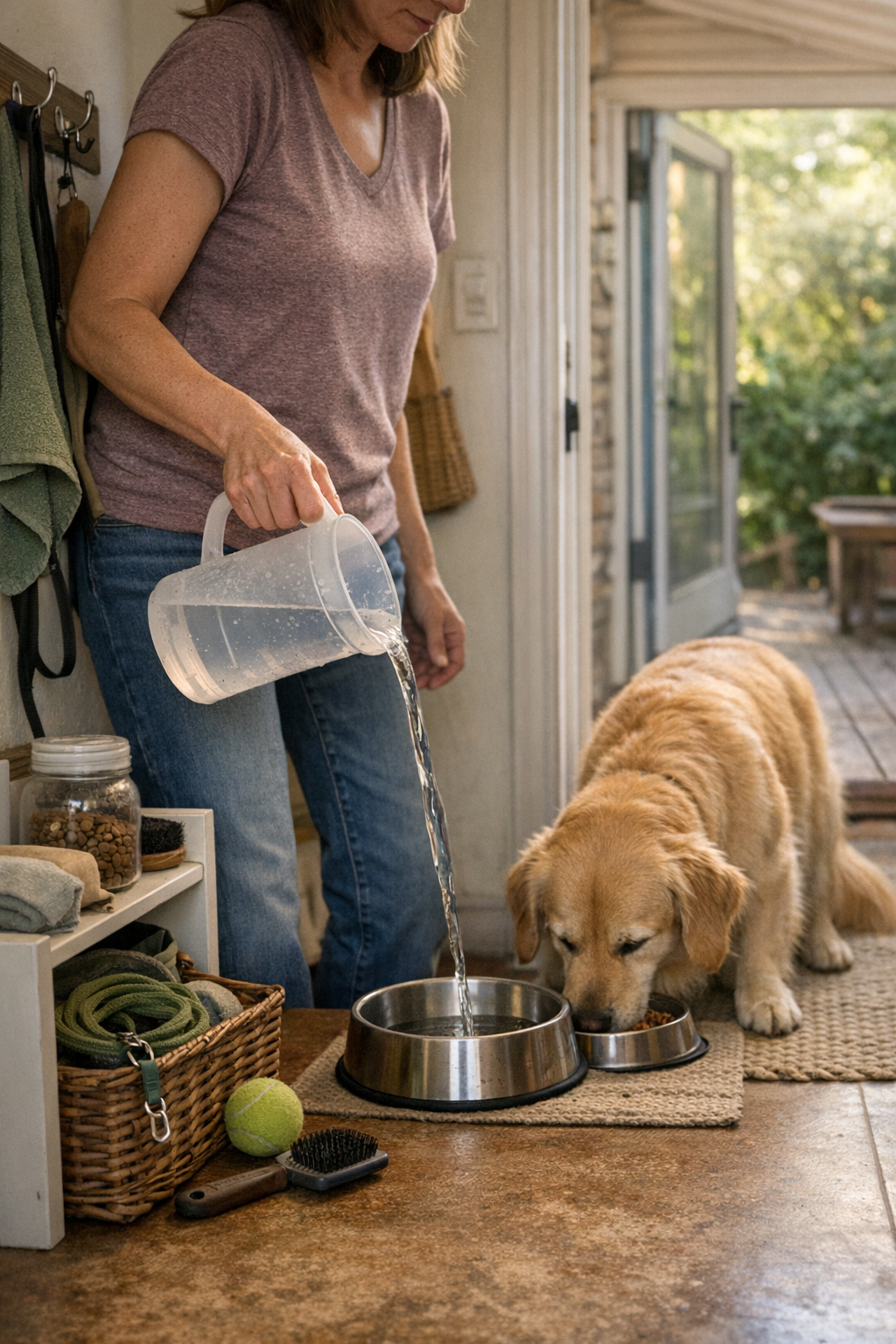
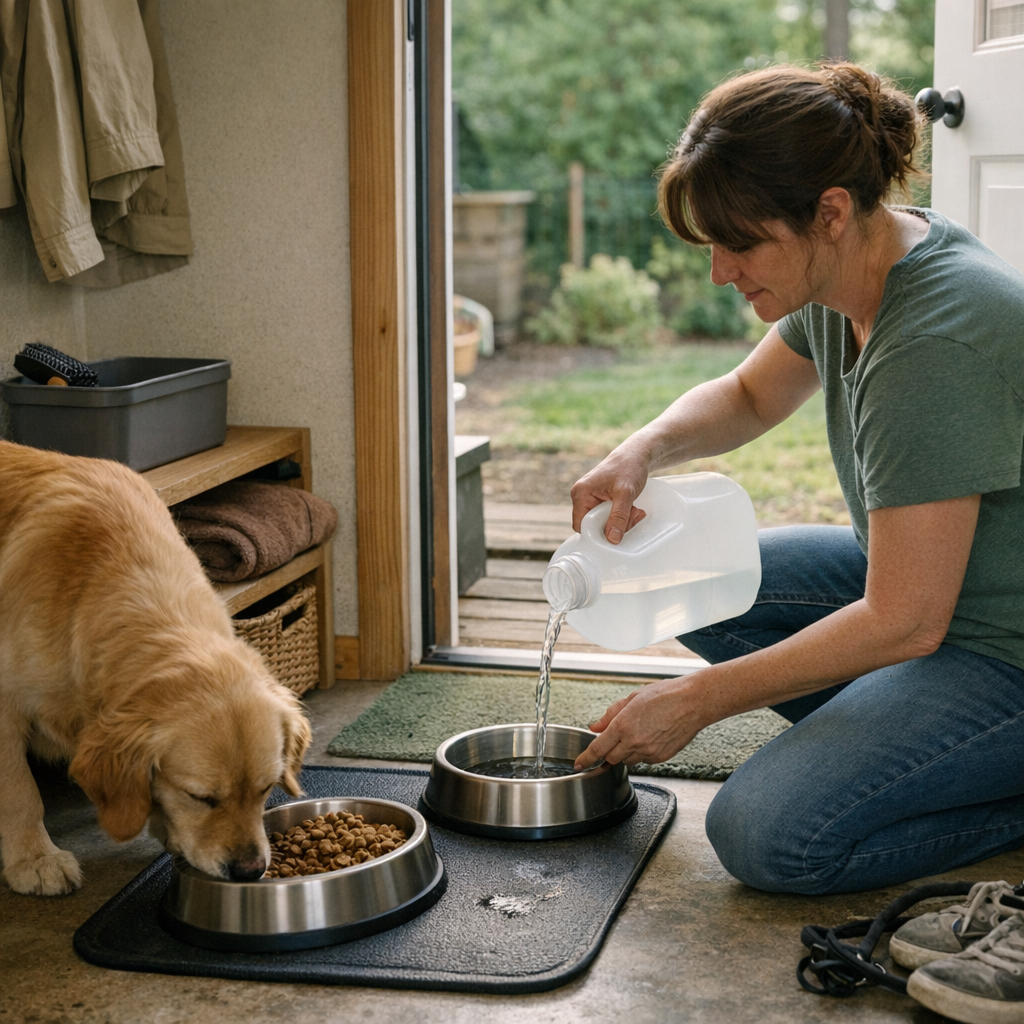
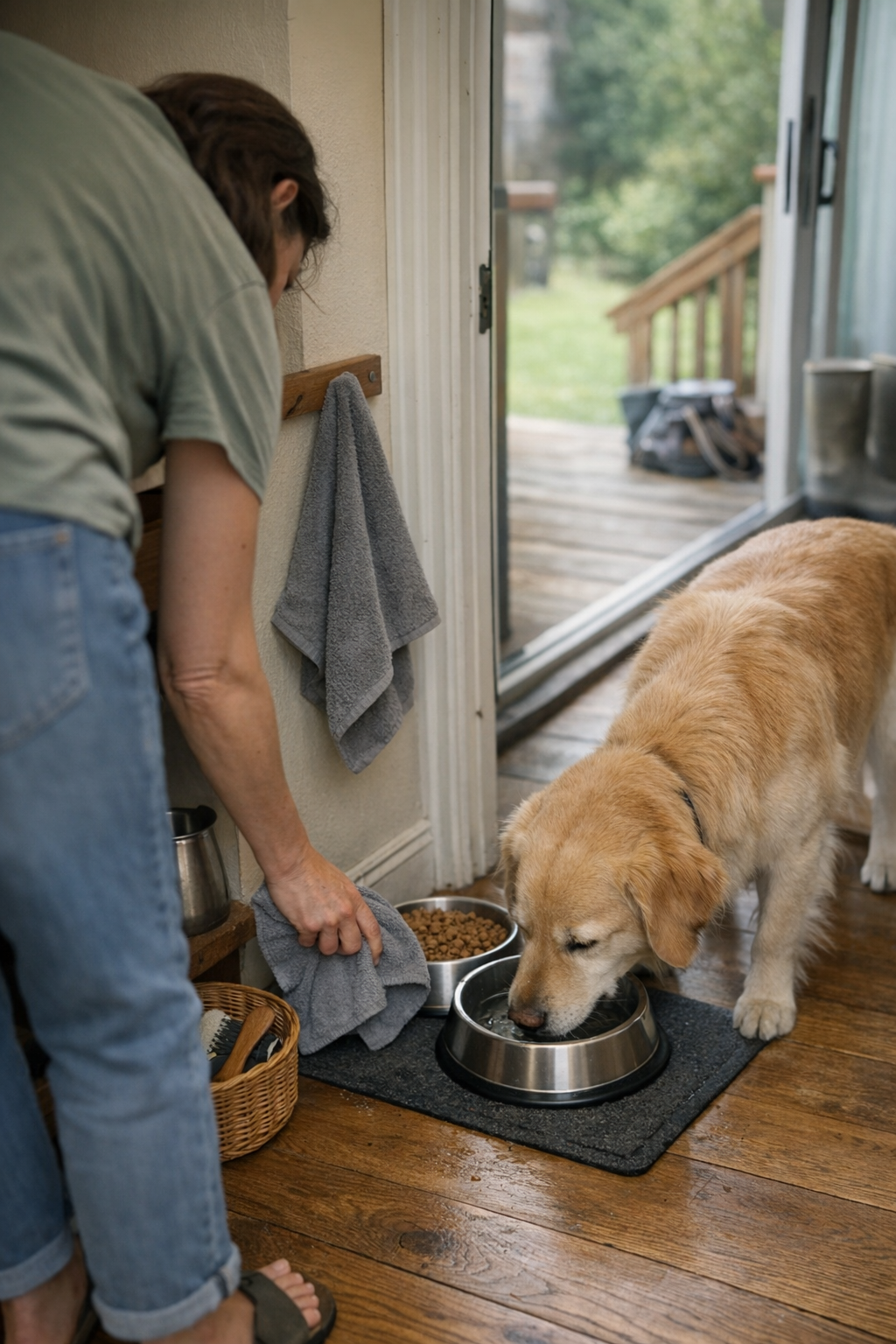
    The fix is rarely a total overhaul, but a handful of targeted tweaks: a washable towel always parked on its hook beside the bowls—no searching, no waiting for it to come out of the wash. Brushes in an open bin within easy reach, not hidden or mixed into unrelated drawers. The key is placement that favors use on the spot—where you already pause, not where you’ll forget. Put a refill bottle within arm’s reach of the feeding zone, and suddenly topping off water is just a flick, not an interruption that derails the routine.

    True “easy access” isn’t just about visible order. It means resetting the area is so simple you’ll actually do it before small messes become big chores—or before skipped steps stack into next week’s work.

    Closing the Gap Between “Looks Good” and “Works Well”

    An area can look calm, but the difference shows when routines speed up or break down. Is the brush back in the bin or missing every other day? Is a towel dry and hanging—every time—or balled behind the door and useless until the next laundry? The real test for any setup is what survives busy mornings, evening fatigue, and unplanned interruptions. When you keep thinking, “I’ll get to it later,” the daily gap between order and upkeep steadily widens—and every delayed fix becomes that much harder to close.

    Practical Changes, Better Flow

    Watch yourself move through home routines: the pauses, repeat actions, things you touch twice. Supplies that get skipped or detoured are signals: hooks that go unused, bins that are always full but never convenient, water stations that demand a trip to the kitchen instead of a quick reach. Changing just the point of access or moving one tool puts you back in control—a towel where you wipe, not just where it “belongs”; an open tray instead of a hard-to-open bin; water refills waiting in the pet zone, not behind pantry doors.

    These small shifts cut down on double-backs and delays. Over time, they add up to smoother, more reliable care routines—an everyday CalmPetSupply result that doesn’t need a glow-up, just a smarter layout.

    See more practical fixes and tools that match real routines at CalmPetSupply.
  • How Consistent Cleanup Transforms Your Dog’s Post-Meal Routine

    Post-meal routines with dogs break down fast over small, overlooked weak points. Maybe it starts with a bowl left out for “just a second,” a towel that’s always a few steps too far, or a cleanup that drags because the wipes are buried behind a crate or a spilled toy. What looks like a routine quickly becomes a mess of pacing, glances, or delays—both you and your dog hovering near the kitchen, never quite sure when mealtime is over and rest can begin. This is an everyday friction: the area looks organized, but every cycle adds minutes and micro-stalls, interrupting both your dog’s wind-down and your own next task. DogPile-world routines aren’t shaped by how neatly things look—they’re shaped by how the flow actually performs across repeated use.

    When “Done” Isn’t Done: The Drag of Unclear Transitions

    It happens fast: your dog finishes eating, the bowl sits where it always does, and you plan to reset “in a minute.” Something distracts you, the bowl lingers, and suddenly your dog is planted halfway to his rest spot, waiting but unsure—one paw in eating mode, tail edging toward bed. The house feels settled, but neither of you get the reset signal. Meals never get a clean finish; rest never really starts. The friction here is subtle but constant: a half-cleanup, a bowl that’s somehow always in the way, and a dog stuck in limbo, waiting on you to act.

    This stall-in-place isn’t chaos, but it pulls real momentum out of daily life. There’s no dramatic mess—just a routine that never closes. The delay is small but contagious, slowing down not just the dog’s post-meal wind-down, but your whole schedule. When the “done” moment blurs, your dog circles, the towel hunt drags, and both of you burn extra energy on the same old half-reset.

    The Cost of “Almost Finished” That Never Resets

    Let a few micro-pauses become normal and the day quietly bends out of shape. The bowl left near a bed, the wipes out of arm’s reach, toys scattered underfoot—every friction delays cleanup and pulls your attention off the next thing. By dinner, it’s easy to feel like you’ve spent all afternoon stuck in micro-loops—shuffling bowls, calling your dog back, and running extra laps between kitchen and rest corner. None of it feels big, but every “almost done” eats away at smoothness, energy, and pace.

    The “Half-Wait” Pattern

    Most dogs signal the problem just by standing at the kitchen edge or glancing at their empty bowl. They hang back because nothing says “change mode”—the bowl’s still there, crumbs remain, the area feels unfinished. When cleanup hangs, your dog isn’t sure if he’s still supposed to be focused on food, on you, or on heading off to rest. Both of you end up stuck, neither moving fully to what’s next.

    Where Routine Friction Really Hides

    The tools are nearby, sure, but rarely truly ready. Paper towels behind a crate, wipes buried under grooming pieces, a toy bin you have to sidestep to reach the trash can. None are big obstacles, but stack them up and every post-meal moment stretches. The room looks under control: bowl lined up, toys binned, towels folded for looks. But as soon as mealtime ends, you’re looping, reaching around corners, and pausing to clear another block. The tidy setup reveals its weakness only in the moments you need speed and clarity—the gap between organizing for pretty and organizing for function.

    The Room That Looks Ready, But Trips You Up

    Even visually neat spaces break down under repeat use. Maybe the dog’s bowl crowds her bed; maybe you’re always reaching behind a crate just to get a wipe. The more you go through the cycle, the more awkward each tiny shuffle feels. By the fifth reset, you’re sidestepping past toys, fumbling behind rest corners, and never getting a smooth pass to reset. Even with clear floors and folded towels, something’s always in the way—or just out of reach when you need it most.

    Immediate Cleanup: Turning Reset Into Signal

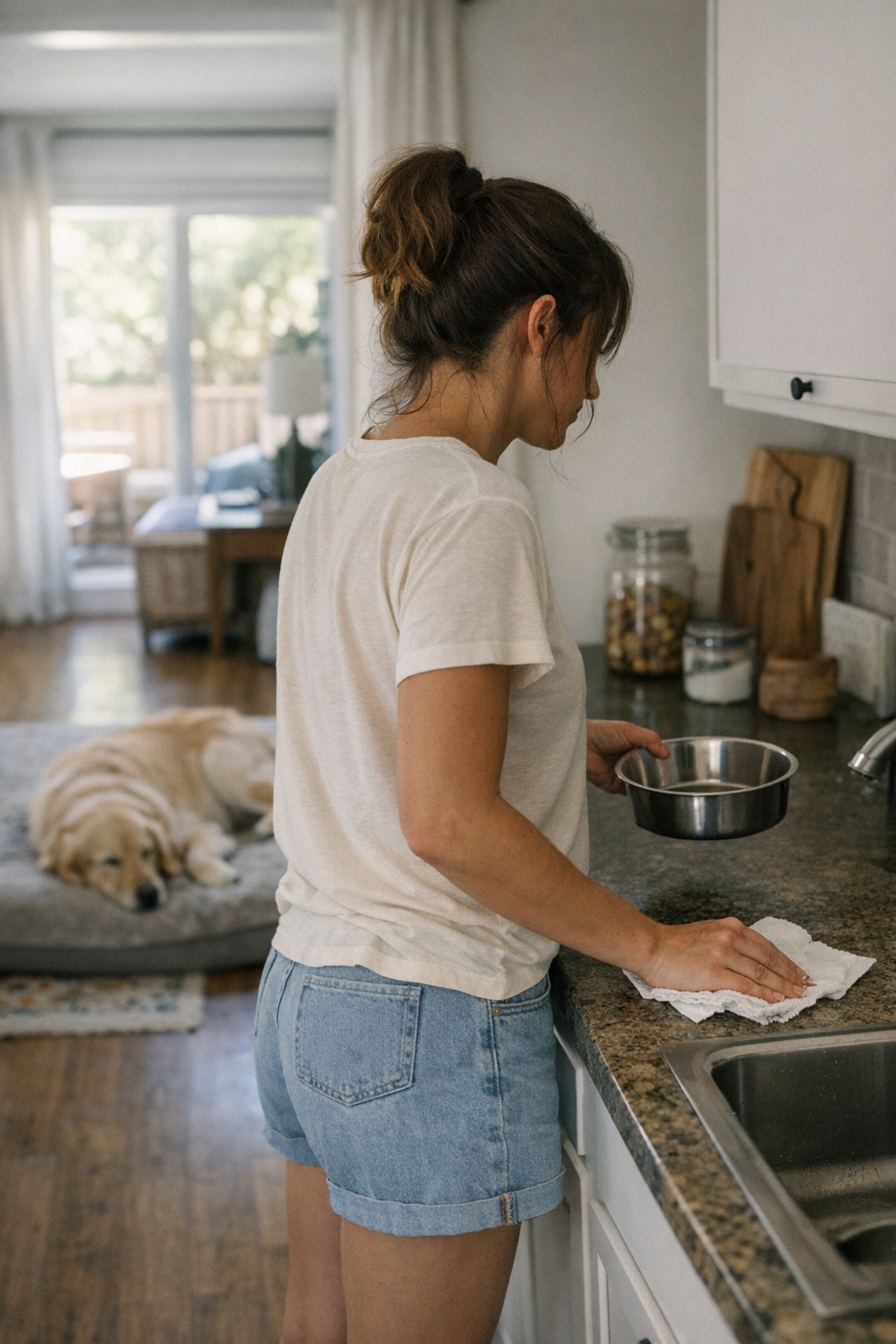
    The difference between laggy and smooth isn’t a new system—it’s committing to cleanup as a visible, immediate anchor. As soon as your dog finishes, the bowl lifts, crumbs disappear, and everything resets before distraction takes over. The dog gets a clear cue—no more circling, no confusion, no leftovers holding back the move to rest. You no longer lose minutes trailing back for wipes or finding the floor blocked by a toy misplaced earlier. Cleanup becomes the “switch modes” signal.

    This single shift returns control to both you and your dog: every meal signals its end; every reset happens without dragging out the in-between. There’s less back-and-forth, fewer delayed settles, and almost no “is it done yet?” energy cluttering up the house. The transition isn’t about speed, but about friction-free flow—the meal ends, the dog moves off, and the day resumes momentum.

    Practical Flow: Ordinary Midday Meal

    Pour kibble, set bowl, step back. Dog eats, you wait, then act. Bowl up, quick towel wipe, crumbs gone. The dog follows your movement, peels off the feeding spot, and glides to bed without waiting for another signal. No repeated calls, no hovering at the doorway, no lingering by an empty bowl. The difference? Every part of the scene closes in one reset, letting both of you swap “feeding mode” for “rest mode” instantly. You get on with your day, your dog gets deep rest, and neither stays stuck in the half-finished zone that exhausts everyone by dinner.

    Repeated Use Finds the Setup’s Weakest Spots

    • Bowl too close to bed: cleanup bumping into nap time, every time.
    • Wipes always one step out of reach: slow response the moment you need quick cleanup.
    • Toys drift by the feeding area: sorting before you can even start tidying.
    • Dog waiting at the door for a signal: neither part of the routine really closes out.

    The most effective setup isn’t just neat—it’s the one that lets you get through the sequence quickly, every single cycle, without tripping on last meal’s friction points.

    Tiny Setup Gaps, Outsize Routine Drag

    Every routine will have its stray moments, but when the setup makes you repeat the same shuffle multiple times each day, the drag adds up. “Just a minute” pauses, towels out of range, and repeated signaling all add weight to the daily flow. If cleanup becomes your automatic anchor, predictability locks in: both you and your dog know the signals, the lines between stages are clear, and the slow creep of repeated friction stops dominating your day. The finish line for one part of the routine becomes the launch for the next—no leftover energy stuck in the middle ground.

    Reset in Practice: Real-Life Checkpoints

    Try walking your own post-meal routine with fresh eyes. Where do you pause? Does a bowl linger where it shouldn’t? Are essential wipes, towels, or bins off by two steps? Does your dog freeze in the hallway, waiting for clearer direction? The difference between a routine you can live with and one that genuinely works comes down to how deliberately you close the loop after every meal. A reset that’s immediate gives the whole house clarity—less drag, less spilled-over energy, and more consistent comfort for both sides of the leash.

    Beneath the Tidy: Structure That Actually Works

    Surface order means little when the actual cycles keep exposing weak points. Try any feeding area across five cycles and watch for where it starts to break: bowls that stick around too long, towels too remote, toys slipping back into food space. The pretty, organized look fades fast if the structure can’t take repeated pressure. The real upgrade is making each clean-up truly easy to reach and reset—again and again—because that’s how routines feel lighter, not just look better.

    The bottom line: looking tidy is only a head start; real payoff comes from a setup that lets you move smoothly from food to rest without dragging out the reset. When your cleanup is ready and instant, your dog gets clearer signals, you cut out the hidden friction, and your day stops stalling at the very step that’s supposed to restore momentum.

    Explore more setups and practical solutions at DogPile

  • How Strategic Nap Placement Calms Indoor Cats and Reduces Evening Stress

    The mistake shows up fast, but never all at once. You set up a soft cat bed—maybe a fleece blanket, freshly washed and squared at the living room’s edge, clear of the walkway (or so it seems). It looks right for a day or two. But then the routine frays: you’re pulling toys out from under the blanket, shaking off crumbs, or re-smoothing a rumpled surface every evening. Your cat circles the area, dozes briefly, abandons halfway through a nap, and by dinner you’re hearing restless yowls or those unmistakable pre-zoomie signals. You got the fabric and spot “just so,” but the problem isn’t comfort—it’s interruption. With most indoor cat setups, it’s not the plushness that fails first; it’s the placement. Where the rest zone sits decides whether it survives your real routines—or just looks tidy for photos.

    Why Cat Naps Keep Getting Interrupted

    Every household has a rhythm: footsteps, dropped keys, doors, the vacuum’s whine, kitchen clatter, or feeding corners that double as corridor. Even if the bedding is plush and cool, if the setup sits in a busy lane—a spill zone near the kitchen, a corner skirting the litter box, or the foot of a high-traffic couch—it constantly absorbs stray interruptions. The nuisance isn’t always dramatic. It’s a toy skittering under the blanket during morning play, a dusting of litter tracked up by afternoon, or a too-close shoe print marking the nap zone’s edge. Each small disruption chips away at your cat’s rest until you’re both dealing with agitated afternoons and needy evenings—proof that comfort materials alone won’t rescue a poorly positioned space.

    When “Organized” Isn’t “Usable”

    Tidy isn’t the same as functional. You can line everything up, vacuum around it, and flatten the blanket daily, yet a week in, the routine sags: shoes overlap the corner; feeding time leaves crumbs inching dangerously close; and you’re fetching a missing mouse toy for the third time by dinner. If your cat is abandoning naps early or seeking out weird corners despite everything looking clean, it’s not the pillow’s fault—it’s a friction point built into daily foot traffic, clutter drift, or overlapping chores that your original “neat” placement couldn’t block.

    Small Frictions That Stack Up

    When you trace a hectic hour in a real home, the friction points multiply:

    • Nap bedding creeps into walkway space as people loop the table or kitchen—each pass knocks the setup askew.
    • Morning meals scatter kibble toward the blanket; the favorite toy ends up lodged underneath after five minutes of play.
    • Afternoon cleanup brings a mop or broom perilously close, and footsteps shake the spot mid-nap.

    What shrinks isn’t comfort—it’s usable time. The main nap area stays empty unless the house is quiet. The rest of the day, your cat flips between shallow half-naps, loitering by doorways, or scouting for some other stable corner, burning energy just avoiding the next interruption. You end up in the same loop: fixing what the layout let unravel.

    Toy Drift, Litter Trails, and Continuous Tension

    Some mess hides in plain sight: a single toy, bits of grit, or muddy footprints creeping closer to the rest area. More often, it’s the sense that you’re always “almost caught up” but never actually ahead—bedding that won’t stay put, objects to rescue, one more wipe-down that delays the next routine. By evening, the difference is obvious: your cat is alert, restless, pestering you just as you want to unwind, or doubling down on noisy, persistent play. This isn’t a training or discipline problem. It’s exactly what happens when rest gets layered beneath traffic, spillover, and shifted clutter—so naps break down, and cleanup becomes a daily rescue operation.

    How Placement Makes or Breaks Calm Cat Routines

    The main divider between an easy nap zone and a trouble spot: buffer from repeat disruption. It’s not about hiding your cat away but shielding rest from friction points—paths where other chores, cleaning, or feeding repeatedly collide with nap time. No setup survives a day if it’s part of your to-do loop.

    Small Adjustments, Noticeable Results

    Try a practical shift. Take a blanket that’s always near the litter mat (where scooping, treading, and stray bits show up like clockwork), and move it two steps behind a sofa or against a wall clear of routine passes. Fold the bedding just tightly enough to keep out wandering toys, and avoid overlaps with shoe drop-zones or bag corners. The change isn’t subtle. Suddenly:

    • Naps stretch longer, even when the house isn’t dead silent.
    • Toys no longer roll under bedding or disappear mid-day.
    • You aren’t crawling under furniture for errant fluff mice.
    • Your cat circles less, settles more, and finishes naps rather than starting new spots every hour.
    • Evening cleanup condenses to a quick smooth-over, not a prolonged hunt for crumbs and toys.

    Eliminating every noise or motion is impossible—but when rest is buffered from direct spillover, the nap zone holds up with far less daily maintenance, and the whole routine stops feeling like an extra task.

    Spot the Signs Your Cat’s Rest Setup Isn’t Working

    The real clue is rework: Your cat leaves naps unfinished as soon as dinner starts, or skips the bedding entirely when daily activity rises. Despite a fresh bed or sunny spot, if you’re seeing:

    • Repeated switching or circling through nap spaces in a single afternoon
    • Short naps leading to more evening vocalizing or attention-seeking
    • Frequent reset of bedding, or picking objects out almost daily
    • Your own movement slowed as you navigate around dish refills, stray toys, or cleaning—all sharing space with the nap setup

    Those are signs: the rest zone is absorbing too much routine collision. Real-life function means the setup avoids—not absorbs—your daily friction points.

    Neat Isn’t Lasting

    Day-one neatness slides fast. Bedding takes on kitchen smells, collects shoes, attracts tracked-in bits from the litter area, or gets kicked out of place with every pass-by. No matter how compact or pretty, any overlap with daily cycles—laundry, refills, cleaning, bag drops—means the setup becomes just another surface you’re subsidizing with extra attention. “Out of the way” visually doesn’t guarantee peace for your cat.

    Making Adjustments for Long-Lasting Harmony

    After you carve out even a narrow buffer from cross-traffic—just far enough from litter, kitchen, or walkway—everything shifts: naps run longer, settle deeper, and break less often; and you finally stop constant micro-resets. Usually within days, your cat eases up on late-evening yowls, and you notice fewer spread-out messes or mid-afternoon troubleshooting. When the setup suits your true daily rhythm, end-of-day chores contract: you aren’t picking over bedding, clearing toys, or dodging extra sweep-ups. Good bedding can’t fix a bad spot, but better placement makes the comfort last past day one, and the novelty doesn’t wear off by the week’s end.

    Quick Checklist: Is Your Nap Zone Actually Working?

    • Is the area safely out of major household loops—not just tomorrow, but every day?
    • Avoids overlap with food bowls, litter cleaning, and main pass-throughs?
    • Does bedding stay put, even after active routines?
    • More finished naps than aborted ones?

    If you’re missing one—or all—a small move can change everything, no new gear required. It’s about noticing where disruption pushes in, and sliding rest just outside the line of fire.

    Real-World Example: The Living Room Reset

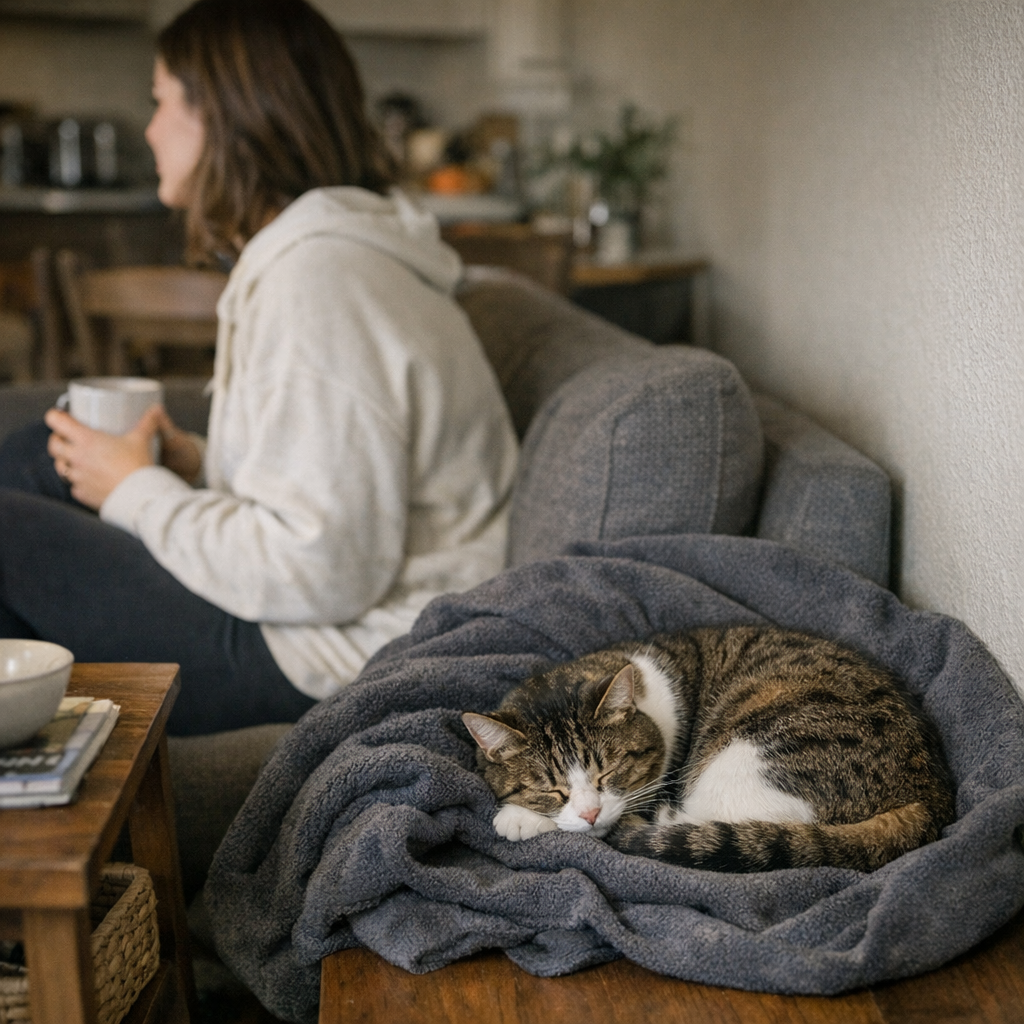
    Behind the sofa: In a real home, a thick blanket started near a walkway—ideal until toys rolled in, shoes left dirt, and every quick pass ruined whatever order you managed. Mess escalated daily; nap times shrank. A move behind the sofa, tucked against the least-used wall, stopped 90% of spillover. By three afternoons, naps lasted, and the end-of-day sweep shrank to a single pass. There’s no styling magic here—just subtraction of avoidable friction, letting cat and human routines coexist without constant overlap.

    What Lasts After the Tidy Look Fades

    No bedding, no matter how soft, can outlast a layout that keeps absorbing daily shrapnel—stray litter, toys, or footsteps that never pause. The setups that work in real homes aren’t “perfect,” but they reliably avoid the bottlenecks that pull you back in, day after day. Once the routine holds with less effort, evenings actually settle—and the work of having

  • How Small Delays in Pet Care Create Bigger Daily Disruptions

    Invisible Delays: How Small Pet-Care Tasks Complicate the Routine

    Everyday pet care looks manageable on paper—grab the food scoop, refill the water, wipe a dribble, drop the brush on its hook. But in real homes, each “quick” task leaves its mark when it isn’t closed out in the moment. One misplaced scoop, one towel drifted into a laundry pile, one wipe left somewhere “for later”—and pet care shifts from smooth routine to a series of frustrating pauses. You reach for the bowl and find clutter in the way. You want to refill water, but the bottle is blocked by a stack of unmatched lids. Slowdowns like these aren’t obvious at first, but over a week, they grind routines down: visible order fades, missing basics stall your hands, and the cost is a drag you keep tripping over.

    How Deferred Care Compounds into Frustration

    Pushing chores like water refills or quick wipedowns “just a little later” never feels critical in the moment. But the next time you’re juggling dinner prep and need to feed your pet, the feeding scoop has vanished—maybe into the pantry, maybe the sink—or the bowl feels tacky because no one rinsed it last night. Instead of two easy motions, you’re scavenging for a works-for-now substitute, cleaning out stuck-on crumbs, and retracing steps. That pause isn’t minor; it becomes a friction point that comes back again and again.

    Over days, these pauses pile up: meal prep that takes twice as long because the right item isn’t in place, cleanup that never really finishes, clutter clustering in the very spot you have to stand. Essentials like pet wipes, or the brush for muddy paws, migrate and vanish just as you need them. The illusion of “later is fine” falls apart under the weight of these small but multiplying inefficiencies.

    Scenes from a Real Pet-Care Routine

    Try a mid-afternoon reset: you head to the kitchen aiming only to top off the water and toss a toy back. The towel for wiping the water bowl isn’t where you last left it—now hidden under a pile of unopened mail. The leash meant for quick yard breaks is wedged under a shoe rack. Crumbs gather under the bowl mat—a few too many to ignore, but not dramatic enough for a full cleaning session. The water bowl is filled but sports a dull ring around the edge. Each action, instead of flowing, now means detouring, digging, or pausing for tools that should have been ready.

    At night, the slowdown deepens: the measuring cup is running through the dishwasher, so you use an old mug and hope it’s close enough. The so-called “pet station” collects loose treat bins and leftovers from yesterday’s mail run, forcing you to reshuffle everything just to pour out food. Even a tiny storage container parked in the wrong spot means another reach, another shuffle, one more break in flow you can’t ignore.

    Spotting Where Routines Lose Flow

    Routine drag isn’t easy to pin on a single mistake. Instead, it’s a pattern: tools you need out of reach, items squeezed into the wrong cabinet, cleaning done twice because it never sticks. An organizer box might corral wipes and look organized until you realize you’re always stepping around it to reach food bowls. A brush hung by the door seems sensible, but when it migrates after a quick porch cleanup and doesn’t return, you’re tracking it down when muddy paws hit again. Visual order alone won’t shield you from these interruptions; it’s the small setup misses—blocked access, borrowed tools, towels out of rotation—that leak time out of the routine.

    These cracks reveal themselves over time. That towel meant only for pet spills gets used on the kitchen counter and disappears. The scoop is borrowed for flour and doesn’t come back. By the end of the week, what looked organized never quite feels workable, and “didn’t I just fix this?” becomes a recurring question.

    Closing the Gap Between Tidy and Usable

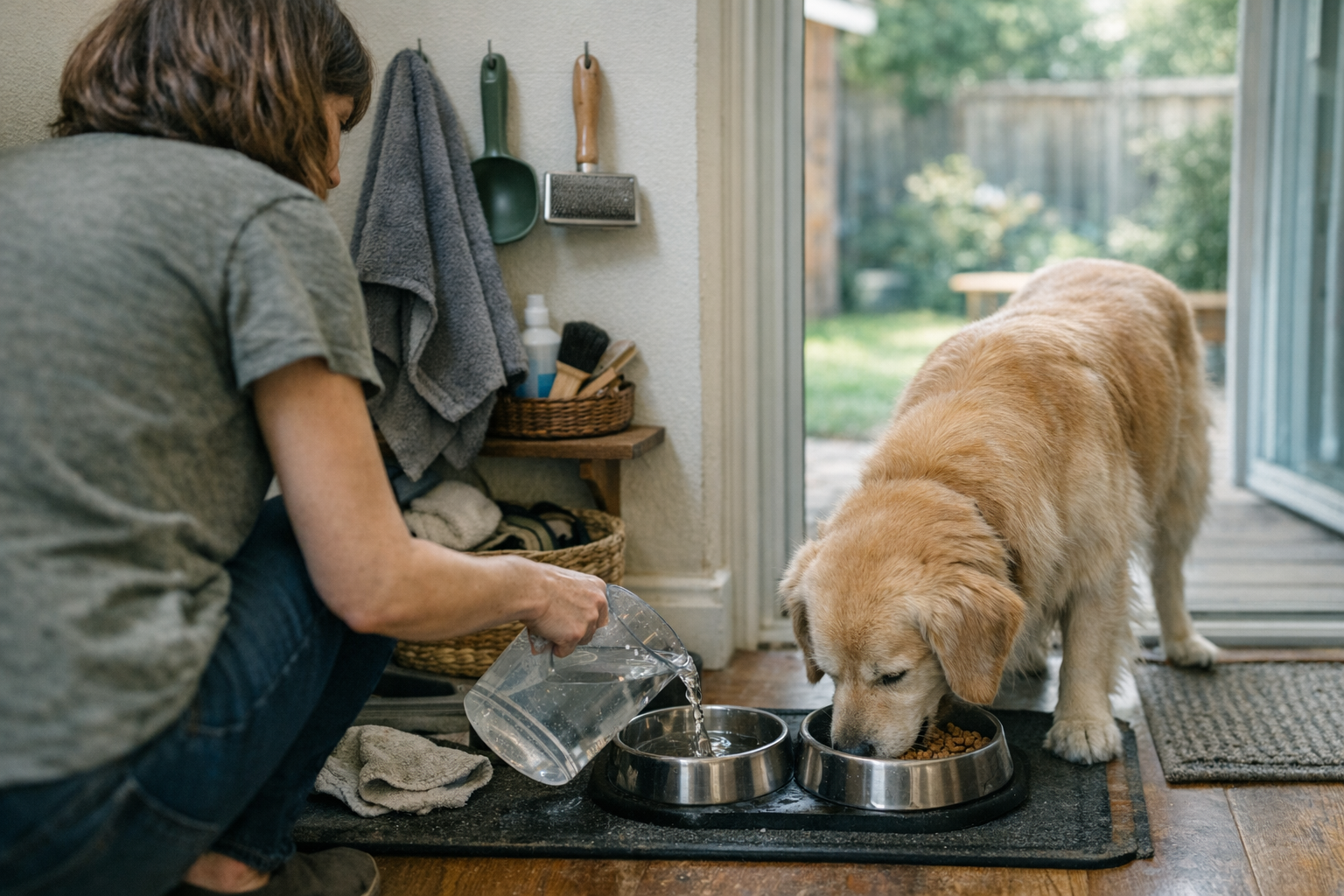
    There’s a gulf between tidy space and actually usable routine. The difference is reach—having the wipe, the scoop, the bag, right where you stand, every time. Hanging a microfiber towel directly above the feeding spot—versus stashing it across the room—makes one-handed wipedowns possible in seconds. No moving between rooms, no “I’ll handle that later,” no repeated shuffle just to deal with water on the floor.

    Apply this to other tools: a brush on a dedicated hook inside the mudroom door, poop bags clipped by the leash instead of in a bin three rooms away, refills stationed near the water bowl. Each item fixed to its real-use point closes a window where tasks get skipped or half-finished. If you have to cross a room or move a blocking basket to get to your supplies, your care setup isn’t working with you—it’s slowing you down at the same friction point, again and again.

    Building a Routine That Minimizes Reset Friction

    The setups that actually reduce routine drag aren’t the prettiest or the most color-matched—they’re the ones that make access to wipes, scoops, towels, and brushes nearly automatic. Grouping pet supplies right at the feeding or grooming zone, not scattered in storage containers that look tidy but separate from real flow, shrinks task distance and lets you finish actions in one go. Cleanup, refilling, after-walk wipes—they all turn into close-out tasks, not repeat interruptions.

    Over a few days, the benefits show. You stop circling back to finish “almost done” chores. Fewer items are left out of reach; fewer surprise messes force a late reset. For shared home spaces—kitchen, entryway, living room—these small adjustments cut collisions between pet care and everything else, producing a calmer routine without asking for perfection.

    Perfection isn’t the point. But when tools, wipes, and feeding gear are all within arm’s reach of the action, the nagging “I’ll do it later” moment disappears—so does the slow drag. The result: daily pet care resets in real time, not after it becomes a hassle.

    Shop everyday pet-care solutions built to keep routines simple at CalmPetSupply.

  • Why Pausing at the Door Transforms Your Dog Walking Routine

    Everything about dog walks feels routine—until one tiny snag at the door upends everything. You reach for the leash and hit a tangle of chew toys. You grab your dog’s collar, but your coat is blocked by a tumbling water bowl. That first slow, awkward pause—or the rush to skip it—determines whether your outing is smooth or just another round of tug, shuffle, and doorway scramble.

    Most routines don’t fail in obvious ways. They fray in seconds: a leash missed for one heartbeat, paws dancing because the towel isn’t where it should be, or a missed pause that leaves your dog spring-loaded and ready to bolt. Get these moments right, and exits start neutral, even relaxed. Ignore them, and friction adds up, trapping you in a loop where “organized” setups quietly sabotage the flow of every walk, return, or quick trip outside.

    Why the Doorway Pause Decides the Whole Routine

    What breaks up the start of your walk isn’t chaos or bad training. It’s the micro-friction at the threshold—hurrying to clip the leash, tripping over gear, or expecting your dog to seamlessly follow. Skip the pause, and your dog surges ahead or stalls, dragging your routine off-kilter before you’ve even shut the door. The difference shows immediately: steady walk versus tense, jerky zigzag. This isn’t about your dog “listening;” it’s structure collapsing where it matters most—in the three feet before and after you step outside.

    The hidden cost? Every time you lunge through the door, leash tension spikes, and your dog gets more wired to treat thresholds as launchpads, not reset points. Week by week, those seconds compound, making re-entry messier, walks less focused, and even quick bathroom breaks a study in missed timing and repeated annoyance.

    Why “Just Going” Triggers More Problems Later

    Speed feels efficient—clip the leash, crack the door, move. But skipping the pause forces your dog to choose impulse over calm: a leash snaps tight, gear snags on the doorframe, and both of you stumble through a half-prepared threshold. It isn’t just embarrassing once; it’s the root of those surges, tangled leashes, and last-second barks that creep into every routine: bedtime outings, muddy re-entries, urgent runs to the yard. With every “fast start,” the door itself trains your dog to leap, not wait. You end up cleaning more, calming less, and circling back to fix what rushed motion always worsens.

    When Rush Echoes Through the Day

    Even if you think you’re shaving seconds, a skipped pause leaves bigger messes. Dogs—especially the energetic or still learning—tag the sound of the latch or the swing of the door as a green light for chaos. Surges, barks, bolting for that first squirrel, or tracking unexpected mud inside all become extensions of that one weak moment. These aren’t rare flukes—they’re predictable outcomes of collapsed structure at thresholds that get repeated all day.

    What a Useful Doorway Pause Really Looks Like

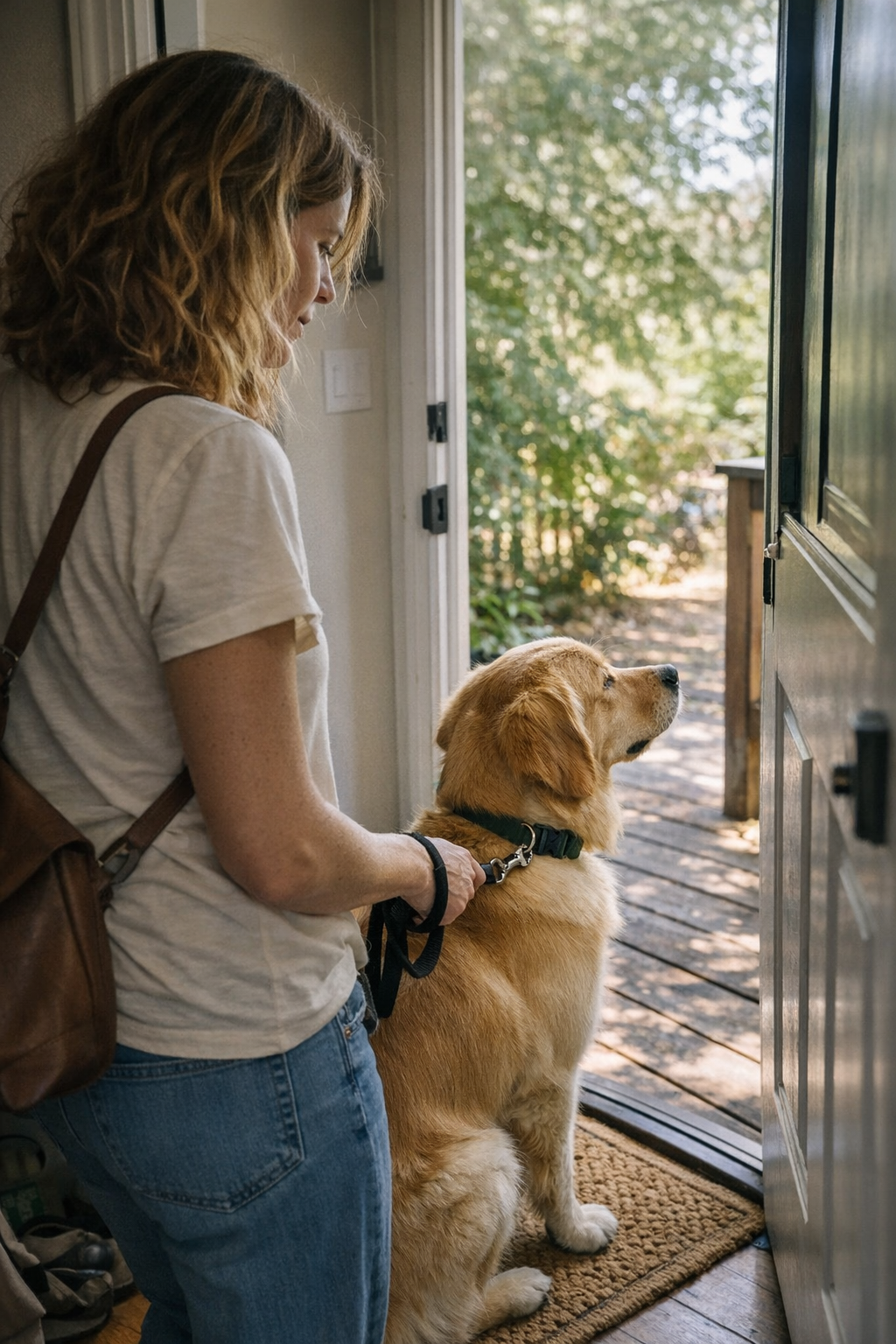
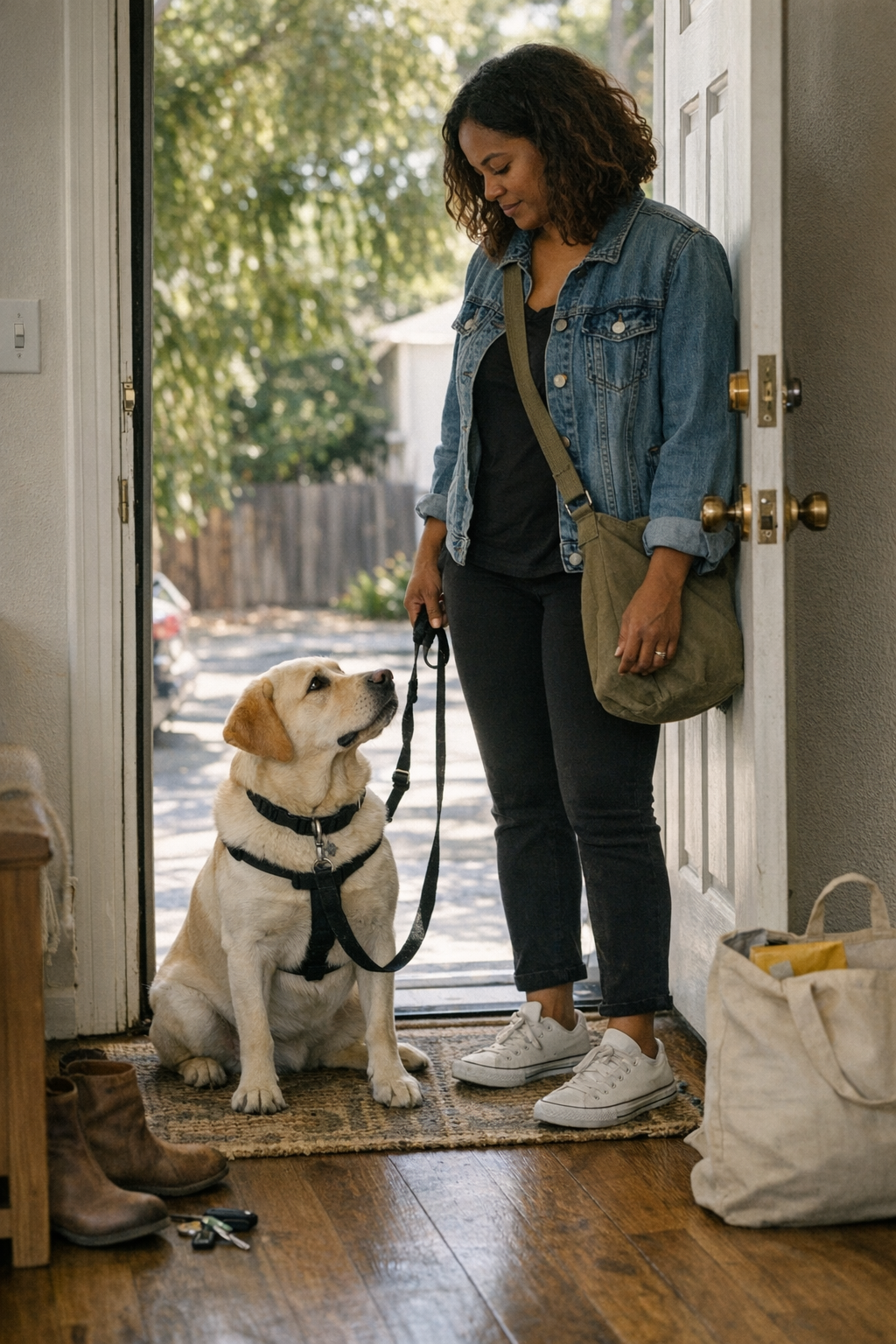
    It’s easy to call any slowdown a “pause.” But in repeated use, only a real reset works: leash short and slack above the collar, shoulders floppy instead of taut, dog looking back at you—even for a second—instead of out the door. A pause that works isn’t about asking for a sit or statue stillness. It’s seeing restless paws flatten, a tail drop, and attention flicker from outside back to the routine. The best resets take five seconds, just long enough for outside energy to cool before it can surge through the door, not just for one outing but for the whole day’s flow.

    The Real-World Cost of Skipping the Pause

    • Leash snags just when you try to close or lock up
    • Push-and-pull struggles at every transition—not just the front door
    • Walks start tense, not steady; focus scatters before you hit the sidewalk
    • Returns home stay chaotic—muddy paw prints, barking, or missed cleanup

    These aren’t background hiccups—they’re the mounting glitches that quietly erode the sanity of routine dog-life, and they almost always sneak back in when your setup “looks” tidy but fails under repeat pressure.

    Where the Routine Breaks: Real Scenarios

    The Leash Fumble Dance

    You grab for the leash and find a chewy or two tangled in it, or a crate edge partially blocking your reach. While you rummage, your dog interprets the cluster as “go-time”—shoulders coil, paws twitch, leash is clipped in a scramble. The timing is done; the window for a reset is lost, and you’re shoved straight into managing a dog who thinks hesitation means launch.

    Post-Walk Return: Setup Falls Short

    Dog’s paws caked with dirt, you’re ready at the door, but the towel hangs on a side hook or is buried behind the crate. Quick wipe turns into a hopscotch, dirt spreads across the floor, and now both you and your dog are half in, half out—grabbing, blocking, tripping over each other because supplies were stashed for “neatness,” not quick reach during rhythms that keep repeating.

    Off-Kilter Exits: Owner and Dog Out of Sync

    Your dog pauses to scan the door for sounds; you juggle a phone, a bag, maybe groceries. You both move—the dog zigzags, your bag hooks the doorknob, the leash tugs, and now you’re improvising through another off-balance exit. In months, this slips into the background as just how the door “works,” but that mis-step is structural, and blunts every return, walk, or quick let-out after.

    None of these are disasters. But when setups repeatedly force little fixes—untangling, reaching, shuffling—they break the flow that should make routines feel smoother after dozens of uses, not more jagged.

    How a Real Pause Resets the Flow

    Five true seconds at the threshold quiets the day’s chaos before it swells. Stop together, don’t rush. Door creaks open an inch; leash is fixed short, not loose. Your hand is near the collar—dog’s body softens, you sense calm in real time. Don’t wait for a “perfect” still; wait for the twitchy energy to drop. Even a glance back counts. Most of all, it’s not ceremony—it’s practical: a break between the mess of previous steps and the next thing. The small investment turns into walks with less yanking, fewer urgent resets, and re-entries that don’t demand two more cleanups before you’ve even hung your keys.

    Practical Steps for the Doorway Pause

    • Pause at the threshold. Don’t block the door fully—just create a sliver of waiting, enough for energy to settle.
    • Leash tight near the collar, not flapping mid-length where it can snag.
    • Watch for real signs of softening— lowered shoulders, tail easing, eyes flicking back.
    • Wait out the pulse. Five seconds. If your dog twitches, wait until there’s a visible drop in drive.
    • Exit in sync—not a drag or a slingshot, just one steady shared step through.

    This micro-habit adds seconds but cuts off dozens of micro-problems before they flare.

    If Pausing Isn’t Enough: Adjusting Real Setups

    Not every entryway gives you a fair chance. Distracting window, crowded mat, or gear piled for looks rather than movement. Try shifting the routine to a back door, side exit, or any less bombarded threshold—one less likely to derail the pause. Shorten the leash for closer, quieter control. If the towel, wipes, or treat pouch always prompt a detour, move them within arm’s reach of where repeated use actually happens, not just where storage is easy. Over time, these tweaks shift your dog’s rhythm just as much as your own—building a true pause into the bones of your routine. “Looks organized” is nothing when “works every day” is still a struggle at the pressure points.

    Invisible Weak Points—When “Tidy” Still Disrupts the Routine

    Entryways can look clean on a slow Sunday, but bottleneck instantly on a busy morning. The crate’s edge, a shoe rack, or a half-full water bowl that “fits” out of the way blocks movement when you’re actually using the space. In real repeated use, setups either cut friction or keep bringing it back—no matter how good they initially seem. Most routines start failing at the same stress points after a few weeks: reaching past storage to grab a leash, re-entering without fast wipe access, or retracing steps when gear isn’t staged in the line of motion. Recognizing where your dog-life setup stalls in real time—especially under

  • How Clear Boundaries Between Cat Zones Reduce Nightly Chaos

    An indoor cat room can fall apart faster than people expect. Setup looks calm—mats lined up, bowls in place, a soft bed tucked by the wall. Then real use hits: by the second evening, there’s kibble in the walkway, toys jammed under benches, and crumbs floating into the rest zone instead of containment. Every “organized” touch just becomes another spot to tidy again. If you collapse onto the couch at night, chances are you’re met not with peace, but with a new round of scattered toys and surprise crunches underfoot. The line between tidy setup and a routine that actually works gets tested every single evening.

    Where Setups Seem Calm, Nightly Friction Builds

    The pattern is familiar: you try for order, expecting less mess and an easy reset at night. But if a food mat sits in the traffic lane or the bed sits near where toys migrate, that surface calm collapses into endless micro-fixes. Usual symptoms:

    • Kibble fragments turning the floor into a minefield that never fully clears
    • Toys drifting out of the basket to curve around or hide beneath tables and sofas
    • Rest corners and mats used as a shortcut, then picked up with every streak of play—so they collect grime and clutter instead of staying usable

    The room that looks “done” at 2pm becomes a maintenance loop by 10pm. Cleanup stops being one pass and starts dominating the night—resetting mats, fishing out toys, wiping up crumbs on repeat.

    Overlapping Spaces: The Source of Repeated Disruption

    The bigger problem isn’t mess itself; it’s the awkward overlap among eating, playing, and resting zones. Even a few inches of poor placement—bowl edge too near the run path, rest mat bleeding into the toy zone—trigger a pattern that multiplies upkeep.

    Food mats placed for convenience get undermined by nightly sprints that scatter kibble just past containment. That toy basket, neatly set at arm’s reach, guarantees play debris spreads to the sleep area. Each time you fix one problem, the layout ensures another mini-cleanup is next.

    At first, it feels like a one-time slip. By week’s end, moving a toy and wiping the mat are just standard—over and over, exactly because the zones keep bleeding together overnight.

    Recognizing the Transition from Occasional Annoyance to Friction

    Most owners wave off small messes as normal—that’s cat life. But if every night you’re delaying rest to fish toys from under furniture or grabbing a wipe for the crumbs right back where you started, those are setup signals, not just quirks:

    • Refilling bowls only after prying away a toy that blocked access—every single night
    • Cleanup tools pushed aside by the drifting mess, so actual cleaning drags on longer
    • A rest area that reset clean in the morning, but by bedtime is again layered with toy fluff and food grit, even though “zones” look separate

    This micro-overlap eats at evenings—the friction grows, stealing minutes and energy, making a supposed calm space feel like a moving target.

    Why “Looks Tidy” Doesn’t Equal Lasting Calm

    Tidy setups can’t survive real routines if their boundaries blur under pressure. The most frequent owner realizations aren’t about mess, but about feeling trapped in cycles:

    • Cleanups that mushroom—five minutes turns into fifteen before you can relax
    • Messes materializing where you just wiped
    • The same zone going wild again, no matter how often it’s redone

    The hidden culprit is overlap. Day after day, the looseness between areas keeps converting quick tasks into drawn-out resets. It doesn’t matter how “organized” things look—the boundaries are weak, and routines show it.

    The cat reveals every flaw: eat, dash, crash, roll, sprawl—if the layout lets a toy cross into the food run, or crumbs migrate to the sleep mat, you’re locked into ongoing correction instead of a real evening.

    Real-Life Scenes Where Setup Weaknesses Show Up

    Reach Blocked, Reset Delayed

    Try refilling a water bowl and discover a ball wedged just at the base—not an emergency, but you now have to move the toy before even touching the bowl. Same for quick wipes: you finally fetch a cleaning cloth, only to find it was shoved behind a scratching post during the last toy burst, adding a delay you weren’t counting on.

    The Quiet Area Keeps Getting Loud

    Imagine a freshly vacuumed rest area, cat curled in contentment. That tranquility shatters minutes later—a chase sends toys and crumbs tumbling in, demanding not just one reset, but another round of sorting, picking, patting, and re-fluffing so anyone can be comfortable again. The corner meant for unwinding turns into a low-stakes battleground every single day.

    Resets That Never Stay Finished

    Every night, the cycle repeats: reset, realign, reclean. Bowls straightened, mats smoothed, and within the hour, disorder creeps back in, undoing the effort almost out of habit. It’s not misbehavior—just boundaries too weak to hold up against normal cat energy.

    Improvements That Actually Hold

    Buying fancier storage or prettier bins never solves this. The real change comes from splitting up zones in small but strategic shifts:

    • Slide the toy basket further from the sleep zone—just enough to catch most play fallout before it hits the rest area
    • Swap in a food mat with a higher edge, so there’s a clear stop for scattered bits and cleanup takes one quick swipe instead of five
    • Move the rest corner out of traffic paths and away from main play lines, even if it’s only a few feet—protecting it from late-night energy spikes

    Results show up right away: toys mostly stay where they belong, food mess is contained, and rest mats stop doubling as the nightly debris field. Instead of three scattered cleanups, you get one main pass that feels under control.

    How to Recognize Unclear Boundaries at Home

    Routine friction has obvious tells—if you watch for them:

    • Food smears and toys land on or next to the rest mat almost every evening
    • Mess spreads into feeding or sleeping spaces regardless of reset attempts
    • Cleaning always means chasing signals around the room—not one fixed spot
    • Each reset lasts a little less time, and you feel like upkeep is compounding quietly in the background

    If any of these show up, your zones are visually or physically blurred—inviting constant intrusion and maintenance instead of actual use.

    Making Simple Shifts for Less Evening Friction

    The most effective fix isn’t a complete redesign. It’s a direct nudge: move food, toys, and rest areas out of each other’s line of fire—even just a few feet makes ripple effects. Examples: place the toy box behind a chair’s leg, or rotate the food bowl so it’s not in the path between window and bench. These tweaks cut down the “scatter and repeat” pattern that keeps sabotaging evening calm.

    Small differences matter—keep the bowls just off the main run and the toys away from the rest zone, and you rarely step on kibble at night or sweep up after the cat’s last dash. Most setups will never be perfect, but visible and functional boundaries give your evening routine a real chance to stick.

    From Surface Tidy to Functional Calm

    The payoff isn’t in how a setup looks but in how it acts after dark. Rethinking the zoning—by inches or by obvious paths—stops your routine from getting swallowed by repeat maintenance. If your cleanup loop keeps pulling you back, it’s the structure, not just the cat. For setups that defend calm against nightly disruption, look for practical boundaries and tools that make reset less of a scramble, not just a design flourish.

    Browse practical indoor-cat setups at StillWhisker

  • How Evening Resets Simplify Your Daily Pet Care Routine

    Why Daily Pet Care Starts the Night Before

    Everyday pet care rarely falls apart in one dramatic moment. It happens in smaller, repeatable ways: last night’s water bowl sits half-full on the floor, the feeding scoop isn’t by the dry food, and the towel meant for a “quick wipe” is nowhere near the bowls. Instead of a fresh start, your morning means scanning for missing items, rinsing a used bowl, or clearing half the counter before you even reach for the food bin. The smallest skipped resets quietly multiply. This is the difference between a pet care setup that works for you—and one you end up working around. CalmPetSupply centers practical routines that keep your next reset from snowballing into tomorrow’s mess.

    When Little Things Become Tomorrow’s Chore

    Imagine walking into the kitchen, ready to feed your pet, and seeing a not-quite-clean surface, yesterday’s scoop out of place, towels stacked somewhere else, and the brush nowhere obvious. Instead of a single motion, you shuffle aside takeout containers, chase down the missing scoop, and wipe up dried food only to realize the towel you need was left drying in the bathroom. After a few days of these missed handovers, clutter starts seeping past the feeding zone—onto the dining table, under chairs, and into shared counters, making each step a backtrack rather than a quick routine.

    The Real Cost of Skipped Evening Resets

    A missed evening reset rarely seems urgent—but its cost shows up fast when repeated. Each time bowls go unwashed, or basic tools drift out of reach, you lose a clean launch point for the next day. What could be two minutes of feeding becomes five or more, picking up yesterday’s slack: scrubbing bowls you meant to soak, pulling out cleaning supplies stashed in another room, or refilling water you overlooked. Each missing item becomes an obstacle at the exact wrong time—like running late, or right before bed, when the last thing you want is added work. “Out of sight, out of mind” doesn’t pay off by morning; it builds up as friction that drags every routine.

    How Clutter Grows (and Spreads)

    Pet care clutter doesn’t wait for an invitation. One left-behind bowl becomes a magnet for treat bags, scattered toys, grubby towels, or the brush the cat just sent flying. These items drift onto prep surfaces and edge out the space needed for simple tasks. Most people end up reshuffling the same small pile—returning things to their “spot” only to see them migrate again one night later. The result: more bending, more reaching, and more time spent rerouting around the same crowding mess, regardless of how neat the rest of your home looks. Each out-of-place tool isn’t just visual clutter—it turns the easiest part of daily care into a chore that never quite resets.

    This cycle isn’t broken by appearances alone. Each missed step at night plants a new round of cleanup, pause, or search for the next day. Routine drag sets in not because you’re careless, but because pieces keep slipping just out of place, again and again.

    What a Reliable Evening Reset Looks Like

    Breaking this loop doesn’t mean doubling your cleaning effort; it means making resets automatic and consistent. Effective setups have bowls washed and dried before bed, towels parked at reach (not buried), and feeding scoops always returned to the same spot. Even one wall hook by your prep zone can hold towels you’ll actually grab, while a small open bin keeps leashes and brushes from wandering. With these details set, nothing is left to chance overnight—by morning, everything needed sits within arm’s reach, so the entire care routine kicks off without detours or missed steps.

    Practical Use Scenes and Common Friction Points

    Most friction in pet care is born out of tiny, repeating failures. Every pet household recognizes these moments:

    • You reach toward the food bin and bump into mail, last night’s mug, or lids you forgot to store.
    • The refill bottle sits empty, but the cleaner you need is still under the laundry sink.
    • Wiping up gets skipped because the towel is always behind a cabinet door, never next to the bowls.
    • Grooming tools hang out on the counter edge—until someone’s elbow sends them to the floor, making “quick brushing” a full reset.
    • Extra dishes and supplies drift from the kitchen into living spaces, crowding out your own meal prep or spotless counter, so simple tasks now mean constant reshuffling.

    Each missed step doesn’t look big alone. But strung together, they steal the ease from every feeding or cleanup, leaving your routines feeling like sets of half-finished chores instead of easy daily flows.

    More Than Appearance: The Value of a True Reset

    Pushing pet gear aside for a cleaner look helps only on the surface. Resets that last are resets that put every item—bowl, scoop, towel—right where you’ll need them, not simply out of direct sight. Stacking items in the corner or hiding tools under a cutting board is a short-lived fix; tomorrow will still bring a frustrating search and repeat work. The real benefit of a reset is reducing the steps between you and your next action. Predictability—knowing every item is exactly where you expect it—shrinks hassle and leaves less room for routine drag to creep in.

    In practice, the improvement is immediate. You prep breakfast without detouring for missing bowls, spend less time rehunting tools, and let your morning run without a leftover cleaning domino effect. The actual reset rarely takes longer—the secret is in repeating the right small habits so your effort pays off each time, not just for one tidy moment.

    Simple Habits for Smoother Daily Care

    Smoother pet care stems from small, automatic resets that put essentials in predictable, reachable places—trays at the feeding area, towels on a hook by the door, bins for leashes and brushes by their point of use. Even when you’re tired and tempted to skip, two extra minutes to clear and reset spare you the irritation of a crowded or interrupted routine the next day. The real payoff is not just a tidier home, but a lighter load in the parts of the day when anything extra tips into frustration. The routine that’s ready before you need it keeps your care light and your shared spaces yours.

    For more ideas on practical pet care setups that keep your daily flow friction-free, visit CalmPetSupply.

  • Transform Your Dog’s Chaotic Door Routine Into Calm Transitions

    The real test of any dog setup isn’t how tidy it looks, but the moment you step back inside with your hands full and your dog pulling ahead. Straight away, the leash handle brushes against the bag looped over your wrist, keys slip sideways, and the towel you meant to grab sits just out of reach. The front door isn’t just the entrance—it’s the flashpoint where everyday gear, restless paws, and repeated friction collide. Small delays—leash tangles, missed wipes, bowls nudging underfoot—don’t feel like a problem until you see how every return home keeps running into the same pile-up and leaves you a step behind your own routine. If your setup only solves mess on the surface, DogPile territory is where pattern friction really shows itself.

    When the Door Is More Than Just a Door: Seeing Routine Friction in Action

    Most dog owners chalk up front-door chaos to “just how it goes.” But after a few weeks, the interruptions repeat: you squeeze in with wet gloves, a half-torn poop bag, and a dog bouncing against your shins. You reach for a towel or wipes, but the excitement window snaps shut—your hands are juggling keys while your dog’s leash coils around your ankle. The first moments are a blur of negotiating movement and attention. The ordinary return has turned into a scrappy traffic jam, every object crowding for space at once.

    This isn’t a crisis. It’s routine friction. Step inside after a walk, and even with a supposedly “organized” entryway, you’re still untangling a leash, sidestepping a water bowl, and catching a dog body-slamming the crate before you’ve reset the mood. The actual test comes in those first twenty seconds—the time when a smooth transition is either recovered or completely lost.

    It Always “Works”—Until Time Is Short

    Most days, the mess is manageable. But run late, hear the phone ring, or find someone waiting at the door and those small snags add up fast. The leash blocks your step just when you mean to grab your phone. A bowl placed “out of the way” slides exactly into your path as your dog races past. Cleanup supplies are in view, but your arms are too loaded to actually reach them. Each thing is minor, but together, it all slows down your whole flow and makes every return a hassle you fight repeatedly instead of a routine you trust.

    Managing the Front-Door Rush: Why Small Resets Matter

    “Off!” turns into background noise. Shoes become obstacles. A towel “within reach” feels like a setup only until you try grappling one-handed with a muddy, bouncing dog. Small skipped resets harden into permanent friction. Each unaddressed leap, missed wipe, or half-managed bag becomes the new baseline for “normal,” making the next entry not smoother, just more work to manage.

    The first few seconds at the door set the tempo for everything that follows: feeding, crate entry, post-walk cleanup, and even bedtime reset. Let excitement win at the threshold, and every next step steals more of your focus. Instead of fading, that tension compounds—turning expected relief into yet another interval of restless movement and delayed calm.

    Repeated Routines, Repeated Friction

    Whether it’s a long walk or a two-minute mail run, the cycle returns: leash underfoot, bags blocking the hall, paws skipping across the mat before you can wipe them. “We’ll settle later” becomes wishful thinking, because every rushed, crowded entry resets the mood for distraction instead of calm. Hands full and brain elsewhere, you feel the drag of slow reset every single time—never dramatic, but always there, quietly stealing time and adding stress you only notice after the fact.

    Common Weak Spots in the Entry Routine

    Hooks, bins, and bowls can make an entryway look perfect. But tidy is not the same as usable. A leash on its hook only helps if you aren’t gripping groceries. The towel’s “right there” until you’re blocking yourself with your own dog. All looks fine until speed, cold hands, or a bouncing dog reveal which part of your setup isn’t actually working. What interrupts you isn’t clutter, but how easily—under pressure—you can move, grab, and reset. “Organized” setups stall out when actual routines keep producing the same stumbles, because visual order isn’t built for repeated motion under real conditions.

    When Items Interfere With Flow

    Dog gear constantly invades human pathways. Mats slip, wipes vanish under jackets, leashes snag on boot trays, bowls inch closer to where you actually want to walk. It’s fine for five minutes, but by evening, you’re dancing around the same misplaced items and wiping paws in a half-crouch with the wipes now lurked behind the mail. A bowl that saves the floor can block cleanup; a clever towel hook can require an awkward pivot at exactly the wrong time. Most setups look better for a day, but the weak point returns—where gear spread, access, or dog excitement interrupts every transition you’re hoping to smooth out.

    The Real Reset: Turning the Door Into a Pause, Not a Pass-Through

    The true shift comes when you use the doorway as an intentional reset zone instead of a rush-through bottleneck. Instead of letting energy spill in—bags dropped, leash off mid-spin, bowls nudged aside—you build in a pause: everyone stops, every single time, before anything else moves.

    In practice: you step in, no gear dropped, no shoes kicked. Your dog halts beside you—leash slack, two paws anchored, attention turning back for a split second. You reclaim control of the space before it turns chaotic. There’s no correction, no bustle—just visible quiet until both of you are steady enough to finish the return. This small stop is what flips the entry from a scramble to a transition you can actually trust.

    Breaking the Excitement Loop

    Most entry routines teach dogs (and people) to rush through the chaos. Every hasty squeeze past the door, every “off!” or urgent redirect is part of the same feedback loop—attention fuels excitement, and the scramble repeats. Breaking the pattern means doing less, not more: requiring a real pause first, so the body language and tension reset before the next move. Over repeated returns, you’ll find fewer corrections needed, calmer entries, and routines that start to feel possible instead of chronic hurdles.

    Results You Actually Notice (and Why the Routine Lasts)

    The effect is measurable in small physical ways: you don’t trip over tangled leashes as often, supplies that looked “useless” become reachable, and your dog learns to pause in the entry zone—even before you say anything. Suddenly, the time from door to “everyone’s calm” is shorter; the stress you used to accept just fades out of the routine.

    How It Feels After a Month of Use

    • Leash tangles and bowl collisions drop, replaced by quick, predictable movements
    • Dogs start pausing in the entry, often before you ask
    • Cleanup and feeding zones remain functional, not buried under bags and shoes
    • Returning home feels less like staging a rescue, more like reclaiming a useful transition
    • Pausing at the door becomes a reset you can count on, not a fleeting correction

    There are still weather days, late arrivals, and multiple pets to juggle. Routine doesn’t mean perfection—but now the scramble is an exception, not the baseline.

    Real-World Tweaks to Support the Pause

    No single product fixes flow, but setup decisions sharpen or soften every return. Useful improvements include:

    • Sturdy entry mats: Big enough to claim “pause” territory, grippy enough not to slide under paws or rushed feet.
    • Leash hooks and wipe bins within arm’s reach: Set so you can use them while still outside or with the door open, not after you’re boxed in.
    • Bowls kept clear from crossing zones: Placed past that initial flurry, so quick returns don’t mean stepping directly into the water bowl.
    • Bag drop spots that claim their own zone: Prevent packages and groceries from overflowing into leash-and-dog space.

    But the real change happens when these spots are tied to the same habit every return—stop, reset, then move. Decorative mats won’t fix friction. Only setups used as intentional pause zones really clear the bottleneck.

    From Tidy to Trustworthy: Why Visual Order Isn’t Enough

    A neat setup isn’t a functional one until it can handle repeated movement, hasty returns, and out-of-sight moments. If your entryway only looks organized, you’ll keep wrestling the same invisible delay: towels out of reach when you need them fast, bowls that clean the floor but block the hallway, toys that roll back into the path you just cleared. A trustworthy setup isn’t just arranged—it’s used, adapted, and tested against the friction of real returns.

    Ready for fewer entryway stumbles and smoother returns?

  • Adjusting Evening Lighting to Reduce Indoor Cat Nighttime Activity

    Late at night, just after you shut off most of the lights and try to pull the house into quiet, your cat is already pacing half the rooms. Not a one-off—this is the same routine that keeps popping up: bowl clinks, water just out of reach, a folded blanket nudged apart, toys scattered where you thought they’d all been put away. The evening was supposed to be done, but instead, you’re circling back to half-fixed cat setups, resetting spots you handled an hour ago, and breaking the wind-down rhythm that was almost holding. Every time an area looks finished but fails to hold up overnight, the whole space—kitchen, hallway, couch, mat—feels just a little less settled. This is the kind of nightly friction the right StillWhisker arrangement is built to reduce, if not remove.

    The Unseen Cost of Nighttime Cat Pacing

    At first, your cat’s nightly wanderings seem minor. But the small interruptions stack up fast—a half-empty bowl means one more detour, a blanket edge tugged loose means it’s never ready for you, a toy finds its way underfoot where you almost step on it in the dark. Nights that should wind down quietly now stretch, with unplanned resets and cleanup creeping into what was supposed to be rest time. The cost isn’t in one big mess; it’s in the rhythm that keeps breaking because one cue after another doesn’t land when you need it.

    Every evening becomes a cycle of missed signals. The cat patrols the same paths, pauses by doorways, tests each “done” spot for unfinished business. Each trip is a test—spill, nudge, or rummage upends any fragile sense that the space is done for the night. What looked ready ten minutes ago now feels open-ended, and your own downtime keeps getting nudged further away.

    When a Tidy Evening Hides a Repeated Problem

    Maybe you straightened blankets, topped up bowls, dimmed lights, and put away tonight’s toys. But for indoor cats, these setups don’t always signal “the end.” If one piece is off—water barely enough, a toy rolling back out, a rest spot not quite right—cat routines fill the gap with another lap, another inspection. That “nearly finished” feeling only guarantees extra interruptions. You catch yourself, again, refilling water you just checked or fixing bedding you thought was settled. The surface looks tidy, but each overlooked gap creates another round of minor fixes—often after you’ve already started to relax.

    This isn’t a problem you see in the moment, but one you feel as you’re pulled from a book or sidetracked on your way to bed because the setup “didn’t hold.” The home stays visibly neat, but the effort to keep it that way drags on longer and feels less satisfying each cycle.

    Evening Routines That Keep Falling Short

    Mistimed resets are all it takes for the friction to return: toys left in the wrong place, water bowls not double-checked before lights-out, litter that gets handled just a little late. Cats notice—and respond—with more searching and movement. Next thing, you’re tripping over a ball you meant to store, kneeling for a water splash on the tile, or grabbing a blanket already bunched up before midnight. The easy calm of the room gets chipped away by these small, repeated breakdowns—burying your downtime under a layer of small, necessary course corrections.

    If every reset finishes out of order, or the tools to handle it aren’t where you need, your evening gets stretched thin. Even good organization loses its grip, and small failures show up in the slow drag of routines that never quite click into place.

    The Light Shift That Quietly Alters Nighttime Pacing

    One detail makes a difference fast: dimming lights 30 to 40 minutes before your cat’s usual pacing window, not after. Start early and the shift sends a clear, physical signal—“night is closing.” It isn’t instant, but after a few nights of preemptive dimming, patterns shift:

    • Almost no pawing at water after 10pm—bowl checking drops off
    • Blankets stay folded and used, not restlessly poked and left in piles
    • Cats settle—actually settle—on beds or mats instead of fidgeting
    • Cleanup for water, toys, or mess outside the “cat area” drops noticeably

    It’s not a theory. If the signal comes early and every cue lines up (water, toys, blanket, light), you stop scrambling to “jump ahead” of your cat’s pacing. The new routine slides in with much less pushback, and late-evening work shrinks down to a few easy steps.

    Why Syncing Cues Works—And Where Gaps Still Show

    Lighting alone isn’t magic if the rest of your setup is stuttered or out of order. Miss a refill, or leave a toy behind, and the cat’s expectation for one more round stays alive. Repetition matters as much as timing. The smoother setups are the ones where everything clicks in at the same notch every night:

    • Consistent feeding time—without nightfall drift
    • Water bowl topped before the room goes dark
    • Toys rotated and binned in the same order, not left for chance cleanup
    • Litter handled in sequence, never lagging behind the rest of the flow

    Cats don’t settle for dimness alone—they settle when the sequence closes down fully. Half-done resets, missed tools, or a piece forgotten at the edge all break the illusion of “night finished.” If everything aligns, the signal is clear; if not, the friction restarts.

    Scenes from Real Use: Where Friction Builds Up

    • Reaching for the water bowl, you have to move yesterday’s mug and a single stray toy, breaking rhythm. The cat lingers—a signal clearly missed.
    • You straightened a blanket after dinner, but your cat circles, waiting for a better spot. By the time settling happens, you’re pulled into another room to wipe a corner missed during late cleaning.
    • A toy bounces from bin to hallway—step on it at midnight, and the cat’s chasing behind. The “tidy” look lasted for six hours, and now it’s back to reset.
    • Wipes or cleanup tools are kept nearby, but never within reach at spill time—the delay lets paws track water further than you intended, or the rug edge picks up what should’ve been avoided.

    None of these scenes are dramatic—they’re just the drag of an almost, but not quite, finished setup. Gaps add up, minor corrections pile on, and the routine’s extra fatigue shows up long before you notice it in the general mess.

    The Difference Between Looking Done and Feeling Finished

    Give it a week with new cues: the room that’s held up well isn’t the one that just looks clean when you walk through—it’s the one that needs no double-checking by midnight. Bowls don’t need inspection later, blankets hold their shape, toys quit returning to shared space, and doors go closed for the night. The point isn’t perfection (cats will still pull a toy out of nowhere or nudge at a mat), but fewer interruptions, easier resets, and a routine that stops eating into relaxation time. What matters is that “done” now holds up through repeated, nightly use—not just for the first half hour but all the way to morning.

    Adapting Routines When Lighting Isn’t Enough

    If dimming lights before pacing isn’t possible—maybe you share space, maybe schedules collide—then success lives in predictability, not ambiance. What actually shrinks cat pacing and owner interruptions is a locked sequence:

    • Feeding, play, and cleanup always in the same order, every night—no improvising, no last-minute switches
    • Litter handled before the final feeding or play, not left for an afterthought reset
    • Cleanup gear (wipes, vac, scoop) never in a bin “nearby,” but out and ready by the right surface and at the right moment—the seconds matter when you’re losing momentum

    Even without early lighting, a reliable system trims down the cat’s drive to revisit “almost finished” corners, lowering your late work and interruptions that keep you from bed.

    Small, Steady Changes That Don’t Quietly Unravel

    No giant hacks needed—just routines that survive real repetition. Early cues, set order, tools where you actually need them. Every night your cat gets the same sequence—feeding, water, cleanup, close-down—means less roaming, less testing, and fewer surprise resets. When that one toy finally stops camping under the kitchen cabinet and blankets don’t pull up after midnight, you’ll see: the routines you keep are the ones that last, not the ones that simply look good the first time through.

  • How Returning One Pet Item Can Transform Your Daily Routine

    Daily pet care seems simple at first: scoop the food, refill the water, wipe up, move on. It’s only after a week or two that a pattern appears—key items vanish just when you reach for them, or simple routines take longer than they should. If you’ve found yourself balancing a stacked bowl to access the water dish, or searching for the brush at grooming time because it wasn’t put back, you’re seeing the quiet drag that starts when setups in feeding, water, and routine cleanup don’t actually stay ready. These aren’t one-off hassles—they’re the small, repeated slowdowns that show a pet care area isn’t really working. In the CalmPetSupply world, these moments define what needs fixing: not just scattered clutter, but the practical faults in how dog and cat basics are stored, reached for, and put back after every use.

    Why Do Pet Care Routines Slow Down?

    Surfaces can appear tidy—supplies lined up, kitchen counter clear. But real pet routines aren’t static. Yesterday’s towel ends up buried under groceries, the treat bin lands in the wrong cupboard, and the scoop gets moved far from the station where you need it. These minor slips don’t spark chaos; they just stretch the next task. Suddenly, refilling a bowl means hunting through two cabinets, and cleaning up spilled food requires a trip down the hall for the right towel.

    The real cost is in the wasted motion and lost attention. No one grabs the towel immediately because “it’s only a little mess.” But skip a reset here and there, and your whole setup grows harder to use. Sharing the routine with a partner? That growing disorder turns a two-minute handoff into a five-minute clarification, since the basics can’t be trusted to be where they belong.

    Everyday Examples: Where Routine Friction Begins

    Picture a rushed morning: you’re ready to feed before leaving, but the scoop wasn’t returned last night. You substitute a spoon—now you’re guessing at portions and picking up stray kibbles around the mat. The cleaning spray is tucked behind laundry supplies, so you postpone the wipe-down. Next, you attempt a quick grooming but the brush has migrated to the living room. These aren’t failures of organization—they’re the real-life breaks that snap the flow of pet care, even when shelves appear organized on paper.

    The effect builds: a tidy space offers zero help if the brush or bowl isn’t right when you reach for it. Order means nothing if your hand lands on an empty spot, forcing a shuffle through drawers or detour around cluttered hallways.

    The Risks of “I’ll Put This Back Later”

    Most routines slide because of the easy shortcut: leaving things for “later.” You mean to return the bowl after feeding or fetch the refill bottle after work—but these pauses add up. The next dog walk, the water jug waits near the door, towel on a chair, treats on the kitchen counter. It doesn’t feel messy, but each missing item multiplies the effort for every handoff or shift in task, breaking up flow at every basic step.

    By morning, routines sprawl. Feeding means an extra loop for each item. After-walk cleanups take three trips instead of one. These costs aren’t dramatic, but they’re real—especially in shared homes, or when routines rely on someone else to fill in.

    Looking Tidy vs. Actually Running Smoothly

    A pet area can look swept and neat after a cleanup. But when your brush gets buried behind mail, or you need to move baskets to access the wipes, organization becomes performance—it’s visual, not functional. Resets stay half-finished. And the second someone else takes over, the illusion vanishes: a partner searches for the refill bottle or can’t find the treat bin just when needed. Even a calm-looking space exposes its weak points the first time routines speed up or get shared.

    A routine that depends on moving a stack, opening two bins, or explaining where the “real” supplies are—this isn’t a ready zone. Tidy doesn’t count if it jams up again with each round of feeding, refilling, or cleaning.

    Scenes from Daily Care: Small Interruptions Add Up

    • You go to feed, but the dish is behind cookware, so dinner drags out.
    • Wiping the mat is delayed because the towel’s with bathroom linens, not at arm’s reach by the food area.
    • Toys and brushes keep reappearing in walkways—so every transition means another step or reach-down.
    • During busy spells, one blocked shelf turns grab-and-go care into a mini detour.
    • The area seems organized, but if you’re hunting supplies or stacking things mid-task, the routine is losing ground.

    How Immediate Return Restores Flow

    The simplest, strongest shift comes from restoring each item to its one spot every time, no exceptions. Refill bottles return to their hook, towels back to their own hook or bin, scoops never drift from the feeding zone, and treat lids get snapped shut before you walk away. The result is visible: bowls line up, tools stay within arm’s reach, and no part of the routine gets bogged down by a missing tool. Messes shrink before they require a cleanup.

    Over a week, cycles speed up. Cleanup never piles up, water refills don’t stall, every essential is exactly where logic says. Anyone can jump in—there’s no recitation of “the real spot,” just a smooth, obvious system. The area looks calm because the flow is real, not just cleaned up.

    Bottom Line: Organizing for Life, Not Just for Show

    It’s easy to race for a tidy look or clear countertop and declare the space “finished.” But a truly practical pet care zone—feeding, water, grooming, cleanup—stays ready because every tool snaps back to its spot with no delay. You’re not organizing for appearances; you’re building a routine that doesn’t fall apart after the third reset. The test is simple: if feeding, refilling, or cleanup gets slower or more stressful as days go by, the visible calm hasn’t translated to true ease. A system that’s always ready means every daily care job—no matter how rushed or shared—just works.

    See everyday-ready routines and practical pet care setups at CalmPetSupply.