
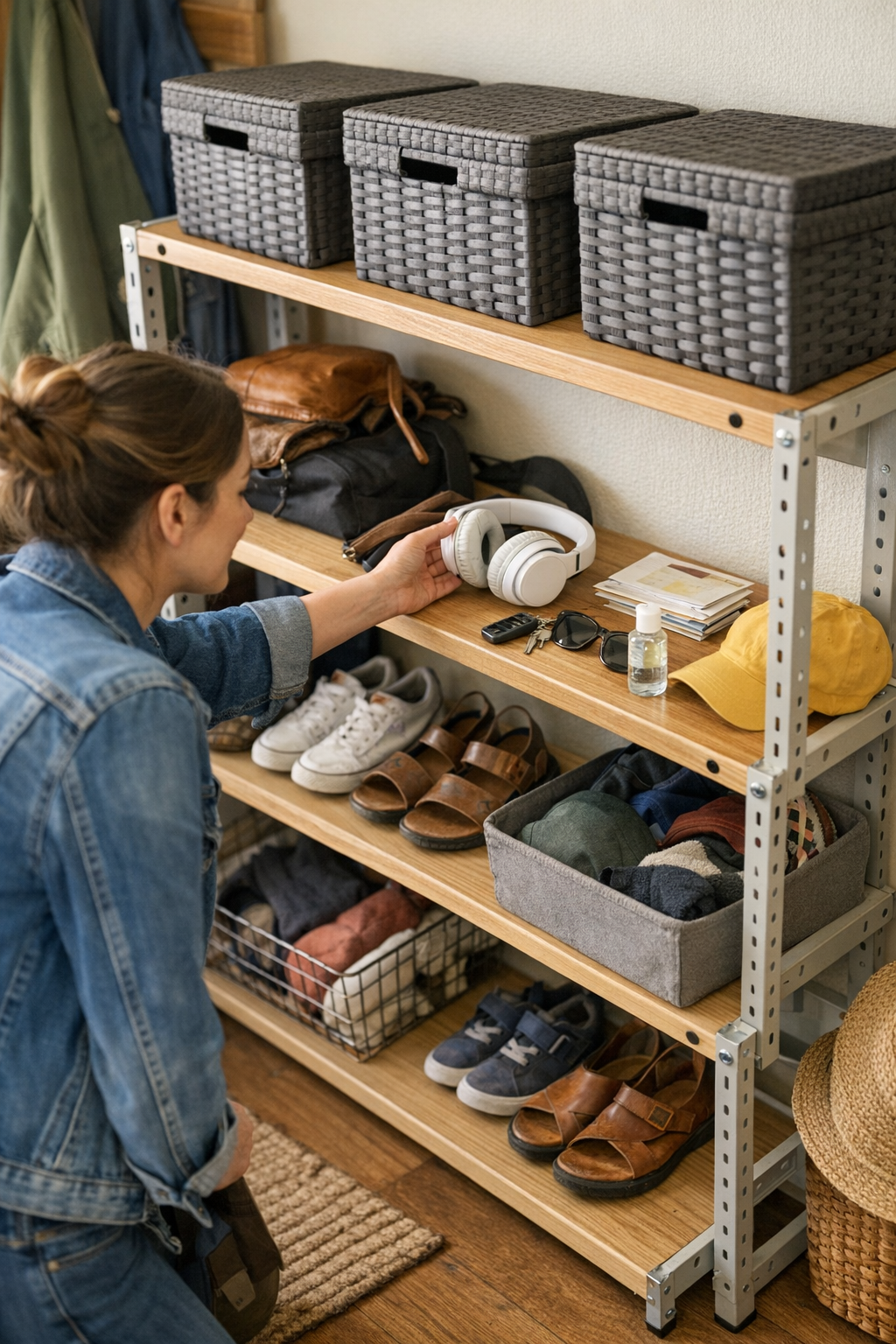
The glossy promise of “organized” storage is everywhere—matching baskets, rows of bins, that dream of everything in its place. But real-life pressure points surface fast: not on day one, but during the third rushed morning, the fourth laundry load, the fifteenth time you dig for headphones you swore were in “the basket.” Instantly neat-looking spaces are easy to create, especially in active zones like entryways, closets, or at the base of the stairs. But as the week unfolds, it’s the usability—not the look—that matters. That’s where so many setups quietly break down.
Photo-Ready or Practical? The Tradeoff You Feel Every Day
Uniform bins and pretty baskets deliver instant transformation: shelves go from chaos to a glossy catalog page. The illusion usually unravels by breakfast. With nearly identical baskets, the search begins: all the lids look the same, but today you need the field trip form, a left glove, the earbuds for the bus ride. Closed storage turns morning access into a guessing game—lifting lids, peeking under folded scarves, hoping you don’t have to upend a stack to check the next bin down.
This whack-a-mole hunt doesn’t limit itself to one spot. Bins migrate to bedroom bookcases, hallway shelves, laundry nooks, and suddenly every quick grab becomes a mini excavation. The daily buildup is subtle: things quietly drift out of the “system” onto open surfaces—a hat on the banister, shoes abandoned by the sofa—because retrieving them from “organized” storage now takes three extra steps nobody wants to repeat.
When Hidden Storage Creates New Problems
Closed bins aren’t inherently flawed—they’re just mismatched with everyday, high-touch items. For backup extension cords, extra mittens, or holiday decorations, hiding stuff away makes sense. For everything you—and everyone else—actually touches on a daily basis, it just gets in the way. With phones dying, mail needing sorting, and a child late for practice, the last thing you want is to fumble through the wrong basket—again.
Categories That Don’t Stick
Every storage system starts with hope: one bin for hats, one for pet stuff, another labeled for “chargers.” By Thursday, the charger bin holds crayons, goggles, and a single slipper. Life’s pace tramples categories. After enough mishaps—gloves tossed in “mail,” receipts hopelessly crumpled under scarves—the whole family stops bothering, because the work of sorting outweighs the payoff. Overflow builds up, and the original boundaries dissolve.
The Chain Reaction of Extra Steps
Scenes repeat: the dog leash hides in the third bin down, so two bins come out, slumping the tidy line of containers. Grab one thing, reshuffle them all. Or worse, you open, dig, and realize—wrong one. Stack, unstack, restack: these slowdowns add up and pile on irritation. By Friday, the shelves look less peaceful, more like an obstacle course. The “easy” routine is suddenly a test of patience.
High-Traffic Zones: Where Order Collapses First
Busy entryways expose the weakness immediately. Everyone coming in or rushing out wants surface-level speed, not lid-lifting or mystery bins. What begins as organized—backpacks in a bin, shoes stacked away—ends with sneakers clustered by the door and bags draped over chairs. The system quietly fails under the pressure of life in motion.
Closet shelves tell a similar story. Folded shirts start upright in a deep basket, but as outfits are yanked during frantic mornings, the pile tips, shirts slouch, and soon everything’s toppled at the bottom. Instead of maintaining order, the storage container becomes just another mess to sort through, not a system that keeps its own shape.
Real-life storage only works if it keeps pace with habits. If putting things away takes too many steps, or if seeing what you have requires constant uncovering, clutter will always find new homes—usually on the nearest horizontal surface. By Thursday night, open counters and spare chairs fill with everything crowded out of neat-looking bins.
Open Storage: The Real Shortcut to Staying Organized
Here’s where small changes make a visible difference: open bins, shallow trays, and clear shelves change the whole dynamic. With daily-use essentials in full view, you skip the rituals of sorting and hunting. Suddenly, “grab and go” routines work as intended. The result isn’t just speed, but better boundaries and less reshuffling overall. What actually happens day to day:
- Immediate access: Water bottles, keys, headphones—one move, not five, and you’re out the door.
- Easier resets: When you see the shelf crowding, you can purge or rehome items in seconds—no more “out of sight, forgotten ‘til spring cleaning.”
- Role clarity restored: It’s obvious what goes where, so hats stay with hats, tech stays together, and the dog leash doesn’t wander into snack storage.
- Fewer lost items: Visibility cuts down on double-buys and last-minute panics—if you see something’s missing, you notice right away.
Set a Visual Limit—the “Tray Is Full” Trigger
Open storage comes with a built-in signal: when the tray fills or the bin overflows, it’s time to purge. No more mystery stockpiles hiding behind closed lids. Use a shallow tray as a parking space for daily items—when you can’t fit more, it’s an obvious cue to reset. The shelf stays steady and your system regulates itself, not just on day one, but over months of use.
Know When It’s Time to Rethink Your Setup
You’ll feel it first in your own daily beat—if you can put things away and find them again without pausing, your system works. But when you catch yourself:
- Repeating the same hunt for the basics
- Noticing bins morph into mixed heaps that lose their roles
- Watching “just for now” items multiply on counters
- Feeling hesitation or annoyance every time you need to return something
—that’s your gut telling you it’s broken. Usually, you don’t need a total overhaul; one open shelf at “grab height,” or a few see-through bins in the busiest spots, is enough to take the pressure off and win back function. You don’t need perfect categories—just visible, one-move homes within reach.
Where Style Meets Reality (and Actually Lasts)
There’s still a place for lidded boxes and matching baskets. For guest blankets, off-season decor, or craft supplies you reach for once a month, the benefits of hidden storage—dust control, visual calm—make sense. But for your “in and out” stuff, visibility wins every time. Durable, livable order isn’t about glossy calm; it’s about being able to function, fast, every day—even after a tornado of a week.
If shelving still feels crowded, bins fill up fast, or the “organized” look falls apart by midweek, consider: a move toward open, obvious storage isn’t just style—it’s relief. And relief tends to last longer than any label.
Find practical solutions for every routine and room at ClosetWorks.