
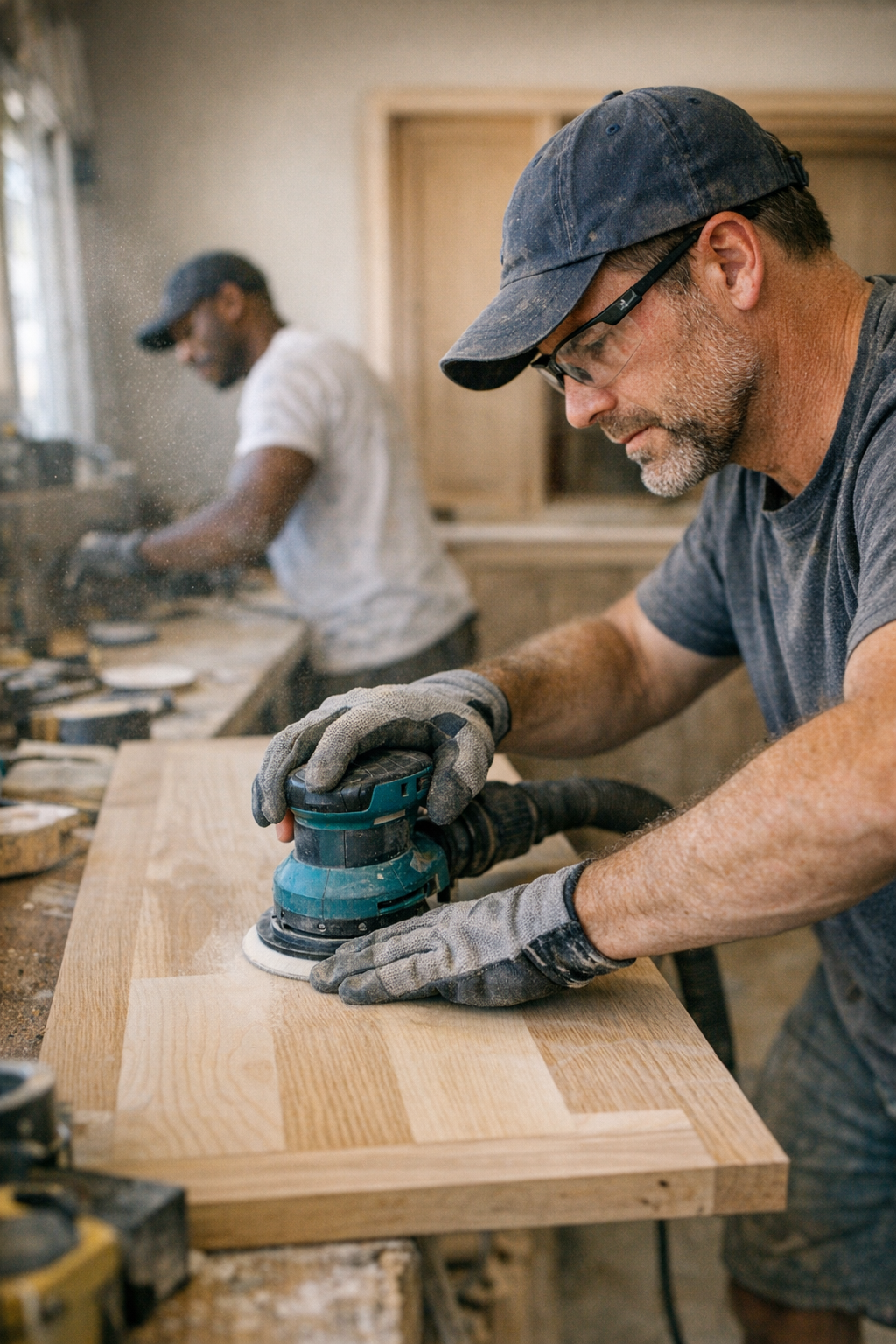
Sanding a dozen panels in a row is when reality hits: the faster you push, the uglier the surface gets—and every streak or swirl you leave behind just piles on more rework down the line. The temptation is obvious: crank the sander up, rip through the old finish, and get on to the next project. But after your third or fourth piece, it’s clear speed comes with a cost—stray marks, rising heat, variegated grain, and a tool that feels harder to steer each round. Every pass starts feeling like payback for chasing a shortcut that never quite pans out. Anyone with a deadline and a stack of real-world work knows this struggle. Electric sanders deliver muscle, but overlook the balance between speed and control, and you’re stuck fixing the byproducts rather than moving forward.
Speed Feels Efficient—Until It Isn’t
First panels off the stack, you want to believe fast is better. Working through a batch of cabinet faces or prepping table tops, high sander speed strips finish in seconds. Jobsite urgency makes it feel right. But after you pull off that first mask and brush away the dust, reality shows up: deep scratch trails run across the grain, tiny swirls catch in the light, and outside edges feel just a touch sharp. The work you “saved” time on now needs another round.
The real headache with high-speed sanding is delayed. What looks like progress ends with you burning through extra sandpaper and dragging the tool back over problem spots. Shop dust starts escaping the vacuum, the pad gets hot, and you end up pressing harder, not smarter. If you’ve ever stopped to swap a new pad before finishing a single surface, you know the cycle: muscle through one flaw, introduce another, and the task keeps growing by inches.
Batch Work Exposes Every Flaw
Where speed truly falls apart: repetitive, high-detail work. Prepping a long run of shelves, rows of doors, or panels needing a consistent touch brings out every shortcut. That “just blast it flat” mentality works for rough stripping, but as soon as you need a presentable finish, every hasty pass leaves its record. A cabinet front burnished at high speed might look fine dry, but try laying down stain—uneven absorption and ghosted swirl marks refuse to hide.
And when fatigue settles in, your hand slips with subtle but deadly pressure. The pad skips at a corner, abandons a dull smear, or carves a line that won’t fade. Drop to slower speed and finer grit, and the feeling improves—if uneven sanding hasn’t already sealed the mistake in too deep. Most of the time, it’s not a dramatic disaster—it’s the slow grind of fixing what quick passes left behind, deciding if this piece “makes the cut” or joins the redo pile when you’re already counting panels left to go.
Small Warnings—Big Failures
Most sanding trouble starts quietly. At first, it’s just a bit more tingle in your palm, or the sander sounding off-key as the pad hums across plywood. The dust that escapes your vacuum system is finer, thicker, and hangs longer in the air. You take longer breaks, shake your hand out, or start noticing that the tool’s harder to guide. Slip once, and you’ll chip an edge. Drag a finger across the grain, and you notice a faint ridge that won’t smooth. These signals—buzzing hands, micro-ridges, lost collection—mean you’re running too hot, too fast, or fighting the tool more than working with it.
Dial, Don’t Muscle—How Speed Actually Feels
That numbered dial on every sander isn’t there for show. Turn it up and the tool’s whole sound changes: the pitch climbs, the vibration gets sharp, and your arms tense just to steady the ride. At lower speeds, the pitch drops back and you hit a sweet spot—smooth pad contact, better dust pickup, and a finish that feels almost natural under your hand. After an hour, you remember what control is. Instead of wrestling the tool, you start steering it—edge to edge, with fewer corrections and a cleaner line at every panel seam.
Even among tools with similar specs, this difference in feel is real. An orbital sander racing at full tilt (10,000 OPM) can wipe a pine board bare with force, but you’ll watch it leave micro-holograms everywhere. Ease off to 7,000 OPM and you trade a few seconds per pass for repeatable, level results that feel the same at 4 PM as they did before lunch—without the palm strain or extra clean-up.
Cabinet Install Scene: Rush Costs More Than Time
Walk onto a site with a stack of empty cabinets needing custom shelves. First instinct: run the finishing passes wide open, dust flying, machine howling—the first three shelves jump off the bench. But then you notice the edges are raw, scuffs are showing despite fresh sandpaper, and every shelf needs more work by hand. Next batch, you drop the sander a speed or two, focus on deliberate overlaps, and let the tool move—not push. Suddenly the edges blend, the dust clears easier, and a palm check reveals a surface ready for topcoat, not redo. The promise of speed? It only pays if quality survives. Most times, it’s just setting yourself up to sand the same spots twice.
Tweaking Your Process—Where Results Actually Change
Small speed shifts make the difference. For sections where finish matters—cabinet faces, trial fit panels, pre-stain prepping—bring the sander down to around 7,000 OPM. Go easy on the grip, let the tool float, and notice how pad changes last longer and your hands don’t buzz post-shift. Across ten panels, this pace actually speeds you up: fewer stalls, less heat, and rarely a missed swirl to patch. By the end, your hands and materials both thank you for not trying to muscle through every inch.
Between finishing coats, especially before applying clear or paint, run a fine grit at a steady, mid-speed pace (7,000–8,000 OPM). The extra minute here pays double when the final topcoat hits glass-smooth, with hidden marks staying hidden—even in sunlight or under LEDs.
Four Telltale Signs You’re Sanding Too Fast
- The pad’s vibration sharpens and the machine howls against the work.
- Fine dust regularly escapes past collection, hanging in the air.
- The sander stutters on edges, or you’re left reworking corners and seams.
- Subtle scratches reappear even after wiping clean.
If you spot these, back down the speed, lighten your grip, and let the sander work at its pace—not yours. It’s almost always faster overall.
The Work Doesn’t Lie: Consistency Outlasts Speed
At Gumboll, our shop tools are built for the daily grind—projects where “good enough” isn’t, and panels need to match from first run to last touch. After dozens of runs, the lesson’s clear: using raw speed to “finish fast” means you revisit the same mistakes later. The time saved in initial passes drains away to rework, pad changes, or the quiet moment you realize a fine swirl is suddenly visible across half the job.
It’s steady, controlled sanding—sometimes a click or two below full power—that keeps results consistent, tools running cool, hands ready for the next task, and shop deadlines from turning into long nights bent over the same project.