
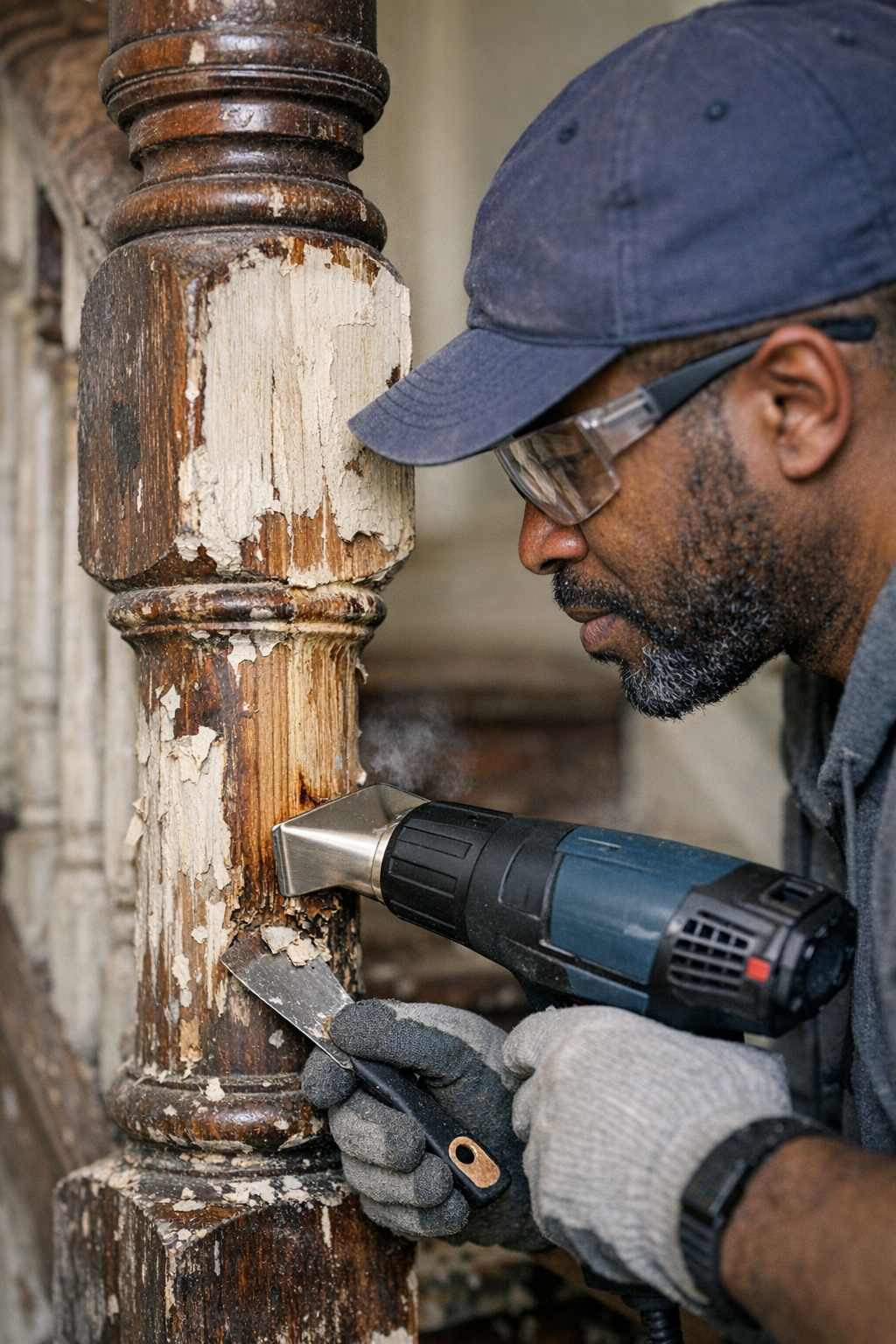
Every heat gun looks the same—until you’ve spent hours stripping paint, fighting burnt edges and bitter smells that just won’t quit. You start with hope: paint bubbles, the scraper glides, the grain looks clean. But fast forward fifty feet of trim—or one hour in a cold garage—and what began as fresh progress is hijacked by a creeping patchwork of brown scorch marks and fragile splintered wood. The promise of even, controlled peeling collapses into stop-start agony, especially around finicky moldings or layered, century-old paint.
“Good Enough” Heat Guns and the Work You Pay Back Later
Every spec sheet tries to convince you: 1800 watts, standard grip, familiar nozzle. But anyone who’s gutted a room knows that paper promises mean nothing once you’re deep into a job. One heat gun can glide and lift entire strips in a single stroke, the next leaves behind stubborn halos and charred patches that only reveal their toll when you finally start sanding. What looked like a time-saver has quietly set up hours of rescue work—filling, feathering, endless fine-grit passes—making every attempt at a smooth new finish a reminder that you “settled” for a tool that couldn’t keep pace.
This is the hidden tax paid by anyone who’s ever chased efficiency with the wrong gun. That brown shadow at the edge, that brittle rough feel under your hand? It’s the signal that your heat is spiking instead of spreading. Specs and wattage don’t account for how real paint and real wood respond job after job—and where shortcuts cost more in the long run.
How Heat Gun Frustrations Mount Over Real-World Jobs
The warning signs are subtle on a test patch. But the game changes fast when you attack years of layered paint, old shellac, and all the quirks of trim, rails, or raised panels. The rhythm: heat, scrape, slide—until a tight contour or stubborn knot throws it all off. A few seconds in the wrong spot and you get a sharp whiff of burnt finish or a fresh brown ring in the grain, the kind you’ll have to sand for ages.
Every minor mistake snowballs: you slow down, scrape with more force, double back for missed flakes. Blade chatter sets in. That crisp peel turns chalky, making progress feel like starting over every foot. Fatigue builds faster than you expect. The more ornate the trim, the more likely every curve and swirl becomes a tedious repair job, prying brittle fibers from places a better heat spread would have kept intact.
The Unforgiving Reality of Detail Work
On actual jobsites, tools need to enable flow—not constant monitoring. An inconsistent, narrow jet means you’re endlessly adjusting: holding too far away (and barely peeling anything), or moving too fast (and risking missed spots), or going too slow (and burning the edges). The result is always the same: extra sanding, doubled-up labor, and finishes that just don’t live up to the care you put in.
Why Even Heat—Not Sheer Power—Matters for Trim and Corners
Brute force doesn’t deliver a clean result if the nozzle concentrates heat into a single point, baking the substrate underneath and sending smoke signals before you see the damage. What you’re left with are hidden scorch scars—brown ghosts that only surface in the final finish, often on the most visible surfaces. Intricate moldings are where average heat guns truly fail. Linger too long or lose focus for a second, and you’re not just stripping paint—you’re carving permanent reminders of every slip.
A heat gun with a broad, even heat pattern changes the equation. You move how you need—not at the tool’s mercy. Pause to check your progress, adjust your grip, or refocus under a work light, without branding your project in the process. The whole surface stays workable, the paint lifts at your pace, and you spend less time and energy compensating for hot and cold spots.
The Difference-Maker: Upgrading to a 50mm Wide Surface Nozzle
Swapping in a 50mm wide reflector isn’t a minor tweak—it’s a line in the sand between struggle and control. Instantly, you’ll notice the change. Even on curved balusters and complex trims, the heat flows; the surface warms, not blisters. The paint softens predictably. Scraping becomes a single, calming motion instead of an anxious, stop-go scrape and reheat dance.
The payoff is real, not theoretical. The simple act of broadening your heat path can rescue detail work, cut down on sanding, and lift your finish from “functional” to genuinely satisfying. Your wrists last longer. That signature burnt-must odor fades. It becomes easier to finish a large section at the same standard as your first test patch. And most importantly, you’re less likely to find last-minute disasters hiding under your sander weeks later.
Know When Your Setup is Sabotaging the Job
Your heat gun is holding you back if these frustrations keep surfacing:
- Persistent brown spots or ghosted halos, especially near edges and joints
- That burned varnish smell, despite careful temperature settings
- Fragile, splintered wood and new cracks after scraping paint
- Dragging, stuttering scrapers that resist every pull
These are not just random annoyances—they’re signs of poor heat distribution or inadequate airflow. Each botched patch bleeds into more sanding, more patching, and the risk of blowing your project schedule (and patience) as the job demands more rescue passes with finer and finer grits.
Small Adjustments That Make Hard Jobs Easier
Don’t wait for mistakes to force you into better habits—build them in from the start:
- Start with a wide nozzle—not as a backup, but as your default
- Let your gun fully warm the surface before trying to strip—especially on cold mornings
- Pause frequently; check the color and scent at the surface if something feels “off”
- Keep your working angle flexible, especially on corners or carved trim, to spread heat evenly
- If you spot damage, swap out for a better nozzle before continuing, not after the next disaster
These fast, real-world tweaks add up. They’re the difference between a “good enough” project that demands endless post-work and a finish that survives the daylight and your own scrutiny for years to come.
The Real Win: Tools That Match the Way You Actually Work
A superior finish is built from more than just muscle or high wattage—it’s built from control, efficiency, and rhythm. The best tool is the one you barely notice: it keeps up with your workflow, supports your focus, and lets your results improve as your fatigue wears on. Whether you’re restoring old doors in the garage or running trim at a busy jobsite, long-term success comes from tools that fit your pace, your process, and the harsh realities of demanding jobs. That’s the line between finishing with pride and chasing repairs until the last minute.
For more tools, accessories, and shop upgrades built for real work—visit Gumboll.