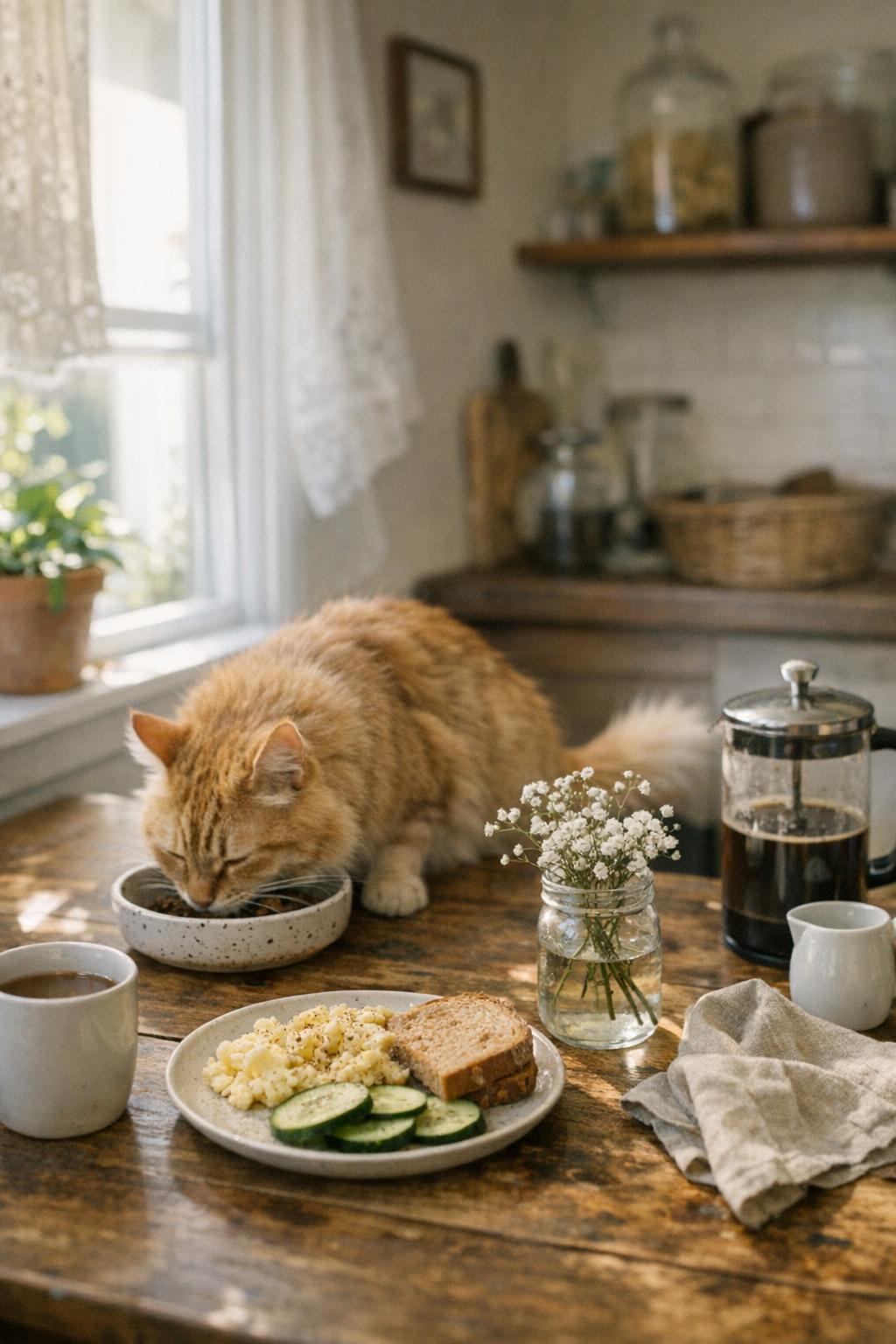
Morning light spilled softly across the kitchen floor, casting gentle shadows that shifted with the awakening day. A faint rattle underfoot signaled Goma’s presence—my tabby, ever faithful at my side during the ritual of breakfast. His quiet anticipation, marked by attentive blue eyes and subtle gestures, anchored our morning routine.
The Subtle Rhythm of Morning Rituals
Goma has been my silent kitchen companion for years, a shadow that follows the sound of opening drawers or the hum of the fridge. His quiet presence embodies a shared understanding of daily rhythms; he expects the familiar—the measured scoop of kibble, the clatter of his bowl being set down, the gentle encouragements of my voice.
Yet over the past month, I started to notice a change. Goma’s behavior shifted from subtle following to constant circling, from casual visits to insistent requests. His soft meows became more frequent, paws nudging the floor with a practiced urgency. Even after his bowl was mysteriously full, he lingered nearby, his eyes searching, his tail flicking with a hint of insistence.
Recognizing Behavioral Changes in Pets
Such changes in an animal’s routine often signal more than hunger—they can be indicators of stress, discomfort, or a shift in the household environment. Observing these signs closely helps in addressing your pet’s wellbeing proactively. Goma’s persistent behaviors—climbing on counters, pacing between water dish and feeding area—hinted that our feeding routine needed revisiting.
Practical Tip: Observe and Record
Keep a daily log of your pet’s feeding routine and behavior. Notes about changes in appetite, activity levels, or vocalizations can help identify patterns or issues early. This practice can also be invaluable when consulting your veterinarian.
Resetting the Routine: The Power of Consistency
One Monday morning, I made a conscious decision. Rather than hastily filling Goma’s bowl, I took measured care—portioning his meal with mindful attention. As he watched, a quiet exchange unfolded: a gentle nudge to my calf, a soft meow that felt like a greeting. The simple act of measured feeding transformed our interaction, and for the first time in weeks, breakfast felt whole, deliberate, and complete.
Following this, an air of calm settled over the kitchen. Goma moved from anxious pacing to content relaxation, finding his favorite blanket bathed in sunlight. The habitual tension dissolved, replaced by a harmonious rhythm between us.
Understanding the Importance of Feeding Rituals
Pets thrive on routine and predictability. Regular feeding times and consistent portion sizes provide stability, reducing anxiety and promoting healthy behavior patterns. When expectations are met reliably, pets exhibit greater calm and trust.
Refresh Tip: Mindful Feeding as a Bonding Moment
Try to turn feeding time into a mindful practice: focus entirely on your pet during these moments, refrain from multitasking, and communicate through gentle tone and touch. This intentional connection can deepen your bond, even transforming routine meals into calming rituals.
The Quiet of Post-Meal Contentment
After his meal, Goma’s demeanor shifted naturally, reflecting comfort and satisfaction. He settled into the warmth near the heater vent, grooming with deliberate care, tail curling softly. The atmosphere of the home grew quieter, more restorative. In this space, even the subtle sounds—the kettle’s whistle, the soft scratch of paws on tile—felt part of a peaceful cadence.
How Environment Influences Behavior
The physical surroundings of your pet play a crucial role in their wellbeing. Warm corners, familiar blankets, and sunny window seats offer safe havens that encourage relaxation and contentment. Ensuring these favorite spots remain accessible and undisturbed can help reinforce positive behavior.
Practical Tip: Create Inviting Spaces
Provide cozy nooks with soft blankets away from household traffic, where your pet can retreat undisturbed. Rotating their bedding periodically keeps the space fresh and comfortable.
Evening Rituals and the Gentle Close of Day
As the day winds down, our shared routines continue to knit a fabric of comfort. Goma approaches the evening meal with familiarity but calm expectation, savoring each bite. Post-dinner grooming and quiet moments reinforce a sense of safety and completeness.
The nighttime quiet deepens this connection, offering space for rest and renewal. Through these moments, I’ve come to appreciate how simple attentiveness can transform a home’s energy, easing unspoken tensions and restoring balance.
Final Thoughts: The Impact of Small Changes
Sometimes, a minor adjustment—a measured scoop, a pause to truly observe—can shift the dynamics of our household profoundly. These mindful choices remind us that care is often found in the details, and a pet’s wellbeing is intimately tied to the patterns we create and nurture.
In embracing these quiet moments together, the kitchen no longer feels like a space of unmet needs but a sanctuary of shared rhythms and gentle companionship.