Author: jaesoon_admin

  • How Frequent Travelers Organize Carry-Ons for Fast Airport Access

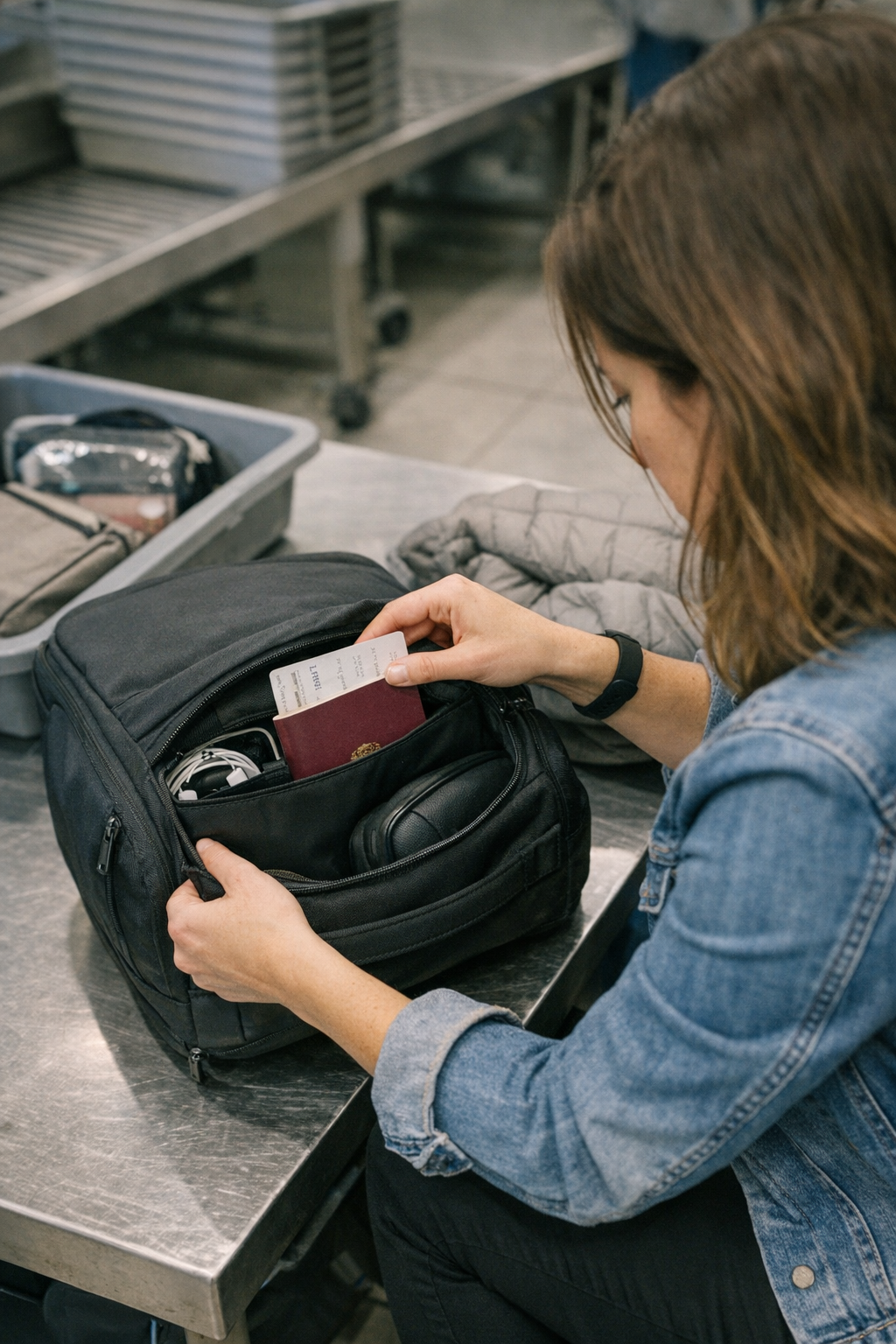
    Your carry-on can look perfectly organized—and still slow you down every single time you move. If you’ve ever felt that spike of frustration when you reach for your passport at a crowded security tray or need your ticket at a boarding gate, you’ve seen it: all those orderly pouches and zipped compartments turn into barriers the second speed counts. What seemed smart on your hotel bed becomes a tangle of layers—passport under tech gear, charger tangled above travel docs, ID wedged behind toiletries. Suddenly you’re pausing, hands in multiple pockets, the line behind you building impatience. That moment exposes the difference between having control over what’s in your carry-on and actually being able to get to it when it counts. For frequent travelers, this friction isn’t rare. It’s repeated—every line, every tray, every return to the bag.

    Why “Looks Organized” Isn’t Enough When Moving Fast

    One mistake almost every traveler makes: believing more containers automatically mean better access. Sure, your bag sits like a showroom piece on a hotel surface—everything slotted, parallel, staged. But the real world isn’t neat or slow. You’ll feel the flaw the first time you have to reach for your passport while the queue surges and realize it’s trapped under two pouches and a cord sleeve. Each extra layer—promising “less mess”—actually raises the odds you’ll hunt for zippers, dig through pockets, and lose rhythm under pressure. What looks composed quickly becomes a bottleneck the moment movement speeds up, especially in environments built around flow, not aesthetics: security lanes, crowded boarding areas, narrow aisles. Forgetting that access comes before order means having to unpack confidence in public again and again.

    The friction isn’t just first-day nerves. It compounds: Open, shuffle, pause to think—then repeat for every checkpoint, tray transfer, or boarding group. By mid-trip, the setup you praised for being “handled” is dragging you backward, forcing public repacking as other travelers press forward. The order hasn’t vanished; it’s just blocking what you need most when you need it fast.

    Where Carry-On Friction Builds … and Keeps Returning

    That Familiar Scene in Airport Security

    6:05 AM. Security line jumps forward unexpectedly. You edge your bag onto the tray, aim for your passport—and remember it’s zipped beneath layers you thought would “streamline” your trip. Now it’s both hands juggling cubes, moving gear in a rush, knees pushing the bin. What felt like control becomes an awkward scramble: fingers stuck in the wrong pocket, devices on display, small items sliding loose under stress. Repacking now means resetting the same trap for later, as quick “just for now” moves turn into more steps at the next touchpoint.

    Boarding Lines and Overhead-Bin Moments

    Gate calls boarding. You grip phone, pass, headphones—then freeze as you realize your ID is zipped two levels below, behind a wall of “systemized” pouches. You shift items, bag sags open, a slip threatens to spill, anxiety spikes. The group behind you tightens as you dig. By your seat, the neat repack takes twice as long because you’ve just performed a one-handed pouch shuffle in the middle of a boarding stream. Travel order resets, but the interruption cost is real—and it comes back every time.

    In-Transit Retrieval: When “Everything in Its Place” Blocks Flow

    Mid-flight. You want your headphones. Instead, you’re unzipping a compartment layered with paperwork and stray receipts—documents now wrinkled, cables uncoiled, what was “orderly” devolving into a quick-access obstacle course. Small retrievals create new mess, making every later reach risk another mini unpack. The system that kept things visually perfect now means repeated micro-adaptations in motion—time lost, and focus scattered throughout the trip.

    A Practical Shift: How Frequent Flyers Actually Pack for Access

    Experienced travelers ditch symmetry and prize fast reach: essentials don’t get buried—ever. That means separating passport, tickets, key tech, and phone into top-access, one-motion compartments. Forget stacking—these use slip pockets or open flaps you can reach while your bag’s still on your back or shoulder. The neat logic of hotel-night packing vanishes at gate pace. Suddenly, it’s not about ultimate visual order, it’s about extraction speed on the fourth trip through a checkpoint.

    Envision a tight transfer at a major hub: your passport, “secure” under nested organizers and a charger roll. On paper, safe. In practice, a multi-zipper fumble as you sense the line close behind you. Travel doesn’t pause while you repack. Well-meaning setups that look perfect on Instagram don’t survive real airport rhythm.

    The “Quick Exit” Pocket: A Quiet Solve for Repeated Interruption

    The unlock isn’t more organization—it’s a single, easy-access pocket for only your highest-use essentials. No zipper routes, no overlap. A wide, rim-facing slip compartment on the outer layer keeps documents, passes, and go-to tech visible and grabbable—without letting the pocket turn into a dumping ground for snacks or paperwork you don’t need to touch. Limit this section to what you actually reach for during transit. Each retrieval becomes a single, predictable move, not a three-step shuffle. Even when reboarding or lunging for a bin, you aren’t slowing for a pocket search. You move—your bag moves with you.

    How Over-Organization Can Slow the Real Trip

    Packing cubes, color-coding, standalone cases—they look like solutions, but on the move, they create new hurdles. Each added sleeve increases the chance of pouch confusion, forcing your hand to follow a choreography that fails once timetables shrink. Outer compartments—designed for speed—turn into deep “junk drawers” as layers stack, and each access becomes a search, not a withdrawal. This isn’t a hypothetical: most travelers see it halfway through their trip, repeating the same access puzzle in lines where impatience is the rule, not the exception.

    The pain point is real at busy times: after takeoff, in low cabin light, you stand for headphones and discover a grid of shifted cubes and extra cases block what used to be a simple grab. Instead of pulling and sitting, you risk dropping gear or holding up others, forced again to patch up neatness under pressure.

    Designing a Carry-On Setup for Real Movement

    The rule of thumb: If you’ll need it before landing, don’t bury it. Group slow-use and “just-in-case” items down deep; defend the top entry and outer slip zone for repeated retrievals—documents, passes, compact chargers, a travel pen. Leave room for the setup to flex: slight mess is fine if it means you never hesitate at the worst moment. The point isn’t photo-friendly order, but snap decisions and recovery—a setup that stays light and accessible through every checkpoint and churned boarding, instead of locking you into routine repacking cycles.

    The best carry-on isn’t the one that impresses in photos, but the one that spares you reentry friction after the first tray, the first boarding line, the first time you need to move faster than your bag’s “system” allows. Minimal steps, one-reach access, fewer crowd-induced fumbles: that’s the kind of flow most repeat travelers quietly learn to build, and the difference that makes every round trip less of a process and more of a path.

    Ready to dial down carry-on friction for your next trip? Browse gear that fixes repeated travel interruption at CarryOnSupply.
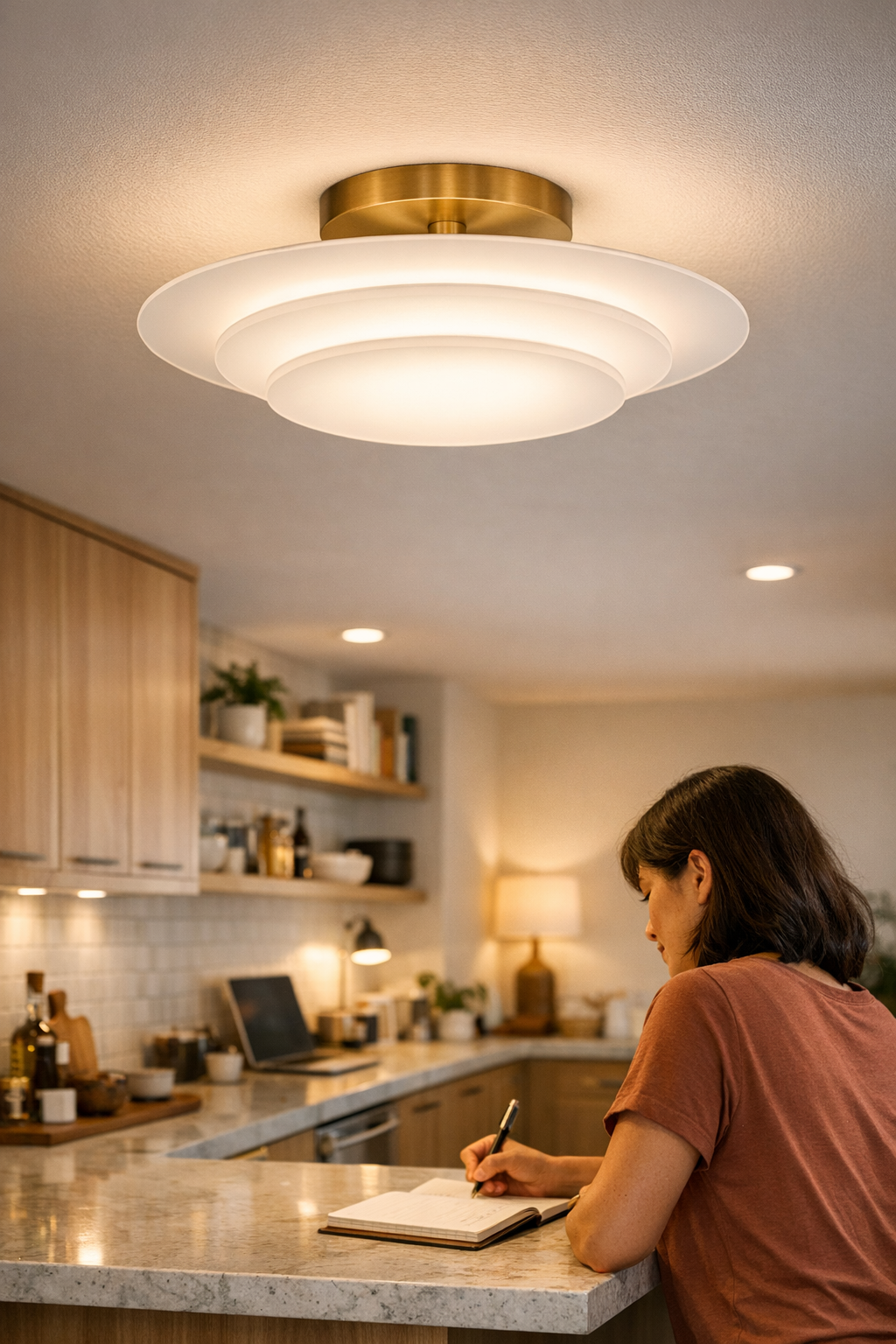

  • How Linear and Panel Ceiling Lights Transform Nighttime Room Brightness

    The difference between ceiling lighting that looks resolved and lighting that actually works shows up fast: the countertop zone left dim while every cable still catches your eye, the glare off one side of a desk, the shadowed half you avoid at night because it feels like a hassle to fix. A “minimal” fixture or tidy flush-mount promises a seamless look but in practice, it’s the edges, corners, and work surfaces that get ignored. After using the space for a week, you stop bothering with the kitchen backsplash, read from only one side of the shared table, and start stacking stray items under shelves where the lighting gives up first. Glare, patchy coverage, and cable clutter don’t fade—they become part of the routine.

    How Looks-First Lighting Choices Create Everyday Friction

    The first mistake is picking a ceiling fixture for its shape, not for how it really lights up your routine. You like the uncluttered ceiling—until two evenings later, when the central glare means you stand off to the side to avoid squinting, or shrug and leave half the island in shadow. Even when cables are “out of the way,” you keep noticing a drooping line or a support bracket just off your main sightline. Clean layouts on paper rarely survive the irritation of moving seats to stay out of glare, or leaving pantry shelves for “later” because you can’t see what’s near the wall.

    This friction adds up: a corner used only to pile stuff, a desk edge avoided after dark, fresh cable marks on the ceiling where you tried to fix the last misalignment. The workarounds pile up—and the room’s weak zones gradually become baked into daily habits.

    The Quiet Difference of Linear and Panel Ceiling Lights

    Switching from a single-point fixture to a linear or panel ceiling light doesn’t guarantee solved lighting—unless placement, mounting, and cable management work with your real room layout. Linear and panel lights break up harsh, central glare, spread brightness to side zones, and make the edges of counters and tables actually usable. Suddenly, prep work doesn’t crowd into one patch, papers don’t migrate from shadow to light, and the awkward “dead” zones get back into play after dinner. Evening comes and the whole surface stays visible—instead of one bright spot shrinking as you move away from the center.

    The risk: even a well-designed linear fixture can look as unfinished as a bulky flush-mount if you allow bent cable lines, loose brackets, or a slightly off-center install. “Low-profile” only helps if alignment and support disappear; otherwise, minor setup errors take over your visual focus and make the upgrade feel like another compromise.

    Spotlight Troubles With Single-Point Flush Mounts

    Flush or globe fixtures offer one dramatic oval of brightness—then leave the rest of the room fading into dull perimeter. Directly under the light, your eyes catch a sharp reflection off glossy surfaces or a too-bright patch on the desk. Move an inch toward the edge and you’re stuck squinting, shifting a laptop, or giving up on the far end for the night. Seeing cables first, light second, becomes normal—and glare makes every late-night cleanup or paperwork session feel like a negotiation.

    Real-World Setups: When Routine Use Picks Winners (and Exposes Weaknesses)

    Think of a shared workspace or family kitchen. A single overhead fixture keeps one spot serviceable—while everything outside its reach gets assigned to “some other time.” You don’t choose the best zone, just the one that isn’t in shadow. It’s not by design; it’s by lighting default.

    Over weeks, this creates lighting hierarchies you never planned: one side cleaned daily, the other side avoided by default; the shelf with nothing but backstock because reaching things there after sunset risks a stubbed finger. Most telling: during real routines, clutter grows exactly where light fails, not where storage runs out. A crowded prep counter is rarely a storage problem—it’s a lighting boundary.

    Moving to a linear fixture with supports hidden behind cabinet lines and cables wedged tight to a ceiling beam, the difference is immediate: consistent light lands across the whole work surface, flimsy excuses for not using half the room disappear, and after dark, there’s no need to chase down extra lamps or dodge stray reflections. The “good” spot isn’t the only one available—whole stretches of counter or desk finally stay in play. No empty corners, no shifting tasks when the light moves.

    The Real Impact: A Concrete Example

    Switching a four-foot linear light to run parallel with the kitchen counter rewrote how the space worked—especially at night. For the first time, the entire counter—from sink edge to back wall—stayed visible right through after-dinner cleanup. Brackets vanished behind trim, and an unruly cable tucked out of sight. Suddenly, routine movements flowed: prepping, rinsing, packing leftovers—no one hunting the old countertop “hot spot” and no stray lamp left in the way. Edge work and minor tasks could shift around without ever feeling half-lit or sidelined.

    Setting Up for Steady, Usable Light—Not Just a Finished Look

    Map out real traffic and task patterns before placing a single fixture. A desk isn’t just a rectangle: check where hands, eyes, and tools move, and run linear lights the same way. For kitchens, place panel or linear lights to hit counter spans evenly, with support brackets avoiding sightlines and cables routed away from overhead storage or walkways. Spreading out the light and securing attachment hardware does more for usable surface than another showy fixture ever could.

    Support hardware—brackets, cable management, anchor points—holds equal weight with the fixture. Skip corners with flimsy supports or exposed lines and every cleaning run turns into a reminder: the cable path was never finished, the bracket line shows in every photo, or that “almost” centered panel throws shadow every time you actually use the space. A neat install means cables follow the room’s lines, not your last workaround.

    Lighting Decisions That Outlast the First Impression

    Installing a ceiling fixture that solves “brightness” but skips coverage or cable control is a short-lived fix. The missing detail isn’t subtle: dim or half-lit corners, stacks and devices shifted for better light, and that tired “I’ll get to it later” feeling in every missed task zone. Ignore visible cables while mounting and you’ll catch your sleeve on one, or lose cleaning patience as crumbs pile up near the exposed edge. A room that feels “done” for photos still falls flat in daily use if movement and sightlines don’t match real routines.

    Consistency means more than symmetry: spread fixtures to reach deep work edges, not just the center; use soft-edge diffusion to prevent abrupt light-drop; disguise cables against beams or seams so they disappear from view. A linear light that’s too long distracts, while a short run leaves zones out. Picture your routines running through the finished layout—routine reveals every oversight your first impression misses.

    When the Setup Holds, You Notice What’s Missing—Fewer Adjustments, Less Compromise

    The best setup stops reminding you it’s there. If a week goes by without adjusting your posture for glare, moving piles out of shadow, or scrubbing around an exposed supply line, the improvement’s clear. Tasks spread out naturally rather than being dictated by the nearest patch of light. Those “just out of reach” cords, crumbs near the wall, or reading glasses left by the glare—these habits fade as steady, even light turns more of your space into usable territory.

    But even the right fixture fails without honest, clean setup. No panel, bracket, or under-cabinet light will stay invisible if cable droops, anchor points drift, or sightlines cut across ordinary work. Choosing light is only half the job; it’s the support, the cable route, and the final alignment that divide rooms you use from ones you tolerate.

    Find lighting and support solutions at LightSupport

  • How Small Changes in Your Dog’s Rest Area Improve Daily Routine Flow

    The reality of living with a dog is that “tidy” doesn’t always mean “easy.” That plush bed in the corner looks perfect the first night. Two days later, you’re sidestepping it as you carry in bowls, nudging it with your foot when your hands are full, or finding your dog awkwardly blocking the hallway just as you reach for the leash. The rest area that promised comfort now adds a minor detour to nearly every routine—reminding you, in small ways, that what looks organized on day one can turn into a low-grade obstacle after a week of real use. The solution usually starts with a shift in layout, not ordering more supplies.

    Why a Tidy Rest Area Isn’t Always a Functional One

    Pinning the dog bed to a “safe” quiet spot may feel organized, but it’s rarely friction-free. As days stack up, the bed drifts toward the bowl or pokes into the walkway. It isn’t dramatic—just an awkward angle here, a block for your foot there. Those small delays—dodging the edge with a filled water bowl, pausing so your dog can clear the entrance—don’t announce themselves, but they slowly turn routine steps into awkward pauses. Orderly corners are easy to admire, but it’s those invisible snags that keep routines from feeling smooth.

    Hidden Slowdowns: When Small Obstacles Stack Up

    Real friction shows up in micro-moments: the bed lines up too close to feeding, your dog hovers, uncertain if she can reach the bowl. Or she circles, confused about whether it’s time to eat or settle. You’re left shifting her bed with an elbow—never quite in the way, but never fully out of the flow. Each individual pause is easy to ignore, but over a week, repeated shuffles chip away at routine speed and make the simplest transitions feel heavier than they should.

    Repeated Routine Friction in Real Life

    The post-walk return is the pressure test: leash in one hand, towel awkwardly caught beneath an arm. You approach the corner to dry paws—except the bed blocks your path, again. Either you move the bed one more time, or you try to stretch over it and nearly miss your mark. Your dog waits, half in her spot and half out, neither comfortable nor truly out of your way. This is where “looks neat” collides with “doesn’t actually work.”

    When Comfort Conflicts with Convenience

    Most people design for comfort—thick bedding, soft blankets, close to some daily activity zone. But a plush bed creeping into a walkway, or overlapping the water bowl by just three inches, isn’t just a visual annoyance. It means extra adjustments for you and waiting hesitations for your dog, especially in busy moments: prepping food, heading out, or coming in after muddy walks. By midweek, you both reflexively work around the obstacle, accepting slowed movement as normal. Comfort and ease drift apart, and the setup never quite stops interrupting the flow.

    The Cost of Static Order: Calm on the Surface, Chaos in Motion

    Freezing the layout might look responsible, but it ignores how routines really unfold. Over time, a visually neat corner becomes a background irritant. Both you and your dog start hesitating in the same spots. She learns to pause at the bottleneck; you learn to preemptively nudge the setup, sometimes without even looking. More people or dogs in the home just multiply the impact—a space that seemed “put together” on Sunday turns into a slow collision course by Thursday evening.

    The Difference Between Looking Neat and Feeling Smooth

    Clean lines and tucked-away beds are satisfying, but a rest area that forces you to side-step, pause, or double-check is working against your day. When you realize you’re bracing for another slow shuffle after every walk, the illusion of order fades—routine performance, not visual neatness, reveals where the real bottleneck lives. The setup that tidied your floor now quietly taxes your patience.

    Small Shifts, Big Changes: Testing and Observing Micro-Adjustments

    The fix usually isn’t a full rework. Moving a bed twelve inches away from bowls or out of a walkway can dissolve the bump in routine almost instantly. Try shifting a corner just beyond the kitchen entry, or along a wall that doesn’t see direct foot traffic, and notice if water refills or towel grabs become automatic, without shoulder-squeezing detours. When routines—like drying paws, prepping meals, or letting your dog settle—start happening without pause, you know the adjustment worked. It’s not just about eliminating mess; it’s about removing micro-hurdles that make daily life drag.

    What to Watch For in Your Own Setup

    Start by tracking where you and your dog slow down. Do you find her stalling inside a doorway, waiting for clearance to move? Are you always shifting bedding with your hip, or carrying bowls high to avoid a plush corner? If the same friction repeats in the same spot, your layout’s not fitting your routine. It often takes a single busy rush—throwing down keys, wiping paws, or juggling dinner prep—to reveal the silent pull of a misaligned rest area.

    Everyday Reset: When and Why to Move the Rest Area

    Nothing about a dog’s home setup should be frozen. The purpose isn’t constant rearranging, but recognizing when friction recurs and letting layout evolve. Look for:

    • Stacked hesitations: Dog pauses or spins before meals and bedtime.
    • Blocked quick access: Bed positioning slows you from getting to a bowl or door.
    • Routine detours: The same sidestep, shuffle, or mental brace every day.
    • Cleanup drag: Wiping, sweeping, or picking up toys becomes a repeat hassle because the bed sits in the path.

    If you spot these triggers in your rhythm, it’s time for an adjustment—no matter how tidy the corner looks.

    The Relief of Fewer Pauses

    After moving the rest zone just outside the main route, the difference shows up in the pace, not just the picture. Dinner prep runs straight—not in a zigzag. Grabbing wipes or drying paws becomes one step, not three. Your dog slips in and out without stalling, and you stop noticing the bed because you’re never bumping it. A “quiet” setup isn’t about how it photographs; it’s about how little attention it now demands.

    When One Weak Point Keeps Returning

    Even with smart adjustments, the same snag sometimes comes back. Maybe bowls move, or a shortcut you didn’t think would matter starts drawing traffic again. Routines change, dogs change, and what once worked gets clunky. The difference between “looks organized” and “stays easy” comes down to whether you stop thinking about the corner, or keep having to work around it. One repeated stumble is more telling than a week of neatness.

    Perfection’s not the goal. Instead, aim for a rest, play, and feeding setup that gets easier—not harder—the more you repeat it.

    Toward a Home That Moves With You (and Your Dog)

    Order should work in motion, not just on display. Every micro-move—leash grab, food refill, towel pull, quick nap—needs space to happen without a thought. If a rest area keeps slowing you down, don’t wait for friction to pile up. Sometimes shifting a bed just six inches reroutes the whole week’s routine back to smooth.

    Track which moments keep asking for another workaround, and don’t hesitate to let your setup adjust when the signal’s clear. Removing small slowdowns is how you reclaim real calm in a dog-filled home—one plain, daily task at a time.

    Explore everyday dog-life setups at DogPile

  • How Concealed Cable Management Enhances Focus and Workflow Efficiency

    Cable routing on your desk isn’t cosmetic—it decides how well your workspace actually works, hour after hour. Exposed cords don’t just clutter your view. In repeated use, every dangling cable tugs your wrist, interrupts a reach to your notebook, or forces you to move devices just to clear space. What barely registers as background clutter in the morning becomes a constant disruption by late afternoon, when the motivation to reset fades and tangled lines slow every transition. The difference between a ‘tidy enough’ setup and one that truly removes friction isn’t about appearances—it’s about whether cables pull you out of flow and force you to manage your desk again and again.

    Visible Cables: The Hidden Cost of Daily Disruption

    In the tight space between your keyboard, notebook, and monitor, cables are rarely just passive background. Any cord trailing over your desk edge, looping into your workspace, or a charger wedged near your mouse pad quietly blocks movement. By midday, these lines turn into real friction points. Your pen snags a wire, a laptop cord makes you slide your notebook further away, or you pause to lay a stray cable flat before typing again. Minutes disappear—not as a single event, but through endless, invisible interruptions every time you switch tasks or shift posture.

    This all compounds during constant jumps from digital to paper, or when your desk depth is already tight. Two or three visible cables can turn the sweep between typing and handwritten notes into a sidestep—forced to nudge devices out of the way or recalibrate your elbow to dodge a power line. When pressure spikes toward the end of the day, these blockages break your focus, making every reset slower and harder to recover from.

    The “Neat but Not Clear” Trap

    It’s easy to imagine that a neatly bundled cord or zip-tied cluster solves the issue. But in practice, just shifting the mess to another part of the desk still lets cables interfere. Reach across to jot a note and your sleeve snags a tightly grouped wire. Try to slide a notebook from under a monitor riser and a looping cord jams the path. The desk may look controlled, but underneath, lines keep dictating your hand’s path and your desk’s reset speed.

    You’ll notice the compromise most when the pace ramps up: busy stretches expose every cable you thought you’d managed. The moment you pivot in your chair and graze a wire, or stop mid-flow to re-wrap a cord that’s crept loose, the gap between “tidy” and “usable” becomes instantly obvious.

    What Real Concealment Changes at Your Desk

    The real change comes only when cables disappear from both view and reach. This isn’t just about a cleaner look—it’s what lets desks actually move with you. A cable tray screwed under the back edge, a proper box hiding power bricks behind the monitor, or clip sleeves dropping lines entirely below the desktop: these moves shift the context of your whole workday. Suddenly, the sweep from keyboard to pad is open again, and you stop calculating your every elbow move.

    Noticeable differences appear almost instantly. You don’t track whether rolling your chair will catch a cord. Your mouse comes back into hand without a second check for tangles after sliding a notebook. The phantom urge to retidy between calls fades, freed from the need to manually police loose lines. Every retreat from a snag or pause for cable correction simply stops happening.

    How Cable Paths Shape Real Work Routines

    • Moving from laptop to notebook: With no cables crossing your dominant arm’s path, your pen lands and moves without detours.
    • Settling your chair for close focus: Cables routed out of leg space mean chair wheels and shoes clear the area—no hidden snag steals your momentum.
    • Resetting the desk between meetings: Clear surfaces, with cords out of sight, let you swipe stray notes away fast—no untangling or re-circling cords just to reclaim work area.
    • Late-day position shifts: If you switch to a stool, stand, or scoot sideways for a stretch, concealed cables don’t pull or push back. The desk stays neutral, letting you re-enter flow instead of fending off friction.

    When Concealment Fights Flexibility

    Total cable concealment comes with a price. Once cables drop into under-desk trays or fixed sleeves, quick swaps mean crawling below or undoing setups. Plugging in a new monitor, redirecting a charger, or moving a dock takes more time. For people whose workstations change often—testing hardware, loaning equipment, or swapping ports daily—perfect hiding quickly becomes annoying. Smart setups split the difference: anchor routine lines in a tray or cable box for daily clutter reduction, but leave a clip, slip-sleeve, or open hook at the surface for adapters or chargers you regularly change out.

    The result isn’t perfect calm, but a practical balance. Cables you touch every day stay accessible, but the ones that always get in the way disappear in the zones you actually use most. Even removing just your top two or three friction lines can return the desk to a usable reset rhythm—while a single flexible cable keeps device swaps easy without dragging chaos back onto the work surface.

    Everyday Clues: Is Cable Friction Costing You?

    Do you dodge cords to lay your notebook flat? Find yourself adjusting device positions just to clear a cluttered path for your hand? Notice split-second checks at the tray edge, or catch yourself re-tucking wires multiple times per day? That’s cable friction taking real time and attention. Individually, each slowdown is tiny. Over a week: real energy lost, more transition errors, and slower recoveries between tasks. These cues—reset delays, posture interruptions, repeated sightline checks—signal it’s time to rethink cable paths as more than a cosmetic adjustment.

    Small Structural Fixes, Big Workflow Return

    • Swap out visible cord wraps for a mounted under-desk tray; this immediately clears your main problem zone without major effort.
    • Let crucial charging lines retain a visible slack if you replug often, but drop workstation cables fully out of line-of-sight to eliminate constant touch-ups.
    • Track improvement not by surface neatness, but by how long you go without thinking about cable position. After several days, forgotten cables mean friction is gone.

    The Real Test: Desk That Feels Clear, Not Just Looks It

    A cable system isn’t working because your desk looks like an advertisement. The true measure: fewer interruptions, less repositioning, no habitual cable corrections, and easier transitions—especially when you’re under deadline. Every cable you hide is one less opportunity for friction, but excessive concealment can make swaps clumsy. For stable setups, the freedom from daily drag far outweighs rare plug-and-play inconvenience. What matters isn’t the perfect line or pristine surface, but whether your desk resets quickly and stays out of your way—day after day, task after task.

    Choose structure to match your real patterns. For most, a reliably hidden route for everyday lines, plus one flexible path for quick changes, delivers a smoother workflow that survives repeated use—and doesn’t require a daily cable audit to stay functional.

    Explore the full WorkBasic collection

  • Why a Simple Reset Rule Keeps Your Workspace Functional Every Day

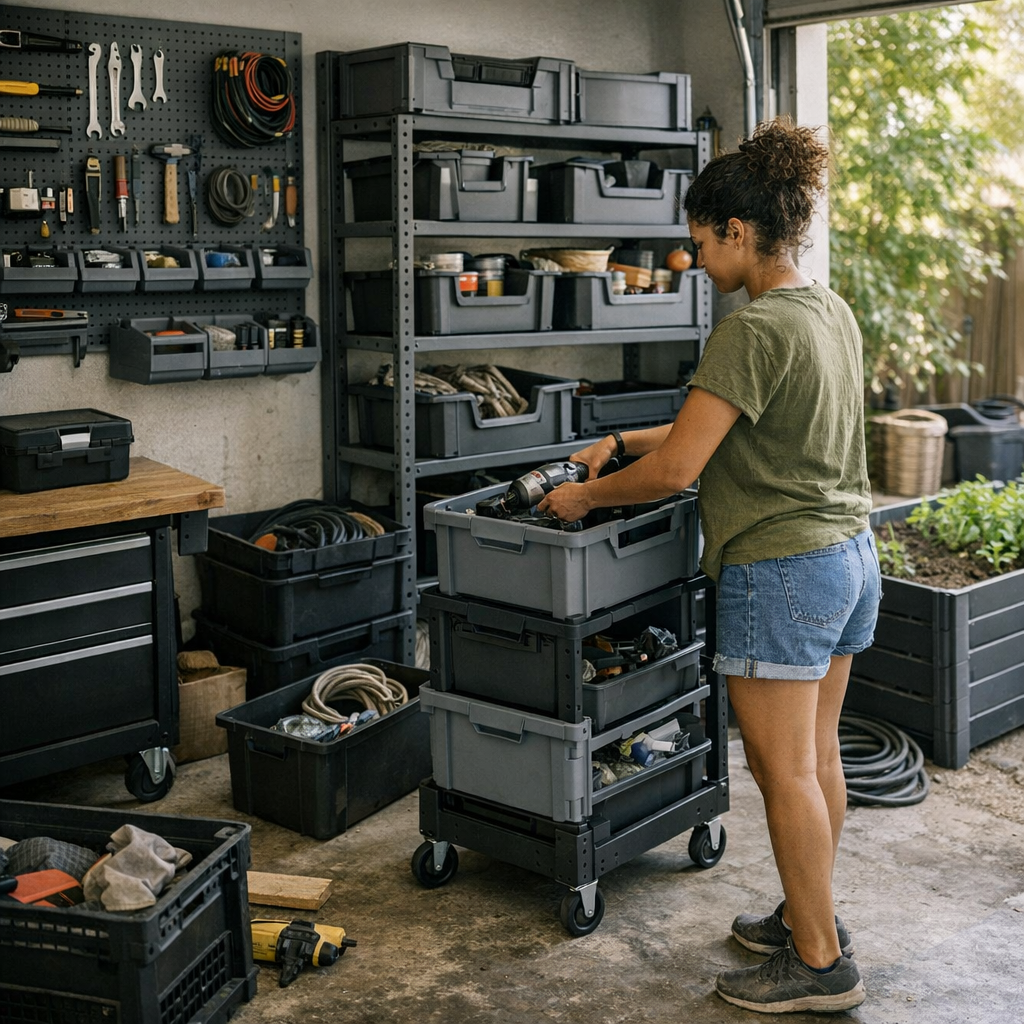
    Set up a garage, workshop, or utility space, and you know the initial satisfaction: every shelf snapped in, bins stacked, tools racked in clean rows. But the real test comes weeks later—once normal projects and everyday mess start rewriting your layout, one shortcut and pileup at a time. A setup might look perfect the first day, but when you walk in midweek, rushed and juggling hands full, how well does it stand up to real-life use? That’s the real question of storage performance.

    The Real Challenge: Routine Use, Not First Impressions

    In the beginning, modular carts roll smoothly, wall panels gleam, and every tool has its numbered spot. But the moment jobs get busy, reality intrudes. Need your sander? You set it down “for just a minute” on a cart—then never move it back. Slide a bin to open the cabinet. Nudge a rolling chest sideways so you can squeeze past. A good plan on paper starts eroding every time you have to move two things just to get at a third.

    The signs are everywhere: corners morph into dumping grounds, overflow baskets settle into main walkways, and wall hooks once lined with tools transform into extra shelves for boxes and gear “waiting for later.” The more you adjust your movement to avoid blockages, the slower everything feels. Showroom order fades fast; daily function starts to drag.

    Where Friction Builds Up—And How Fast

    Little obstacles quickly become walls. Maybe it’s the cabinet that always catches your hip because you have to angle around it, or the rolling cart permanently parked across your main path because there’s nowhere else for it to go. Pretty soon, your setup isn’t serving you—you’re serving the setup, reshuffling bins and sidestepping baskets just to get started.

    It’s deeper than not having enough storage. The true issue is the return flow—the ability to bring the space back to ready without a restructuring marathon every Saturday. When every task involves juggling, shifting, or detouring around awkward footprints, even the best-planned layouts grow tiresome. That’s how what promised smooth access turns into slow frustration.

    Overflow Creep: The Silent Space Stealer

    The constant enemy? Overflow that appears quietly and never seems to leave. It’s the “later” pile—leftover hardware, half-used rolls of tape, project scraps balanced on a bin for just a day or two. But as soon as one session ends and another begins, nothing’s actually cleared. The piles migrate: a bin mound by the wall, stray gear teetering on a cart, a bag wedged into a corner that was supposed to be open.

    Instead of a clear area, you end up weaving around makeshift stacks, stretching to reach what used to be directly in front of you. Overhead shelves become landing pads for random overflow. Corners you thought would boost capacity instead just collect things nobody wants to deal with. The cost? Your main routes shrink, work slows, and you start avoiding your own setup.

    The Reset Rule: What Separates Usable from Unraveling

    The secret behind workspaces that actually stay clear is surprisingly simple: a minimal, truly doable reset routine. Not a complete overhaul, but a short, repeatable step you can manage every time—even when you’re in a hurry or done for the day. It’s less about neatness and more about preventing drag: identifying where stray tools or overflow bins belong (even temporarily) and making sure key movement paths are always open for next time.

    In practice, it could be as basic as this: at the end of a session, anything left out goes to one designated catch-all spot next to the exit. Quick scan, five items into the overflow zone—then you’re free. The workspace isn’t museum-grade pristine, but you aren’t starting the next job clearing a runway. The crucial difference? Resetting no longer feels like work; it’s just routine, no matter how chaotic the project was.

    How to Tell If You Need a New Reset Rule

    You don’t need a full-on mess to spot a setup problem—just small patterns that signal friction:

    • Constantly shifting a cart or basket just to open a path or cabinet
    • Finding random tools or supplies stranded in areas they don’t belong
    • A recurring pile in the same dead corner, never quite cleared
    • Avoiding certain zones because “temporary” clutter keeps lingering a little too long
    • Resetting the space feels like an intimidating commitment, not a quick evening wrap-up

    When you notice movement slowing, routes narrowing, or stalling before a task because of blockages—your storage needs less organizing and more routine resetting.

    Why Hardware Alone Falls Short

    It’s easy to believe another wall rack or set of bins is the answer. And yes, modular gear helps showcase a catalog-level workspace—at first. But when there’s no fast path to clearing overflow, even the nicest wall panels end up buried under “on hold” gear, and rolling bins morph into roadblocks. Tools and supplies have a place to live, but getting them back there feels like a mini project every time.

    In the end, storage only works if it supports constant return to clarity. Otherwise, you’re stuck in the classic shed trap: gear technically organized, but in practice, always one pile away from chaos, and momentum lost to endless reshuffling.

    How to Build a Reset-Resistant Layout

    1. Create a Single Overflow Zone

    Designate just one spot for overflow—a visible, convenient area by the door or the main walkway. When a session ends, only this spot needs attention. You avoid the spread of piles and keep the rest of the space functional.

    2. Guard Your Main Artery

    No matter how you arrange storage—rolling chests, racks, bins—commit to never blocking the core walking route. Protect it: if you have to wrestle a cart or step over a basket to get through, the risk of friction and buildup multiplies.

    3. Redefine “Good Enough”

    You won’t always have time for deep resets. That’s normal. Make it your pattern to do the five-minute version: stash what’s loose in the overflow, realign anything left astray, move on. The art is routine return, not visual perfection.

    Real Use: The Only Test That Matters

    Setup success isn’t measured by how impressive it looked the first day, but by how smoothly you can walk in, start work, and reset the space—even after a stressful week. If the layout lets you return to baseline with minimal effort and almost no thought, friction stays low and the workshop remains an asset rather than a source of dread.

    The best storage never stops you in your tracks. Its real promise isn’t perfect rows, but routines that hold up when you’re tired, distracted, and in a hurry. Every setup fails eventually if resets are too hard—but the right reset rules keep your space useful, no matter how often chaos visits.

    Explore practical storage setups at StackNest.

  • Why Entryway Storage Placement Makes or Breaks Daily Clutter Control

    Every entryway reveals the same pattern within days: shoes pile up by the threshold, bags drift out of immediate reach, and “temporary” piles tighten the very path meant to stay clear. The promise of entryway storage is control—but the reality depends on where your key storage actually lands. If your shoe rack or bench sits even a step or two too far from the actual flow, the chaos returns, fast. The wrong setup quietly overloads the edge zone, forces awkward detours, and turns simple routines into repeat obstacles you never planned for.

    When Storage Lives Too Far from the Action

    The instinct is classic: keep the entry picturesque by pushing storage deeper—stacking racks, benches, or cabinets beyond immediate sight, lining up hooks on walls past the landing zone. For a day, maybe two, the front feels open. But as soon as daily life resumes—a fast in-and-out, arms full, kids darting through—the separation breaks. Here’s where friction gets real:

    • Shoes stall right beside the mat, never making it back to the distant rack.
    • Bags cluster around the path “for now,” waiting for a reset that gets bumped by the next arrival.
    • Mail lands on the nearest surface, rarely migrating beyond the entry until habit or schedule allows.

    What starts as rare slippage turns quickly permanent. Those extra few feet kill the reset. Instead of order, you inherit a rolling obstacle course no one claims, but everyone works around. The myth of a tidy, far-off storage zone dissolves the second repeated use exposes the drift.

    A System that Breaks Down Under Real Traffic

    Peak hours reveal the cost. Mornings mean frantic exits; evenings bring tired arms, wet boots, and the familiar traffic snarl. Here’s what actually happens in homes that push storage too far away:

    • Overflow squeezes the threshold where room is tightest, not in the controlled “storage” area.
    • The bench lost by the far wall sits empty as shoes erupt around the door.
    • Bags and jackets drape over chairs, pile up at corners, or hang awkwardly from door handles—visible stopgaps, not systems.

    Instead of fixing clutter, remote setups move the overflow to the worst spot. The entryway clogs. “I’ll clear it later” becomes a nervous refrain. The cleanup backlog grows—and with each reset deferred, the clutter forms a semi-permanent blockade at the only space that can’t afford it.

    Near vs. Far: It’s Not About Looks—It’s About Routine

    Compare these two setups:

    • A wall-mounted bench anchored just inside the threshold.
    • A slim vertical rack further down, out of the initial path—neater in photos, harder to reach.

    Both seem neat on day one. By week’s end, the contrast is sharp. The distant rack collects only what someone bothers to carry; the bench by the door becomes the actual reset point. Shoes, bags, coats—everything lands on the closest available surface. Reaching deep for storage turns into an exception, not a habit. The result? The “for now” pile stakes its claim right at the boundary, growing with every return.

    The near-bench option does something crucial: it makes reset almost automatic. Entry storage only works if it’s impossible to miss in real-life flows. Too much distance, and the micro-reset collapses. Annoyance trumps intention, and clutter wins by default.

    The Reality of Clutter Creep

    Small moments expose the system. Picture three people coming home on a wet day:

    • Boots too soaked for the rug get abandoned at the door—forming a ragged wall after just two arrivals.
    • Grocery bags demand an immediate drop, turning the nearest open floor into a clutter magnet.
    • Backpacks, gym gear, and jackets cluster at the pinch point, forcing each newcomer tighter into the pass-through.

    This isn’t about laziness; it’s about friction at the margin. When the most-used storage isn’t right at hand, “temporary” fixes repeat until the path jams up and resets feel punishing. Entryways built for clean lines but not real behavior trade functional flow for short-lived appearances.

    What Actually Changes When You Move Storage Close

    Shift your core storage—bench, hooks, shoe rack—just inside the threshold and the effect is immediate:

    • Shoes and bags drop naturally during entry, not after a forced trek past the action.
    • Small resets—straightening shoes, sweeping grit, restoring order—become near-automatic because they’re on the way, not out of the routine.
    • Overflow shrinks. It’s easier to return things right where habit forms, so piles don’t take over.

    The simplest diagnostic: for one week, watch where things actually end up. The “official” storage zone is whatever surface captures daily use—not the one that looks best when staged. Every unintended cluster tells you where the friction lives. If dealing with shoes, bags, or coats is still awkward, the storage is too far.

    Using Far Docks Wisely

    Remote cabinets, large vertical racks, corner benches—they have a job: off-season boots, extra gear, overflow for items you rarely touch. But for everyday shoes, coats, and bags, the only zone that works is the one you walk through with full hands and zero patience. If it’s not within the path of entry, reset never becomes routine.

    Put distance to work by reserving the farthest spots for rarely-used items. Force daily essentials to live on the front line—so returning them is easier than avoiding the reset. Storage should help your default, not add steps to every start and finish.

    Recognizing When Your Setup Isn’t Working

    Watch for the signals: stepping over repeat piles, promising “I’ll sort it tonight,” or fighting with a buildup that undermines your open space. If your storage makes you work around stuff instead of with it, you’re resetting the wrong problem. The cost isn’t just mess—it’s everyday drag, path congestion, and the steady stress of never quite catching up.

    Choose storage just one stride too far and frustration compounds. The zone stays tidy in theory but fails in daily practice—a universal hurdle, not a personal flaw. Most layouts are built for how a transition looks, not how it holds up under repeated, untidy use. Routine, not appearance, is the axis that matters.

    Entry Storage That Works With You, Not Against You

    Every transition-space setup fails or succeeds by how it handles imperfect, repeated entries—not by the order captured in a single tidy moment. Storage that sits where the pressure is sharpest—within reach as you come through the door—carries the flip: resets happen by default, not effort. Even a small shift—a bench moved closer, a wall rack added at the edge—can break the cycle between intention and overflow for good.

    If you’re caught in a loop of constant reacquisition, reset, and never-quite-clear passage, don’t just clean harder—move your storage to where your habits insist on landing. The right setup isn’t invisible: it works because it puts the fix in your way, not out of it.

    http://www.betweenry.myshopify.com

  • Small Nightly Resets Prevent Mess Build-Up at Cat Feeding Stations

    A feeding area that looks organized on Monday morning can turn into a source of extra work by Friday—even if you never see a dramatic mess coming. For most indoor cat owners, the feeding setup is less a solved space and more an ongoing adjustment: bowls shift, mats creep, stray pellets migrate, and what started as “tidy enough” quietly becomes a small but persistent hassle. Walk by midweek and things might seem fine. But after a few skipped resets, unnoticed drips, and crumbs tucked just out of view, that low-key corner demands a full scrub and drains the energy you meant to save.

    When Visual Order Masks Real-World Mess

    The catch isn’t obvious—until it is. Bowls lined in a row and a mat sitting straight can hide an invisible buildup: grit settles under edges, water seeps behind seams, and debris drifts where you rarely look. Cleanup feels simple day-to-day—until you kneel down and realize most of the mess never showed up until the weekend reset, when you’re forced to dig it out. Visible order doesn’t equal easy upkeep; a setup that looks calm on the surface can still pile up the next big chore underneath.

    This problem goes past looks. The setup that appears “fine” can lull you into skipping quick wipes or failing to re-center the mat. Every shortcut after work quietly hands off residue to the next day—until, days later, one “easy” corner has hardened edges, stuck bowls, or that unmistakable gritty feel underfoot. The burden shows up all at once, not as a crisis, but as repeated work you thought you’d avoided.

    A Familiar Scene: When “Neat” Isn’t Actually Clean

    It’s easy to do a quick check after feeding: refill, glance, move on. But the mat picked up crumbs near its farthest edge, the back rim of the bowl collected a film after the last water refill, and that cluster of kibble near the wall hasn’t moved all week. On Thursday evening, nothing looks urgent. By Saturday, your foot snags a rough patch near the cabinet, toys from a late-night game carry bits of food into another room, and sticky spots resist a basic wipe. All the skipped “two-second” resets compound until you’re stuck resenting the corner you carefully organized.

    The Hidden Consequences of Skipping Real Resets

    Most indoor-cat cleaning is less about mess explosions and more about friction that accumulates—quietly, relentlessly—until it slows you down. A mat once good at trapping debris now has an immovable border. A bowl with “just a little” residue suddenly won’t wash clean. The headache isn’t the initial mess—it’s how invisible layers build up in places you thought were under control, forcing a bigger job you never scheduled.

    This is where appearance blindsides real function. Nightly good intentions fade; crumbs drift under the mat, dust combines with fur, and water sneaks between the mat and wall. When the “contained” zone seeps into shared space, you get reminded—you’re not just managing a feeding area, but chasing its creep all over your home, especially by the end of the week.

    What Actually Happens in Real Repeated Use

    Reaching for a Quick Fix—and Finding It’s Not So Quick

    Anyone who’s bent down expecting a fast bowl reset, only to brush old crumbs, knows the reality: supplies aren’t always handy, and grabbing that wipe from the next room is enough reason to put it off. The cleaning cloth lives in the drawer, not beside the bowls—so a two-minute task becomes a ten-minute chore on Saturday, when grit has set in and the whole area feels layered with missed details.

    The Human-Cat Dance: How Cat Life Complicates the Routine

    Small changes make a big impact. Slide the bowl closer to the wall to stop scatter, and feeding gets neater—but now the bowl blocks a cabinet or makes reaching awkward. Use a softer mat for comfort, and it cushions paws—yet it also hangs onto crumbs, making a one-wipe reset impossible. Every improvement for the cat can introduce one more friction point for you, slowing resets you wish stayed quick.

    Movement Patterns that Multiply Mess

    Cat routines don’t respect boundaries. One paw flick sends dry food moving; a tail swipe launches water past the mat. Toys rolling through the feeding area turn into debris couriers, redistributing dirt into living spaces. These slow interruptions aren’t accidents—they’re the pattern that guarantees even “contained” zones spit extra work into other rooms, bite by bite, swipe by swipe.

    Practical Tweaks That Shift the Whole Experience

    The difference between a once-a-week time sink and an easy daily upkeep boils down to what your setup allows you to do without thinking. In many homes, bowls are pushed tight together, the mat crowding the wall, and the most accessible path blocked by a stray item that “belongs” but complicates the reset. A setup that’s hard to move or clean locks mess in the same problem zone, every week.

    Move and Lift—Don’t Just Wipe What’s Visible

    Instead of only wiping where you see crumbs, get in the habit of shifting bowls and mats an inch or two after meals. That quick lift exposes where buildup starts: the seam behind the bowl, water that escaped the mat’s edge, crumbs hiding under the rim. Interrupting the layer before it hardens means resets don’t pile up—the weekend never surprises you with fossilized messes.

    The One-Inch Rule for Rim Grime

    The first spot to trap stubborn mess is the last inch along the back of the bowl. A single damp cloth pass here, right after dinner, stops sticky buildup before it becomes a chore. When you handle this each evening, bowls rinse clean, mats lose that tacky feel, and you avoid the musty end-of-week smell that signals skipped resets.

    Keep Cleanup Tools Handy—But Not in the Way

    A stash of cleaning wipes or a designated cloth right next to the station—within hand’s reach but clear of the feeding path—makes fast resets normal. Out-of-sight means out-of-mind; too close means blocked access and causes you to skip it anyway. Placement matters: if grabbing the tool is automatic, daily cleaning is too.

    The Real Test: How Setup Choices Play Out Through the Week

    The risk isn’t that the feeding area explodes into disaster—it’s that tolerable clutter silently becomes overwork because the system needs more daily intervention than it gets. What repeated use actually reveals: If you’re pushing bowls aside to chase old mess, you’ve already let the friction build up. If crumbs and dust travel past the “feeding zone,” the setup isn’t just holding pet life—it’s creeping into yours.

    Accept That Some Spill Happens—But Stop It from Settling

    No matter how carefully you arrange things, some food escapes, some water drips. The smart move is giving yourself a structure that lets you recover easily: quick resets, fast moves, nothing blocked or buried. If you notice Saturday is always the rescue day, your system is passing all the invisible work to the weekend—and the work always grows.

    Why Most Setups Need One More Adjustment

    A perfectly arranged feeding area is only as effective as its resetability. If it can’t be moved quickly, wiped underneath, or checked for stray debris in seconds, small messes become lasting friction. The real difference isn’t how straight things look, but how many times you find yourself re-setting the same items after the fact.

    Final Takeaways: The Difference Between Looking Fine and Feeling Easy

    Anyone can stack bowls in a row and smooth a mat. A truly workable feeding zone is one that lets you reset in real time, not one that quietly hands off stray work to your future self. The most livable setups don’t chase perfection—they make it normal to shift, lift, wipe, and get on with the day, saving every weekend from a project you didn’t plan.

    For more practical indoor cat setups and tested home-life solutions, visit StillWhisker.

  • Why Dustproof Underbed Storage Cases Are Essential for Quilt Care

    Underbed storage looks like the simplest way to fix quilt and bedding overflow—until the shortcuts start costing you time. One poorly chosen case or flimsy bin is all it takes to turn a smooth bedding swap into a dusty, awkward reset. Instead of grabbing a fresh quilt, you find yourself dragging out boxes that look organized from the edge but guarantee another round of rewashing, shaking out, or delayed changeover—all because the underbed zone never actually stays closed, clean, or easy to use when seasons shift.

    The Invisible Cost of “Nearly” Organized Storage

    Sliding neat bins under the bed gives an immediate sense of progress, but even a week or two of real use exposes quiet failures. Lids pop halfway open after a single tug, plastic bins flex and gap as you nudge one aside, and even “sealed” containers collect lines of fine dust or pet hair by the next swap. Those steps you thought would shrink the bedding project—slide the bin, flip the lid, grab the quilt—get interrupted by the need to check for debris, shake out dust, or worse, rerun laundry for things that just sat too long in a not-quite-closed case.

    The breakdown is subtle but relentless. The first time you put off putting away a comforter because the box isn’t actually clean, it feels minor. By the third or fourth cycle, the underbed area creates its own friction. You end up stacking overflow at the edge, finding hidden lint stuck to new corners, and moving the same bins around with growing hesitation. What you pictured as sorted storage now steals time from every reset.

    When Visual Order Fades Into Hidden Hassle

    The gap between looking organized and staying usable grows with every bedding change. Open bins and matching boxes deliver a clean underbed line, but daily reality cracks through after a month. Stack or pull a case, and the slip of a lid or popped corner lets dust creep in unnoticed. The next time you want to swap a quilt, you’re opening three bins just to find a set that feels clean enough. That promise of a streamlined system fades fast—replaced by extra sorting, stalled resets, and the visible creep of things you meant to solve for good.

    Take a typical weekend: after a determined deep clean, you line up bins perfectly, telling yourself this time the storage routine will last. But within the season, the cycle returns: you stand on the balcony shaking out a quilt because fine dust worked straight through the case. Bin by bin, the time you thought you’d saved leaks away—and that illusion of control quietly gives way to another round of blocked movement and half-done returns.

    Long-Term Use: Where Real Storage Choices Show

    Underbed storage setups don’t break down on day one—they wear thin by the fifth bedding change, or the first time a pet sneaks under the bed, or after an unplanned cold snap. The wrong case starts to sag, shift, or leak dust at the seams; what seemed like a “dustproof” bin loses the fight after a few moves, while anything soft-sided warps after a season of bumping cases around. When the system stumbles, your routine starts collecting friction: laundry piles up, resets get delayed, and the underbed area turns into storage you dread touching instead of a functional extension of the room.

    One design change—switching to a zippered, rigid-edged, tightly sealed case—alters the flow immediately. The minute the case doesn’t collapse or leak, you skip the air-out, shrink the laundry queue, and pick up the reset without second-guessing. That change in the underbed zone isn’t just about keeping things neat; it finally lets you move bedding in and out without the multi-step hassle that cheaper solutions always promise to solve but never do.

    The Surprising Pitfalls of Skipping Measurements

    Even the best case fails if you skip the setup basics. Bin only a half-inch too tall? You scrape it every time, wearing through slats and destroying the floor finish. Cases crammed too slim lead to flattened, lifeless quilts—nothing feels ready for use, and the bedding you swap in never restores its shape. More than one “fits-most” solution ends up parked sideways or half-pulled out, blocking movement and making you wish you’d just left everything in a closet instead.

    There’s no shortcut: measure your underbed clearance and check the folded dimensions of your thickest quilt. A good case glides straight to the wall and pulls out clean, no awkward shuffling, no jammed corners, and no daily temptation to pile overflow somewhere else.

    Sealed, Zippered Cases: Less Work, Not More Steps

    The myth: open bins make for quick access. The reality: every open edge or snap lid is one more breach for dust, humidity, or pet hair. Long-term, those “convenient” entry points bleed slow chaos into your routine. Lids warp, plastic shifts, and each nudge turns the whole system more fragile, more out-of-sync. Every time the seal drifts just a bit, small failures build—by the end of the season, the system you built for efficiency now creates extra maintenance instead of saving effort.

    Switching to a fully zippered, reinforced storage case brings visible difference. Rigid sides prevent collapse, seals finally hold, and resets don’t get interrupted by cleaning or sorting. What seems like a small hardware tweak quickly shows up as fewer laundry days, faster bedding swaps, and less time lost to troubleshooting a “solution” that keeps almost working, but never quite does.

    Breathability: The Key Detail Behind Dust Control

    Kicking out dust can’t mean locking in moisture. Store quilts or down bedding in airtight plastic, and you trade dust for that stale, closed-in smell. Look for zippered cases that balance tight, dustproof panels with breathable fabric sections or vents—especially in zones prone to humidity. That detail makes the difference between bedding that feels fresh after a month under the bed and bedding that needs a forced air-out before the first use.

    The Real Payoff: Storage That Reduces Reset Friction

    Tidy surfaces count for nothing when every bedding swap adds to your to-do list. The actual value of a dustproof underbed case: it lets your storage vanish from daily thought. There’s no pause to shake out bedding, re-clean, or hunt for new hiding spots—resets become single-move, repeatably frictionless. Suddenly the underbed area works as an extension of your actual routine, not as a zone you keep rearranging or cleaning around. The benefit isn’t subtle the fifth time you reach for a quilt and it’s ready, shape intact, no lint to shake out, no laundry added—just grab, remake, and move on.

    Explore more practical indoor storage solutions at Gridry.

  • How Organized Pet Bags Can Reduce Noise and Hassle on Night Walks

    The trouble with most pet-travel bags isn’t obvious until you hit your second curb stop of an ordinary night walk. You hang the leash on your wrist and grab the “organized” setup by the door—treats packed, wipes tucked in, collapsible bowl zipped away. But on the very first cleanup, your free hand is already picking through pockets, finger caught on a bowl rim, trying to drag out one wipe without dropping half the section onto the curb. The bag that looked ready falls short the instant you need quick access more than visual order. Every stop, you’re forced to reshuffle, making a “prepared” setup feel more like an obstacle—especially when your pet tugs forward before you’re re-packed.

    The Visual Order That Disappears With Real Movement

    Most pet-travel organizers look smart sitting still: every compartment has a label or mesh, treats won’t mix with cleanup gear, and everything holds just-so—until you actually move through a pitch-dark street or hit cracked pavement. A few minutes in, that tidy side pocket sags as items settle and slide. The divided mesh intended for two categories grows into a jumble: treats propping wipes sideways, bowl pushing into the leash clip, zippered pockets shrugging off their contents with every unintended jostle. Reach for wipes and instead wrestle a handful of tangled gear. You started with visible order, but now real use shows the cracks you never notice at home.

    Preparation never survives the first few restarts without friction. The breakdown happens between stops and starts—the curb crouch, leash looped tight, grab for wipes or waste bag, and the wrong item lifts out first. The difference isn’t how clean the gear seems, but whether a midnight walk feels steady or scrambled by each missing quick-access handoff. With every circuit, those micro-disruptions add pressure. What looked organized collapses into repeat interruptions, and it’s never the bag’s selling points that are the problem—it’s how they fail under real, routine pressure.

    Where Repeated Movement Exposes the Weak Points

    Most friction during short pet excursions isn’t a dramatic spill—it’s the endless repetition of small, avoidable slowdowns. Shared pockets become choke points: wipes wedged behind treat packets, zipper lines puffed open just enough to leak a rolling waste bag or bowl. Every “quick” pause means you’re still sorting, still correcting, still untangling—while your pet is already straining against your arm for the next patch of grass. Reset the order and it’s undone before your next stop. The invisible drag builds: items shift, supplies dangle together, and what looked set in the entryway dissolves in the field.

    So the same cycle repeats—always a little untidier, always with more unexpected overlap. It’s rarely a total mess. But as pockets cross over, items block each other, or a sticky wipe pouch glues itself to water gear, you feel the slow grind: reaching for what you need, when you want it, becomes slower, never easier, no matter how prepared the kit looked at 7 p.m.

    Overlap: The Hidden Saboteur in Pet-Travel Setups

    The friction point isn’t how much fits—it’s what happens when sections collide. Shared compartments guarantee overlap. The moment wipes and a travel bowl share a side slot, every hand-in risks dragging one out with the other, or loosening the whole setup into a clatter. The overlap is subtle until the leash jerks or a crouched reach turns into a two-handed recovery. Over time, those “small” retrievals stretch into repeat pauses. Soon, grabbing essentials means disturbing comfort gear, and pet items blend with your own keys or phone, blurring the line between categories you wanted kept separate.

    This is the true fault line: the gap between what looks sorted and what actually lets you control the routine. The illusion of preparation shatters the moment you can’t move through a walk in real time, forced into extra corrections and mini-restarts. With every loop, those collisions become louder than the quiet order you planned for—until “organized enough” feels like a compromise, not a solution.

    Scene: Fumbling Through the Night Walk

    Picture the moment: late evening, second lap down a block. Your dog stops hard at a shadowy patch, and you need cleanup gear—now. Leash wound tight, you dig for a wipe in the same compartment as treats and bowl straps. Instead of a clean grab, the wipe packet comes up hooked to the bowl, maybe even yanking both onto the walkway in a dark tangle. You’re left kneeling on cold pavement, sorting and stashing what should have been one fast, quiet move—while your pet has already nose-dived three feet ahead. The “prepped” setup just made the whole routine harder when every second mattered.

    Tuning for Repeat Flow Instead of One-Time Order

    Most travel routines improve not by buying more compartments, but by refining the structure. Giving cleanup every its own flap—clearly marked, always in the same place, never blocked by bowls or snacks—breaks the overlap that usually piles up mid-walk. Instead of shuffling gear each stop, essentials wait in isolation: wipes and bags reset in one motion, hydration gear in its own zone, nothing banging against or tangling with items for the next restart. When something leaks, sticks, or needs to be swapped, you deal with it without transferring the mess.

    The difference isn’t flash. It’s the sum of 20 smoother pauses on a single route. One hand, without glancing, nails the location of wipes. If a curb is damp, the cleanup kit shields the rest; no sticky or wet cross-contamination. Each small pick-up or stop resets instantly—restoring the pace instead of forcing another shuffle and delay. The win isn’t in the bag’s looks but in every avoided fumble, every second you keep your focus where it matters—leash, pet, street, not the constant correction of your setup.

    The Real Dividing Line: Looks Ready or Actually Works?

    Most kits never fail outright—they wear you down by multiplying the smallest delays. Each shuffle stacks up, turning “it’s fine” into low-grade irritation. Organizing for real use means scrapping the idea that a kit only has to impress at setup; it has to function when you repeat the same tasks all week. The difference becomes obvious on day three: Do you step out feeling ready—or already prepping for another fight with pockets and tangled supplies two curbs in?

    The gap between kits that look calm and those that move at your speed is what makes some setups repeatedly frustrating, even if the mess is never spectacular. Real travel isn’t about shielding you from every routine friction; it’s about making sure the same snag doesn’t trip you up at every restart. A strong setup isn’t perfect—it just takes one persistent hassle out of the route.

    Explore practical pet-travel setups at PawGoTravel

  • Why Storage Systems Fail Over Time and How to Fix Them for Daily Use

    Why “Organized” Can Still Mean Frustration

    The photo-ready closet is a siren song. Rows of matching bins, almost military-perfect folds, and a shelf that practically dares everyday life to mess it up. But give it a month—sometimes just a week—and that glossy “after” look often starts working against you. Socks end up buried behind bins that block your reach. The “tidy” stacks soften, lean, and collapse as you fish out a single shirt. Shelves become slow, awkward obstacle courses instead of helping hands. Somehow, clutter returns—not as a mess you can see at a glance, but as a string of tiny slowdowns, shortcuts, and silent frustrations that linger in your routine.

    This is the trap: setups that solve for appearance on day one, but not for how you use your space twenty days—or two hundred days—later. A closet system that seemed perfect on a Saturday afternoon routinely starts to buckle by Wednesday, when the bin you need is under three others, or you have to reshuffle an entire stack just to grab gym shorts before work.

    When Looks Deceive: The Downside of Fast Fixes

    The “Organized” Illusion. It’s tempting to grab a set of bins, snap on some lids, and call it done. Deep bins promise to hide chaos. Tall stacks create the momentary high of order. But under weekday pressure, these fixes unravel—because perfectly contained isn’t always perfectly usable. Most of us don’t have the patience (or time) to unstack and restack bins just to reach the daily basics—and the more steps it takes to get to what you need, the more temptation there is to leave things out “for now.”

    Picture the hallway closet before work: In a rush, you swing open the door hunting for your gym bag, only to face a wobbly tower of bins. Each one you move threatens to unmake the careful order you spent a weekend creating. By Thursday, stray gloves lurk at the back, scarves are balled up in corners, and the shelf loses its logic. If grabbing one thing means shifting three others, the system has failed real life—no matter how good it looked the day you finished.

    Where Storage Starts to Slow You Down

    The truth leaks out in seconds lost: delays you only notice when they add up. Need a hat? Now you’re pulling lids off opaque bins, rooting blindly, and causing an avalanche by the third try. Soon, the lids stay off, overflow takes over, and the idea of “resetting” the shelf feels heavier every day.

    Open baskets sound like freedom, faster access, and ease—but if there’s no divider, they devolve just as quickly. Small stuff sinks to the bottom; headphones twist into glove tangles. Within weeks, what was “organized” morphs into a mixed catchall you dig through instead of use.

    How “Perfect” Setups Fall Apart in Routine Use

    Every system shines—until you use it. Take the classic shelf of folded t-shirts: crisp lines on Monday, slumped stacks by Friday. Every time you grab a shirt in the middle, the neat pile sags or slides, and you’re restacking after a single pull. Or the tidy row of shoes by the door that, after three busy days, has extra pairs creeping up the wall, lost mates hiding behind boots, and the “zone” evaporates under rush hour reality.

    Spotting the Real Issue: If you catch yourself constantly restacking, moving items just to reach a basic, or sighing at the sight of a shelf that should make life easier, you’re not failing at organization—the system just isn’t matching your daily moves.

    Small Tweaks, Big Gains: Making Storage Actually Work

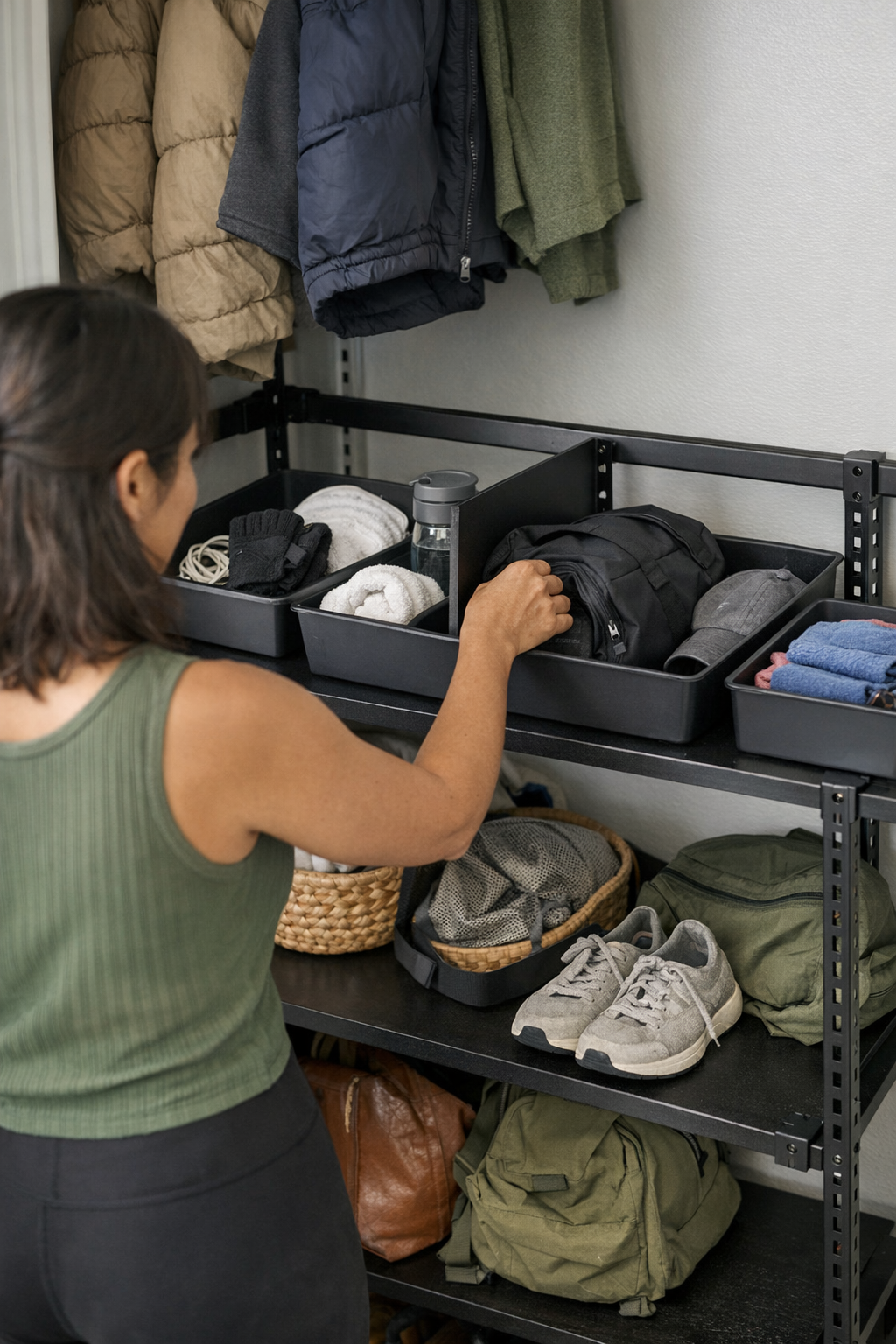
    Real fixes aren’t grand gestures. In one hallway closet overhaul, swapping deep bins for shorter trays and adding a vertical divider changed everything: the gym bag became a one-reach grab, not a rescue mission buried behind tote bags. Hats and gloves finally kept to their lanes. With trays only one item deep, nothing disappeared—and even at the end of a long day, the quick reset felt doable, not draining.

    This change didn’t turn the closet into a magazine spread. But it did make roles clear, cut down on stuff left out “for now,” and nearly erased the old habit of stacking things wherever there was room.

    Why Storage Logic Fades—And How to Prevent It

    The biggest culprit? Expecting rigid structures to fit routines that always shift. Too many bins, and it takes three steps to put anything away—so you don’t. Slicing categories too thin means you stop sorting altogether. Real homes reward flexibility and visibility: fewer, open containers with clear boundaries and easy access. They aren’t always photogenic, but they hold up through hectic mornings and messy weeks.

    Design for Habit, Not Just for Show

    The gold standard isn’t the shelf that impresses visitors, but the setup you actually want to keep using. Choose containers based on real grabs and put-backs. For your everyday routine, use open trays and baskets—dividers where needed—so you see what’s there and can return things without hesitation. Keep lids and closed bins for out-of-season sweaters or backup bedding you reach for a few times a year, not for the things you need at 7 AM.

    Keep an eye on the warning signs: that pile growing on top of a bin, the object that won’t quite fit its box, the repeated detour around an overfilled basket. These are clues—use them to fine-tune, not overhaul. Often, the smallest tweak (a divider, a shorter tray, a shelf lifted two inches) delivers the most relief, making daily access easier and keeping clutter from sneaking back in.

    Make Your Storage an Ally—Not an Obstacle

    No one’s routine is picture-perfect, and no storage system will always stay that way. But a setup with smart visibility, honest boundaries, and fewer steps does more than just look good—it operates in sync with you. Whether it’s your primary closet, the rush-hour entry zone, or that kitchen shelf you raid five times a day, storage that truly works makes busy, messy weeks feel a little smoother. Instead of frustration hiding beneath the surface, you get support you can count on—even when life gets messy.

    Find practical closet systems, shelving, trays, dividers, and more at ClosetWorks.