Author: jaesoon_admin

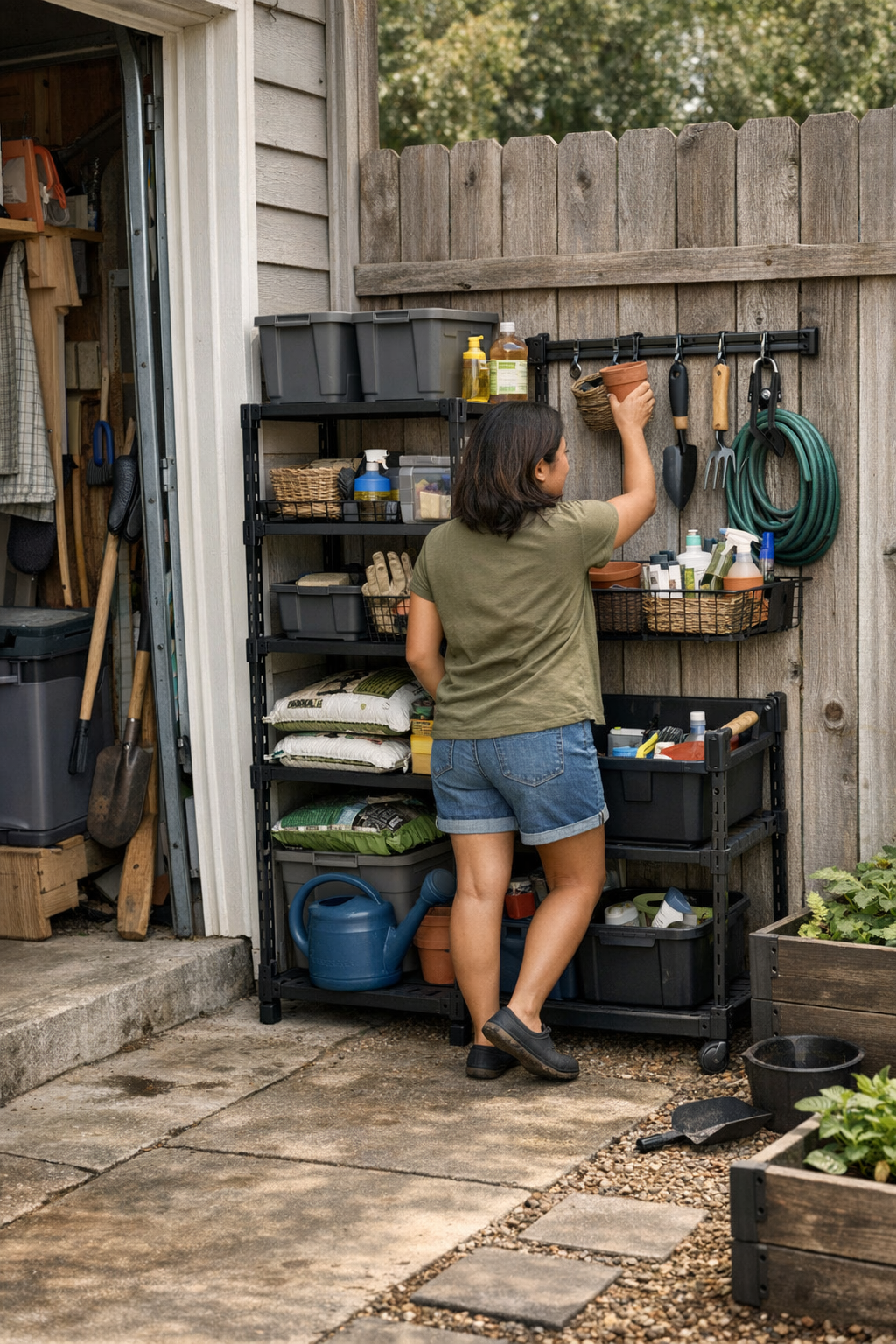
  • Why Outdoor Storage Systems Fail When Real Use Begins

    Most outdoor storage feels solved until you actually start using it, week after week. At first, the side yard or patio-edge looks squared away—lidded bins snapped shut, lawn chairs stacked, rakes out of sight. But reach for a shovel after a rainstorm, or try to put away muddy boots when your hands are full, and the setup shows its cracks. That clean, organized surface quickly demands shuffling, stacking, and constant quick fixes. There’s a real difference between a backyard that looks tidy and one that actually lets you move, work, and reset without interruption.

    Clutter Moves Into Your Path, Not Just Your Pile

    The drive for a minimal fence-line or neat shed pushes everything into bins and boxes. Gloves wedged in totes, secateurs buried under hoses, soccer balls smothered by lawn bags: it’s organized until you need the third item down. One gardening session, and suddenly you’re peeling open heavy lids just for a misplaced trowel, or moving bins so you can grab the rake without knocking over the hose cart. That crisp, stacked look doesn’t last past the second or third use—friction creeps back in with every task.

    The mess rarely explodes all at once. Instead, you get walkways filling up with “just for now” piles—boots left near the shed door, garden bags dropped at the fence, tools that never quite make it home because their “home” is too buried. Every small detour signals it: the system isn’t out of space, it’s set up for surface calm and hidden hassle. The smooth footprint is an illusion; the more you use it, the more awkward the flow becomes.

    Where Tidy Setups Break Down—In Actual Motion

    Think about a typical setup: storage bins stacked along a garage wall or tucked into a side-yard cabinet. Leaving gear out of sight keeps the yard pretty, but only until you hit a wet stretch or a week of projects. That’s when the bottom container needs unloading, or the last-used tool ends up exiled somewhere in the stack. It takes just a couple of hurried drop-offs before the original “system” turns into a tangle—lidless containers, tools sprawled at the cabinet base, boots abandoned at the threshold, blocking the rest of the walkway.

    These are the choke points that shrink what should be open routes. Suddenly you’re shifting lawn chairs just to free the path for the mower, or nudging camping tables aside to clear access to the hose. Once piles gather along a wall, every quick return—“just leave it here for a minute”—invites more overflow. Days later, the area officially “organized” feels as clogged as before.

    The Modularity Shift: Open Use Beats Hidden Clutter

    Stacked bins try to keep order by hiding gear. Modular wall strips, open rails, or shelves shift order into motion: everything sits uncluttered, visible, ready to grab. At first, the wall rack full of shovels or pegs lined with gloves can seem busy—less visually tidy than matching tubs. But once outdoor tasks ramp up, the setup doesn’t unravel. You use one item, you return one item—no reshuffling, no leftover pileups.

    After a round of planting, you drop the trowel right onto its peg, hang up the gloves, and move on. Even with dirty hands or arms full, you can reset the area in seconds. The system doesn’t just look organized; it actually stays that way. Shared spaces suddenly work for everyone: no more decoding which bin holds what, no more “I’ll fix it later” dumps in the path, no more depending on whoever set the system up in the first place.

    Real-World Reset: Garage Edge Revisited

    This shift only feels real after you’ve lived the before-and-after. My patio cabinet, once packed with lidded tubs, lasted a few weeks before weather and routine opened the floodgates. Each trip meant digging through the bottom bin just to grab one bag of soil. Rain turned the ground around the cabinet into a catch-all: garden tools, boots, and empty planters crowding up the path. By May, my supposedly space-saving stack had doubled its footprint—but made moving through the zone a headache.

    Switching to an open rail and shelf, easy to reach and no stacking involved, changed the reset entirely. I could shove boots back onto an open rack and hang trowels straight from the door—no bins to open, nothing to move out of the way first. Even on wet days or with the pace of group cleanup, returns never clogged the entry. There wasn’t more storage; there was just less buildup, fewer obstacles, and an ease that stuck through the season. No more shifting two bins just to put one tool away—and no more micro-clutter dragging down every routine.

    Small Changes, Big Difference to Movement

    The worst blockages start right by the access points. Whenever you need to step around a bin, unstack a tub, or sidestep a jammed-in chair just to return one tool, clutter wins. Corners meant for easy passage quietly transform into overflow zones—the hidden graveyard of “temporarily” stranded boots and project leftovers. Even the least-used spot can become a dead space, a magnet for mess as soon as normal routines speed up.

    Modular wall systems or visible shelf zones flip that routine. Movement through the area stays clean; putting items back doesn’t trigger a domino effect of tidying. The next person in doesn’t face a mess from yesterday. Instead of warning kids, guests, or partners to “watch the pile by the door,” the area handles itself—a frictionless reset instead of a reluctant chore.

    From Dead Corners to Real Utility

    Some trouble zones never look “messy” until you see how they work. The side of the garage or a fence-line often collects stray gear: sports balls rolling into the open, tools set aside for “later,” garden supplies after a busy weekend. Closed bins claim to solve the problem, but the minute someone needs the lone basketball or hedge clipper, it resurfaces—forgets to get put away—and starts blocking the path. That one spot becomes a vortex for overflow, and the awkwardness spreads to every other border zone.

    The simplest fix is to make these corners accessible for real use: hang a low wall rail, mount a pegboard, or install a one-row shelf—just high enough for anyone to grab and to return what they need without ever stacking. Small layout tweaks—dropping a pegboard by six inches, adding a ledge by the backdoor—change how quickly gear comes and goes. Every step toward open movement is time gained for actual yard work, not just cleaning up last week’s clutter.

    Stop Hiding: Choose What Actually Works

    Shoving everything out of sight is the most tempting version of order, but relief comes from never having to move three things just to use the fourth. It’s not about perfect optics—it’s about not being interrupted by your own storage system. If you can return a rake, tuck a chair, or put back boots without a chain reaction of shifting, your space works. If you need to unbury bins or stack lids after every use, it’s time for a reset.

    See where your setup stalls, what triggers overflow, and which corners become the unofficial dumping ground. Lean into open, modular options that match how your yard gets used—not just what fits the space at rest. The right storage zones clear movement, cut down on daily reshuffling, and keep your outdoor area ready, no matter how many hands use it or how often the routines shift.

    See setups and outdoor storage solutions focused on real utility at TidyYard.

  • Minimizing Jig Saw Blade Drift for Cleaner Thick Panel Cuts

    You don’t spot jig saw blade drift while you’re cutting— You discover it when the panels hit the workbench and the edges won’t line up. That’s the moment you realize: cutting thick panels isn’t the satisfying “slice and stack” routine it looked like on the first couple sheets. Whether you’re running lengths of 32mm MDF or breaking down butcher block, those early success stories lull you into a rhythm. Then the friction creeps in. The saw starts to fight you just a bit more with every cut. Joints that should be seamless now need aggressive sanding. You spend longer clamping and re-trimming than actually assembling. Suddenly you’re second-guessing your grip, your setup—even the wood. But the real culprit, slowly compounding in the background, is blade drift worming its way down each cut, turning finishing work into a rescue effort.

    How Blade Drift Sneaks Into the Workflow

    On job one, it’s invisible. Two or three panels come out straight. You move with confidence—until your fifth thick cut, and the panels refuse to sit flush. Joints get rough, the grain tears, and it never feels like a single “bad move” caused it. You blame shaky hands, a glitchy saw, a deadline-induced caffeine jolt. The reality: a blade that’s been slowly flexing off its line, lost in the noise and vibration of repeat use.

    Fatigue starts small but snowballs fast. Each round, you press just a touch harder. The saw vibrates longer, the handle runs hot, and what felt like muscle memory turns into unconscious overcorrection. The blade starts to warm, bend, and walk. Slow enough that you can miss it on sheet two—glaringly obvious when you’re sanding out misaligned seams three hours later.

    Blade Drift: Small Lag that Compounds with Every Pass

    True blade drift doesn’t announce itself in a single bad cut. It’s a series of minor setbacks—the flex in a blade, a kerf that’s too wide, the urge to push faster when the saw stutters. What really goes wrong?

    • Stiffness rules the line. Soft blades feel fine early, then bow and veer on thicker material. A stiffer blade traces the layout you intended—panel after panel.
    • Kerf width isn’t just a number. Wide kerfs cause more friction, more vibration, more heat, and more wandering. Narrow kerfs glide truer and avoid the rough, scorched edge that only gets worse with each round of cutting.
    • Repetition is the silent thief. The longer you cut, the more lapses appear. Stiffness in your hand, wandering focus, and a dull blade invite mistakes that don’t show up until it’s assembly time.

    The result? What looked like a “good enough” blade on panel one gives you a ragged, misaligned gap by panel five—no matter how many minutes you lose at the sander trying to fix it.

    In the Shop: Where Drift Disrupts Build Flow

    The real hits show up mid-project: six slabs of butcher block, each topping 35mm, all queued for cabinet tops. With every panel, the early satisfaction wears thinner. On piece four, the jig saw starts to judder, the motor seems to strain, and the cut swerves—sometimes only half a millimeter, but enough to break the groove on a joint. You feel the blade catch and hesitate. Just one wrong choice—a generic, floppy blade midway through the stack—can sabotage your afternoon. In one case, chasing convenience cost the builder an extra hour: switching to a bargain blade meant recutting, resanding, and resigning himself to filler. Multiply this by every “just get it done” shortcut, and the backlog grows: wasted material, missed deadlines, cut corners you can’t hide after the last round of shellac.

    Choosing Blades: Why Similar Isn’t the Same

    Buying blades by the label is tempting. “Hardwood,” “precision,” “fine cut”—all sound right, but not every package tells the full story. Two blades of the same length and tooth count might behave worlds apart once you hit serious material. Softer steel flexes under pressure, wide kerfs bog the cut, and low-grade teeth dull out halfway through your run. Once vibration sets in and the saw turns jumpy, the best you can do is wrestle the workpiece and hope the sander covers your tracks.

    Test for real payoff: Check the specs—look for high-carbon or bi-metal designs, and aim for a narrower kerf every time. Run two blade types on scrap before you commit them to your workpiece. Sometimes, the winner is a surprise—the stiffer, “slower” blade outpaces the flashy label once you’re on the fifth thick cut.

    When Your Setup Works for You—Not Against You

    Get it right: stiff blade, narrow kerf, and a conscious drop in feed rate. Don’t force the saw. If your machine allows, set orbital action low—enough to eject sawdust, not enough to send the blade thrashing. Suddenly, even tough oak panels part clean, edges barely need more than a finishing pass with a sanding block. On a five-piece job, your drift is barely a hair’s width. Not flawless, but finally predictable—and predictable saves hours.

    You can’t fake a perfect seam, but you can stack the odds. Fewer repairs. Less time hunched over a sander. Enough consistency that the last cut is almost as sharp as the first—without gambling on luck or muscle memory.

    Warning Signs: The Subtle Feedback You Can’t Ignore

    Drift never announces itself with drama. It’s the small signals that matter:

    • Unexpected resistance halfway through a cut
    • Edges rougher on the underside than the top—gaps you didn’t see on pass one
    • The saw shudders more, demanding two hands when one used to be enough
    • The blade or motor housing surprisingly hot after long runs

    These signals build slowly, and they’re almost always the first sign you’re heading for misalignment. Ignore them, and you’ll spend the evening wishing you hadn’t.

    Shortcuts That Cost—and Tweaks That Deliver Every Time

    Slow the pace to stay in control. Pushing harder for the sake of speed forces the blade sideways, especially in thick stock. Reduce orbital setting when depth matters. If you’re burning through a stack, check the blade after every few panels—a small nick or warp at the tip can quietly ruin the next run of cuts.

    Stock extra blades—and use them. No blade handles repeated thick-panel jobs forever. Swapping to a new blade keeps cuts crisp and control intact. If the job list runs long, invest in bulk—not just for peace of mind, but to match blades to wood and panel thickness without hesitation.

    Precision Pays—Especially Under Deadline

    Preventing blade drift is a discipline, not a one-off fix. The reward isn’t gold-plate perfection—it’s a stack of panels that actually fit by shift’s end. The mistake with drift is letting minor slip-ups snowball: a nick here, a gap there, and suddenly the project runs late or finish quality suffers. Stay alert to the tool’s feedback—resistance, heat, vibration. Cut with a blade that actually matches the job, and stay ruthless about switching out tired hardware. That’s how you end the day closing panels clean, not fighting endless rounds of sanding to hide what drift slowly ruined.

    Explore practical jig saw blades and worksite accessories at Gumboll

  • How Quick Resets Transform Daily Pet Care Into a Smooth Routine

    The Hidden Gaps in Daily Pet-Care Setups

    That feeling of control—lined-up bowls, brushes at hand, fresh towel hooked by the door—rarely survives past the second feeding or first muddy walk. It looks set for easy care, but by lunchtime, the “organized” area is already fighting back: a wet bowl crowds the counter, the brush is gone, and you’re reaching past clutter to find even the basics. The illusion of order fades fast under repeat routines, and pet care slows as you reshuffle supplies or double back for missing items. What worked at the start of the week unravels by Wednesday, turning ordinary feeding and cleanup into a series of avoidable stalls.

    Where Pet-Care Routines Get Stuck

    That so-called organized corner breaks down the minute you try to use it under pressure. Reach for a water bowl and find a food bin shoved in the way—or yesterday’s rinsed bowl is still damp, awkwardly perched where a quick scoop should be. After a rushed grooming session, the brush is abandoned on the table, leaving you hunting for it with damp hands when you come back for the next round.

    Every small slip means another slow-down. The refill bottle’s empty and not where it should be; retrieving it means doubling back to the other room. That towel you rely on for after-walk paws is gone, so dirt travels farther into the house. Each “just a second” pause adds up, breaking the feeling of routine and pushing simple care into friction-heavy territory.

    Real Use Scenes: Interruptions That Sneak In

    Come in from an evening walk—leash in one hand, drippy toy in the other—expecting a towel at arm’s reach. Instead, it’s balled up on the sofa or vanished to the laundry pile. The jug you use to refill water dishes is empty, hiding behind unfolded laundry. You end up tracking messes through the space as you try to hunt down one missing supply after another, turning what should be a two-minute reset into a minor scavenger hunt.

    And during a busy week, the cat’s grooming brush never lands in the same spot twice—used by the kitchen sink, left on the coffee table, then migrated to the feeding zone. What saves a step in one moment adds to the search later, and you burn time chasing after items meant to be ready for quick routines. Even a feeding spot that started out “tidy” by evening is blocked off by scattered toys or abandoned breakfast bowls.

    Looks Tidy, Works Slower: The Practical Difference

    Visual order and daily function don’t always align. It’s easy to reset everything each night—align the supplies, wipe bald spots, hang that missing towel—but cracks show during high-traffic hours. The friction isn’t from visible mess; it’s from essentials going missing or getting harder to grab, so each basic care step slows or stalls. If you skip even one small reset, next time you’re left staring at a missing wipe or an empty water jug right when you need it.

    Focusing on appearances means you might beat back surface clutter, but routines pile up underneath. The towel isn’t ready for a muddy dog, the scoop’s gone missing, storage bins block the counter, and daily pauses multiply. The space designed for convenience keeps interrupting your real flow, and regular care starts to feel heavier, less automatic.

    Why Fast Resets Matter—And What Actually Helps

    A reliable pet-care area isn’t about perfect order, but about how quickly the basics land back in place after use. Immediate resets—refilling that bottle before it’s empty, hanging the towel as you finish, returning the brush right away—shorten the chain of slow-downs. Skip the reset and the next routine runs into a snag; build the habit and those missing-item interruptions mostly disappear.

    Fast resets work because every action counts: refilling a bowl right after feeding, stashing the brush as soon as you’re done grooming, and returning containers before stray items pile up. Supplies stop drifting out of reach, and routines start to run as intended—with care tasks handled before they turn into time-wasters.

    Troublesome Patterns & Easy Fixes

    Pay attention to the repeat offenders: the scoop always outside the litter area, the towel never on its hook, or a refill bottle that roams the house with no fixed base. These are the small leaks that drain your pet-care flow—even when the area tricks you into thinking it’s organized. Letting these patterns build up makes daily care feel like a string of micro-interruptions and forced resets.

    The solution isn’t a big once-a-day overhaul—it’s those simple, automatic resets baked into each routine. A quick return, a refill, a wipe-down in the moment keeps clutter from invading shared space and prevents pet-care basics from breaking down right when you need them.

    Function Over Appearance, Routine Over Reset

    A setup that works isn’t defined by how neat it looks, but by how smoothly it keeps you moving—feeding, cleaning, resetting, and repeating without slow-downs. Every small habit of putting things back saves time the next round, and your space quietly shifts from hidden obstacle to silent support. You don’t need a perfect corner—just a setup that keeps basic pet care from becoming a drain on your day.

    Browse practical pet-care setups at CalmPetSupply

  • Streamline Your Carry-On for Faster Travel and Less Stress

    If your carry-on feels organized at home but slows you down at every airport checkpoint, you’re not alone. The real test isn’t how sharp your bag looks on the hotel bed—it’s whether you can grab your passport or charger without stopping, unzipping, and digging through layers while the line behind you tightens. Every extra zipper, every layered pouch, every “system” that hides essentials adds real friction in transit: delays at boarding, shuffling at the security tray, irritation when your boarding pass is a step too deep, or that public fumble when your setup blocks the flow.

    Where “Order” Meets Real Travel: The Hidden Cost of Slow Access

    From the outside, a carry-on can look ready for anything: crisp lines, packed pouches, stacked organizers. The weakness only shows when pressure hits—right as you need to produce a document under watchful eyes, or reach your charger in a gate area packed with other travelers. The supposed order becomes a liability. A routine document check turns clumsy as you unzip, dig under a mesh pouch, and repack while the queue moves on. If every retrieval or return is “just a few extra steps,” those steps start to weigh on you in motion.

    Packing details that look finished at home often break down in use. Slowdowns build in seconds—choosing the wrong pouch, opening the main compartment for a cable you’ll need twice before landing, fishing for a boarding pass that’s trapped under your toiletries. Delays accumulate each time you loop through security or face another document check, making every movement with your bag feel heavier than it should.

    Repeated Friction: When Packing Choices Start to Backfire

    Take the boarding line: you join, bag slung confidently, only to freeze when asked for one last document. Your “organized” setup demands you unzip, sift through two pouches, then repack before you can move on. By the time you’re done, the gap ahead of you has closed and you’ve felt that slow, visible inconvenience. The more flights you catch, the more these tight spots stack up—making the initial feeling of control evaporate each time you repeat the same slow access under minor pressure.

    The Real Difference: How Quick-Access Packing Alters Your Trip

    A carry-on that actually works isn’t about symmetry or perfect layers—it’s about immediate reach for your high-frequency essentials. When a gate agent requests a document, or you need your charger with people crowding around, the difference is clear: can you retrieve and return that item without breaking your flow or repacking mid-stride?

    Looks can deceive: every quick-use item buried behind organizers or in an inner mesh section triggers a “pause and reshuffle” cycle. What seemed like tidy packing turns on you—two zippers here, a dig there, then restoring order for the next stop. Repeated exposures—security, boarding, in-seat—make hidden inefficiencies leap out. The payoff of control fades with each loop; the cost of inconvenience increases the more you travel.

    Scene in Motion: The Airport Security Tray Test

    Pressure spikes at the security trays. If your laptop or passport is even one zipper too far, you turn into the person halting the line, spreading pouches and chargers across the tray. Flawless-looking setups collapse here, turning your neat arrangement into a scramble as you repack under glances from agents and travelers alike. Even a “smart” organizer system can trip you up: time pressure, fiddly pockets, and the disruption of getting order back in seconds rather than at your own pace.

    Why “Looks Organized” Is Not the Same as “Works Fast”

    Visual order—neat stacks, symmetrical kits, perfectly zipped mesh—only solves for appearance. Once travel routines kick in, slow access becomes a repeating tax: longer pauses at every check, exposure as you search for one charger, control lost as a single retrieval disrupts your layered system. The evidence isn’t a catastrophic mess, but constant, minor interruptions that keep you from moving cleanly from point A to point B.

    A practical, movement-focused setup emphasizes separation for quick-use items. Visual neatness might take a hit—creases on your outer pocket, pouches that show wear—but deliberate priority puts your high-frequency tools within a snap of your hand. The result? Fewer hesitations, less awkwardness, and a daily travel flow that feels lighter both physically and mentally.

    Every Cycle Magnifies Weak Spots

    With each round—boarding, tray, hotel check-in, seat entry—the gap widens between a setup that “looks right” and one that “moves right.” Essentials that start one pouch too deep on day one seem to drift further as you repack in a rush. You feel it when your movement is stalled not by airport crowds but by the reach, search, and repair your own bag demands each time you need something fast.

    Practical Shifts: Packing for Movement, Not Just Appearance

    Anything you’ll need more than once or twice—passport, charger, frequent documents—should live in its own dedicated, easily reached outer area. Forget deep-stacked organizers for these. Store them where you can reach by muscle memory while moving, without the drama of a mid-queue unpack. This alone transforms the entire tempo of travel: single-motion retrieval instead of clumsy repacking, immediate access instead of one more bottleneck overtaking your careful appearance.

    Over repeated trips, the benefit is obvious: after a few airport cycles, that worn outer pocket becomes your functional command zone while everything else can stay locked down. Visual perfection fades, but flow improves with each use—no more restoring lost order after every checkpoint interruption.

    Resisting the “Catch-All” Trap

    The easy mistake is treating outer pockets like dumping grounds. That only piles on confusion. Instead, assign a purpose to every quick-access zone: passport and documents in one, charger and earphones in another, each item chosen for frequency, not category. The real measure: can you retrieve and return it by touch, even with your eyes on the gate, keeping the flow moving? That kind of functional separation pushes your bag to serve your route—not just your sense of order.

    Spotting the Signals: When Your Setup Isn’t Working

    Weak setups reveal themselves early. Red flags: needing to open multiple areas for one passport, having to stack kits onto the security tray just to reach a charger, pausing with your bag splayed on the terminal floor to rebuild a tidy arrangement. The stress isn’t about the size of the bag, but about the break in movement each time your carry-on fails to keep up with the pace of the journey itself.

    This isn’t one dramatic setback. Instead, it’s a string of minor, repeated barriers—a buried boarding pass requiring a pause, a tech pouch that can’t be managed on the fly, or the subtle annoyance of reordering everything after a single fast access. Your setup looks good for photos, but never feels tuned to the pace of real travel.

    True Test: After a Day of Real Use

    After one day—boarding, tray, hotel, and surprise document checks—the practical difference is unmistakable. A bag structured around real-world reach stops getting in your way. Suddenly, you’re no longer prioritizing appearances over actual travel motion: flow matters more than perfectly zipped mesh. When your carry-on starts to wear in the spots you touch most, it’s a cue you’ve designed it to move with you, not show off control you lose after the first checkpoint.

    Packing for Flow: Form Follows Frequency

    The setup that works isn’t a perfect packing diagram—it’s one tuned to repeated access. Let frequency of use dictate pocket placement. Reserve deepest storage for kit and backup; devote the most accessible spaces to what you’ll actually grab, scan, or charge before boarding and after landing. Ignore the “like with like” impulse if it adds steps to every retrieval. Visual wear on a quick-access pouch isn’t a flaw; it’s a sign you’ve made your travel setup serve your actual habits instead of your ideal plan.

    In the end, the right carry-on isn’t designed to stay untouched and pretty—it’s built for the unglamorous, repeated grabs that keep your trip moving. You’ll notice it not when you pack, but every time you skip a line pause, avoid a scramble at security, or move straight to your seat with only the essentials exposed and ready. That’s what CarryOnSupply is built for: turning repetition into flow, and letting order work for you—not the other way around.

    CarryOnSupply

  • How Even Ceiling Lighting Transforms Shared Work and Living Spaces

    Every weekday evening, the same problem appears: Your kitchen counter looks clean and “done,” but daylight is gone, and now one patch burns with overhead glare while the next slips into a dull shadow. Slicing vegetables or wiping up crumbs, you keep dragging everything back to the only spot where the light actually helps—and each time you catch yourself, it’s obvious the ceiling lights aren’t matching how you use the space. Instead of evenly-lit surfaces, you get harsh bright zones broken by gray bands. The kitchen worked on paper; in practice, daily tasks keep colliding with lighting that divides the counter into neglected stretches and overexposed pools. The setup isn’t broken, but it keeps forcing small, silent workarounds.

    The Real Annoyance of Ceiling Light “Pooling”

    This friction doesn’t show up the first night the new fixture is installed. At first, a fresh ceiling light or grid looks tidy, even impressive. But after a week of late-night emails at the kitchen table and morning meal prep, the reality sets in. Patterns form: You keep shifting the mail into a bright rectangle. You avoid one corner where reading labels means squinting. The overhead fixture makes some surfaces look “fixed,” but in motion, those zones of light chop the space into areas that interrupt your routines.

    This uneven coverage—where brightness clumps in one spot and tapers off too soon—is classic light pooling. Overhead fixtures that look clean at rest create visual seams and blunt shadow lines along your counters, desks, or hallways. Try reaching for the edge of a workspace or checking what rolled under a shelf: You find yourself compensating, angling, and moving, because the fixture’s light stops just short of where you actually work. It’s a slow, creeping performance problem, not a dramatic failure.

    Why Even “Minimal” Setups Still Create Friction

    Flush-mounts, recessed cans, and slim ceiling panels all sell “minimalism,” but when these fix light in one direction, the problem just shifts shape. Tight beam cones make for neat blueprints but leave real surfaces split into bright spots and shadow-rims. Even a grid layout, meant to banish clutter, can map invisible boundaries across a room—especially once you start working or cleaning in real locations, not just standing where the catalog photo aimed the light.

    Each time you slide paper to a different side of the table or reach under a floating shelf, the line between enough light and not-quite reaches your hand. The surface tempts you to use it, then splits your work between a hot pool and a dim edge. There is rarely a total failure, but the friction is steady: surfaces half-lit, one side of a walkway always murky unless you relocate your routine to suit the fixture’s grid.

    Repeated Discomfort Adds Up

    Annoyances compound, not because light is missing, but because it’s in the wrong place at the wrong time:

    • Cutting with one hand while shielding your vision from overhead glare
    • Feeling along a shelf, never quite finding clean edge visibility
    • Catching a cable run or bracket in your line of sight every evening
    • Assigning a corner of the worktable as the only area “worth” using

    This isn’t a layout quirk—it’s a repeated failure to support how a room actually gets used, especially in zones that blend work and daily life.

    How the Right Fixture Turns “Resolved” Into Actually Usable

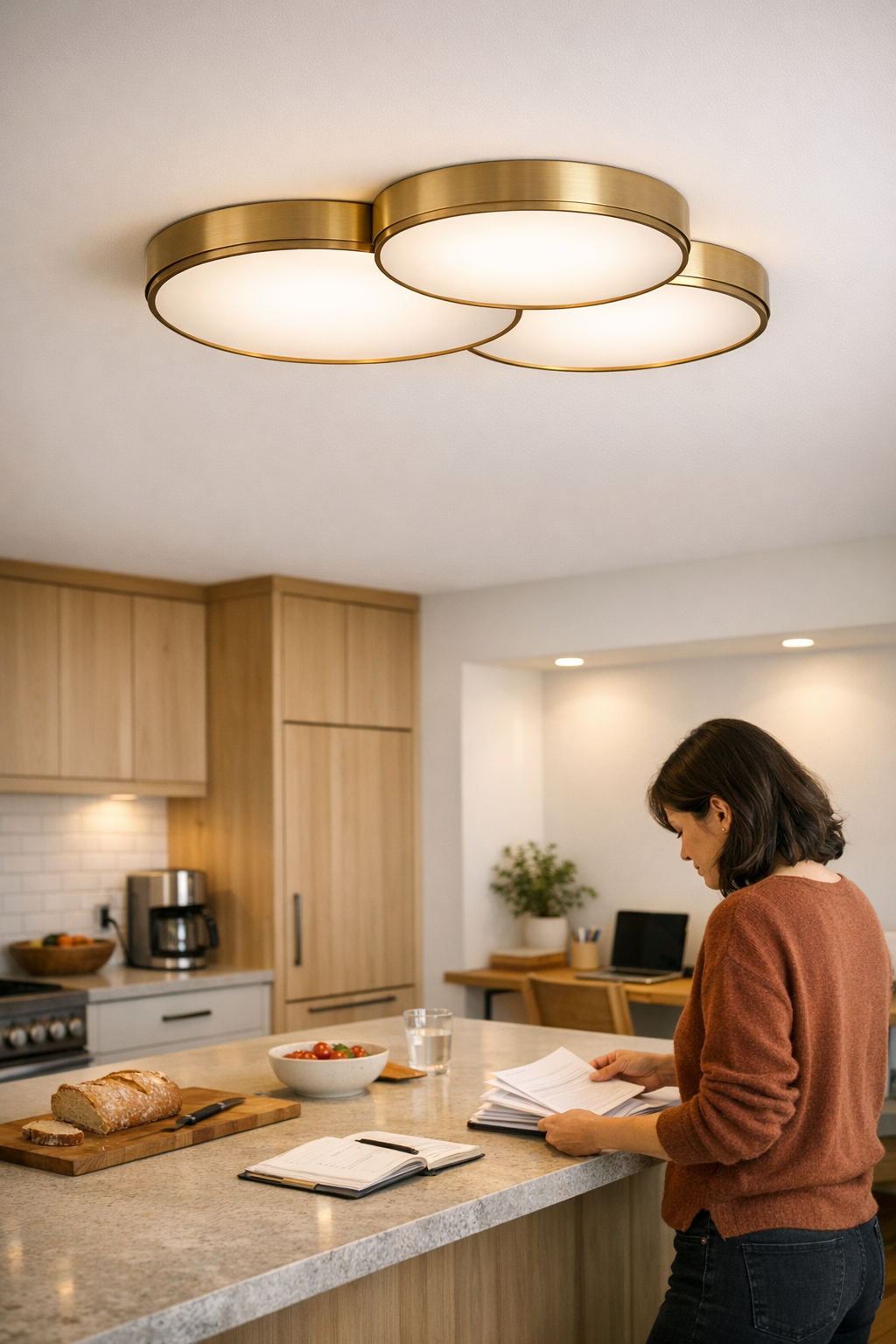
    The improvement is instant in demanding spaces. Consider a kitchen doubling as a home office: Adjustable ceiling spots once “solved” the need for flexibility, in theory, but left a blacked-out counter edge every evening. After switching to a flat, broad LED panel flush against the ceiling—with cabling hidden in an unobtrusive bracket—the forced dance between bright and dim ended. Light finally reaches both the main prep area and the far corner, so you’re not forced to haul your work or cleaning supplies back and forth, tracking the light across the room.

    No need for heavier bulbs or extra lamps—the win comes from smoothing the distribution. By replacing those two old overhead darts with an evenly-diffused, low-profile panel, the room stops dictating where you stand. That stubborn band of shadow (the one you learned to avoid with a soft shrug every week) simply stops existing. Where you once thought about stick-on task lights or running another extension cord for a lamp, suddenly you’re done. Edges are visible; counters stop hiding smudges. The light no longer divides the room into “usable” and “annoying.”

    Support Hardware Should Fade, Not Distract

    With many setups, the hardware itself becomes the friction point. Exposed brackets, cables, or makeshift management schemes push themselves into your view every time you look up. Good lighting support—clean brackets, hidden channels, or snap-in hardware—disappears from attention. The test isn’t whether you admire the bracket, but whether you stop seeing cable paths entirely as the surface keeps working for you. When support stays visually silent but removes setup drag, the change is genuine.

    When to Upgrade: The Telltale Signs of Pooling and Patchiness

    Even with an uncluttered ceiling or sleek fixture list, you see it if you look for it:

    • Persistent reading trouble at the desk edge—no matter where you sit
    • Hallway sides and shelf backs lingering in shadow, forcing awkward stretches or missed dust lines
    • Spots of glare or “hot zones” so strong you flinch or consciously avoid them
    • Cables or DIY supports drifting back into sightlines, undoing even your best tidy-up effort

    The workarounds become habits: stacking tools in one favored light spot, leaving an area unused except as storage, nudging the lamp for each task. The fix isn’t “more light”—it’s even, background light that actually supports activity. When minor frictions—dim halves, glare blooms, stray hardware—vanish, you realize how much smoother the room can feel.

    Uneven vs. Even: Real Use, Not Just Visual Calm

    Linear LED panels and broad diffused fixtures change behavior, not just atmosphere. One thoughtfully-placed, low-profile panel sends light smoothly across an entire surface, eliminating the old patchwork of brightness. Multiple compact fixtures only work if their beams blend with no seams; too often, they carve up your working areas into bright cores and dead borders. The real test is how you move: If you’re no longer driven to follow the brightest patch or clean only what you can see in a beam, you’ve found the setup that works with—not against—your routines.

    The goal isn’t a ceiling that looks spare on a video call. It’s a countertop that’s readable end to end, hardware that quietly recedes, and a surface you can use without thinking about “where the good light is” every single day. Once the friction fades, the room frees up for any task at any angle, at any hour.

    Small Adjustments, Big Practical Gains

    It often takes less overhaul than expected to clear out these annoyances:

    • Swapping narrow-throw fixtures for a flat LED panel wipes away those jagged edge shadows instantly
    • Replacing a tangle of visible clips with an integrated, hidden bracket eliminates sightline bugs and setup fidgeting
    • Thinking in terms of even coverage, not just fixture count, ends the habit of nudging lamps or dragging work to follow the light

    The key isn’t bumping up total brightness. It’s about ensuring that every square inch you actually touch—prep zones, tables, shelf edges—stays visible and ready, with zero cable distraction or visual clutter added in the name of order.

    Daily Routine Should Dictate, Not the Fixture Grid

    The real verdict comes after a month of real-life mess and movement. Are you still skirting one dim section? Still untangling cable runs that aren’t as hidden as you hoped? Or do you simply stop thinking about where the lighting ends and the work begins? A setup that looks seamless but divides your surfaces into shadowed puddles is just another round of rearranging around a ceiling plan. The right lighting-support approach—clear surfaces, low friction, no more shifting for better light—translates not into “newness,” but into a room that actually works as hard as you do, no matter how repeatedly you return to the same spot.

    LightSupport – making lighting and support perform for everyday spaces

  • Why A Fixed Dog Bed Spot Transforms Your Pet’s Sleep Routine

    You clean the floors, vacuum behind the sofa, and push the dog bed out of the way—just for a minute. Later, when it’s time for bed, the evening slows to a crawl. Your dog stands in the wrong spot, searching for the missing bed, circling, confused—even though the room looks spotless. A single change—moving the bed away from its anchored place—creates a snag in what should be your easiest routine. The living room feels tidy, but now every step to settle your dog feels slower. This is the kind of ordinary, repeated hitch that DogPile setups are built to expose and solve—where the tiniest disruption in placement keeps turning comfort into a nightly stumbling block.

    Shifting Sleep: When a “Simple Move” Breaks the Flow

    It’s tempting to treat the dog bed as just another cushion you tuck away to make cleaning or rearranging simpler. That flexibility seems smart—until the rhythm of your evening drags with every new spot. At first, it costs you a few seconds: your dog looks around, sniffs the air, perhaps circles once. By the third night, settling turns into minutes of pacing, backtracking, or freezing by yesterday’s corner. The process never explodes into chaos, but the whole wind-down grows rough-edged. The “before bed” routine becomes a puzzle you didn’t sign up for.

    How Repeated Bed Moves Undermine the Routine

    When you reset the bed’s location too often, the toll builds up in small, visible frictions:

    • Bedtime drag: A quick settle turns into a drawn-out hunt; what should take thirty seconds stretches out, with your dog stuck waiting for direction.
    • Ghost returns: Every dog has a favorite spot. When the bed’s missing, your dog walks to the empty place, pauses, and you can see the doubt: “Wasn’t rest supposed to be here?”
    • Owner-side stumble: You’re standing with the leash or prepping a towel, but your pace slows too—you’re dodging a restless dog, retracing your own steps, or refilling water behind schedule while the settling process hangs in limbo.

    Individually, these moments seem minor. Pile them up over a week, and your “tidy” setup keeps making the final routine feel misaligned—each evening a little less smooth.

    Everyday Examples: When Setup Friction Sneaks In

    This is the kind of trouble you notice only in motion. You walk back in after a winter walk, dog ready to flop, only to find the bed still propped on a chair or lost in a hallway from earlier cleaning. Now your dog tracks mud or circles on bare floor, waiting while you hunt down the cushion. You reach for a towel or wipes, but they’re across the room—belonging near the bed, but now disconnected from the routine. All your planning for fast resets, but the missing anchor turns a comfort ritual into another problem to patch.

    Or consider the after-dinner calm: you expect your dog to drift to their spot, but the bed is halfway to the kitchen. Instead of gliding from leash-drop to rest, you’re both thrown off. Your dog waits by yesterday’s footprint, and the whole bedtime shuffle has to be improvised again.

    Why Location Is Stronger Than Cushion

    It’s not just softness or warmth that drives your dog to rest—it’s knowing exactly where to go. Predictable placement means your dog moves right into relaxing, no searching or second-guessing. The real comfort comes from certainty: when the bed (and whatever towel, mat, or toy belongs with it) is anchored after every disruption, the “end of day” signal is automatic. Rest happens more easily, and you spend less time managing a process that should just work.

    This isn’t abstract. It’s a practical difference: A stable setup means fewer circles, less hesitation, easier cleanup, and a faster shift from activity to downtime—for the dog, and for you.

    Repeating the Mistake: The Hidden Cost of Floating Beds

    Keeping the bed out of sight or shifting it repeatedly may look organized, but each reset piles on small snags:

    • Your dog double-checks two or three spots every night, wandering through familiar zones only to find them empty.
    • After a walk, there’s nowhere obvious to catch muddy paws; you race to drop something absorbent in the right spot, but not before paw prints cross the clean floor.
    • Blankets and toys keep getting separated from where they’re needed. Every reset means extra steps—either for you, or for a restless dog.
    • The bed itself becomes a trip hazard mid-move, blocking easy paths or snagging feet until it finally lands—somewhere new again.

    None of these are “failures” by themselves. But your home’s flow gets chopped up, and bedtime shrinks into a cracked process—less calm, more correction, no matter how orderly the rest of the space appears.

    Reset Drag: How Looking Tidy Can Slow Everything Down

    It’s easy to assume a clear floor or tucked-away bed makes things run better. But every time you delay returning the bed to its real spot, the routine loses speed:

    • Your dog freezes at a room’s edge, scanning for an anchor that isn’t there—settling takes longer every night.
    • Cleanup gets skipped (“I’ll get it tomorrow”) because it’s not obvious where the dog will land tonight—and the dirt moves with them.
    • Treats, towels, and toys drift out of arm’s reach, so you’re forced to cross the room and start over, mid-transition.

    The room may look uncluttered, but the routine feels stuck in low gear. What saves seconds on cleaning costs minutes in hesitation and extra movement the rest of the week.

    Make the Bed a Constant: Rebuilding the Routine Anchor

    The most practical fix: set a permanent bed spot and stick to it. Choose a corner out of the traffic path—maybe near your regular chair, or somewhere the whole household passes in the evening. No matter how often you vacuum, rearrange, or host visitors, return the bed to that exact spot after every shift.

    When the anchor is reliable, the pattern repairs itself. Dogs transition from outside to inside, drop straight to their cushion, and settle with a single turn—no guessing, no excess pacing. Reset after a walk is automatic: wet paws go where the towel waits, not across your path. Bedtime becomes a real routine again, instead of a slow-motion quest for comfort.

    Real Flexibility: Temporary Moves, Not Nightly Shuffling

    Flexibility isn’t banned—but the core of your setup should reset to baseline after the outlier tasks. Move the bed for deep cleaning, for sunbeams, or guests when needed. As soon as you’re done, bring it back to its home. Skip improvising every night. A familiar object—one toy, a mat—left in place can reinforce the anchor, even if the rest of the room changes around it.

    “Tidy” Isn’t Always “Usable”: What Makes an Area Actually Work

    A space that looks organized isn’t always easier to use. A setup can be clutter-free but block quick movement—forcing you to bend, reroute, or handle dog items in the wrong order. Over ten rounds of walks, wipes, and bedtime resets, these small frictions add up. For beds, the cost hides in slow restarts and the mood of the room: does it invite effortless access, or does every task feel like an extra step?

    Consistency isn’t about control—it’s about reclaiming flow. The real value is making the routine run quietly, so you spend less time herding the process and more time letting it unfold the way you want.

    Patterns That Signal a Friction Point

    If you notice your dog keeps circling or standing by yesterday’s resting place, it’s not just a mild quirk. It’s the structural setup asking for correction. When the same slow or hesitant settling repeats—regardless of how organized your home looks—it’s a clear sign the “flexible” arrangement is subtly disrupting everyone’s night.

    Make a Reliable Bed Location Part of the Routine

    Certainty, not endless adjustment, creates practical rest. Pick a corner and make it unchanging. Return the bed there after every disturbance—walk, cleaning, guest, or furniture move. The result isn’t just less confusion for your dog. It’s a routine you can rely on—even when the rest of your day still feels busy or unpredictable.

    Explore better setups and more practical routines at DogPile.

  • Why Thirty-Second Resets Transform Workshop Storage Efficiency

    Why “Organized” Setups Break Down So Fast

    The first day a storage makeover goes live—racks assembled, mobile carts perfectly aligned, bins labeled and stacked—it looks like order has finally landed. But fast-forward a week or two, and reality creeps in. The cart that once hugged the wall is now parked in the middle, always in the way. You wedge a bin out from under a shelf, only to realize there’s nowhere to set it down. That easy-access corner starts collecting orphaned screw packs and paint cans. The promise of simplicity is replaced by small, draining obstacles: shuffling equipment just to reach a cabinet, returning a tool only to find everything’s too tight to slide it in. The fix that was supposed to speed you up now takes extra time, every single reset.

    The Practical Reset Test: Is Your System Actually Useable?

    This is the truth no catalog photo shows: if it takes longer than thirty seconds to put something away or clear a section, your “system” isn’t holding up under real use. Order can survive a few rounds, but daily routines push layouts in ways pretty pictures never predict. That thirty-second mark isn’t arbitrary—it’s the difference between a setup that quietly works in the background and one you avoid whenever possible. The longer the reset, the more you’ll cut corners, pile up “just for now” overflow, and sidestep the area entirely. You start to resent the space that’s supposed to make things easier.

    Where Setup Friction Really Builds

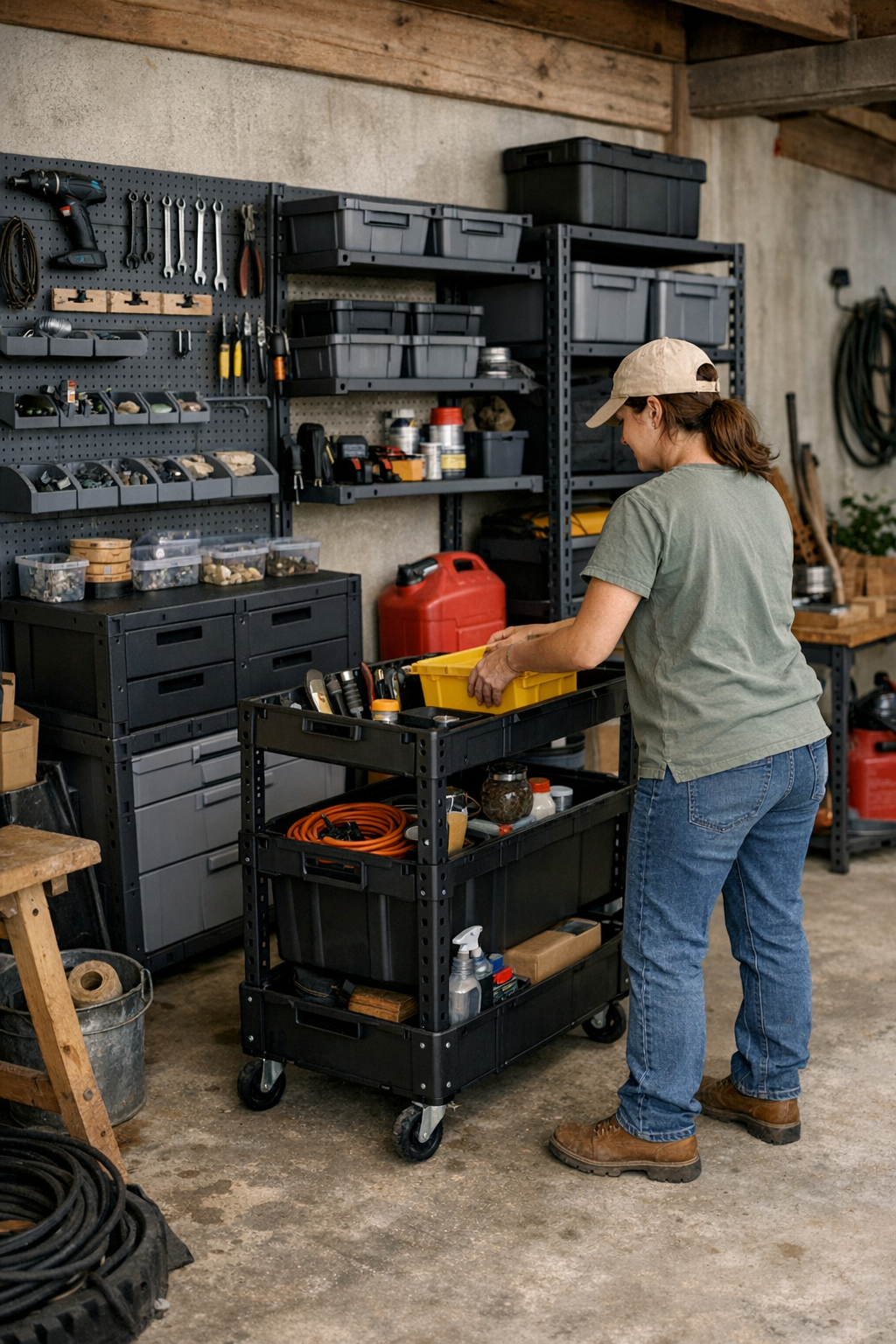
    Take what seems like a small win: a modular rack that finally clears floor space. It feels right until the slots tighten and returning a saw or drill means balancing it on the end, out of place. That mobile cart? On day one, it glides between work zones. But now its turning radius means swinging it wide just to open a cabinet, or nudging it out of the path over and over. Each detour or awkward step is a few seconds lost. Spread across a project or weekend, you’re losing genuine working time—just from a footprint that almost fits, or a route that almost stays clear. Resetting stops being a non-event and starts feeling like a penalty.

    The Moment a Setup Shows Its Weakness

    Most storage solutions don’t fail at installation—failure becomes obvious on the fifth time you need to restock, late at night when you just want to clean up, or during a rush to find the right gear. What reveals the flaws?

    • One section that always overflows—junk, tools, spare fasteners—because it’s closer or easier to dump things “just for now.”
    • A cabinet that looks tidy, but forces you to extend your reach well past comfort, straining against crowded shelves for every simple return.
    • Mobile units technically clear the floor but force you to sidestep, roll, or even pick up equipment just to reach what’s behind them.

    On the surface, everything looks fine. But beneath, slow resets and awkward movement start stacking up. Go past thirty seconds on a routine reset and the whole workflow gets slower—by inches, then by yards.

    The Slip: Watching Efficiency Unravel Over a Weekend

    Here’s how it played out in real life: I set up a combination of wall-mounted storage for tools and a sturdy, low-footprint cart for fast-access hardware. Day one, all’s well—everything goes back where it belongs, open floor space, nothing in the way. By Sunday? The cart becomes a magnet for spare screw boxes and cable ties—random overflow that doesn’t “fit” anywhere else. The upper rack turns into a balancing act just to reach commonly used screws, while returning tools means walking the long way around the now-in-the-way cart. What was seamless for three resets becomes a gauntlet by the fourth or fifth—the signs of friction multiplying until avoiding the setup entirely almost seems easier.

    Design for the Thirty-Second Return

    The turning point isn’t more storage—it’s building everything around a fast, frictionless reset window. If putting something away, clearing a bench, or restocking a bin ever drags beyond thirty seconds, that section’s layout needs rethinking. Here’s what changed my setup:

    • Unblocking main paths: I moved the cart and reconsidered shelf depth, so neither blocked my go-to routes.
    • Simplifying actions: Every motion—returning a drill, grabbing a bit, sliding a bin—became a one-step process, achievable with a turn or short reach.
    • Fixing spillover traps: Corners that caught overflow got assigned clear, open spots. When overflow appeared, it was fixed in real time, not left to grow into another pile.

    Fast resets keep disorder from snowballing—even after repeated use, there’s no sludge of awkward workarounds to slow you down.

    Identifying and Breaking Real-World Chokepoints

    When a space feels off—when a cart lives in your direct path, or the same shelf overflows again and again—you know the setup’s costing you. More bins or hooks won’t fix it; adjusting the flow will. Hunt for:

    • Footprints—large or small—that edge too close to main walk zones, breaking up natural movement.
    • Overflow magnet areas—low shelves, ends of carts, that become “temporary” but end up permanent holding zones.
    • Reset points—bins or cabinets—where you always have to rethink how to stack, slide, or sort, instead of simply returning things.

    Targeting these pain points doesn’t just clean up the layout—it frees up both physical space and mental bandwidth. The usual friction disappears before it starts.

    How to Keep Resets Effortless

    • Preserve open space. Never overfill racks or cabinets. Leave gaps so you’re not forcing tools back in, even when you’re in a rush.
    • Time your resets. If putting anything away starts to drag, trim, rearrange, or split up sections until every action hits that quick thirty-second mark.
    • Attack overflow at the source. The moment you spot a pile-up zone, adjust the layout so it never becomes a dumping ground. Fix layout friction, not just symptoms.

    The Difference Between Looking Organized and Working Seamlessly

    The setups that really last aren’t polished photo shoots—they’re the behind-the-scenes workhorses that reset as fast on the fiftieth use as the first. What matters isn’t cramming more in, but creating layouts that you can clear, recover, and start fresh—without friction getting baked into your everyday routine.

    When maintenance becomes second nature because of design, not daily effort, you get your time and space back. That’s what separates a layout that “looks” organized from one that actually works—again and again, for the long haul.

    View practical modular storage solutions at StackNest

  • How Proper Cable Slack Management Enhances Workstation Efficiency

    Cable drag ruins a clean desk faster than clutter ever does. You feel it the moment a chair wheel snags a charging cord or a monitor resists your hand—an invisible flaw hiding beneath a surface that looks organized. Most setups fool you at first: cables routed out of sight, a newly tidy stretch of desk, everything visually under control. But the real test isn’t on day one—it’s when daily work turns cable management into a bottleneck, slowing every adjustment, every device swap, every reach for space behind the keyboard. If your setup only looks clear but forces you to untangle, reset, or work around hidden drag lines, the promise of “organization” collapses into repeated frustration.

    Where “Tidy” Fails: Cables and the Hidden Interruptions

    Most desk makeovers begin by vanishing cables—power bricks vanish into trays, ethernet cords zip-tied along the frame, chargers crammed in boxes beneath. Everything appears open; finally, no wires spill across the surface. Then, reality undermines the fix: the monitor arm moves, a cable jerks everything off center, or you roll the chair and hit a stubborn, tensioned wire. Needing to unplug or slide a device means fighting tight cable runs, not just moving your hands. What looked smooth now feels rigid.

    Visually clear does not equal comfortably usable. A spotless desktop often turns clumsy when slack is overcontrolled. You can’t adjust a screen or share space for notes without cables pulling back. Rigid loops keep USB hubs from reaching, power lines clamp monitors in place, and legs tangle with cords that looked out of sight. These aren’t flukes—they’re constant interruptions on a desk that values appearance over actual workflow.

    Routine Work Reveals the Real Cable Test

    Friction sneaks in during the routine—the video call ends, you slide the chair, and a too-short cable drags on your ankle. Switch from notebook to keyboard and the charger yanks everything taut. Plug in a new device, only to trace resistance all the way through a box or tray that let style win over movement. Seconds lost on each reset don’t feel like much, but multiplied by every day, minor snags erupt into chronic wasted motion.

    When you’re working at a compact desk—where keyboard, notebook, notes, and power all share one tight strip—mistimed cable slack is exposed by every quick reach, every attempt to shift position, every reset between tasks. Smoothed-over cabling can’t hide a workflow that keeps grinding to a halt as you try to pull, slide, or stow devices. In these spaces, a “clean” look becomes a trap if it kills flexibility.

    What Actually Changed: Small Slack Adjustments, Big Differences

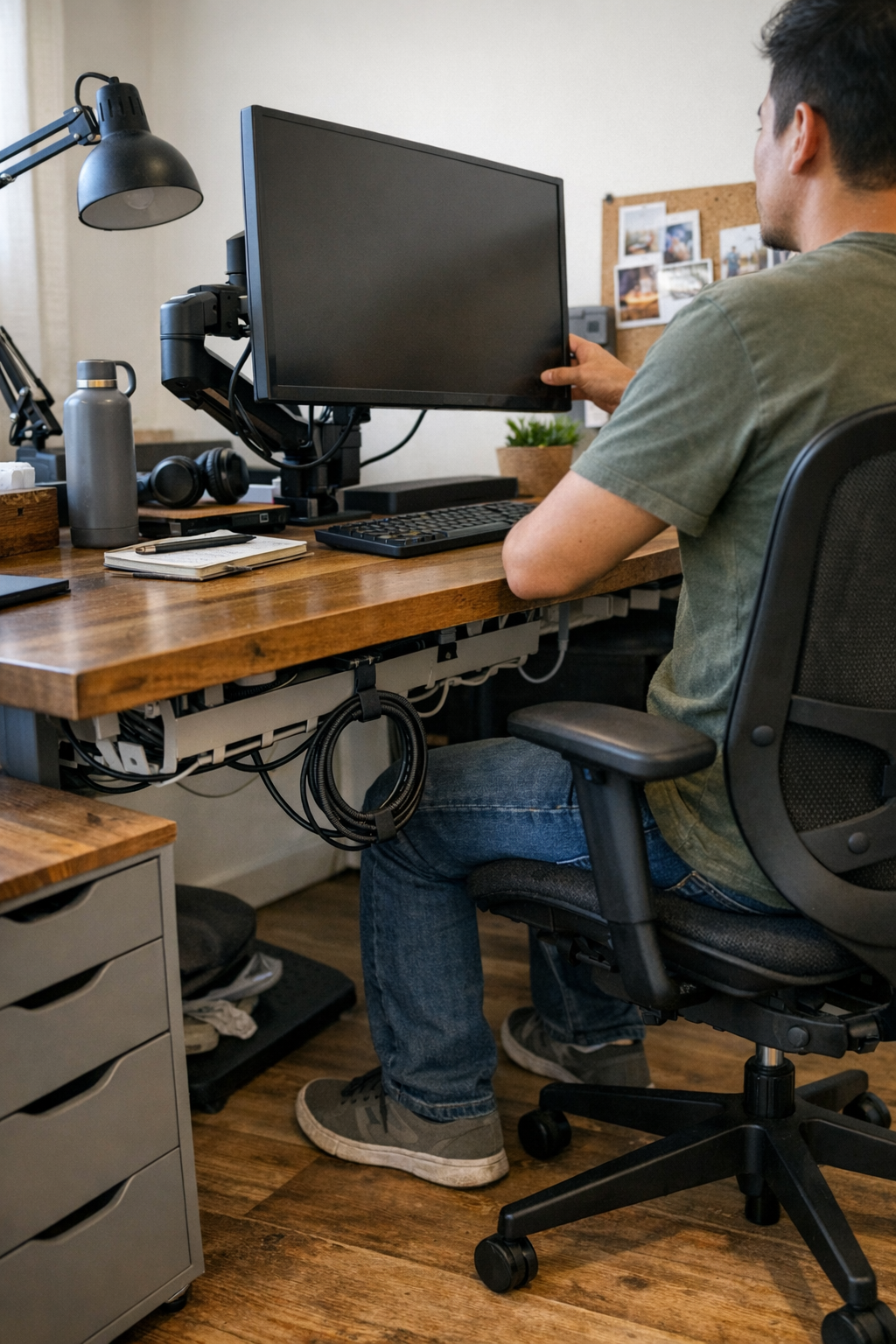
    The breakthrough came not from fewer cables, but from freeing their movement: ditching hard cable ties for an adjustable loop behind the monitor, roughly two fingers wide. That tiny extra slack let the monitor glide for note-taking, device swaps, or a late-day screen shift, without jerking everything else off-axis. No more straining under the desk to fix connections, and devices could be pulled, pushed, or rotated in place—without setting off a new round of untangling or crawling for lost plugs. The visible effect didn’t suffer; the work path finally matched what the clear desk promised.

    Now instead of stashing every wire out of sight, there’s just enough movement for frequent adjustments. Device changes became a quick slide and plug, not a full teardown. Cables float with the motion, not against it. Once the right amount of slack was dialed in, the “organization” stopped being an obstacle and started making repeated routines less of a reset.

    This is about reliable movement, not staged neatness. Controlled slack creates a workspace you can use without hesitation—preserving the routes you actually use, and keeping small interruptions from becoming daily friction.

    Spotting Slack Problems Before They Multiply

    Slack issues are easy to miss if you value looks over movement—until the same pain points keep breaking focus. Watch for these desk-life signals:

    • Chair wheels tug cables — If rolling back always meets resistance, your slack is either routed through the wrong zone or simply too short for everyday moves.
    • Monitor won’t stay centered — Any time a screen jumps or pulls as you adjust, the cable isn’t flexing close to where movement happens.
    • Feet scuff or trip wires — Repeated contact means cables are routed where your legs need to move, damaging both the wires and your work rhythm.
    • Swapping devices feels like a reset — If every change requires unplugging, unlooping, or untangling, rigidity has won and workflow takes the hit.

    If you’re seeing these patterns, your setup isn’t failing on looks—it’s bleeding time on every routine action.

    Cable Control That Survives Real-World Desk Life

    Invisible cabling can become unusable cabling. Real workstations demand flexibility—screens shift, chairs roll, and feet need space to move. A practical desk doesn’t suffocate every wire; it leaves key slack visible and close to points of adjustment, while heavy main runs are lifted out of leg range with trays, or routed along the rear with a cable box. One adjustable loop behind the monitor or docking station can often hold the line between daily flow and clumsy resets.

    Hybrid approaches outperform pure concealment: anchor major cables above knee height with trays, route main power at the back, but leave one floating, adjustable segment where movement matters—behind each device that earns daily use, not buried out of reach where slow tension builds up. This keeps clutter out of the work zone while removing the headache from repeated, real use.

    FAQ: Tackling Cable Slack in the Everyday Workstation

    How much slack does a monitor or moving device actually need?

    A loop about two fingers wide behind the device is enough. This lets monitor arms glide and screens pivot for daily adjustments, while stopping cables from pooling underfoot or near wheels.

    How can I spot when slack management is failing?

    If a cable snaps, tugs, or scrapes, or your feet and hands start working around hidden resistances, your organization has crossed into obstruction. Cables should follow you—not the other way around.

    Should I just hide every wire?

    No. Total concealment is a trap if it freezes the setup. Leave visible loops where friction always returns: monitor centers, plug points, docking stations—the spots you touch and move every day.

    Lasting Usability Is Built on Forgiving Structure

    A desk that actually adapts doesn’t pretend that perfect order fixes workflow. The hidden win comes from setups where screens move naturally, chairs roll clear, and cables flex—not snap—as routines change. It’s the slack you never see in pictures, but always feel in the flow of real work. When your setup responds to you, not just your sense of order, you spend less time wrestling with wires and more time working how you intended.

    Explore the full WorkBasic collection

  • How Wall-Mounted Storage Transforms Utility Room Flow and Order

    The breakdown always starts right at the threshold. In a utility room or any entry area forced to double as a landing zone, storage “systems” unravel quickly under real use. One rushed arrival, and the lineup—shoes, bags, coats, cleaner bottles—immediately overruns what seemed like enough space. The bench, if it exists, shifts from a spot to sit to a magnet for overflow. By midweek, the entry “setup” doesn’t keep up. A space can look organized from the doorway and still turn into a maze of shoe piles, toppling bags, and too-narrow walkways almost overnight. The real divide isn’t between tidy and messy—it’s between zones that absorb daily routine, and those where each reset just buys you a couple more days of crowding and detours.

    When Clutter Quietly Takes Over

    Clutter doesn’t barge in; it seeps through the cracks of weak storage. The shoe rack somebody thought would corral boots until spring fills up by the second wet day. Hooks mounted at the “ideal” height seem clever until a heavy bag shares space with two backpacks, and the whole cluster ends up slumping off the rack onto the bench. That tall basket intended for hats and gloves? It morphs into a dumping spot for whatever nobody wants to deal with right now—leashes, delivery packages, a stray grocery bag. The result is slow-motion takeover: every quick drop-off leaves behind another layer to work around. A pair of wet sneakers multiplies by Thursday, pushing clear paths into obstacle course territory.

    Everyday Movement Becomes Negotiation

    Function breaks down before looks do. A utility room or threshold zone isn’t just storage—it’s traffic flow. When overflow creeps onto benches and blocks the floor, returning with groceries or laundry turns into a series of minor evasions. Setting anything down becomes a calculation—will this trip someone, will it dry, will it even stay put? Every detour adds friction that nobody planned for. Before long, just getting out the door means pausing to reshuffle or sidestep someone else’s earlier detour.

    Why Single-Solution Setups Break Down Fast

    Sleek hooks in a row, that fresh bench beneath… they settle in nicely for about a week. Then the real routine begins: kids latch onto the lowest hook, oversized jackets overflow, and heavy totes never hang up. Shoe rows, so satisfying when empty, break formation and edge out past the bench limits, wet treads spreading wherever there’s bare floor. “All-in-one” baskets hide the mess instead of sorting it—what was a glove bin now eats mismatched gear no one can find later. The neat setup becomes a scene of category drift and failed boundaries, fast.

    Visual Calm vs. Mixed-Use Reality

    The quiet order of a newly set bench evaporates at crunch time. Garden shoes, rain gear, and rogue totes pile up, joined by bags of groceries and sports equipment. Cleaning supplies lose their assigned spots and migrate to wherever there’s a gap. Unclear boundaries—like a bench edge not sharply separated from shoe storage—invite a steady overflow. The difference isn’t subtle: what looks organized out of use collapses as soon as the routines overlap. Predictable chaos returns if your storage can’t make mixed use obvious and easy.

    Designing for Repeated, Overlapping Routines

    Storage isn’t universal—routine differences expose weak systems. What can look “organized” in a photo rarely fits the mixed flows of real use, especially when several people are coming and going. Wall-mounted racks free up floors, but if they’re set too high or the sections are vague, people bypass them. Drop zones blur: a bag lands on the bench instead of a hook, a muddy boot gets left on the edge instead of the shoe slot, and slowly everything creeps toward the easiest open surface. The moment three categories hit the room at once—mop bucket, school stuff, muddy gear—your original plan collapses into catchall chaos.

    Segmented Storage Makes Return Flow Easier

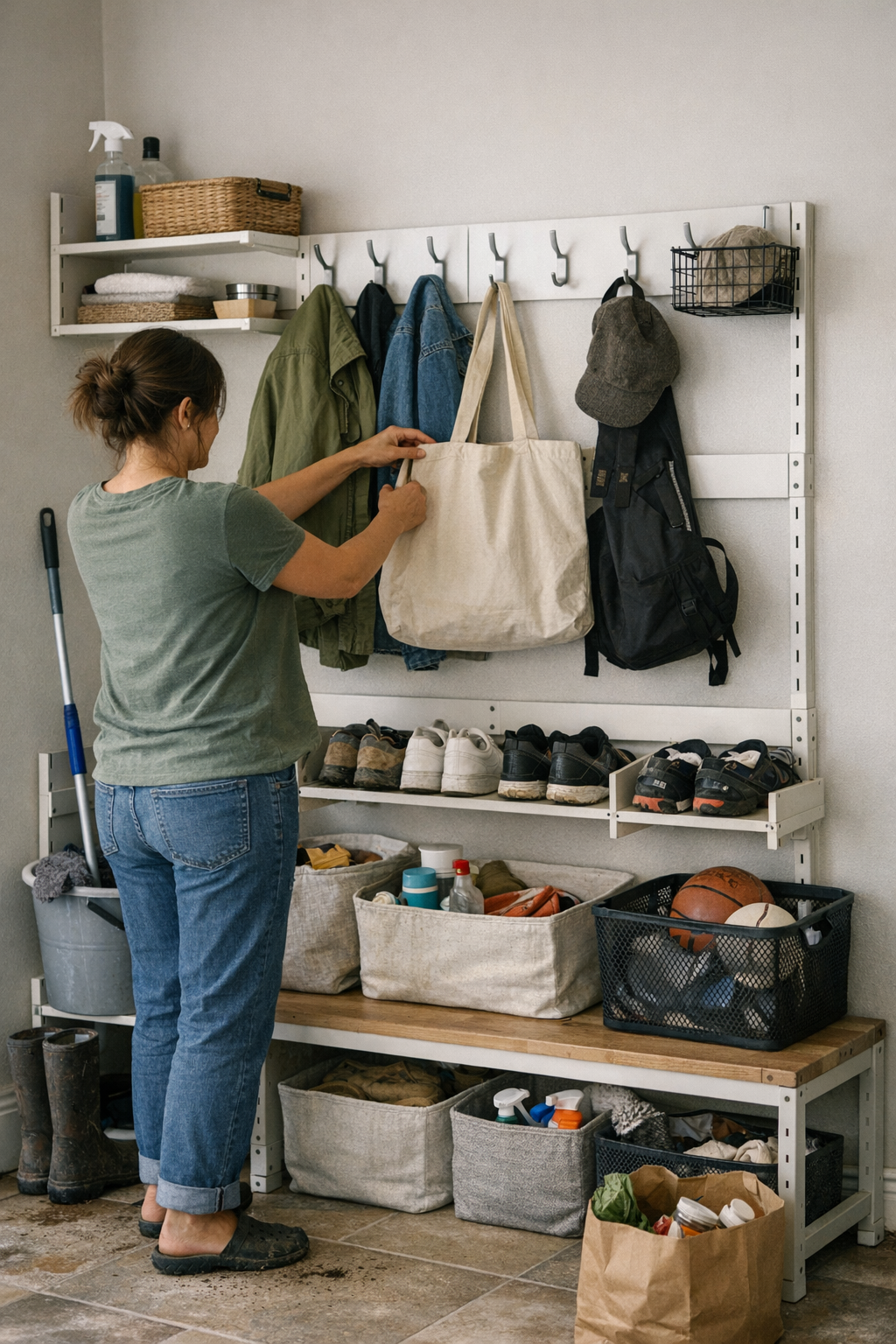
    A wall panel split by use—shoes low, bags and coats above, side rails for tools—provides a self-explaining map. Each section signals what goes where. The difference is practical: someone dumping a stray tote on the bench stands out immediately, so a quick grab puts it back in slot and the flow resumes. It’s not just a tidier look; it’s a friction reduction—less lost time, fewer late-night resets, and visible signals when the routine gets off track. Well-marked slots cut down how often you need to “start over” just to make the room passable again.

    Practical Scenes: Stress Tests in Daily Use

    Typical afternoon crunch:

    • One person drops muddy shoes and a garden tote at the edge because no slot is clear; existing shoes compress, and the bench is half-blocked again.
    • Another hauls laundry and groceries, finds the upper hooks out of reach during a rush, and everything lands on the nearest flat surface.
    • A wet mop bucket, left even briefly, blocks the path so everyone detours through tight gaps rather than a clean pass-through.
    • Sports gear—helmet, pads, a rogue water bottle—spills into the walk zone, nullifying any hope of keeping the entry clear.

    When temporary placements harden into blockages, routines unravel. Each makeshift stop reinforces the mess. The slow squeeze—extra minutes cleaning, returning, or just escaping the house—becomes daily background noise.

    Making Utility Storage Actually Work: Small Shifts, Stronger Flow

    Replacing baskets and guesswork with a segmented wall panel at reachable height can flip the pattern. Place shoe slots low—no bending or confusion over whose go where. Space coat hooks just enough to stop bags merging into a single tangle. The bench returns to its original job: a brief stop for putting on boots, not a graveyard for overflow. Preserve a visible sweep zone under the lowest rack—no more emptying half the floor before you can vacuum. Every design tweak fights clutter drift and forced reshuffles.

    Category Drift and Slot Discipline

    If shoes or bags start creeping sideways into new territory, that’s the system giving up boundaries. Assign each person a row, and don’t let unused pairs or random bags settle in for the long haul—rotate them out. Visible, divided slots keep categories from blending and from turning the routine into maintenance work by Wednesday.

    Mounting Height Matters

    Vertical storage can be your strongest tool—but misplace it, and it barely gets used. Anything mounted too high gets ignored on busy days. Hooks and racks should meet people at their real, not theoretical, reach. If unloading groceries means dropping bags on the floor because a hook is too high, the system invites failure. Make every access point match real daily movement.

    Blocked Thresholds vs. Open Movement

    The core question: Can you move through, even when it’s busy? Storage that works preserves a clear threshold even after the third messy arrival. If shoe rows crawl into the aisle or bags crowd the bench, the setup is failing under real pressure. Segmented, wall-mounted panels limit spillover—open baskets and unsorted benches just soak up clutter til they’re full, then leak into the walkway. A single bench edge collecting all “last stop” items is your red flag: your layout isn’t absorbing pressure, it’s just staging it for the next reset.

    The Subtle Impact of a Better Setup

    The real payoff isn’t visible after a one-time reset—it shows in how little you have to fix each night and how soon you notice something drifting out of place. If the clear zone near the door holds up even on muddy, gear-heavy days, you’re not just tidier: the utility space runs quieter, smoother, with less late-night maintenance. Tuning boundaries, accessibility, and separation over time steadily reduces the drag of nightly re-sorting. The difference isn’t just order—it’s less friction in every pass-through and fewer obstacles to leaving and returning at speed.

    If your entry area depends on improvisation and constant reshuffling, the tradeoff is daily: more friction, more lost time, and more frustration. A better foundation—segmented storage mapped to your home’s actual return flow—restores order not just for looks, but for movement and routine. See Betweenry’s practical storage options designed for real transition-space routines.

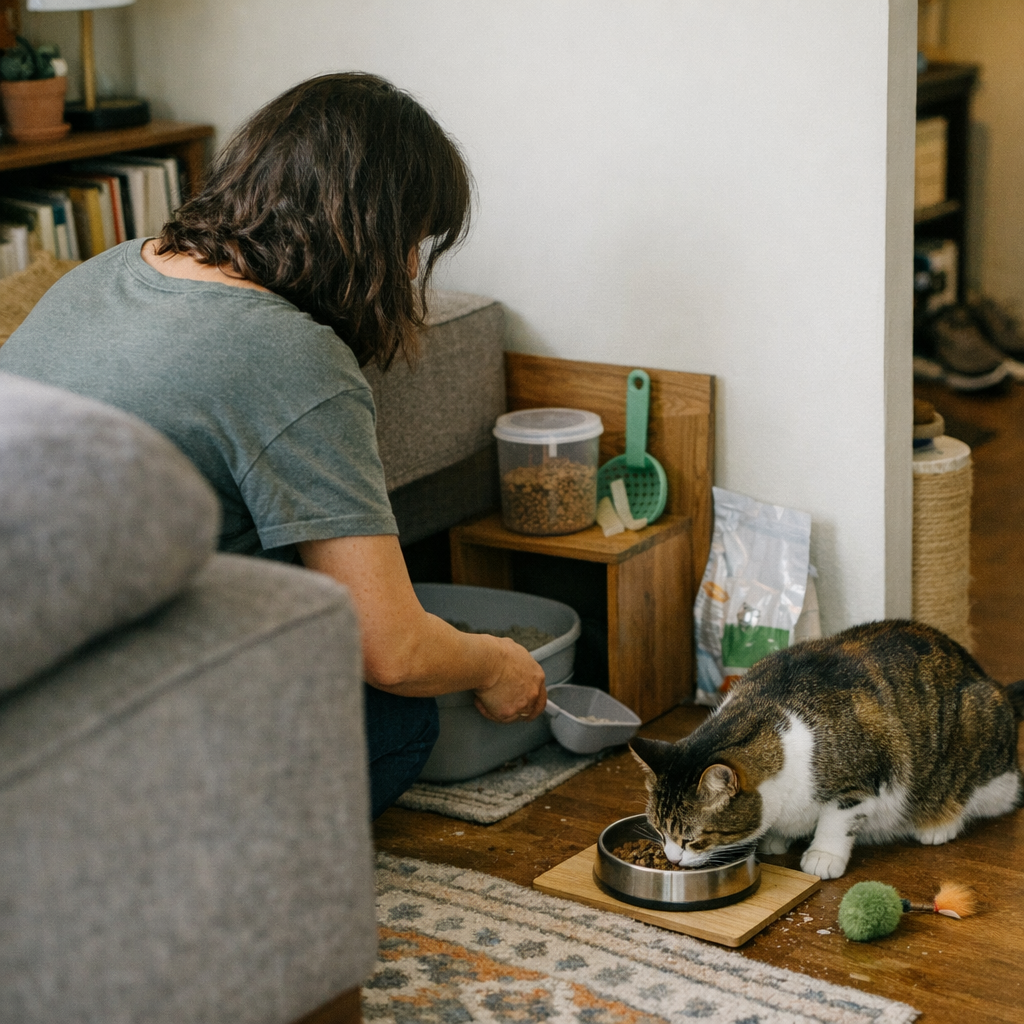
  • Solving Indoor Cat Mess by Rethinking Your Daily Setup

    The real test for any indoor-cat setup shows up by the third day—not in how tidy the space looks, but in how the routine keeps fighting back. What runs smooth once can turn tedious fast: you refill water, but the counter is already streaked before breakfast is over; you swear the scoop had a home, but by midweek it’s gone wandering again. Routines slow, cleaning repeats, comfort setups start to sprawl, and the neat look you created on day one starts leaking messes and extra steps everywhere. That repeated drag is the StillWhisker world’s focus: not just looks, but setups that don’t crumble under real, repeated use.

    Why the Real Mess Sticks Around

    A space can look organized—bowls perfectly lined up, scoop tucked away—but if every refill or wipe-down makes you zigzag for supplies, you’re feeling friction that builds with every round. Mess appears wherever routines stall, not just after big cleaning sessions. The gap isn’t about decluttering; it’s about how each setup reacts when real habits test the limits.

    In tight apartments, every extra walk to a distant faucet or a hidden scoop adds strain. Leave gear scattered for “easy access” and the whole corner starts to block itself: hand bumps bowl, mat won’t lie flat, or you end up nudging the cat’s food station every time you just want to pass through. The surface says organized, but daily resets get slower and less satisfying—making “clean” feel more like a performance than a condition you can count on.

    The Hidden Costs of a “Clean” Setup

    Out-of-sight storage promises relief: scoop in a top cupboard, toys stashed deep in a side bin. On the first day, the floors are clear and breathing room is real. But every longer detour breeds “I’ll wipe it later”—those little interruptions that become new sources of stray litter, crumbs, and grit. Messes start creeping outside their zones, building up in places meant to stay clean, with the “not quite done” feeling sinking in every day the right tool isn’t close enough. Tidiness starts to hide deferred work, not reduce it.

    The Other End: When Everything Lives in One Spot

    Stacking it all together? Now the friction flips. The scoop is reachable, but the setup crowds in, forcing you to move a toy to wipe the mat or shift bowls just to reach underneath. Every action is blocked by something else—meaning a two-second reset grows into a longer round of awkward reshuffling. Instead of feeling equipped, you find yourself stepping over curled mats and guessing which pile holds what you need next. Easy access becomes its own mess trap.

    Where Setup Friction Sneaks In: Common Indoor Cat Scenarios

    The real weak spots aren’t obvious on day one—they reveal themselves after a few cycles of feeding, scooping, refilling, and clearing space. Practical examples:

    • Refilling water means carrying a heavy jug back and forth—one spill darkens the carpet edge, and you end up tiptoeing over slow-to-dry spots for days.
    • The scoop drifts behind a leaning board, so now there’s a trail of grit right through the main walkway, while the litter area only gets cleaned when you finally go searching.
    • Wiping surfaces gets postponed because the cloth or brush isn’t within reach, letting food dust and water tracks circle the bowls for hours.
    • Supplies “temporarily” stacked aside for company leave small piles that block the morning reset and slow down the next round of cleaning.
    • Mats or blankets for comfort take twice as long to put back—now you’re smoothing curled corners around other supplies, letting dust or stray litter cling until the next deep sweep.
    • Cat stations drift into walking zones: bowls edge out, mats curl, and scoops stray just far enough that both people and cats now trip over the fallout.

    None of these are disasters. But together, they’re the reason recycled mess and slow routines become the rule, not the exception. The difference between an “organized” space and one that actually feels easy only shows up when you’re back in the loop, doing it all over again.

    Questions to Diagnose Setup Trouble

    If your routine breaks down fast, the structure itself is likely the weak point—no matter how well you tidy up. Ask yourself:

    • Are you moving things just to start cleaning, instead of actually cleaning? If you spend more effort on the setup shuffle than the job, chances are essential items are out of daily reach, leaving real messes to linger “for later.”
    • Do you always have to nudge, juggle, or restack supplies to reach what matters? If every wipe, scoop, or reset comes with a mini dance, too much has crowded into too little space—or key clear space is gone.
    • Is your sticking point too many steps, or too much congestion? Whichever repeats most is your main friction—spreading out and slowing movement, or clustering and blocking every reset.

    The setup challenge isn’t about which cat gear you own, but where and how it fits into routines you repeat dozens of times a week. The best area isn’t the cleanest on camera—it’s the one that survives second and third rounds without forcing you into a loop of extra work or regret.

    Practical Scene: Real Repeated-Use Friction

    Picture a week in a cramped living room. The water fountain and litter tray share a corner behind the armchair—the only outlet forces them over a ragged strip of carpet. To refill water, you haul a jug past two obstacles and mop up drips from a greyed mat edge. By Wednesday, the bowl hasn’t been wiped in days; mentally, it drops down the to-do list because the trip itself feels like a bother.

    Toys scatter across the floor, creeping under furniture without boundaries. Come Saturday morning, the scoop turns up behind a leaning board, with a band of litter grit claiming the main walkway. Now, try the other extreme: every supply within arm’s reach of the sofa. Feeding, scooping, wipes—nothing demands a trip. But by Friday, you’re picking up toys with every step, guest traffic means bowls and mats break ranks, and every corner is a new obstacle course. The room looks unchanged, but resets drag and both humans and cats sidestep low-level mess fatigue.

    Smoother Reset: The “Route” Fix That Actually Works

    Most breakthroughs don’t come from another bin or a new round of deep cleaning. They come from mapping daily moves and matching placement to flow. Locate what you use most right where your route takes you—feeding or cleaning shouldn’t require detours or shuffling through a pile just to finish one job.

    This can mean putting the food bowl a foot closer to the water fountain—so wiping, refilling, and feeding happen in one pivot, not a room-crossing lap. Store the scoop in a slim cabinet near eye level, with just the daily basics—not the full supply spread. Extras that keep blocking movement or migrate into shared space probably need a new home or a less demanding spot. These are small, structural shifts—not photo-ready “after” shots, but changes that noticeably reduce repeated work.

    When every reset doesn’t require tracking down supplies or fighting congestion, fewer messes linger past their moment. The biggest sign of improvement isn’t how the area looks at a glance, but how much less you have to keep fixing the same problem.

    Worth Noting: Tiny Shifts, Big Difference

    This kind of practical adjustment won’t erase all setup friction—some tension between comfort and cleanup is part of real life. But by shrinking routine obstacles and keeping quick resets available, you start to gain ground. Mess loses its grip, and the space feels less like a repeating project and more like part of daily life you don’t have to dodge. The point isn’t “perfect”—it’s fewer moments spent circling the same frustration, and more time with a setup that survives the week without falling apart.

    Browse practical indoor-cat solutions at StillWhisker.