Author: jaesoon_admin

  • How Thoughtful Pet Travel Gear Eases Every Stop on Your Journey

    The difference between a “ready” pet travel bag and one that actually helps—shows up fast at the third stop. You pause, your pet tugs, and suddenly the setup that looked organized is slowing you down: wipes drifting under a collar, the leash tangled with a food pouch, cleanup supplies always one item too deep. Every stop exposes another tiny inconvenience. What’s packed “for emergencies” is awkward to grab when you’re one hand short and your dog’s already half out the door. This is where slip-ups multiply—not because you forgot something, but because the structure hides it just when it matters. In the world of repeated pet travel, PawGoTravel builds for these real moments: setups that keep pace when “organized” isn’t good enough.

    The First-Glance Trap: Looking Ready vs. Moving Smoothly

    At departure, an average tote crammed with pet gear can feel reassuring. Every item—bowls, wipes, chews, leash—folded into a section or zipped pocket. But by the third roadside pause, reality sets in. Your hand fumbles between compartments; the leash escapes into a nest of snacks; the section you just shut is open again for one missing item. Outwardly, the carrier still looks neat. Internally, every reach takes longer, each action interrupts the last, and both you and your pet sense the slow build of hassle. The real strain isn’t at the start—it’s after routines repeat, surfaces get messy, and every “quick stop” reveals another delay.

    Repetition Is the Real Challenge

    Pet travel exposes weaknesses not in emergencies, but in the steady rhythm of stops and starts. On stop one, hunting for wipes under a bowl is only a shrug. By stop four, you’re reshuffling a dozen things before anything is reachable. The leash stuck beneath the jacket you packed “just in case”; comfort biscuits packed perfectly, but too deep to grab for a nervous pause. It’s not disaster, it’s repeated irritation—slow, cumulative, and draining. Each restart demands rearrangement. Organization begins to erode. “Prepared” quietly turns into “why won’t this work?” even for careful packers.

    Packed Isn’t the Same as Practical

    Most setups fail not because something’s missing, but because overlap and blocked access creep in. On paper, combining wipes, water, lead, and toys in a single big compartment seems sensible. But with one hand occupied by a leash and a pet twisting to explore, you’re forced to tip out three things to get one, again and again. The visible difference is the slow but steady “where did I put it?” moment after every stop. Items migrate. Quick access gets muddled. The more often you pause, the more the whole kit feels scrambled—a pattern every pet owner knows from the endless cycle of motion, cleanup, and calming.

    Cleanup and Comfort: Small Wins Change the Day

    Travel friction spikes during the small but urgent cases: cleanup after a muddy paw or a sudden whine for comfort. When wipes are lost behind a zipped barrier or the blanket is buried for “organization,” these moments become needlessly tense. The solution isn’t more packing—it’s easier access, without cross-talk or spillover.

    Cleanup That Doesn’t Slow You Down

    Think back to your last few trips: how often did you dig for wipes just when you needed them clean and fast? With a dedicated, no-interference side pocket, grab-and-use motion becomes automatic—no dumping, no leash trailing, no mess expanding just because access is blocked. It’s a testable difference you notice by the second or third round.

    Comfort Items Within Reach

    Calming treats and familiar toys only help if you can hand them over fast. If “organized” means they’re trapped beyond a heap of towels or water bottles, nerves ramp up for both you and your pet. Quick-access, front-loaded pouches or side-release holders keep those go-to comforts on hand—cutting nervousness, speeding sooth times, and stopping tensions from spreading through the whole trip.

    Cleanup, Restart, and the Overlap Struggle

    The real test for a carrier or organizer isn’t total capacity—it’s whether you can reset smoothly under mild pressure. After an hour on the road, your pup is twitchy, you’re juggling half-clean hands, and you want water out—now. The collapsible bowl jammed under a heap of leashes, wrappings, and wipes? That slow search turns routine stops into frustration factories. A structure with stable outer pockets or fast-separating sections means speed instead of scrapping with the bag every time, helping you close the door and get moving with sanity (mostly) intact.

    The Real Difference: Automatic Returns and Movement Flow

    Setup structure doesn’t just keep things tidy at the start—it organizes your habits on the fly. The right travel bag puts wipes, leash, treats, and water within hands-reach, shaping motion so you don’t think about where to find anything. You grab, swap, return, and move—sometimes even with muscle memory, not conscious hunting. Imperfections stay: a collar will tangle, a favorite toy will wedge wrong one trip. But interruptions shrink, and routine stops take less mental bandwidth. The more invisible the effort, the more the setup works.

    Everyday Scenes That Reveal Weak Points

    • The wrong pocket, again: Reaching for treats, but the zipper reveals a snarl of lead and wipes nowhere nearby.
    • Buried cleanup: On a walk, needing wipes instantly—but your “good organization” buried them beneath two other compartments.
    • Restart hesitation: That moment before you close the car door, knowing the bag is more jumbled on every stop—and re-setup is only getting worse.
    • Comfort at a cost: The one item that keeps your pet calm is always stuck under something else, blocking smooth access and slow-tracking your whole restart flow.

    No single scene ruins a journey. But they add up. Overlapping items, awkward placement, and blocked fast access quietly shift your setup from “solution” to friction. Get through five or ten stops, and even a tidy-looking bag starts to feel like dead weight.

    Building for Real Flow, Not Just a Tidy Look

    Forget surface neatness. The only test that matters: Does your setup make the fifth or tenth stop easier—or does it stack hassle with every repeat? Pockets aligned by motion, quick-reach clips, and clearly divided sections shrink interruption’s reach. The best gear setups disappear into habit, letting you move, reset, and care for your pet without a mini-reset at every break. Start with structure built for real use, not just a packed image. Function shows up at the fifth pause, not on the first glance.

    Let the repeated trip routine drive better design. The right flow beats “packed” every time. As you tweak how you load and reach, those moments of friction start to fade—not because the problems disappear, but because your kit finally keeps up with you, not against you.

    http://www.pawgotravel.myshopify.com

  • Streamlining Carry-On Organization for Faster Airport Transitions

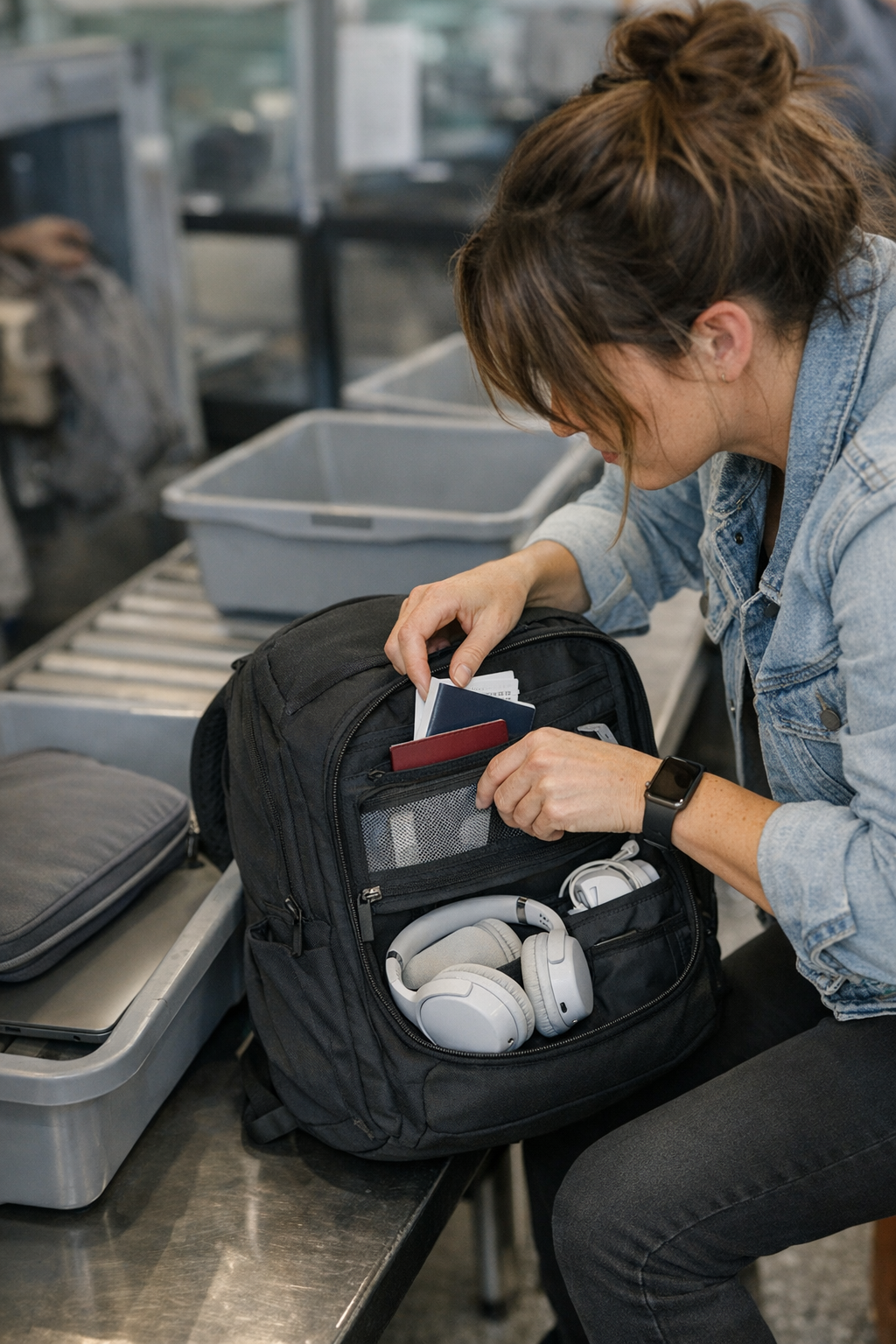
    The real test of a carry-on setup isn’t what you see on a bedroom floor—it’s how fast you can reach, retrieve, and repack when the line shoves you forward at airport security or boarding. Every traveler recognizes the quiet drag: fishing for a charger you swore was on top, unzipping a pouch you thought was for “quick access” but now blocks your hand, holding up a line while a document or headphone case vanishes deeper than it should. Nicely divided pouches and clever layouts can look under control at rest, but on the move, invisible slowdowns pile up. Every second spent rifling through the wrong pocket, shifting a kit to unlock a sleeve, or tracing a cable under a toiletries bag, is friction you feel in real time—and it never happens just once.

    Organized on Paper, Slow in Practice

    The tidy packing logic—separate pouches, snapped-in sleeves, color-coded organizers—means little when your routine breaks it in minutes. You plan for order, but airports force constant reach and return: headphones for zone calls, passport for desk checks, sanitizer on demand, charger before wheels up. Each time, a smooth layout at home becomes a shuffle of pouch-over-pouch, or an awkward pause as you pull one item only to block another. The structure that looked “put together” now acts as a slow gatekeeper. The flaw isn’t in forgetting to pack—it’s in backing a setup that turns these tiny retrievals into repeated speedbumps.

    Travel exposes this: your main sleeve is tidy but blocks the charger two layers down, or your outer pocket is stuffed with “just in case” items, putting boarding passes and IDs beneath an accidental barricade. Reach, pause, reshuffle, move along. The cost isn’t major in one moment; it’s the repetition—every interruption a small penalty that chips away at flow.

    Access Delays: The Quiet Obstacle Course

    The problem shows up fastest at security and document checks. You unzip to grab a laptop but find cords tangled under a toiletries kit, or a tech pouch that shifted in transit now masks your passport. The line behind you watches as you empty out layers you packed specifically to avoid this. What started as logic—“group similar things, zip tightly, be neat”—fails, not by descending into chaos, but by hiding the right item beneath the wrong layer. The order is still there—it just doesn’t work at speed.

    What’s more common than dropping everything is repeating a small dance: unzip, reach, pause, remember, retrace, then return items to their layer, only for them to migrate again after five minutes. Over the course of a single trip, that choreography steals minutes you don’t even notice adding up. By your second or third airport line, friction has built into a visible fatigue: slower rhythm, more disruption, a bag that demands your attention instead of simplifying your path.

    Packing Logic vs. Real Travel Flow

    Many travelers pack to look neat, not to move fast. Splitting essentials into isolated kits or pouches often means your boarding pass, passport, phone, and charger end up in three or four zipped zones. In theory, every group is separate and orderly. In use, every extra move turns the bag into an obstacle course. Visually clean setups can still force you through detours—slide one pouch aside, then another, then search. The time to scan a code, grab a pass, or stow a device isn’t measured in “was it packed well?” Nearly every delay is self-created by structure that rewards stillness, not motion.

    Count your most common travel sequences: code scan at a gate, boarding pass at security, headphones in-seat, charger before landing. If any of these require a second zipper or shifting a stack to reach, you’re set up for repeated interruption. Even perfectly packed carry-ons create friction if their logic doesn’t match your rhythm of reach, retrieve, and move.

    When “Good Enough” Structure Stops Working

    Your system may look fine at home. The failures only show under pressure—seat knees blocking access, one hand busy, the other untangling a cord or searching for a pass that was “right here” but slipped under travel snacks. The moment that repeats is quiet but clear: open, hesitate, try again, by now holding up another traveler or blocking access to the overhead bin. At first, it seems minor—then it becomes the normal flaw you tolerate, because the setup is “good enough.” Real carry-on stress isn’t meltdown; it’s the steady drag you feel by the fourth or fifth time the wrong pouch opens before the right one.

    Every repeated delay is a signal that the structure works against you, not with you—because what’s logical in a still room fails in line, aisle, and seat sequence. When the outer pocket is full of infrequently used things, documents migrate to harder-to-reach places. When the passport pouch fits the slip, it can also swallow a boarding pass by mistake. It isn’t one slip, but the combined price of design that never gets retrained after real use shows its limits.

    Small Tweaks, Sharper Results

    The fix starts with reading your own routine: identify the two or three items you always need first—passport, boarding pass, charger, headphones—and move them into a ruled outer pocket reserved only for these. Don’t rely on new gear; test with what you have by stripping just the repeat-use essentials from the main bag structure. Assign these a home that opens directly, near the zipper, every single time. Force one fast-reach zone for in-line and in-seat moments, not for static storage. Then test: at security, note how many moves it takes to unload; on board, see if reaching for headphones now requires no pouch-pulling or inner-bag shuffle. After use, monitor if everything restores in one motion instead of a return-to-base sorting. Small design tweaks that reduce these micro-motions compound immediately—less interruption, more travel flow, no need for a total re-pack.

    The Compounding Effect: Less Delay, More Trust

    When essentials stay one move away, the daily string of airport friction fades. No more apologetic aisle dances, blocked bins, or lost rhythm while digging for a cable or cards. A single, clearly split outer pocket turns a carry-on from an order project into a movement tool. It won’t feel revolutionary in one go, but the difference is clear when the same motion that once slowed you down now happens without a thought—your hand knows where to reach, your focus stays on your next step, and your setup lets you move. The best structure doesn’t just look tidy; it stays less interruptive through every repeat access. That’s how you measure real improvement—less friction, no matter how often you open, reach, or return.

    See travel-ready organizers, outer-pocket tools, and better carry-on structure at CarryOnSupply.

  • Why Under-Desk Cable Management Often Fails and How to Fix It

    Under-desk cables are almost invisible—until they wreck your rhythm. The clean desk you set up on Monday can turn into chaos by Thursday: a chair wheel pinches a forgotten charger, or the under-desk drawer jams halfway open because a cable loop slid directly into its path. What looked organized under fresh lighting now interrupts your reach, grinds against your storage, and trips up the routine that’s supposed to keep you focused. The promise of a tidy appearance—smooth surfaces, cables hidden away—collapses as soon as you actually start cycling devices, shifting your chair, or using drawers with any regularity.

    When “finished” isn’t the same as functional

    Desk setups fool people with visual order. Hiding stray cords, bundling everything tightly, and pushing organizers flush against each surface often creates a look that barely survives its first week. The illusion breaks fast: open a drawer to grab a notebook and feel resistance you didn’t expect, or try to move your feet and end up tangled. Whenever monitor arms swing or you swap out chargers, the tight, “invisible” arrangement becomes a small obstacle course.

    Visual tidiness rarely translates to real ease of use. You notice it less during an initial test run, but by day five—after swapping in new devices, bumping the monitor, or trying to clear room for a snack—the “out of sight” cords are in the way, demanding attention every time you try to reset or adapt. The desk surface stays clean, but below the surface, every new routine exposes another friction point.

    Repeated use exposes workstation weak spots

    Picture a typical situation: compact desk, laptop docked, dual monitors, an under-desk drawer tucked underneath. You start the week with cables routed tightly into trays, looking streamlined and deliberate. By Wednesday, a single device change—like adjusting screen height or plugging in a new charger—drags you into ten minutes of detangling or undoing bundled cords. That smooth tray becomes a slow-down, the drawer catches on a cable you thought was safe, and basic swaps get stranded in partial teardowns.

    The more you repeat daily actions – reaching for a notebook, shifting in your chair, plugging in a phone – the more the rigid “ordered” setup works against you. These aren’t decorate-and-forget problems—clutter slips directly into your workflow and pace. What hid clutter visually now bakes it into movement: rails grinding to a stop, cables dragging as your chair moves, reset friction right when you need to move fast.

    This is where the whole cable management problem flips: functional flaws don’t announce themselves until you’ve lived with your setup through a workweek. Especially in tight or multi-device spaces, inflexible cable runs leave you fixing the same obstacle, again and again.

    What seems efficient can slow you down

    Nearly every “tidy” cable approach—forcing cords behind a box, clamping every line to a single rear path—misses the point in real use. When every cable is forced into strict alignment, adjusting anything means dismantling everything. Trays positioned directly ahead of storage or leg space become instant barriers; neatness locks the whole setup rigid, delaying every adaptation.

    Short-term order, long-term interruption. Those perfect cable trails don’t flex with reality—each device swap leaves you rebuilding routes, while hidden tangles build up out of sight. Chair wheels scuff cords, drawer tracks stall on invisible bumps, and repeated “fixes” add to the time lost in the next reset. Usability drops every week the setup stays this rigid.

    A rethink: Cable control that keeps pace with real work

    Switching to a more forgiving cable setup felt different immediately. The aim shifted: instead of hiding everything or demanding strict lines, it became about working with actual movement. Leaving a true path for drawers and legs was equal priority to a tidy look. The setup that worked best wasn’t a bulky box hidden at the back—it was a slim cable channel, placed just past the drawer’s reach, close enough for hand access but clear of storage friction. Each cable got enough slack to swap devices or reroute power—without the domino effect of untangling an entire cluster.

    A few centimeters of margin makes a measurable difference over a week of work. Drawers stop catching. The anxiety of crawling underneath or wincing at snagged feet fades. Device swaps and charger resets don’t stall out the next task. You get a workspace that’s supportive, not demanding—one you don’t have to second-guess during ordinary routines.

    Every reset is less of a hassle

    The real improvement is practical: drawers open freely, chargers swap without hesitation, and your workflow doesn’t pause for “cable rescue” every other session. Even if you can spot an occasional wire from the front, the friction you feel disappears. No more prioritizing showroom appearance over movement and flexibility. “Invisible” cables are a myth—what counts is never hitting the same snag twice.

    FAQ: Troubleshooting the most stubborn under-desk cable problems

    How do I stop cables from tangling with under-desk drawers?

    Route cable channels clear of all drawer hardware. Place channels further back from the desk’s edge and away from sliding tracks, so storage can move freely without hitting bundled wires. If you notice a catch in daily use, reroute before it starts to slow your workflow further.

    What’s the smartest way to handle frequent device swaps?

    Avoid forcing all your cables into a single tightly-bound trunk. Open channels or individual adhesive clips let you pull or add one cord without disturbing the rest. Each line gets its own slack—so swapping in and out doesn’t tangle or force a reset for the entire desk.

    Why does my workspace still feel cramped after doing cable management?

    Rigidity is the issue. If your cable runs cross leg space or drawer paths, their hidden drag slows daily motion—even if nothing looks cluttered. Test your flow: if you can’t move as naturally as before, it’s time to reroute or adjust your channels to restore actual comfort in use, not just a tidy look.

    Deliberate cable choices build everyday confidence

    The best desk setups don’t force you to think about cables at all during work. If you can shift positions, swap a charger, or open storage without any extra move, your layout works. The pursuit isn’t perfect invisibility—it’s control that lets you forget about cable friction and reset delays for good.

    Choose cable management that serves your pattern, not just your sense of order. Compromise a little on invisibility for a lot more fluency at the desk, and the setup stays effective day after day—no matter how many times you reset.

    Explore the full WorkBasic collection

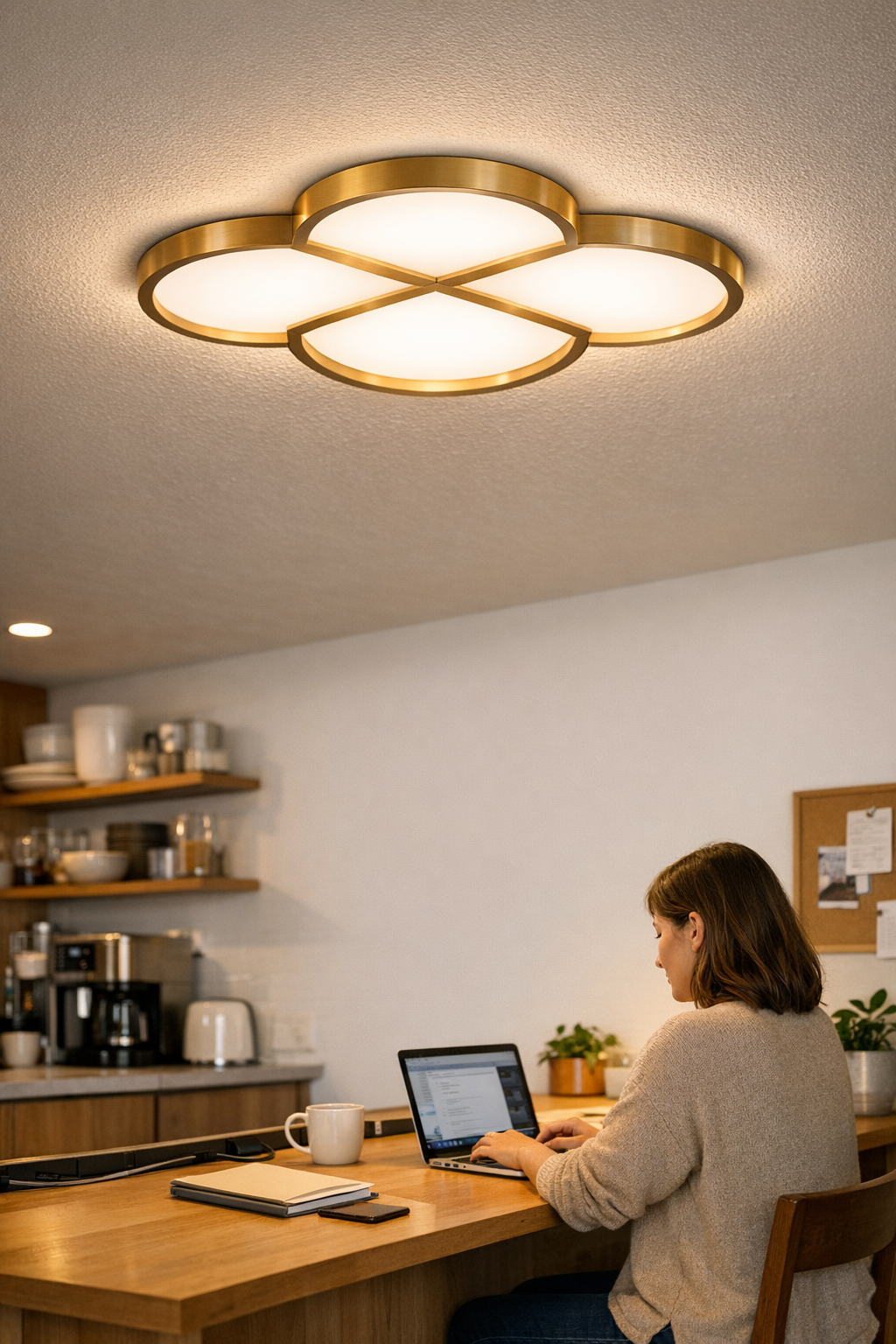
  • How Linear and Panel Ceiling Lights Transform Crowded Ceilings into Calm Spaces

    Lighting and support setups fall apart hardest after the first week, right when you need them to just work. The signs: glare streaks cutting across your screen every afternoon, cables that always resurface under your chair or beside your hand, and work edges that stay dim even though the fixture above looks crisp and central. In kitchens, studios, or any shared surface, it’s not the style that wears you down—it’s the creeping inconvenience: rearranged seats, improvised lamps at the edge, and a sense that the more you “optimize,” the more cables and shadows push right back in. This is the friction most lighting photos skip and most rooms keep repeating.

    The Everyday Friction of Messy Lighting

    If you’ve ducked to avoid a stray cable or caught yourself angling your work so you don’t block the one usable beam, you already know what weak ceiling planning delivers. Spot fixtures and statement pendants look decisive when first installed. Yet after a few days, it becomes a juggling act: overheads cluster together, cables snake along edges, and you’re physically working around the limits of the setup every time you reach, swivel, or pull up another chair.

    Most installations chase symmetry at rest and forget the movement, repositioning, and adjustment that happens dozens of times in actual use. The centered fixture leaves islands of darkness at the margins; “clever” cable routes slide back into sight every time you reroute a device. Wall brackets that appeared flush on paper now occasionally jar elbows or narrow your reach at the busiest stretch. Even as surfaces seem tidier, every step or task reveals a new interruption.

    How Linear and Panel Lighting Change the Equation

    The shift comes with broad, low-profile coverage. Instead of clustering light in one spot and hoping the rest falls into place, linear and panel LED fixtures spread usable illumination right to the edges—eliminating underlit corners, reducing glare at the desk, and keeping everyday movements clean.

    On long tables, counters, or shared setups with chronic cable creep, these fixtures adapt to routines instead of freezing them in place. You stop scooting chairs for the “bright patch,” stop fencing with desktop lamps, and start noticing fewer tripping hazards at the cable points. The daily annoyance isn’t defeated by looks—it’s resolved by an arrangement that holds up through dozens of uses, not just before the room photo.

    Scene: The Narrow Table Dilemma

    Imagine a kitchen-length worktable: one simple ceiling light, everything looks calm. But within days, every tool and notepad drifts beneath the only bright cone. Margins go dim. Extension cords and clamp lights sprout along the sides. Anyone grabbing a charger, shifting a tray, or pulling out a stool inevitably knocks a cable loose or knocks the light out of aim. No matter how neatly cables were tucked on day one, they keep sneaking back into view and snagging sleeves.

    In shared rooms, every move multiplies the problem: a bumped cable tangles up two seats, an unplugged lamp breaks up the conversation zone, and glare sneaks in after each seat shuffle. Order unravels the instant the room is used by anyone except the installer. Clean lines overhead didn’t solve dirty friction on the ground. The setup looks better than before, but repeatedly feels unfinished.

    Making the Shift: From Clutter and Glare to Clean, Functional Illumination

    Actual clarity comes by replacing scattered points and piecemeal cable runs with a panel or linear fixture set to your surface—not just your ceiling’s geometry. If your desk is ringed by brackets and cords, a flush panel above the active work area instantly puts light where your hands and eyes land—removing the need to drag in side lamps, and letting shelving or monitors stay put without fighting for the “good” spot.

    The difference isn’t cosmetic. That low-profile, edge-aligned fixture allows brackets and cable channels to stay invisible in the path of use. Corners that lived in shadow now pull their weight. Cables once crossing footpaths get routed clear in ways that actually last. Bracket and channel choices finally support the rhythm of work instead of blocking it—holding cables out of elbows’ reach, not merely out of sight lines.

    After adjusting, you catch yourself not needing to adjust: plugging in the laptop doesn’t spill the charging cable over your desktop, notes stay visible regardless of the hour, and you aren’t twisting trays to chase a brighter angle. The fixture stops being a piece to manage and becomes a quiet piece of the space—support receding into routine.

    What to Watch For with Every Setup

    First-day neatness hides long-term annoyances. Even a flush globe, centered and “clean,” can blind you from the side or leave the busiest edge in shadow. Smart cable tricks fail if the lit area misses where you sit, read, or reach. Wall brackets that look invisible at a glance can still crowd hand space by the second week. Routine tells you what’s succeeded: if you keep moving lights, shifting posture, or hunting for clean cable paths, your support system is out of sync with your life, not just your layout.

    Visual calm is an illusion if you’re still ducking glare or working around dark patches. Actual ease comes from setups matched to real, changing activities—not a frozen plan. If every day triggers the same workaround, your ceiling or mounting plan needs to do more than look finished.

    Where Linear and Panel Fixtures Make the Biggest Difference

    Linear and panel lighting transform zones that demand broad, reliable coverage—think dining tables where food and conversation spread, shared desks that host spreading paperwork, or long counters crowded with appliances and arms. These are not spots for decorative pin lights; they’re spaces where uniform edge-to-edge brightness and truly unobtrusive support hardware let the area function without daily improvisations, elbows hitting cables, or lights needing constant repositioning.

    For nooks or very focused areas, task lamps still have a part—but they can’t match the core clarity or eliminate the small, nagging interruptions that creep in at the margins of high-traffic surfaces.

    Real-World Tips for Cleaner, Smarter Lighting and Support

    • Align light with use, not just the center line. Place fixtures where work or conversation actually happens—even if it breaks the “symmetry.”
    • Map cable routes to real motion. Run cords to avoid daily stretches, open drawers, and the sweep of arms and chairs, not just to achieve the tidiest appearance.
    • Test lighting across active zones. A surface that is bright everywhere is a surface you don’t need to baby or re-aim.
    • If habitually shifting a lamp, dodging glare, or chasing a clearer corner, assume it’s the setup—not you—that needs the change.

    When It’s Time to Rethink the Setup

    When you catch your sleeve on a cable loop again, find a bracket blocking your notebook, or watch your best workspace stay dim regardless of “good” fixtures, it isn’t just a small annoyance. That’s your room telling you looks aren’t enough—the structure still isn’t working. Rethinking lighting and support isn’t a luxury fix: it’s what marks the line between a space that demands daily workarounds and one you actually want to use, without interruption.

    Let your lighting and hardware serve your movements, not the other way around. Improvement isn’t proven by untouched surfaces—it’s found in all the routines you finally stop noticing: cables finally out of reach, the shadow that disappears for good, the edge that becomes part of your usable surface instead of a dead zone. That’s where light and support pay off.

    http://www.lightsupport.myshopify.com

  • Why Bi-Fold Doors Often Fail in Busy Entryway Storage Spaces

    Threshold storage isn’t just about making clutter invisible—it’s about how fast you can reset the zone when the next entrance, drop-off, or handoff crashes through the door. In a cramped entryway, the promise of bi-fold door storage sounds unbeatable: panels fold away, walk space opens up, and for a brief spell, order is restored. But in the day-to-day grind—arms full, shoes drifting, bags multiplying—the cracks show up fast. The neat facade matters less when you’re stuck handling temperamental doors or stalled resets just to keep chaos at bay.

    Why Bi-Fold Storage Seems Like the Answer—Until It Isn’t

    Bi-fold cabinets catch attention for tight hallways because they sidestep the wide swing—no more doors banging into benches, bags, or bodies squeezing through the threshold. Early on, it feels like you’ve solved the passage puzzle: more space to move, mess zipped away in a tidy shell. For a few days, everything glides. But in a home that pulses with repeated comings and goings, that smoothness breaks down where you can least afford it.

    Small compromises in daily use add up fast. Every folding panel becomes another moving part that can misalign, accumulate grit, or snag on a stray shoe. Instead of a quick return—grab, store, move—you’re juggling sticky hinges, nudging stubborn tracks, or dealing with panels that refuse to stay flush. A threshold that looked streamlined yesterday now bogs down today, just when you’re rushing to reset before the next round of arrivals.

    When Small Friction Turns Into a Stalled Reset

    Looking organized isn’t the same as working fast—especially at the entry where clutter pressure is constant. Picture the morning routine: shoes expand into the hallway, a backpack squats next to the cabinet, coats slip half in, half out. With bi-folds, a jammed panel or misaligned track means you’re stuck—groceries in one hand, fighting to coax the doors open with the other. If a panel pops loose or won’t stay shut, the “clean” look collapses and the reset backs up for everyone.

    Real-world reset hurdles:

    • Juggling two doors at once with one hand already busy
    • Prying at a hinge or shuffling the track before the door will move
    • A stuck fold blocking access to everything—no quick fix, no simple grab

    This isn’t dramatic failure—it’s the kind of low-level hassle that piles up across every wet morning, hands-full entrance, or school-day rush. What starts as efficient storage trickles into repeated little interruptions. The system you trusted begins to stall you, one jam and one deferred reset at a time.

    The Visual Order vs. True Usability Gap

    Bi-fold doors conceal chaos—at least until the mechanism turns on you. The real cost appears not in the first week, but after dozens of rushed returns. A stuck panel or inch-intruding door breaks both flow and order. In morning traffic, someone dodges sideways for a half-folded panel, or gives up and dumps shoes outside the storage—restarting the hallway clutter all over again. In transition spaces, every slow reset shows on the floor, not in the design catalog.

    Direct consequences you’ll notice:

    • In a rush—one shoe in hand, the other hand on the lunchbox—the resistance leads to shoes abandoned beside the unit, not put away.
    • Two people passing: a partially open bi-fold crowds the path, making each squeeze a stress test for space—and patience.
    • With the door open, the next person waits, blocked by your incomplete reset; return flow stops until the panels are back in place.
    • When tracks warp or hinges stick, “temporary” clutter becomes semi-permanent. The zone that was supposed to stay reset slips back into disorder after just a few days’ use.

    What Actually Improves Daily Flow?

    Switching from bi-fold doors to open-front storage in a tight alcove is less about aesthetics, more about reliability. When your entry gives you a foot-and-a-half at best (think 18 inches between the wall and the door), anything adding friction becomes an obstacle. With open storage, you see what needs resetting, toss shoes or bags in one-handed, and keep moving—no detours for adjusting hardware or matching panels. It’s honest: you trade away perfect concealment, but you get zero-delay returns.

    Entry routines run better on:

    • One-hand-or-no-hand drop-in—even if you’re juggling groceries and a toddler’s rain boots
    • No alignment rituals—just grab, toss, or adjust on the fly
    • Instant scan—what’s overflowing, what needs to be fixed before movement gets blocked

    This is where function steps ahead of form—where looking “done” gives way to staying adaptable. If you’ve jammed your hand, tripped the reset, or watched clutter choke the path more than once, the problem isn’t your routine. It’s the setup slowing you down when you need speed the most.

    The Real-World Payoff: Reliable, Low-Effort Reset

    Entry zones take a daily beating—small faults grow bigger with every pass-through. A bi-fold that sticks or comes off-track once might be forgiven, but every extra micro-adjustment gets between you and a clean threshold. Each clog turns a five-second reset into a multi-step workaround. By contrast, open storage skips the risk: nothing to break, nothing to block, nothing to keep you from a quick, low-effort reset. It’s not about hiding the mess; it’s about preventing it from multiplying in the first place.

    In real use, see where the simple setup wins:

    • Bags dropped midstream: With open bays, you spot spillover right away—deal with it before it becomes wall-to-wall mess.
    • Shoe lines drifting wide: Open units make it clear which pairs are out-of-bounds, so you can sweep the reset before anyone trips.
    • Bench as landing zone: When every seat edge becomes overflow, open storage lets you rescue the bench for quick sitting without fighting panels for access.
    • Return in motion: If closing a cabinet interrupts your momentum, that step gets skipped—leaving the system weaker each time. An open front keeps the reset part of the walk-through instead of a separate task you might skip.

    Fast fix: For houses with the highest entry churn—kids, guests, recurring gear—leave at least one open bay for must-drop items. Visual clutter is a smaller problem than slow resets that let mess snowball.

    Form vs. Function: The Entryway Reality Check

    Catalog glamour fades fast if your storage slows the routine. If your entry isn’t constantly under traffic pressure, maybe a bi-fold shelf works out. But for most city apartments and crowded family homes, every extra hinge and track is another chance for trouble. Once a panel sticks, every return feels heavier. When things stall or snap off-track, maintenance and catch-up become regular chores—not rare issues.

    The underlying logic: a threshold setup should turn your day smoother, not slower. The cost of chasing perfect visual order can spike each time a return gets blocked or postponed because the storage created one step too many. Simple setups—open benches, wall racks, drop zones you can reset in seconds—almost always outlast “clean look” systems in spots that see real, repeated use. If the trade-off is visible shoes but a pass-through that actually resets every day, most households find the “imperfect” system wins on reliability and real order, not just appearance.

    Explore practical entryway storage solutions for real transition-space routines at Betweenry.

  • Balancing Paperwork Storage: Sideboards Versus Open Organizers Explained

    If your paperwork never seems to land in the right spot, the storage setup isn’t keeping up. Even when counters start empty and the dining table looks clear, by midweek there’s a migration—mail with receipts, school forms edging across surfaces, and the same stack making the rounds from bench to shelf to open drawer. When a bill goes missing or a permission slip vanishes just as you need it, the real problem emerges: your system isn’t designed to handle the way paper actually moves through daily life. More storage doesn’t fix routines that break down every Thursday evening, or stop this week’s pile from blending with last month’s archive in the same hidden cabinet. If you’ve ever hunted through layers or spent Saturdays simply resetting zones, you’re not alone—the real cost of a mismatched storage choice shows up in lost time and repeated friction, not just visible mess.

    When Paperwork Collides with the Week

    Choosing between a sideboard (closed, anchored storage) and open organizers seems straightforward—until real routines hit. An uncluttered start quickly unravels if your storage doesn’t fit where and how you actually handle paper. Paperwork doesn’t flow neatly into its category; it builds up around pinch points: that kitchen counter where urgent mail lands because the sideboard is too far, or the hall shelf where incoming forms crowd out yesterday’s “to-dos.” The dinner table doubles as a shuffling ground. Retrieval no longer feels quick. By the time you notice, finding a single page involves backtracking through three different zones, each a step slower than it should be. It’s not just an untidy look—it’s stalled decisions and extra loops in your day.

    Hidden Calm or Instant Access? Why Structure Means More Than Looks

    Sideboards clear surfaces fast. Sweep stray envelopes behind a closed door: visual calm restored in seconds. But a week later, that same sideboard swallows categories. Tax forms edge under coupons; action items slip between ignored flyers; the archive layer thickens and today’s urgent document is out of arm’s reach. Hidden storage can quietly concentrate confusion—retrieval becomes a slower, multi-drawer search that disrupts the routine you meant to protect.

    Open trays and labeled organizers work differently. Every category stays in view, and sorting seems quick—until real volume stretches the setup. Watch as “file later” bins merge with “to pay now,” folders overflow onto the first available surface, and high-turnover zones bleed across the room edge. The promise of instant access turns into a subtle maintenance burden: you’re constantly adjusting stacks, trying not to trigger a collapse, and the reset cycle creeps closer to daily instead of weekly. The pressure builds in plain sight.

    Where Setup Collapses: Fallout in Real Use

    The real tension between looking organized and staying functional shows up in high-traffic spaces. Picture an entry counter by the kitchen: the obvious spot for keys, bills, and updates. With a sideboard within reach, it’s too tempting to sweep stray papers away before dinner—out of sight, but not out of the system. By Friday, the compartment holds a muddle of old statements and tomorrow’s deadline, making even a short search unpredictable when you’re in a hurry.

    Open systems feel under control until one heavy week brings in more than they can contain. Bins overflow, “urgent” piles blend with “just arrived,” and soon you’re out of assigned slots—paper spreads to desks and the floor. After two or three cycles, the space needs rescue, not just a reset. Open clarity is only as strong as the system’s ability to keep pace with the incoming volume, and to hold a line when routines slip under pressure.

    Movement Blocked, Flow Interrupted, Order Lost

    Storage impacts more than what’s seen—it slows how you move. A bulky sideboard may keep the counters clear, but if it shrinks the passage or its drawers collide with chairs, the setup interrupts every pass-through. You might move stacks twice to reach what you need, or pause to shift a bench out of the way just to open a drawer. Open organizers without enough structure can do the opposite: they invite rapid stashing but turn every surface into a catchall. As return flow weakens, small messes multiply—one tray overflows, then a full shelf joins the sprawl. Restoring order demands effort out of sync with the rhythm of daily use, and “easy access” turns out to be its own friction point.

    Category Boundaries: The True Line Between Order and Chaos

    Most setup failures aren’t solved by just adding more storage. The difference is boundaries. Insert a divider inside a sideboard drawer and suddenly “to process” has zero overlap with “to archive.” Retrieval is immediate—routines tighten, and the urge to start new stacks on top of surfaces fades. A tidy look turns into sustained, visible function: each category has an address, and even short resets are more efficient.

    With open organizers, labeled slots for each document type slow down category drift. But when the volume outgrows the structure—or returning an item feels like a chore—the system can’t hold. Overflow zones appear, surfaces fill, and the cost is measured in time wasted shuffling between sites. A setup that flexes—a new divider for a busy week, a repositioned tray when activity shifts—is less likely to slip under real pressure.

    Breakdown Signals: Where Storage Fails Real Use

    • Overflow hits the floor: When trays max out, paper spreads to whatever open space is nearest, quietly increasing the weekly reset burden.
    • No internal boundaries: Drawers without dividers let categories blend—requiring full-drawer excavations for every retrieval.
    • Movement gets blocked: Sideboards or benches placed too close to choke points make even tidy spaces awkward, slowing natural routines.
    • “Sorted” but not stable: Spaces look neat on Sunday, but with no clear return flow, new mini-stacks appear by midweek and sorting starts over.

    Outpacing the Paper Trail: Fine-Tuning Your Setup

    Lasting order hinges on using mixed storage types for mixed problems. Sideboards and cabinets handle overflow—if you add dividers to keep them from becoming black holes for paper. High-frequency documents work better in open-front or wall-mounted organizers within reach of your entry or main work zone—provided those units aren’t crowded or blocking daily paths. Timed returns matter: if putting away a receipt or form takes more than a few seconds, or if papers migrate between zones before settling, the system’s not fitting your real flow.

    Try a live test at the end of any regular weekday: did stray notes and mail end up filed, or did quick stacks form on your go-to table? This routine check reveals breakdowns faster than any deep clean. And when routines change—new activities, digital bill shifts, or heavier use—the most adaptable setups let you quickly add a shelf, insert dividers, or rotate organizers so new surges don’t push the limits and force paper back onto visible surfaces or problem walkways.

    A Setup That Survives the Midweek Rush

    The strongest systems aren’t the tidiest on day one—they’re the ones that hold their boundaries under pressure and shrink reset time to minutes, not hours. When you open a drawer and immediately find today’s paper—not a mulch of old forms—you know the setup is working. Inside storage isn’t just about hiding clutter; it’s about matching each zone to the way paper really enters, circulates, and leaves your space. When a storage choice fits your actual reset rhythm, categories stay separate, flow stays clear, and your space keeps working in real time—even when routines shift and new friction appears.

    For practical inside-storage setups, explore Gridry.

  • How Quick Cat Grooming Cuts Daily Hair Cleanup and Home Tension

    The gap between a “clean” indoor cat setup and one that actually works shows up fast—usually in the first repeated routine you run. You reach for a cat bowl to refill, but fingertips catch a line of hairs clinging to the rim. A fresh feeding mat that looked spotless yesterday already shows faint dust-lines around the edges. Every time you move a toy or a cushion, you find a new pocket of fur, not in drifts but in daily, stubborn traces. The setup didn’t fall apart; it just quietly lost its reset smoothness. If you catch yourself wiping the same spot twice before breakfast, or pausing to chase lingering fur before handling the actual bowl, you’re not just being picky—you’re seeing the real friction that builds when grooming and cleanup aren’t fully aligned with daily indoor cat life. StillWhisker setups are designed to shrink that gap: real-world home routines, not just tidy first impressions.

    Seeing The Invisible Work: Where Stray Fur Really Collects

    At a glance, a feeding spot—bowls aligned, mats placed—feels under control. But miss even a single grooming reset, and the quiet build-up shows: fine hair webbing the bowl’s curve, dust-fine strands gripping the soft mat where you pour kibble. These aren’t just cosmetic annoyances; they multiply steps. Poised to top up water, you realize a layer of hair coats one edge, so your “grab-and-go” turns into a sweep, lift, and second wipe before refill. Each round, what should be a single movement fragments into several—never a crisis, but always a little slower, a little less contained.

    If your setup lives on a shared walkway—kitchen corner, hallway elbow—the cycle accelerates. Every reach drags low hair across to human zones, and mats at the edge start looking faded or clingy. A reset is no longer just for bowls; it means repositioning a stray toy, chasing a missed fluff, or grabbing a cloth from a shelf that’s one step too far away. That calm, organized look thins sooner than budgeted, and routine upkeep starts to show where your setup’s convenience ends.

    When Routine Grooming Breaks Down: How The Cycle Starts

    Let grooming slip for even a day or two and the slip shows up fast—not in one big catastrophe, but in micro-returns: a fine grit where the bowl lands, low-lying fur shadowing every feeding mat, those moments you hesitate before setting a dish down because it doesn’t quite feel clean after one wipe. Maybe you skip brushing because the cat’s coat looks fine by eye, or you run late. Suddenly, it’s the afternoon reset and you’re stuck clearing the same faint traces from yesterday—plus new ones that crept in while you weren’t looking.

    The giveaway isn’t always surface mess. It’s the repeat wiping, uneasy pause, or that “almost clean” feeling that creeps into everything near the feeding area. Toy returns drag in hair. Bedding reset triggers another check around the bowl. Outward order, but one or two hidden trouble spots that mean you’re still working too much just to stay even. That’s when “looks okay” slides into “feels like maintenance.”

    Small Friction, Real Minutes: How Maintenance Accumulates

    The speed bump isn’t dramatic; it’s the way seconds stack up—reaching for a bowl but getting stopped by fur pasted to the rim, needing to flick the mat twice before it looks ready, halting the return of a toy to swipe away a hint of fluff. Each piece is minor, but together, they create a home routine that never quite resets cleanly, always a bit stickier, never fully done. The cost isn’t a disaster, but a dozen split-second pivots from “grab and go” to “pause and fix.”

    If the brush is always in the wrong drawer or the cleaning cloth is two zones off, these steps drag—the interruption is built into the layout. As skipped grooming repeats, these pauses multiply, until a single daily reset easily costs an extra minute chasing the same recurring hair points. Now, every comfort upgrade—softer mat, new blanket—brings relief, but another friction point: plush surfaces trap more, folds catch lint, “easy” resets become little obstacle courses for stray hair.

    Comfort and Complication: How Improvements Uncover Weak Spots

    Adding a plush mat or smooth new feeding tray delivers instant visual calm, but softness often means hair sticks deeper, corners collect more. The space feels better—at first—then slows down day two or three when mats grip debris, with folds or padding gathering stowaway fur from toy swaps or bowl landings. Function fights feel. Soft improvements make a room look finished, but also make each reset more work if the routine slides, revealing where “easy-to-clean” wasn’t actually built for daily indoor traffic.

    Grooming Frequency: How Often Matters More Than It First Appears

    The visible split between “looks good” and “works better” appears inside three days. Fur lines redouble if grooming is delayed or supplies aren’t at arm’s reach. Owners who keep a soft brush nearby—the caddy, a hook, not some unseen closet—catch drift before it bakes in. Quick passes every day or two cut not just obvious fluff, but the slow stacking of effort: mats and bowls reset with fewer wipes, cleaning doesn’t spill into hallways, and hair drift doesn’t invade every shared path or rest spot.

    Miss these resets, and hair gradually crosses cat-only zones into human domains: under couches, along doorways, and across that favorite play zone. Even careful vacuuming won’t match the difference—a routine brush pass keeps the hair anchored to one spot, while neglect lets it cross every zone you hoped to keep tidy.

    Everyday Scenes: Where Hair Drift Steals Time and Focus

    End-of-day: you lift a bowl, expecting done-for-the-night, and see a hair line etched where the mat meets table. Midweek vacuum: pull back a cushion and loose fur flickers out of the seam, waiting to be re-settled later. Morning routine—before coffee, you’re already sidetracked by a film of fur on the feeding corner, needing the cleaning supply before you even get to feeding. It’s not about cleaning for cleaning’s sake; it’s the constant rerouting—each small interruption, each too-late wipe—that quietly eats up your daily flow.

    Those faint fur trails that snake from the feeding mat to the furniture edge signal when your setup’s working against you. Doesn’t matter how often you vacuum; skip consistent grooming, and hair draws new lines from food zone to play zone, and back again. Throw blankets shake clean, but by afternoon, fur’s back in the same fold. Reset after reset, you feel the lag—still handling the same evidence of missed steps, still fussing with what should be done by now.

    Structuring a Smoother Routine: What Actually Changes With Consistency

    Routine grooming isn’t magic—it simply cuts the double work you never wanted. After slogging through back-to-back slowdowns, I locked in a two-minute soft brush after every second feeding. Instantly, next resets went from chasing a dozen rim hairs to finding maybe one. Mats held less debris, and wipe-down shrank by nearly half a minute. “Hair check” faded from constant duty to a quiet background step. There were still outliers—busy days meant some fur got missed—but the repeat friction and mental tax dipped in a way even a tidier appearance couldn’t fake. Suddenly, cleanup supplies lasted longer, movement through the room felt lighter, and the feeding area stayed usable, not needy.

    Building Your Grooming Habit: Tips For Real-World Success

    Don’t aim for perfect. Build grooming habits into a moment you already hit—after first feed, or prepping the last meal. Store the brush within sight, not buried: on a caddy, drawer edge, or out near the feeding space. When you see hair collect, brush right there—seconds per mat edge is enough. If bedding always has residue, run the brush as part of your rest corner reset. Consistency trumps perfection—the whole point is to stop drift before it becomes another round of reset slowdowns and scattered cleanup frustration. Setup choice means less if the maintenance living with it keeps circling the same spot.

    Explore StillWhisker’s setups for grooming-adjacent routines and more practical cat-life structure.

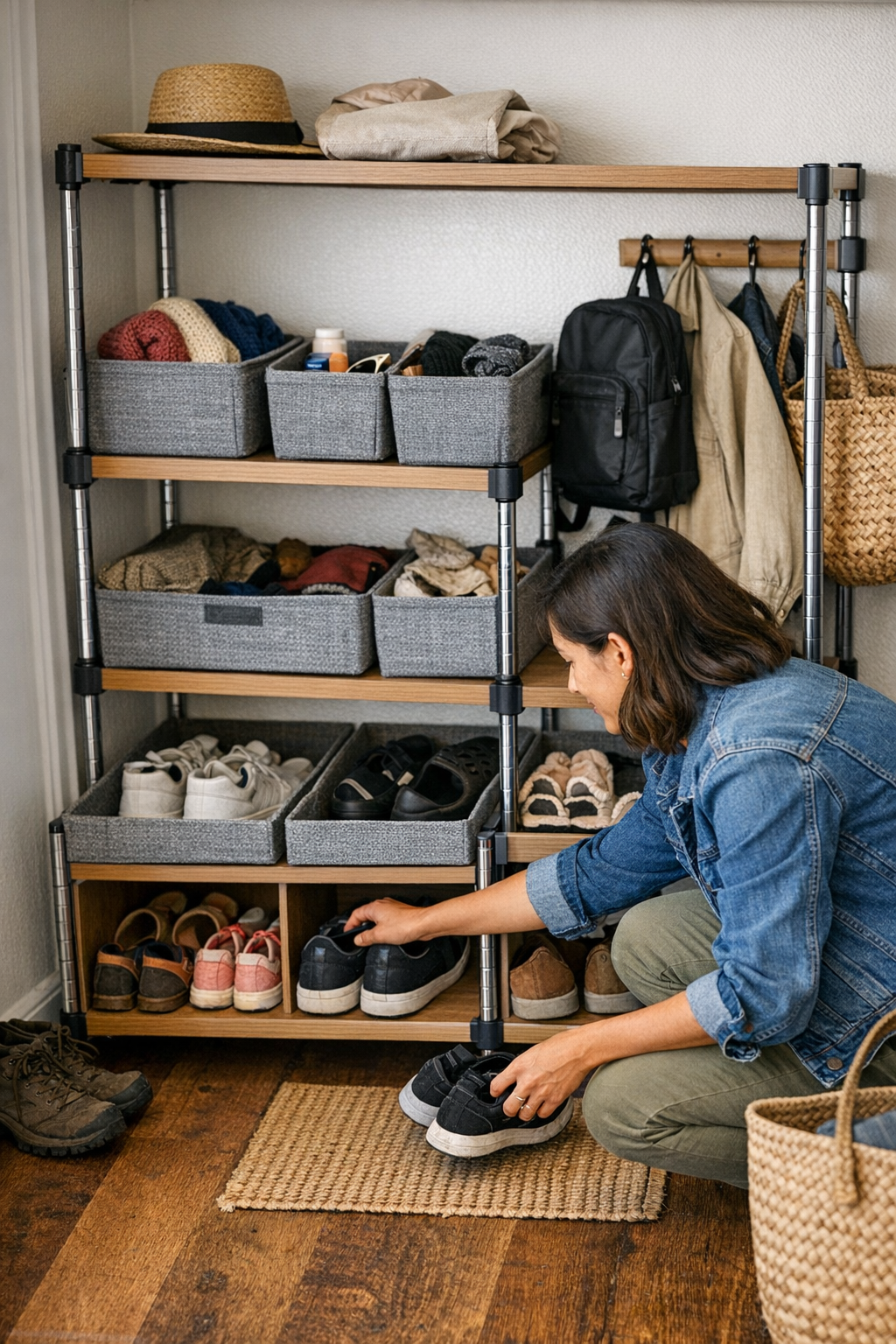
  • When Temporary Storage Turns Into Everyday Clutter Problems

    The first sign is almost always innocent—a spare bin squeezed into the closet just to “tide things over.” The hallway shelf, meant for the essentials, turns into a holding zone for loose gloves, mail, and whatever you haven’t had time to put away. These last-minute fixes promise instant relief, and in the rush of a busy week, who hasn’t felt smart for grabbing an extra basket to keep the mess at bay? But days blur by, and those makeshift spots quietly become part of your daily routine, for better—or for worse.

    When Quick Fixes Become Daily Obstacles

    It doesn’t take long for a “temporary” bin to plant roots. The overflow basket meant for shoes soon blocks the best path to your closet’s essentials. What started as a crisp drop zone at the entry now buries your keys under catalogs, masks, and the odd sock. Grabbing one item usually means reaching behind two, or shifting a pile just to unearth something small. The faster you try to move, the more each tiny obstacle adds up—until every reset feels like a round of hide-and-seek with your own stuff.

    Surface Order, Hidden Hassles

    Matching bins and a tidy shelf might deliver that instant “after” photo. But by week’s end, function cracks through the surface. In high-traffic zones—entryways, hallways, bedroom closets—the system faces the real test. Need your go-to scarf? Not without pulling off the hats and sliding two bags aside. Lower shelves stack up with whatever landed there last, and you start forgetting what’s in the bottom bin. What looked streamlined now only works if you never touch it. And that’s rarely the reality.

    Clutter Creep in the Entryway

    Scan the front closet after five days of family comings and goings: The “shoe bin” now hosts knotted sneakers, winter boots, and gym sandals all tangled together. The shelf above fills with yesterday’s mail, reusable bags, and things destined for “somewhere else.” Running late, you’re digging for a lost glove stuck beneath a backpack and last season’s hat. Each search leaves the pile messier, and corners fill up with things you’ll “sort later.” Instead of supporting the day’s rush, storage becomes a gauntlet—making small tasks (like getting out the door) harder than they need to be.

    The Hidden Price of Catch-Alls

    Those bonus baskets and easy-fill shelves promise freedom from clutter, but lacking boundaries, they quietly make things worse. Today’s overflow becomes tomorrow’s habit. Sandals you haven’t worn in months camp out with shoes you wear daily. The gym bag lands on top, burying what you actually need. The next round of stray mittens just piles onto the jumble below. What started as “extra space” turns into a lost-and-found. You spend more time hunting, less time moving on with your day.

    Spotting the Slowdown

    If you hear yourself muttering “where did I put that?” every other day, you’re not alone. Bins overflow, shelves layer up, and you find yourself sliding stacks around just to get at something in the back. Spending three extra minutes looking for a single item adds up—especially when week after week, you’re fighting the same battles. Tidying doesn’t stick. Items blend into each other, and that once-clear system now operates on hope and habit instead of real order.

    How Real Change Starts: Reworking the Basics

    Forget the fantasy of a full overhaul. Instead, split that unruly bin: use open dividers so each category (or family member) claims a clearly marked space. The effect is real and immediate—when the “kid shoes” section fills up, it’s obvious. A once-chaotic shelf becomes three sized bins: hats, gloves, scarves. Now you see what’s running low and what’s multiplying. Grabbing what you need takes one motion, not a full dig. Restacks become rare, and the system works even after a wild week.

    What matters isn’t perfection—it’s visibility and limits. Containers with real roles keep overflow in check. Instead of wrestling with an endless pile, you see right away when something’s out of control, and the reset takes seconds, not half an hour. The separation reduces mix-ups, keeps items within reach, and gives every object a visible home.

    Small Habits, Smoother Days

    The payoff lives in your daily routines. Evening resets go fast—just a quick tidy, not a full excavation. There’s less friction on busy mornings; you’re not shuffling stacks to get your keys or fishing hats out of bag piles. The whole household finds things more easily, and shared spaces stay sane. Boundaries don’t just create order—they help routines survive the storms of real life.

    Of course, busy weeks will still test any system. But now, recovery is a matter of moments: put things back where they fit, and order returns before chaos spreads. No more perpetual game of catch-up.

    Time to Rethink Your Storage?

    If you’re often pushing aside piles, hunting through layers, or using awkward corners as an unofficial drop zone, it’s time to pause. Catch-alls and “overflow” bins are only helpful when they have clear, visible limits. Without them, a backup quickly becomes a bottleneck—slowing you down, swallowing your essentials, and silently contributing to the daily scramble.

    Pay attention next time you tidy: Are you always shuffling the same overstuffed bin? Are shelves filling up too quickly? Are resets taking too long? If yes, try tighter boundaries and more purposeful bins. Make each spot serve a clear, visible role—and see how that changes your day-to-day flow.

    Real storage wins aren’t about a picture-perfect closet, but about a setup that moves at your speed, adapts to a real household, and recovers quickly when things get messy. Choose systems that make it easier to see what’s what, grab what you need, and reset the space in minutes—because storage success isn’t just about a neat snapshot, but a space that quietly holds up, week after week.

    Visit ClosetWorks for storage solutions designed to handle real life

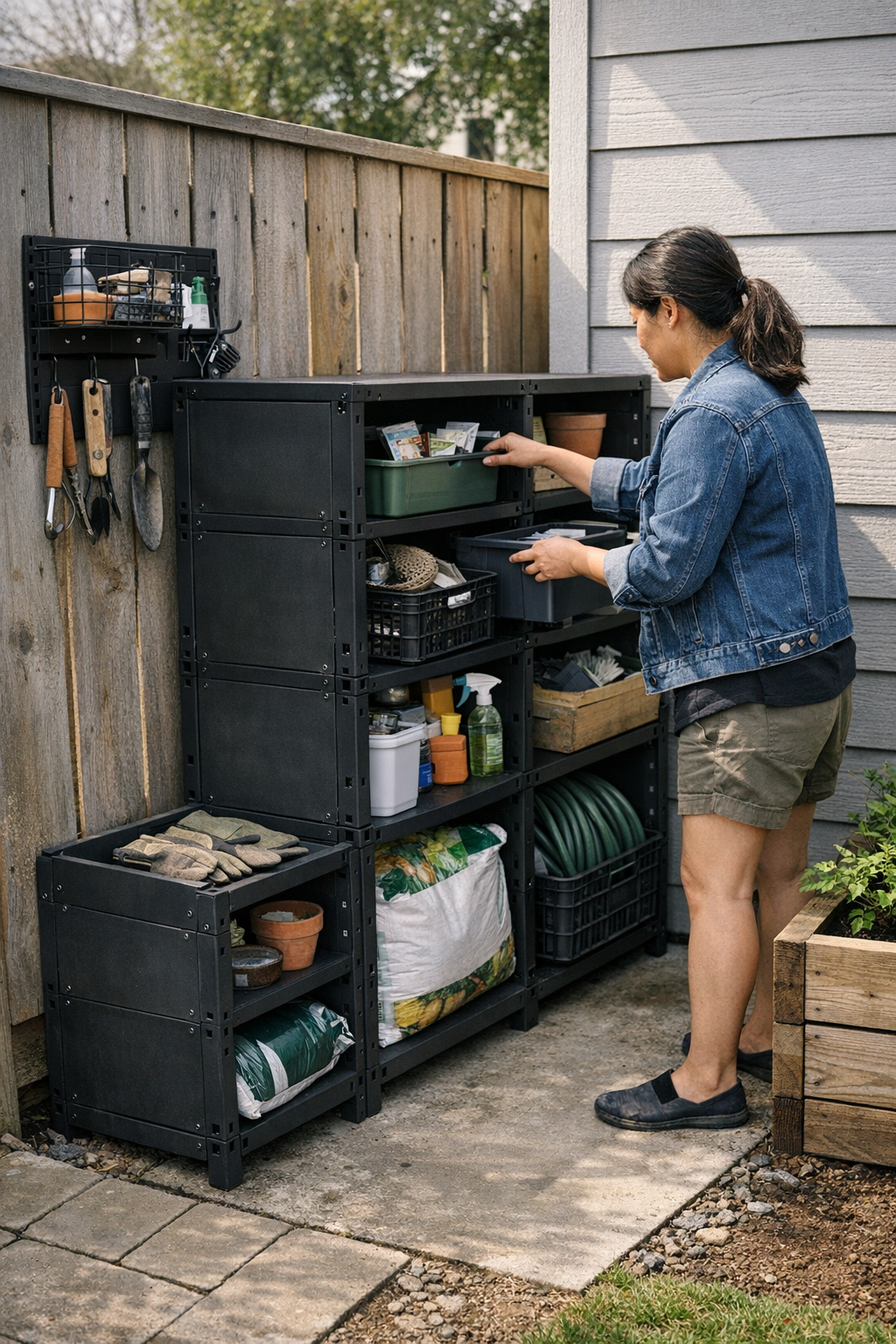
  • Why Wall-Mounted Rail Stability Matters for Long-Term Workspace Efficiency

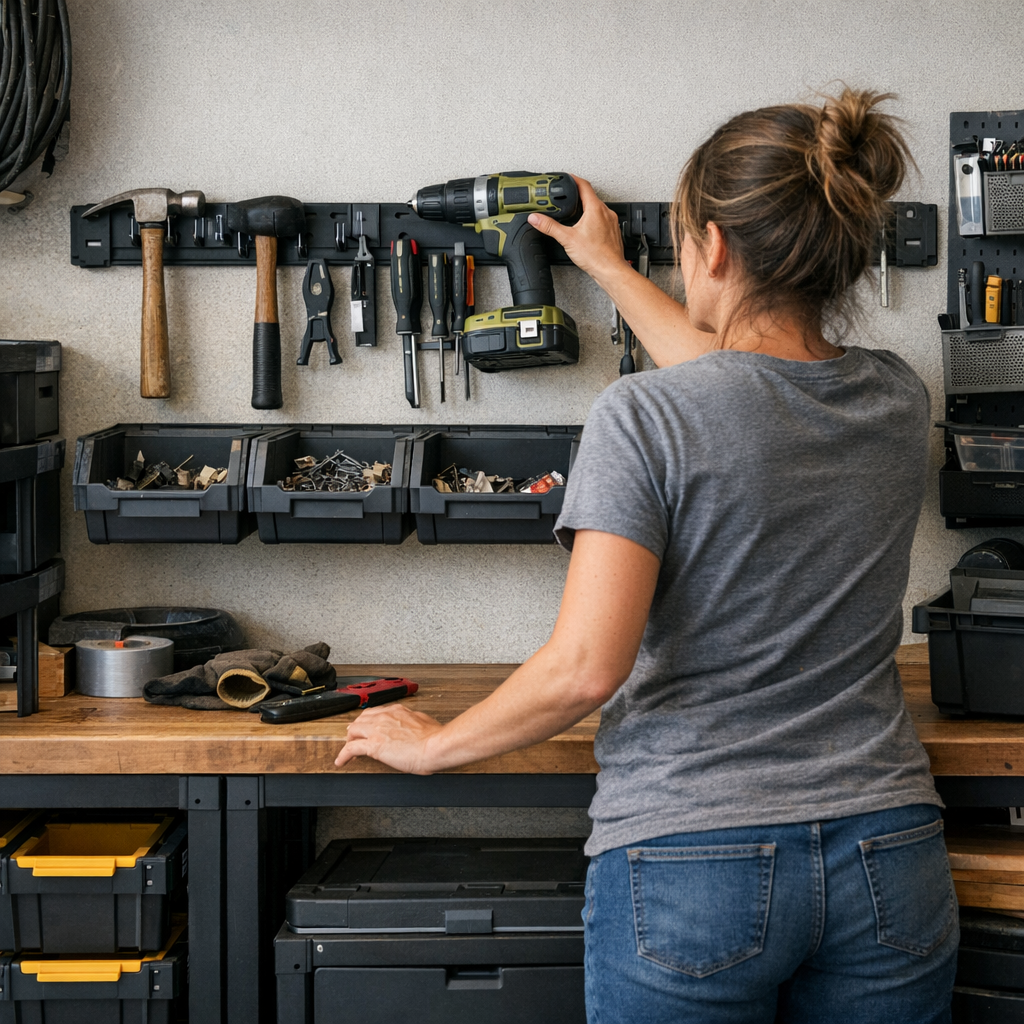
    You mount a rail system on the garage wall, line up every hook and bin, and for a moment, the whole space looks transformed—pristine, logical, like it belongs in an organizing catalog. But beneath that picture-perfect order lurks the real test: not how day one looks, but what happens once the work begins. The first week is always the proving ground—when that new system faces muddy boots, hurried grabs, and the constant shuffle of real, unpredictable use.

    When “Organized” Breaks Down in Real Life

    The slide from order to friction happens fast. Monday morning, you grab a driver with one clean motion and move on. By Friday, those rails—seemingly rigid—have migrated just enough to set off a chain reaction. Handles jut where you expect open space. Bins that once slid out without effort suddenly catch on their neighbors. Returning a wrench becomes a fumble, not a reflex. The system still “works” on paper, but every motion stretches a little longer.

    Disorder doesn’t arrive as a collapse. It shows up in nudges—a ladder propped flush against the wall, a broom bumped sideways, or the course-correction required to wheel a cart past suddenly-encroaching bins. Each nudge, each sideways tug, introduces play in the rails and throws the layout just a bit more out of sync. Flow gets interrupted, and throughout the week, the cracks widen.

    The Damage You Don’t See on the Surface

    Most setups still pass the “drive-by” test. At a glance, nothing seems amiss: rails are up, bins are hanging, nothing has fallen. But the experience in the space has shifted. Now, your path to the workbench means pushing the same awkward cart again, or using your hip to edge aside a once-tidy module that’s started to drift. Overflow piles up on the same stubborn corner shelf—close to the door, always in the way.

    These micro-annoyances build momentum. The gap opens between “fits the wall” and “fits how you work.” In a cramped garage or a tight shed corner, a rail that drifts means turning a reset into a full-on scramble—minutes lost just because nothing lines up as planned.

    From Day-One Order to Midweek Clutter: A Real Example

    Here’s how it looks in practice: on my wall, everything was dialed in—hammers, small bins, the drill charger lined up beside the vice. Then, after a round of spring cleaning and a neighbor stacking hedge trimmers too close, the central rail drifted an inch to the left. Suddenly, bins jostled for space, hooks veered off their familiar pattern, and the “grab and return” motions got clunky. With each use, I found myself reaching awkwardly behind a creeping bin just to snag a socket, or gently lowering a driver back, hoping not to send the adjacent hook spinning.

    It didn’t become chaos overnight, but it made everything slower. The flow of the wall—the ease that made the whole setup appealing—got replaced with hesitation and little corrections. Every micro-shift left a mark. A few seconds lost here and there became minutes over the week, and the space I’d organized became just another thing to manage.

    What Really Moves Rails—and Why Most Setups Drift

    The trouble isn’t vertical weight. Most rails will hold up heavy tools just fine on day one. It’s the sideways stress—constantly bumping, reaching, shifting tools and carts during actual use—that works against the weakest anchors and hardware. Slide a bin with the wrong angle, get careless with a rolling toolbox, or return something off-pattern, and suddenly the rail isn’t quite where you left it.

    These lateral pressures are invisible in the instructions but relentless in practice. Over weeks, rails flex and creep; hooks twist loose; bins lose their “just right” alignment. The wall you built to smooth out your routine starts introducing little friction points into everything you do.

    The Real Difference: Pretty Walls vs. Smooth Routines

    Order isn’t just how it looks—it’s how it moves with you. Relying on what’s “straight enough” by eye means missing the slow drift: the repeated effort to scoot a cart aside, the zone that swallows overflow, the return trip for the wrench you should have been able to grab blind. Over time, real functionality gets hidden behind a façade of order.

    What Actually Kept My Setup Solid

    My fix was practical. I ditched the generic rail screws for hardware made to handle real side-loads—longer anchors set for both pull-out and shear force, especially in drywall sections without accessible studs. After installation, I torqued every fastener down, then checked for play after two heavy-use days. After the first week—half a dozen frantic project resets later—nothing had shifted. Each hook still lined up, each bin slid out easily, and returns landed in place on the first try. The space looked clean, and it moved cleanly, too.

    Making Stability the Default—Not the Afterthought

    If you share a workspace, wrangle gear in a small garage, or know the pain of a “just organized” space falling apart under pressure, anchoring for side-stress isn’t optional. It’s the move that separates walls you redesign three times a year from walls that actually serve the routine.

    • Don’t trust “any screw will do.” Get anchor hardware rated for real lateral force—especially if your rails see carts, scooters, or garden tools coming and going at odd angles.
    • Make the first month hands-on. Once a week, forget how the wall looks. Take a minute and deliberately shove, pull, and wiggle. Small shifts reveal weak points early, when they’re easy to fix.
    • Understand mobile modules are temporary order. The more your system flexes or rolls, the more discipline it takes to maintain. For most setups, fixed rails deliver the kind of routine-proof stability mobile versions just can’t match.

    What You Actually Notice After a Month

    The change doesn’t announce itself—it just sneaks into the daily pace. A rail system that stays anchored stops bins from drifting and keeps zones from blurring together. Your path stays clear, resets shrink down to seconds, and the frustrating back-and-forth across the space fades away. You stop thinking about the wall entirely, and just move.

    Shelves that used to end up as dumping grounds keep their shape. Dead corners become reliably useful. Reshuffling turns rare. Everything finally returns to where it belongs, without the sidelong glance or second adjustment.

    Ignore the Subtle Creep, Lose the Fast Routine

    Every modular system looks like order at first glance— but only setups anchored for real lateral use hold up to the mess of everyday life. You might not see the difference at a distance, but you’ll feel it every time you reach for a tool or slide by a crowded bin. Secure it for the way you actually work, and the reward is a workspace that’s not just tidy, but truly in rhythm with your routine.

    Find reliable modular rail and wall systems for real-world organization at StackNest.

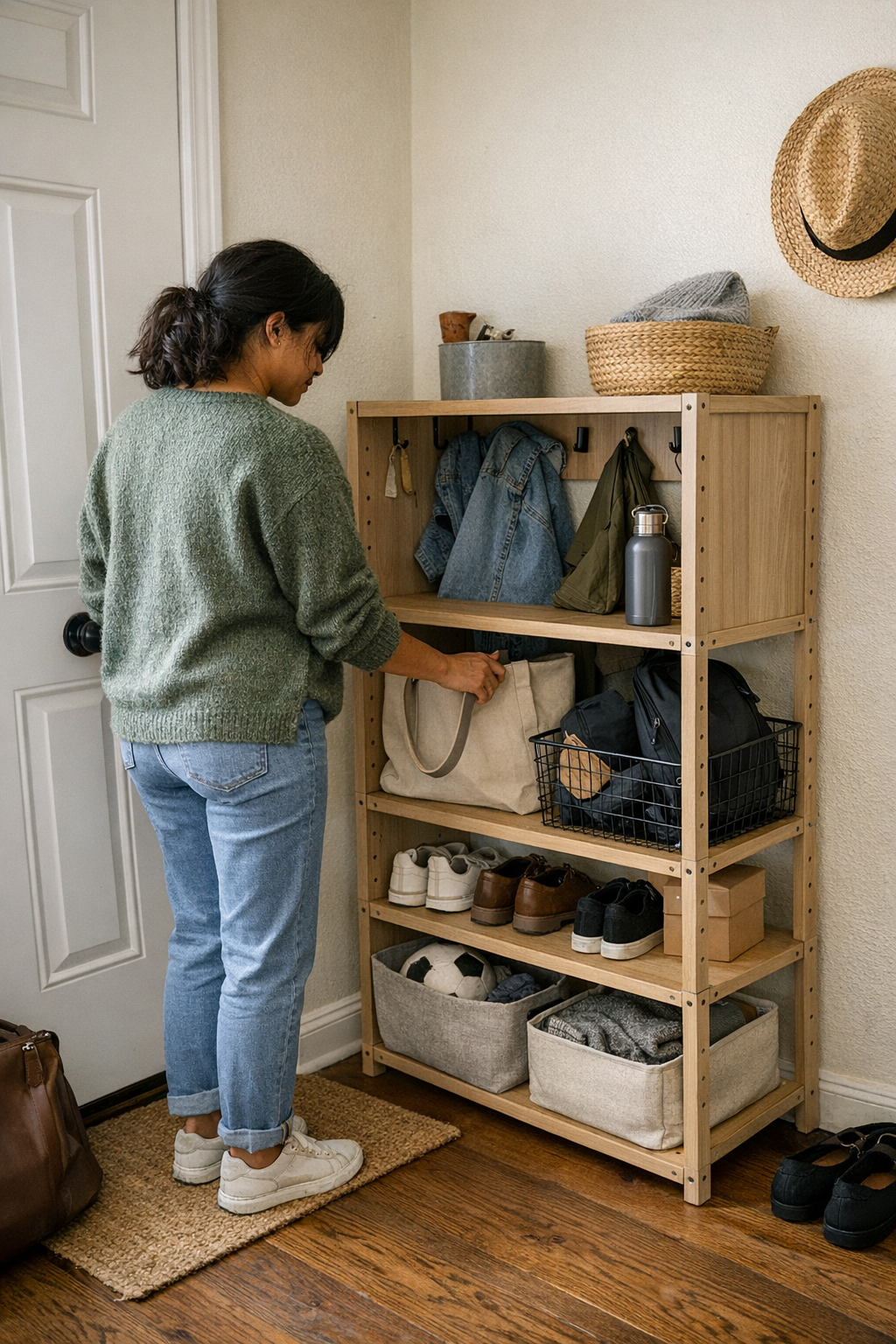
  • Why Modular Shelving Transforms Everyday Storage and Organization

    There’s a moment when a shelf, freshly set up, feels like the answer—rows of shoes lined up, baskets labeled, towels stacked with inch-perfect space above. But real life catches up fast. One large shopping haul, a pair of boots that don’t fit your old routine, or the everyday jumble of school bags and deliveries, and that calm order starts to fracture. Suddenly, you’re moving stacks just to grab a single hat. That “plenty of space” optimism drains away as shelves fill, stacks lean, and the floor gathers the spillover. The problem isn’t that you’re messy. It’s that fixed shelving rarely keeps up with the real, changing pace of life.

    How Fixed Shelving Boxes You In—Fast

    Walk into most closets, entryways, or laundry nooks and you’ll spot it: fixed, unmoving shelves set at arbitrary heights, idealized for a narrow version of “organized.” The trouble starts small. Summer shoes out, winter boots in—and now the top shelf is too low for bulky footwear, while the middle shelf is wasted air above slippers. You wedge a box sideways, double-stack bags, and hope nothing slides out when you reach for the back basket.

    Soon, every “quick fix” becomes its own mess. You’re pulling stacks forward just to find a lost glove. Bins get shoved out of category. Half the shelf space is empty air while the other half is jammed tight, forcing awkward reaches and constant stacking and restacking. What was once a streamlined system becomes a juggling act—and it happens faster than you think.

    Modular Shelving: Adjust As Life Shifts

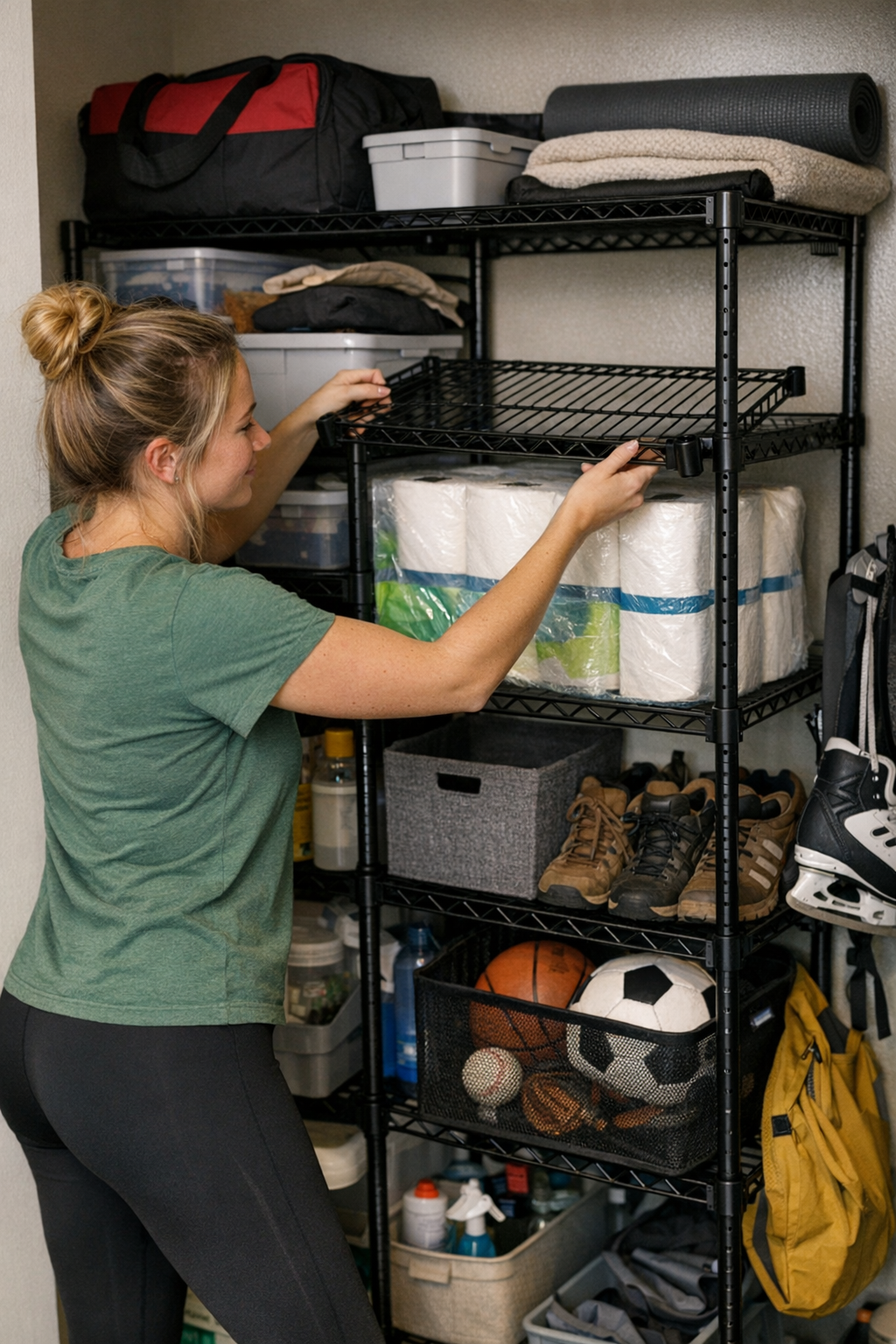
    This is where modular shelving dramatically redraws the line. Instead of treating your shelf like a permanent fixture, modular setups give you options in real time. Need more space for rain boots this week? Slide up a shelf in a minute. Bring home a new vacuum that won’t fit under the old setup? Drop a section down, reassign bins, and you’re done—no tools, no weekend project, no frustration.

    The heart of the advantage: real flexibility when it matters, not “someday.” With modular shelving, you make new room mid-task: freeing up space for that awkward box, reclaiming a shelf for today’s essentials, dividing a zone for work bags or sports gear on the fly. No more putting off a major reshuffling just to cope with a small change.

    Everyday Reset: When Routines Collide

    Picture this: your utility closet is piled with out-of-season sports gear, last-minute holiday finds, and overflow cleaning supplies. Fixed shelves demand you empty half the space just to fit a new bin—meanwhile, what you actually need gets buried. With modular shelves, a three-minute adjustment slides a divider up, makes space for the bulky gear, and keeps your towels and bottles from stacking up on the floor. The process is simple, repeatable, and fast—exactly what you need during the weekly flow of real life.

    When ‘Organized’ Isn’t the Same as ‘Easy’

    Here’s the persistent truth: The first day of organization is never the problem. A shelf looks great after a weekend reset—until daily life sneaks in. Shoes spread beyond their row. Bags that started with a category end up piled on top of anything with spare space. That seasonal scarf gets lost behind out-of-season storage because the shelf heights refused to cooperate.

    With fixed shelves, every hiccup means more work: shifting baskets, accessing the wrong category just to reach a needed item, starting “temporary” piles on the floor, or digging for lost things behind bigger, heavier bins. What started as “organized” rarely stays that way. Modular shelves, by contrast, let you tweak the setup without pulling it all apart—giving sections distinct roles again, even as needs shift.

    • The “shoe basket” stays for shoes—not as a backup catchall for toys or scarves.
    • Overflow clears fast when shelves aren’t held hostage by old heights.
    • Less time wrestling stacks, more time actually seeing and reaching what you need.

    Leaving Space: The Overlooked Storage Advantage

    Most people try to fill every shelf from the start. That’s the trap. Leave a little air—a spare shelf slot, a bit of vertical flex—so the next out-of-season coats, impromptu shopping trip, or growing kid shoe sizes don’t kick off a domino of unpacking. That one empty space is your future reset, built-in.

    Next time something new arrives, you shift a shelf instead of restarting your whole system. Instead of pulling everything down to squeeze in one more bin, you slide, adjust, and keep moving. This habit isn’t just convenient—it’s the difference between a weekly tweak and a monthly storage crisis.

    Keeping Pace When Life Speeds Up

    The biggest test of any storage system is how it holds up when routines loop again and again. Fixed shelves stiffen over time: bins blend categories, stacks slump, and “out of the way” becomes “forgotten for months.” Your five-minute morning grab-and-go turns into a daily hunt and reshuffle.

    Give it sixty days and the contrast is obvious. Modular shelving adapts as you go. Boot season? Raise a shelf and keep the mud off your stacked bags. School year over? Lower a section for summer gear. The categories remain clear, the access stays easy, and the clutter doesn’t creep out into the rest of your space. With fixed shelving, even small changes feel like a full re-org. Modular means quick, focused resets that keep you moving instead of bogged down.

    Real-World Tip: Use Flexible Labels

    Don’t let labels tie you down. Go with removable stickers or clip-on tags so sections can change without hesitation. When modular shelves plus flex labels work together, staying organized shifts from a one-time event to an everyday routine—visible categories, quick access, chaos kept in check.

    Choose Shelving That Keeps Up, Not Just Keeps Order

    You probably won’t notice the cracks in fixed shelving until a real change hits—new gear, a sudden pileup, or a season in flux. That’s when modular shelving quietly proves its worth. The difference isn’t just in looks: it’s in every easier grab, every quicker re-slot, every time you avoid the dreaded floor pile. Real flexibility means storage that adapts—so you don’t have to start over every time life gets just a little more complicated.

    Shop practical modular closet and shelving solutions at ClosetWorks.