Author: jaesoon_admin

  • Prevent Masonry Drill Bit Overheating with Carbide Tips and Proper Technique

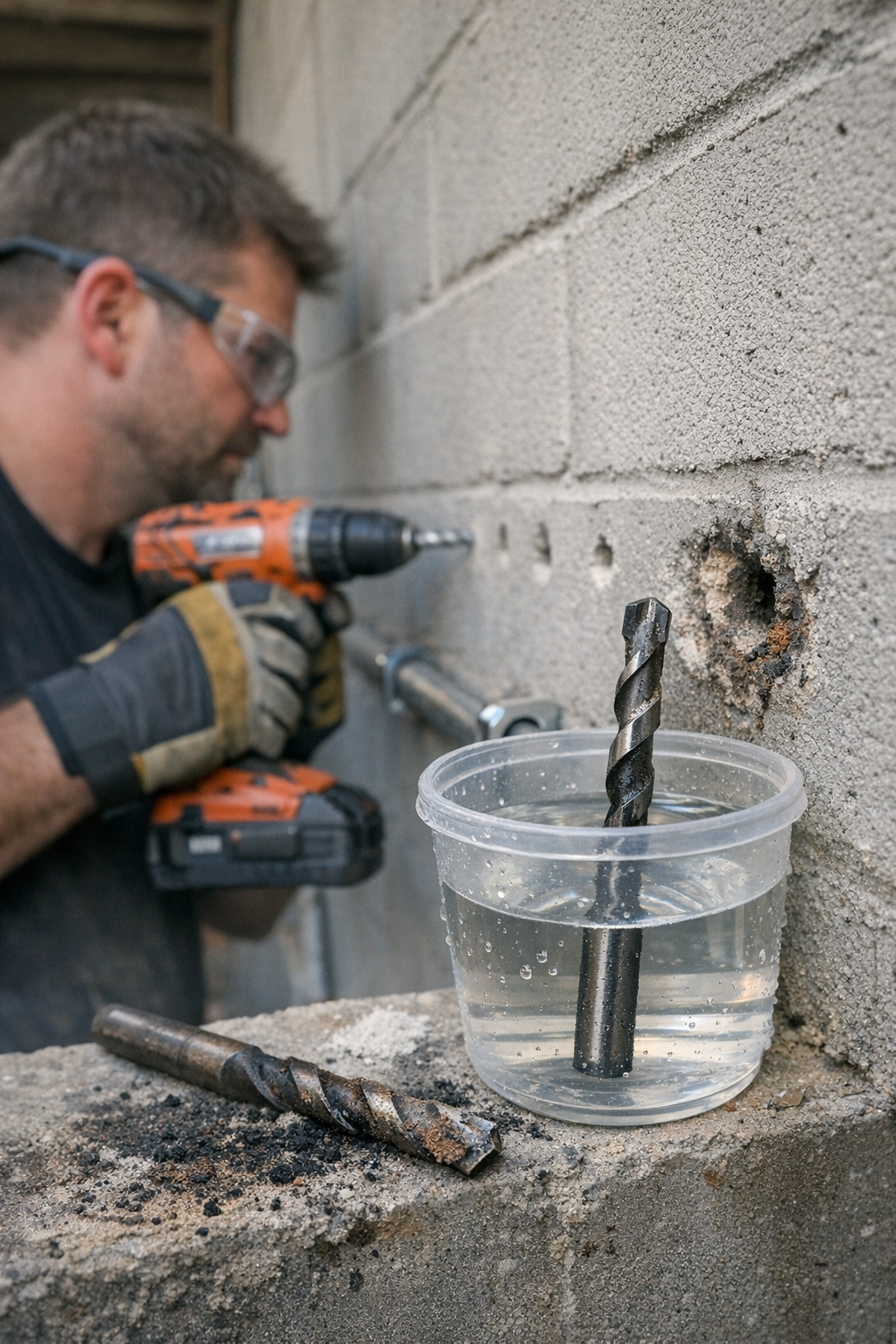
    Halfway down a row of concrete block, your drill buckles, the bit smokes, and progress grinds to a halt. You started clean—anchors ready, a fresh bit that looked promising in the lineup. But by hole seven or eight, every push on the trigger feels heavier. Dust comes out black and gritty, the bit’s tip is too hot to touch, and that perfect paint finish is left scarred by ragged holes. Most crews have lived this shift: what seemed like a routine string of fixings turns into an hour spent patching, swapping dull bits, and wishing you’d grabbed masonry-rated gear.

    The Subtle But Brutal Gap Between Bit Types

    On the bench, “all-purpose” and masonry-labeled bits look nearly identical. Toss either in your kit and you might not think twice—until you put them into real material, back-to-back. The first handful of holes into concrete tends to hide the difference. Steel bits blast through soft surfaces and even tease you with early success in block. Then, as soon as you’re locked into a repetitive run, their limits reveal themselves: the drill starts to whine, you force the tool more, and the bit edge starts to fail from heat soak not visible at first glance. Suddenly, instead of drilling, you’re stuck in a loop—bit stalls, holes get uglier, and your work tempo falls apart.

    Why Heat and Vibration Steal the Job from You

    Masonry work generates relentless heat—fast. Drill bits meant for wood or metal aren’t built for this: their edges overheat, metal blunts out, and dust turns dark within minutes. As temperature climbs, you feel more resistance, the tool starts wobbling, and your holes lose their precision. It’s not just about progress—now your anchors risk shifting or slipping. Even one ragged entry can lead to patching, redrilling, or worse, leaving behind a weak fastening point you’ll worry about long after cleanup.

    Carbide-tipped masonry bits are different for one simple reason: they’re made to stay sharp through the heat. The carbide edge cuts cleaner, dissipates heat faster, and resists vibration. You keep your rhythm, and holes stay true—so you’re patching less and moving faster, without burning through your forearms or your bit stash.

    Quick Scene: Swapping Bits, Feeling the Real Change

    Try blasting three holes in old brick with a basic steel bit. The drill labors. Dust is burnt. The result? Jagged, chipped entry points and paint you’ll have to fix. Switch to carbide mid-job—immediately less vibration, the noise smooths out, and round holes actually hold anchors snug. You finish faster, and the wall looks like you planned it—not like you fought with it.

    When Good Drilling Starts to Go Bad—Spotting the Decline in Real Time

    Picture it: fastening conduit runs, spacing brackets evenly along that block wall. Early on, every anchor seats cleanly. But as you move down the line—especially if you’re stubbornly sticking with a worn or generic bit—the problems compound:

    • The drill growls and chatters, fighting the material at each new hole.
    • Acrid heat rises—burnt dust, scorched bit tips, and the unmistakable smell of overheated metal.
    • Entry points chip out, paint flakes, and the holes drift off-round or widen unpredictably.
    • Dust gets gritty, black, sometimes even clumps or fuses inside the hole, making each pass harder than the last.

    By hole ten, you’re juggling patch compound and swapping bits, hoping you haven’t ruined the finish or the day’s schedule. Anchors sit loose. You try “wobble-drilling” to get through—but you know it’s a shortcut you’ll pay for when those brackets get checked down the road.

    Working On, Not Against, the Wall: How Carbide Bits Change the Game

    When you switch to carbide-tipped gear and add a rhythm of short pauses, everything clicks back into place. Trusted job habits make the improvement obvious:

    • The bit keeps its edge—hole after hole, 20 or more, with far less chatter or pressure needed.
    • Pausing briefly to brush out packed dust or tap the bit free keeps holes cool and sharp—five seconds you gain back tenfold by skipping later repairs.
    • Feel it in your hand: steadier runs, fewer tool surges, and predictable cut speed the whole way down a bracket line.

    When the bit stays sharp, the tool does most of the work—not your wrist, not your patience, not tomorrow’s patch list.

    Field Habits That Actually Save Time

    Here’s what separates a smooth run from a struggle:

    • Clear dust every few holes. Packed debris acts like insulation—trapping heat, blunting your bit, and ruining hole quality fast.
    • For relentless block or old concrete, dip the bit in water or use a mist sprayer. It’s a two-second move that stops overheating before it starts, giving you a real shot at making one bit go the distance.

    For a handful of holes in newer brick you might skip these. But facing a row of block or jobs where finish quality matters, these tricks mean less downtime, fewer broken bits, and walls that don’t betray the battle fought for every anchor.

    Real-Life Questions About Bit Overheating—Answered

    Why do my bits burn out so fast in concrete or block?

    Dense masonry builds heat inside holes way faster than wood or drywall. Standard bits can’t ventilate or deal with constant friction—they dull, slip, and burn, sometimes inside ten holes. Masonry-rated carbide bits, plus mid-job pauses, stay working longer and avoid that mid-job collapse.

    How can I tell a bit is cooked—before it ruins the wall?

    The drill starts dragging, vibration rises, and burnt dust or scorched tips show up quick. You’ll often smell a sharp, burnt odor before noticing visible damage. When these signs hit, stop—cool the bit, clear the debris, and don’t try to muscle through, or you’ll create more work later.

    Is water dipping just for pros, or does it help on basic runs?

    If you’re knocking out a couple holes in soft material, water isn’t always worth the fuss. But if you’re tackling a long line in older block or stubborn concrete, a quick dip or spritz between batches can extend bit life and preserve finish—actual time saved, not just for show.

    No Hype, Just Fewer Headaches and a Cleaner Result

    No drill bit is magic, and nothing bypasses wear forever. But in the chaos of real jobs—walls that aren’t perfect, anchors spaced by tape measure and instinct, paint that actually matters—the right bit, sharper drill rhythm, and small cooling habits take the fight out of the work. Instead, you keep your focus, your tools last, and the job wraps up without the telltale scars of a fight lost to heat and haste. Lose sight of these basics and you’re not just fixing ugly holes—you’re losing time, money, and trust in your own work.

    Explore Gumboll’s selection of masonry-rated bits and real job gear at http://gumboll.myshopify.com
  • Choosing Between Wall-Mounted and Floor Outdoor Storage for Lasting Use

    Every outdoor storage area looks organized on day one. But the real test kicks in after two weeks—a mower that blocks the side yard path, a batch of wet tools balanced on the garage edge, or bins creeping back into the space you swore would stay clear. What turns once-neat storage into an obstacle course isn’t just clutter habits or lack of square footage—it’s how the setup fails to keep up with actual, repeated use.

    The Hidden Reset Burden of Wall Storage

    Wall-mounted storage delivers that initial promise: tools in a row, open shelves, fresh space underfoot. It’s easy to believe the problem is solved—until real routines return. One not-quite-dry hedge trimmer takes over an entire shelf “just for today.” A muddy rake leans against the wall, never meeting its intended hook. By the third or fourth week, folding chairs have migrated—one on the wall, one by the stairs, neither fully stored but always blocking something else.

    Return friction sneaks in, day by day. The more awkward it is to rehang or stack an item, the more likely it’s left somewhere in-between—a bucket on the ground, a pair of garden shears exiled to a corner. Hooks get overloaded. The prime slots that once held seasonal gear get swamped with daily-use clutter. Soon, your “everything on the wall” plan feels like working around a fence line of half-returned, half-forgotten stuff that never quite goes away.

    Spotting the Setup That’s Working Against You

    • Leaning tools: Are shovels, rakes, or hoses forever propped at the edge of the wall rack, waiting for “next time” to get put up? If putting things back always feels like a small effort, the reset burden is already collecting in your routine.
    • Half-returned gear: Is there always a soccer ball, cooler, or pile of pool toys camped out on the patio steps or just inside the gate? If items block your movement or gather in not-quite-out-of-the-way spots, your system is slowing you down.
    • Stray bins and overflow: Bins meant for hooks end up on the ground. Dead corners become the default dumping zone. Over time, the “floor stays clear” promise collapses, and the layout forces a shuffle each time you walk through.

    Each tiny snag means a small reset, and those resets add up. Instead of one clear-out at the start of summer, you’re renegotiating with your own storage every weekend, just to keep the path open.

    Where Floor-Based Units Quietly Win

    Floor storage is rarely pretty—but in the spots where movement matters, it saves you. Lower friction, faster returns. Drop muddy boots in a bin. Stash a hose loop in a chest. There’s no balancing act, no puzzle to solve each time. That difference is loudest on weekends—when guests, kids, or yard projects pile up, the path by the garage stays open because items go straight into a bin or chest, not scattered across three different places.

    Bulky gear and folding carts get contained, not orphaned at the edge of the wall system. The area stays usable, not showroom-tidy but clear enough to haul groceries, find your tools, or let the dog through without tripping over last week’s project.

    When “All Up Off the Floor” Fights Your Routine

    In tight outdoor strips—side yards, patio edges, or that narrow wedge between fence and house—it’s easy to believe that wall hooks alone will solve everything. But with several people (or pets) using the area, overflow finds its own way down. See planters or garden carts “stored” a foot off the system, hoses looping across the walkway, bins squatting in corners. The more you squeeze floor space, the more you end up blocking flow. Movement stalls, objects pile up, and the sparkling vertical system quietly starts sinking the entire zone back into daily shuffle.

    Return Flow: The Make-or-Break for Real Use

    The test isn’t a perfect “after” photo, it’s the fourth week of busy routines. Are you slotting gear back where it actually belongs—or detouring to the easiest landing spot out of impatience? Floor units and modular chests survive the cycle-pressure: the fast returns, odd-shaped items, dirty tools that no one wants to fuss over. Wall setups hold up if you only ever use the same few tools, the same way, every time. But the moment your real gear list expands—bikes, chairs, project leftovers—you see hesitation: “Should I reshuffle the whole system tonight, or just set this here for now?” That’s the gap where clutter returns.

    Recognizing What Actually Works—Not Just What’s Tidy

    Reality check: You come home with groceries, and the footpath is blocked by a pile of bins and a chair that never went back up. Walk to the mower—first, slide the coolers out of the way, scoot aside last week’s balloon weights. The system didn’t fail on day one, but bit by bit, it puts your routine on pause every time you just want to move through. The loop resets: organize, shift, work around, promise a seasonal cleanout that keeps getting pushed back.

    Adding a single floor bin or modular chest breaks this loop. Now you can drop a muddy pair of boots, fold and stash a chair, or park garden toys the moment you’re done. No unnecessary lifts, no puzzle-solving—just a clear return flow that keeps the area open. Tidiness follows from convenience, not from occasional resets.

    Strategy: Pair, Don’t Just Pile Higher

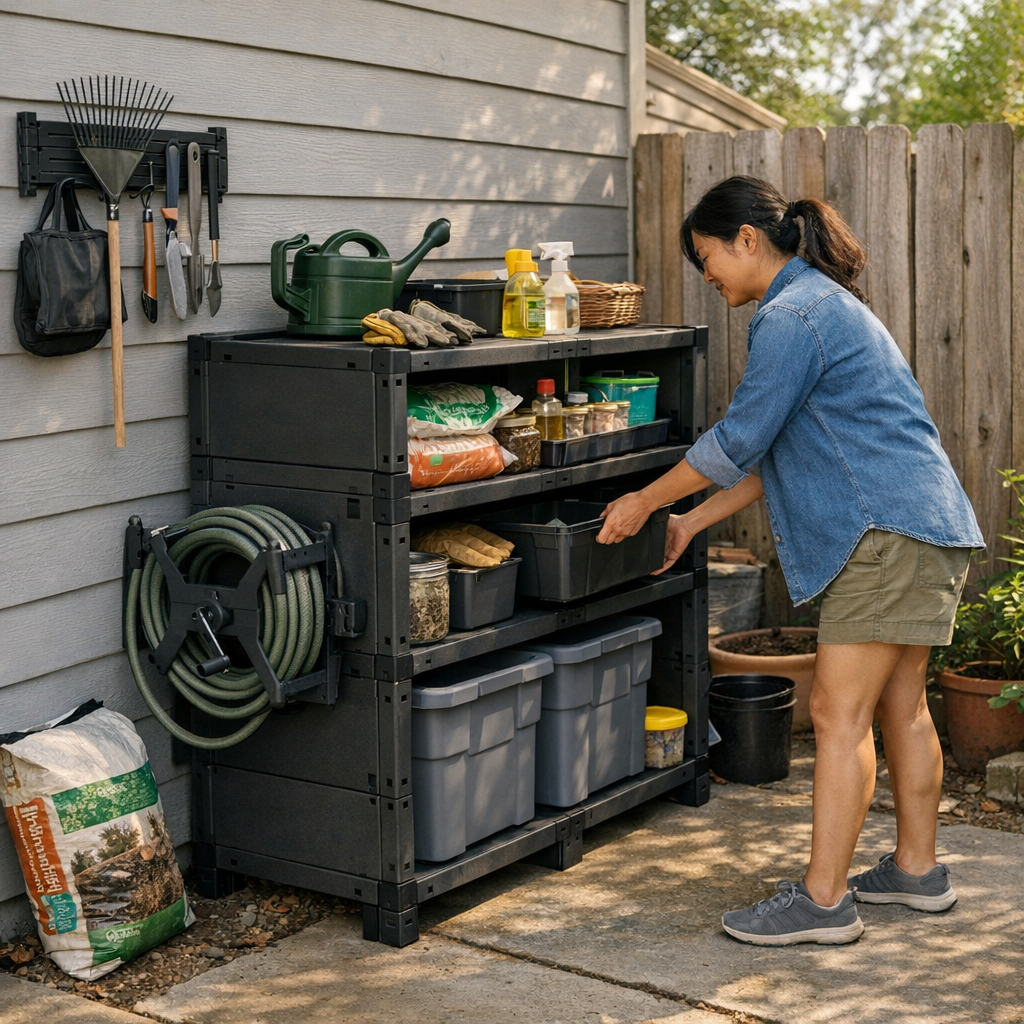
    Instead of building up another row of hooks, combine a single wall rack for your core tools—what absolutely needs to hang—with one or two floor-based containers for everything that won’t sit neat. Now, the tricky and oversized gear lands where it belongs, not at the foot of the steps or in the path to the side gate. In real family yards or busy garden zones, a catch-all bin outperforms the fantasy that “everything up” will keep working once life gets busy again.

    Let Your Routine Lead the Setup

    No system fixes everything. But the right outdoor storage setup erases the small frictions you feel daily: gear that always lingers at the edge, paths that keep blocking, corners that never truly clear. Watch where your own returns actually collect. Which items demand easiest possible drop-off, and which can live neatly hung? Setup that follows these patterns is the setup that holds, even when nobody wants another reset.

    The difference isn’t a photo-op finish—it’s how the space actually moves after a normal week. Let real use—not just a clean floor—drive your next change.

    Explore TidyYard outdoor organization solutions

  • How Evening Resets Keep Pet Care Counters Clear and Clutter-Free

    The real test of a daily pet-care setup isn’t whether everything looks tidy after a Saturday reset—it’s whether you can actually feed, refill, or wipe down without dodging yesterday’s clutter, blocked access, or stray tools after any ordinary use. In small homes, it takes just one round of feeding or grooming for pet gear to start invading shared counters and kitchen zones. Even with a fair effort, supplies barely land where you left them, and the “quick reset” quietly turns into a series of interrupted motions: shifting a water bowl for the coffee pot, pushing a grooming brush away from dinner prep, or returning a damp towel to its supposed spot before someone else needs the sink. You don’t need another organizer. You need a system that is easy to keep up with once the daily cycle repeats—something the CalmPetSupply world has learned by seeing care routines break down even in the neatest looking spaces.

    When Pet Care Routines Quietly Slip

    Resetting feels simple: refill, wipe, toss the brush back, hang the towel. But in daily reality, the steps that seem invisible upfront start to stack as the week moves on. What’s a five-second delay on Monday turns into a bowl left drying by Thursday, or that same brush “just for now” sliding into meal prep territory.

    One missed water-bowl put-away is fine, but three nights in, that same bowl sits just close enough to the counter’s edge to cause a H2O spill during someone’s late coffee fix. The grooming brush gradually claims a semi-permanent spot next to the knife block. A half-damp pet towel crawls toward the laundry pile, half-folded, never quite making it there. The mental notes to “reset later” never feel urgent—until every single surface becomes a half-pet-zone, and your shared space is full of reminders that pet care routines have quietly slipped.

    It’s not about big chores. These are stacks of micro-misses that nudge your space off course—and every skipped check-in makes tomorrow’s basic care slower, less smooth, and more frustrating.

    The Cost of “Almost Ready” Setups

    Many pet routines limp along in a state of “good enough.” The cleanup sponge is theoretically handy, but you have to move two treat bags and a food scoop to get to it. The bottle meant for water refills is clean but never actually back in reach when you need it. The grooming brush, if not returned instantly, ends up in the traffic lane, so when the next shed-hair moment hits, you search or reshuffle—again.

    Over the week, this friction builds. Five seconds here, thirty there, and suddenly pet care means digging for basics instead of just acting. Leave wiping to the next day and you’ll confront crusted rings around the water bowl; skip returning the towel to its actual home and you’ll watch it crawl right back into the busiest spot by dinnertime.

    Spaces that “look clean” often just disguise the migration of tools. If your towel doesn’t always go back on the same hook, or the brush’s storage spot competes with pantry items, clutter doesn’t vanish—it just keeps circumnavigating into prime real estate. It’s a cycle: the prettier the setup, the easier it is for one weak link to restore clutter and slow down your routines.

    How Small Misses Stack Up in Shared Spaces

    Shared spaces magnify every missed reset. Leave a water jug near the coffee pot once, and morning prep becomes a game of shifting items until you have actual surface to work on. Skip just one after-walk supply return, and a leash coils itself into the evening laundry scramble.

    Each out-of-place pet item isn’t just visual—it’s friction. The food bowl drifts out from its wall spot. The grooming brush floats onto the dining table. Suddenly, every quick routine diverts into cleanup, and the after-walk unwind gets rerouted by a hunt for that brush or a scramble to clear the feeding space before guests arrive.

    The outcome: care steps slow down, pleasant spaces feel hijacked, and the supposed “simple” routine is never a one-step reset. The effort shifts from helping your pet to battling lingering, shifting pet gear.

    Making the End-of-Day Reset Automatic

    The only real change comes when late-night resets aren’t skipped. Designate unmissable drop zones—a lidded bin under the counter, a compact hook behind the door, a storage caddy within arm’s reach of the bowl’s spot. These spots aren’t about decoration. They make it more likely that everything returns to where you’ll actually grab it again, not just where it “should” go.

    Station a low-profile towel or sponge right where you feed or refill. Wipe, put away, done—eliminate the pause that leads to “I’ll deal with it in the morning.” The difference isn’t one big clean; it’s dozens of micro-motions that now fit in flow instead of stacking up. This is how CalmPetSupply setups make the repeat work disappear, so your night counter resets aren’t undone by morning.

    When every piece returns to its real home, tomorrow’s care actually gets easier. No silent messes, no new chores, no “missing one basic” crisis when the pet’s water runs unexpectedly low at 11pm.

    Balancing Comfort and Consistency

    Plenty of setups get an initial win: the counter looks better, the mess is corralled. But move feeding gear to a closed shelf and it takes one extra step to refill, so gear drifts back; use a decorative bin for brushes and toys, and the distance from daily reach means the brush never really migrates back to its “home.”

    If you spot towels stacked but not put away, scoops flip-flopping between surfaces, or refill bottles just out of quick reach, recognize these as symptoms that your system is slowly adding extra work with each pass. Small delays become routine drags. The baseline should be smooth, not another pause before care actually happens.

    The Difference: Looks Tidy vs. Works Smoothly

    Tidy spaces feel satisfying for an hour. But a setup that works for daily pet care means you find every basic—bowl, towel, scoop, brush—where you need it, even after several messy rounds. The best systems are nearly invisible in action: the counter is clear at night and still clear after morning feeding, with no leftover gear sneaking into your flow.

    A smooth home pet-care setup doesn’t pretend the friction isn’t real; it just stops giving clutter a second chance. The right drop zone, return habit, or wipe-down anchor flips the day from “prepping around the pet mess” to “reset and done.” In the CalmPetSupply world, function wins over decorative “order”—and the best setups are the ones you barely have to think about, even when you’re wiped out from a long day.

    See how a real-world, keep-up-with-it setup looks at CalmPetSupply.

  • Why Carry-On Bags Fail to Maintain Travel Momentum During Transfers

    The real test for your carry-on comes when you’re halfway between flights—passport check, security line, boarding zone—moving fast and reaching for essentials that seemed perfectly placed at home but now feel buried under layers of “good organization.” A carry-on bag that looks tight and logical on the packing table quickly exposes its weak points during airport transfers. You reach for your boarding pass and end up unzipping three pockets. Your phone charger, once nested “efficiently,” is now lodged beneath snack wrappers and a toiletry pouch. The outside still looks neat, but inside, every access moment pulls the setup a step further from ready.

    The Illusion of Order: When Neat Packing Doesn’t Hold Up

    It’s easy to believe in the “stack and sleeve” method—each device, cable, and document tucked into its own pouch. But as soon as you’re moving between terminals, the logic starts breaking down. The problem isn’t overflow; it’s layered access. Waiting at security, you realize your charging cable is trapped below a divider, your passport is wedged with headphones, and your outer pocket—“reserved for quick stuff”—is now an overflow zone of half-used sanitizer and transit leftovers. Quickly, the meticulously packed interior starts forcing scattershot repacking with every checkpoint.

    Access Gaps Between Packing Table and Gate

    At home, every item has its slot. In line at the gate, the system collapses under real pressure. That wallet you tucked deep for “security” now means digging with people waiting. Your charger is easy to spot until you need it mid-transfer, only to realize it’s inside a zippered tech pouch wedged under a knit hat. Small retrieval delays stack up. One missed reach becomes a reset—every essential is now harder to extract and harder to return.

    The Real Test: Multiple Transfers, One Bag

    Switch planes twice and your bag’s structure gets exposed. The difference is sharp: you step off one flight, squeeze past crowds toward your connection, and scramble for documents and headphones—one hand full, the other occupied, nowhere to set the bag down. If your setup depends on deep stacking and nested organizers, this is where you lose efficiency. Boarding calls, ID checks, and snack runs demand single-move access, but instead, you’re left juggling and risk misplacing essentials just to stuff everything back before someone else edges you out in line.

    Trapped by Your Own Neatness

    This isn’t overnight chaos—it’s a visible drift. Every checkpoint leaves the inside less ordered than before. Snack wrappers slide into tech sleeves, a cable migrates to a deep corner, a passport gets sandwiched where it shouldn’t. Your bag looks composed but packs more confusion at every stop, and every new transfer makes the last attempt at order feel hollow.

    Where Most Setups Break Down

    Most “organized” carry-ons are built for static order, not moving travel. Multiple zippered dividers, stacked organizers, or pouches separated by logic at the kitchen table turn into practical obstacles at checkpoints. What you need most—passport, charger, boarding docs—ends up split, stacked, or hidden just when speed matters. Seat entries, overhead bin grabs, and quick gate checks? Every time the pressure is on, you’re blocked by your own layers, juggling or reordering the bag on the fly.

    Why Layered Organizers Slow You Down

    Organizer-heavy builds seem smart until the fifth reach in thirty minutes. It’s never “too much stuff”—it’s too many decisions, too deep a structure. Which pocket? Which sleeve? One wrong choice, and you’re forced into a partial unpack, sifting through pouches and stalling in the process. A tight, clever system at home becomes a drag every mile further from the packing table; essentials move further away just when you need them closer.

    Spotting the Warning Signs: When Your Bag Adds Drag

    Carry-on drag is hard to ignore once you know the cues:

    • You end up with a handful of loose items after every tray pass or boarding call.
    • A document or cable takes so long to extract that you need to stop, unpack, and re-pack in public.
    • Key essentials repeatedly resettle into deep, inconvenient layers—forcing multiple re-reaches for the same thing.
    • One quick retrieval sparks a full-on reset: what should be a five-second grab becomes a multi-step shuffle, every time.

    Not dramatic failures—just constant, low-level interruption that saps pace and energy bit by bit, every transfer.

    How a Quick-Access Setup Changes the Flow

    The shift is simple but sharp: dedicate a flat, outer pocket—no overlap, no stacking, no double zippers—for high-frequency items only. The essentials you need through every phase—passport, charger, earpods, travel docs—live here, unburied. When tested in real airport movement, the difference is immediate:

    • Security trays are prepped in seconds: one reach, all essentials out, zero digging in main compartments.
    • Impromptu checks and seat entries no longer trigger a mini-repacking—credentials and gear come straight to hand.
    • No more cascading resets—every access returns the inside to “ready,” not “almost together.”

    After two transfers, the downgrade in visible order paid off in real movement: what looked less “packed” actually worked better. Traffic flows past instead of around you. The airport stops draining momentum over tiny, repeated friction.

    Questions Frequent Travelers Ask (and the Real Answers)

    Minimizing Disruption During Layovers

    Q: How do you minimize disruption during layovers with a carry-on?
    A: Only the things you reach for most go in the outer, unstacked zone—no hidden layers, no deep stacking. Priority is immediate, single-move access for the essentials, not locked pouches buried for the sake of neatness.

    Organizer-Heavy Setups: Why They Falter

    Q: Why do organizer-heavy setups become harder as the trip goes on?
    A: The more you stack, the more every retrieval triggers partial unpacking. Each checkpoint introduces disorder as the “logical layers” shift, making repacking slower and essentials harder to track with every leg.

    Seeing the Signal: When to Rethink Your Layout

    Q: What’s one signal your current setup is slowing you down?
    A: If you leave every checkpoint juggling or repacking in public—even after small access—you’re carrying a layout that resists movement instead of enabling it.

    Packing to Move, Not Just to Look Neat

    Perfect order at departure can’t keep pace with airport reality. Real travel flow comes from setups that anticipate repeated, on-the-move retrieval—not just clever storage. If your routine needs constant reset—always shifting, always re-layering—something needs to change. Prioritize single-motion access, reduce overlap, let a bit of mess show if it saves time and friction. In the end, workable beats Instagrammable, and your carry-on shows its strength not in how it looks when zipped up, but in how it lets you move and reach what matters after hours in transit.

    CarryOnSupply

  • How Small Changes in Dog Bowl Placement Improve Feeding Calmness

    Feeding time looks simple—bowl down, food in, dog eats. But if you keep noticing your dog hesitating at the bowl—shifting weight, pausing mid-chew, glancing back whenever someone walks past—the real problem isn’t pickiness, it’s setup friction. Small, repeated interruptions turn a supposed routine into a slow-motion scramble: food goes untouched, play gets pushed back, and you end up nudging your dog along instead of moving on with your day. The space you set aside for eating isn’t working with your routine—it keeps getting in the way, but not loudly enough for you to call it out. DogPile is all about those pressure points. If feeding keeps snagging—if the routine never feels settled—there’s probably a better setup hiding in plain sight.

    When the Setup Looks Fine but Still Creates Friction

    Feeding areas can look organized and still fall short when routines repeat. Bowls line the wall, the location is neat, but if your dog is circling or stalling near the bowl, it’s not about food or attitude. It’s about location. Too close to the hallway, too exposed to movement. Mornings get crowded fast: people cross for coffee, a quick door slam, a burst of kid energy. Suddenly your dog faces distractions at every bite, flinching when shoes scrape or someone grabs a jacket. The “easy” setup stalls, stretching a two-minute snack into a drawn-out shuffle.

    Instead of calm feeding, you get constant darting glances and a meal that never quite finishes until the traffic dies down. Every time you walk by, you reset the process. A setup that looks clean still breaks down under real home pressure—especially when your dog’s back is exposed to repeated movement or noise.

    Repeated Hesitation Is a Setup Problem—Not a Quirk

    It’s tempting to blame a slow meal on your dog’s mood, but daily stalls mean structural friction. Dogs are always alert to movement or sound—especially during feeding. When meals become unpredictable, dogs struggle to relax, and you’re left running interference instead of letting the routine run itself.

    Example: The breakfast trap. You set the bowl down where you always do. But this morning, it’s a few inches closer to the kitchen entry. Suddenly, your steps for coffee or your partner’s phone grab turn the space into a bottleneck. Your dog approaches, pauses, sniffs, then backs away if someone passes. With every interruption, the meal window stretches and your morning flow tumbles—play gets pushed off, the routine starts fraying, and one wrong bowl position derails the next hour.

    Spotting Micro-Frictions Before They Undermine the Routine

    There’s rarely a dramatic collapse. It’s a matter of inches or a shift in traffic: a kitchen that’s calm at noon but chaos at six. Many owners don’t spot the pattern until it gets baked into daily life—now you anticipate the stall, you step around the bowl, you expect the hesitation. That’s when small friction becomes routine drag. If you catch it now—a glance back, a repeated backward step—you can cut off the chain reaction before it turns feeding into a daily detour.

    Everyday Example: A “Clean” Setup with a Persistent Weak Spot

    The bowl’s tucked under the wall, away from the main walkway. Then after dinner, the whole household rushes between the mudroom and living room. The dog steps up, then pulls back as someone sweeps past—laundry in hand, broom off the hook. The same meal that should flow quietly now stalls and restarts, the dog sniffing, waiting, dodging back to the bowl over and over. Each pass keeps the pause alive. On paper, the setup works; in practice, daily rhythm wears it down.

    It’s not about obvious mess—no spills, no toppled bowls. But after a week, you notice you’re always reminding your dog, reshuffling foot paths, or propping the bowl somewhere new. The difference between “looks good” and “works every day” only shows up when you watch what actually breaks under routine use.

    Subtle Adjustments: How Small Changes Can Rescue the Routine

    You don’t need a major overhaul—an extra six inches or a sturdier backing can change the whole flow. Move the bowl just clear of the walkway or set it near a solid wall, and suddenly the dog settles to eat without a hitch. The payoff is real: no more mid-meal “come back!” calls, no more blinking at why feeding is dragging. The new spot may only be a corner removed from the main lane, but it holds the rhythm in place. Routine returns. Ten minutes and the bowl’s empty, cleanup doesn’t trail into the kitchen, and you’re not resetting five times because a towel was too far or someone needed to reach for recycling.

    The change feels small—one adjustment, one habit. It puts routine support over visual neatness. Less stress, less owner-side interruption, fewer small negotiations just to get one thing done.

    When Tidy Looks Isn’t Enough: The Difference Between Visual Order and Real Ease

    It’s easy to admire a bowl lined up perfectly with the floor tile and food measured to the scoop. But when you keep dodging toys to refill, or move the bowl after dog water splashes halfway to the door, that neat setup just makes the routine slower. An organized appearance doesn’t guarantee smooth daily function. The need to grab a wipe, hunt for a towel, or push the bowl back into place—each signal means ease is missing. If small snags keep stacking, the “clean” look is just hiding the day’s extra drag.

    The Domino: How One Weak Point Interrupts the Whole Day

    Frictions around mealtime don’t stay contained. A slow meal pushes back the walk, a messier reset steals minutes from the evening, and soon the rest of the routine is bumping along—never disaster, but never quite right. You feel it most when you realize routines take longer, you’re nudging the dog more often, or your cleanup window keeps shrinking—even though nothing “looks” wrong.

    Walk-in example: After a muddy stroll, you manage the leash, shoes, and wet paws at once. The bowl is by the door—meant for quick feeding. But boots pile up and the towel lands on the same hook, blocking your access just when cleanup needs to be quick. Instead of a fast, hungry dog-to-bowl moment, you both stutter-step around each other. The “convenient” spot becomes the backlog. Repeat it daily and “fine on paper” never feels smooth in reality.

    Reading Your Dog’s Clues: What Hesitation Actually Says

    If your dog repeatedly stops mid-bite, scans the room, or leaves food untouched when someone walks past, chances are it’s your setup—not your dog’s appetite. Movement, noise, line of sight, even how backed-up the bowl feels—all signal comfort (or tension) to your dog. When you try new foods and nothing changes, or the same pause happens every day, routine friction is quietly running the show. The dog is reading the space—and asking for change you might not see until you focus on where the trouble starts.

    • Stopping mid-meal to check over a shoulder
    • Backing away from the bowl during movement nearby
    • Delays when the bowl sits in an open or traveled space
    • Less hesitation when the spot is moved from traffic or buffered by a wall

    Resetting the Routine: Practical Tweaks for Everyday Calm

    Feeding isn’t a stand-alone ritual—it’s a pressure point in your daily chain. If the layout supports confidence and quick access, you both get a smoother reset. Don’t chase perfection, chase stability: a consistent, semi-protected spot stops friction in its tracks. Make sure nothing crowds your dog’s bowl when traffic peaks—solid backing, no crossing feet, no competing reach for towels or toys. Watch the difference: feeding, cleanup, and post-meal flow click into place with less effort, and the mental friction fades for both sides.

    Most effective spots aren’t the flashy ones. Try a wall-cushioned corner, a few feet from where shoes pile up, or anywhere that makes access possible without blocking the day’s next move. Once settled, resist reorganizing unless friction returns. The shift isn’t always dramatic—but minutes and micro-interruptions vanish. Less owner effort, more actual routine.

    Recognizing Setup Friction—And Deciding When Change Is Needed

    Just because a setup looks tidy or “almost works” doesn’t mean it’s good enough to keep. True comfort comes from routines that don’t need repeated nudges, bowl slides, or workarounds. When pauses, repeat steps, and tiny resets dominate your morning or evening, it’s not just inconvenience—it’s lost time and lost calm. Spot the friction, choose function over first-glance order, and reset before the cost adds up.

    Find practical feeding-space resets and solutions for real daily use at DogPile.

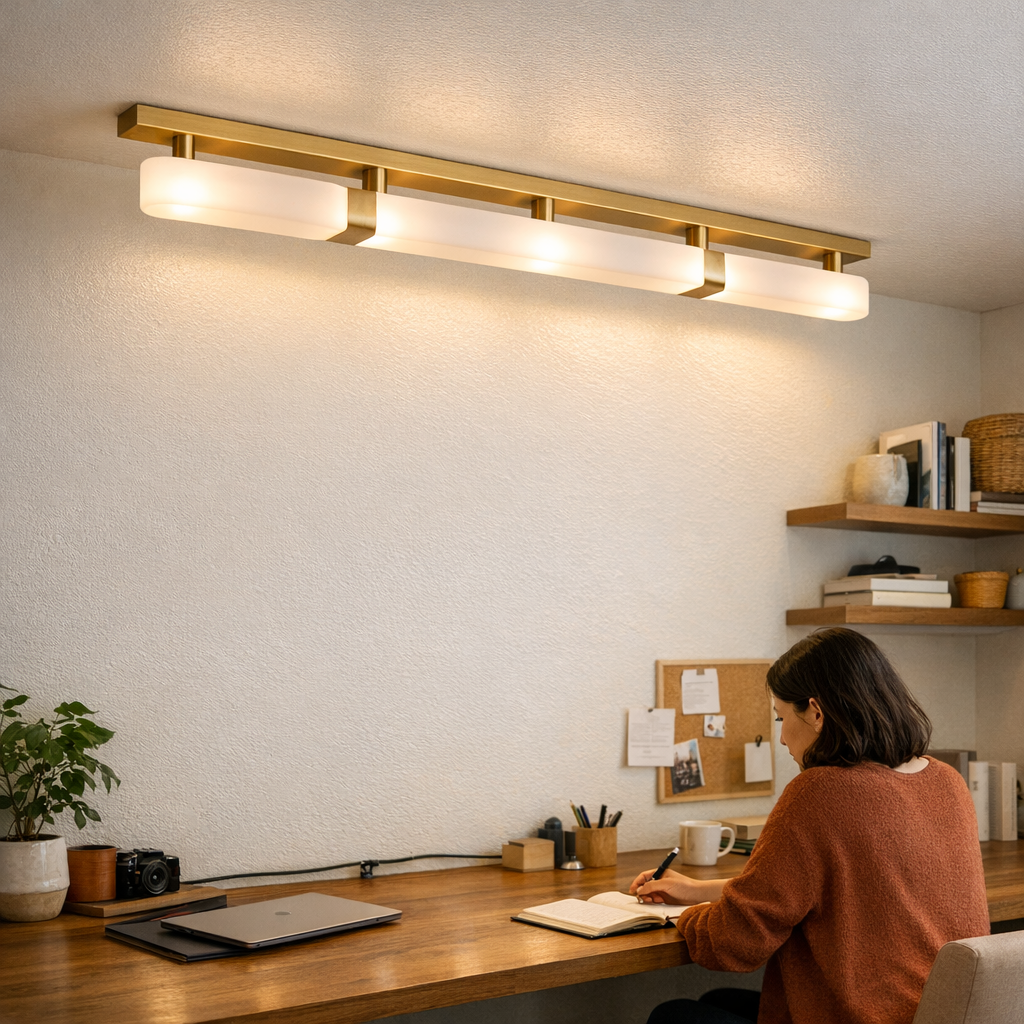
  • How Linear Ceiling Lights Solve Common Workspace Lighting Problems

    Ceiling lights promise a finished workspace—until routine use exposes what’s actually unsolved. The desk looks clean, the panels line up, but after a week or two, the comfort cracks start: glare over the screen, dim strips at the far edge, or stubborn shadows under a shelf you use every day. The ceiling stays uniform, but reaching for what you need still brings back awkward cables and uneven light.

    The Problem With “Finished” Ceiling Lighting

    Step into any “ready” workroom: lights overhead, desk surfaces staged, everything seemingly planned. Yet by the end of the first month, a familiar discomfort returns. Ceiling panels that made the room look seamless end up spotlighting glare right where you sit, or leave the back third of your work surface faded and easy to avoid. The difference shows not in brightness numbers, but in small, daily disruptions: screen reflections, awkwardly reached power strips, and the recurring appearance of table lamps meant to be “temporary.” Everything on the surface seems stable, but every session makes the mistake clearer—light that pleased your eyes on day one quickly fails the real test of use.

    This isn’t a dramatic collapse—it’s a pattern of small, persistent hassle. One side of a shared desk feels usable while the other always loses out, as shadows cross the work area no matter how you shift. A shelf that needs to be bright stays dimly out of reach. Moving your monitor, adding another lamp, or trying to reposition a panel doesn’t solve it—if anything, exposed cords and workarounds pile up until the “tidy” setup is visibly cluttered again. The desk won the ceiling game but keeps losing at the surface, session after session.

    Linear vs. Panel: Why The Difference Matters During Real Use

    Panel and linear ceiling lights claim the same territory: a “resolved” overhead appearance. But the lived results often split in two. Panels spread soft light broadly—but mostly at the center, fading at the edges where you actually need coverage for reading, detail work, or shared surfaces. Once tasks move to the outside, the shortfall is clear. It’s not obvious at first, but over time, under-lit desk edges and shadowed perimeters become a daily inconvenience you can’t ignore.

    Here’s the real divide: Wherever a work zone meets a wall or stretches across two users, panel lights rarely reach every inch. That leaves the edges dim, so you and a coworker either bunch in the middle or set up rival lamps—cable mess and new glare included. “Finished” overhead look, but now surfaces turn into problem zones: one end useful, the other a home for drifting cables and unread papers. The problem isn’t lack of lumens, it’s the mismatch between clean ceilings and real, reachable tasks.

    Linear fixtures, especially when installed parallel to the desk edge, flip this outcome. Light follows the length of the surface, so the whole depth is activated—no dead edges, no “good” vs. “bad” seats. You use both sides of the table, not just the sociable middle, and the full span stays equally readable. Instead of layering on more add-ons, one support solves the job at the structural level, giving you practical, everyday relief, not just a neater overhead.

    Everyday Friction: What a Poor Setup Really Means

    Repeat annoyances expose system failure—here’s how it adds up with most panel setups:

    • Your laptop always needs nudging to the brightest strip, while the outer desk edge gets ignored or left dark.
    • Shared spaces ration “good” light, so one user habits the shadow, or both jockey for the bright spot.
    • Clamp-on or clip-on lamps multiply cords, crowd power strips, and tangle setups just to light the edge.
    • Reconfiguring shelves or rotating lights never fixes the persistent shadows along the work-back or wall.
    • None of this is dramatic, but every session, something feels compromised—appearance wins, routine loses.

    It’s not a hardware defect, but a real mismatch between ceiling calm and surface confusion. Desks look composed once, but as soon as you’re actually searching for notes, plugging in a charger, or setting up side-by-side, the problems repeat: shifting shadows, odd glare, exposed cabling intruding where you wanted clarity. These little dysfunctions become the rhythm of your room, replacing order with improvised solutions and never quite solving the strain around cords, corners, and coverage.

    The Real-World Shift When Lighting Is Oriented For Use

    Consider a real adjustment: After steady frustration with shadows and cord nests on a shared workbench, switching to a linear fixture—mounted just out from the wall and parallel to the work surface—immediately killed the recurring dimness at the back edge. Suddenly, every seat along the table was equally usable, and reading across the whole surface felt natural. No one needed to angle extra lamps just so a notebook was visible; stray power cords faded under the desk, not dragging across the top. The visual calm finally matched the routine: work areas stayed tidy because the main light now reached what people actually touched and read.

    At first, not everything looks transformed—but over each week, the improvement deepens. Gone is the shuffle of moving lamps, chasing the last unlit inch, or overloading outlets for the sake of a brighter edge. No more dealing with blind spots, low contrast, or last-minute cable jumps to reach an ignored corner. The space becomes quietly easy. Use feels smoother, glare recedes, and you spend less time “fixing” what your lighting should have covered from the start.

    Supporting the Setup With Clean Cable Management

    The benefit extends past light path: with a planned, well-supported linear fixture, cable management gets dramatically easier. Wires follow neat, hidden routes—clipped along brackets or tucked behind supports, not looping in the open or creeping toward work surfaces. Nobody notices a perfect cable run, but everyone relaxes when cords stop hijacking the first glance or getting in the way, session after session. Good support strategy—choosing correct brackets, planning conduit paths, setting up stable mounts—means less visible clutter and more dependable comfort, so the setup holds its own under real traffic, not just on photo day.

    What Makes A Lighting Setup That Lasts?

    The measure isn’t a perfect ceiling or day-one wow factor—it’s whether your lights make routine work easier after weeks, not just hours. Well-chosen, properly supported lighting keeps every surface usable, brackets and cords where they belong, and distractions out of the path. This isn’t an aesthetic upgrade: it’s daily stress prevention, the result of matching support hardware and fixture orientation to the way you actually use the space.

    If you’re living with dim desk edges, repeat glare, or constant cable drift, take a closer look: does your ceiling lighting actually solve the conditions you deal with at the surface? For most, orienting a linear fixture with real cable management is the detail that finally delivers the working comfort promised by overhead panels. It’s not about trends; it’s about fewer friction points—light where you need it, cables where you never see them, and a workspace that stays as clear to use as it looks.

    LightSupport

  • Creating a Reliable Workspace by Organizing Desk Undersides Effectively

    The desk that only looks organized is the desk that quietly drains you. Line up your organizers, stash the loose pens, file the spare notebooks, and the surface plays the part—until you actually work. Shift from keyboard to notebook, adjust your screen for a late-afternoon check-in, or roll your chair back to stand: suddenly, what you can’t see—cables stretched just enough to catch your shoe, power strips nudged sideways, adapters clinging to the edge—starts to sabotage flow. What shows as neat at 8 a.m. slowly turns into another under-desk tangle by midweek. With every device swap, drawer slide, or simple posture shift, the gap widens between the appearance of order and the way your desk actually behaves. The routine becomes wasteful: a daily scramble to reset what looked perfect not long before.

    Why a neat desk underside matters far more than appearances

    The real trouble with a desk isn’t on the surface. Problems appear where you don’t watch—chargers drooping past the edge, adapters swinging every time you shift your chair, and legroom swallowed by sprawling storage boxes. You notice too late: a loop of cord snagging your shoe, a charger jolted loose as you stretch, power blocks collected where your feet want to land. These aren’t one-time annoyances but repeating interruptions—minor, cumulative, and slightly embarrassing when you have to crawl around during a call. Out of sight means out of control, especially in cramped spaces or days packed with device switching. The desk looks calm, but the underside chaos interrupts your work so frequently it becomes the real “mess.”

    Surface order vs. real repeated-use behavior

    Most desk setups pass the first glance: cables tucked along the back, organizers lined up, a few clever clips doing all the visual work. But repeated use exposes the structural weaknesses that a stylized desktop can’t hide. Trays sag after a week under too much cable weight. Adhesive clips surrender, dropping lines onto your footpath or behind the drawers. That cable route that worked perfectly for your laptop stops making sense as soon as a monitor, power bank, or extra phone enters the mix—new lengths, new tensions, new drift toward your feet.

    The moment you reach below for a charger, only to pull up a snarl or catch a loose adapter, drives home the point: efficiency that looks fixed from above unravels underneath with every session. Surface order hides slow-motion failure—cables drifting down, adapters creeping into leg space, and constant small corrections that never really fix the flow.

    Desk routines: the real test for cable flow and storage

    Desk reliability isn’t about a “good” first setup. It’s about what happens after dozens of resets, nightly device swaps, or sudden pace changes. In a normal workday, you drop into the chair for a call, nudge aside a notebook, twist to find a charger, adjust a monitor, or shuffle drawers. Each action meets resistance or delay if the underlying setup can’t keep pace. If a storage box blocks your knees, if the cable route breaks across the drawer slide, or if clips force you to grope under the surface for the right cord, the irritation multiplies. Sooner or later, the need for “just another quick adjustment” starts feeling like a built-in tax on your attention.

    Example: everything’s moving smoothly until you roll your chair and feel the telltale snag of a cable you thought was routed clear, or you reach down for a charger but bump into a tangle of speaker wire and phone line. These aren’t dramatic problems—they’re friction loops that waste seconds every time and defeat the whole principle of an organized workspace. You end the day not with a cleaner setup, but with a low-level suspicion that you can’t return to work without crawling back under the desk.

    What actually improved the return-to-use feeling

    The shift happens not with another round of decluttering, but when under-desk structure finally controls where everything ends up. Mounting a solid cable tray, anchored firmly to the back edge, prevented adapters from creeping into legroom. Charger lines routed through a tray—not draped, but held a few centimeters under the desktop—stopped hanging where feet or drawers move. Now even frequent unplug/replug cycles don’t end in cables falling to the floor or tangling with storage units. Leg space stays open. Power doesn’t migrate to the worst possible spot. No more tracing cords by hand just to re-activate a device. Real improvements are quiet: accidental disconnects drop, drawers glide without a snag, and power blocks stay away from rolling casters, even as routines change through the day.

    The desk doesn’t suddenly look “more” organized—it finally works. Each reset between calls, work sessions, and charger swaps is simple: nothing shuffles out of place, nothing distracts you with small failures in the background. The friction that trailed the old “clean” setup is gone—not because it’s hidden, but because it finally doesn’t happen.

    When improvements create new problems (and how to spot them first)

    No under-desk solution is immune to unintended consequences. Fix one problem and another pops up: a cable box eliminates the visible tangle but blocks the bottom drawer, or heavy cable bundles rip adhesive clips free after a few weeks, dumping the mess back into leg space. Sometimes a storage fix interrupts the path you use most, or a cable tray is mounted just close enough to hamper chair movement. The patterns repeat: minor obstructions that only become obvious after days of extra effort or distraction.

    The best signal you’ve missed something? If under your desk needs fixing every few days—re-routing a wire, smacking a block out of the way—the system isn’t working. A durable desk solution is one you forget about. Cables remain grouped, adapters don’t wander, and swap-outs are deliberate, not desperate. The only time you need to reach down is when you actually mean to.

    Real questions from messy desk moments

    How do I keep cables from tangling under my desk after the second or third week?

    Secure the heaviest gear—power strips, adapters—directly in a sturdy under-desk tray or closed box, fixed at the rear. Don’t overload adhesive clips or cram every cord into a single channel; sag and detachment come fast. Use cable sleeves for related lines, but keep them loose enough for regular device swaps. Over-concentration in any single clamp turns that spot into a new tangle point by week three.

    Should I stick with open clips or go all-in on hidden trays?

    Hidden trays and cable boxes keep your leg space clear and greatly reduce accidental yanks, but make spontaneous device swaps slower. Open clips offer speed and flexibility, but also need more frequent adjustment as cables shift. Choose based on whether uninterrupted footroom or rapid access matters most for your day. Both beat letting everything slide into general chaos, but neither is flawless in real rotation.

    What’s one mistake most people make with cable management under the desk?

    Packing too much into too little room—overfilled clips, cords stretched across moving drawers, or power blocks plopped where your knees need to swing. These setups look managed until you’re pressed: then plugs slip, wires get yanked, and every disruption means hands-and-knees troubleshooting between tasks when you least expect it.

    What actually makes the desk feel reliable over time

    The real mark of a strong desk isn’t the show of surface order—it’s the near-absence of problems after days of intense use. Reliable workstations protect foot space, keep cable flow off the floor, and make storage stay put in the rush of actual tasks, not just in photos. The less attention your setup demands between work cycles, the more you can give to the work itself—not another under-desk rescue mission for wayward power bricks.

    Explore the full WorkBasic collection

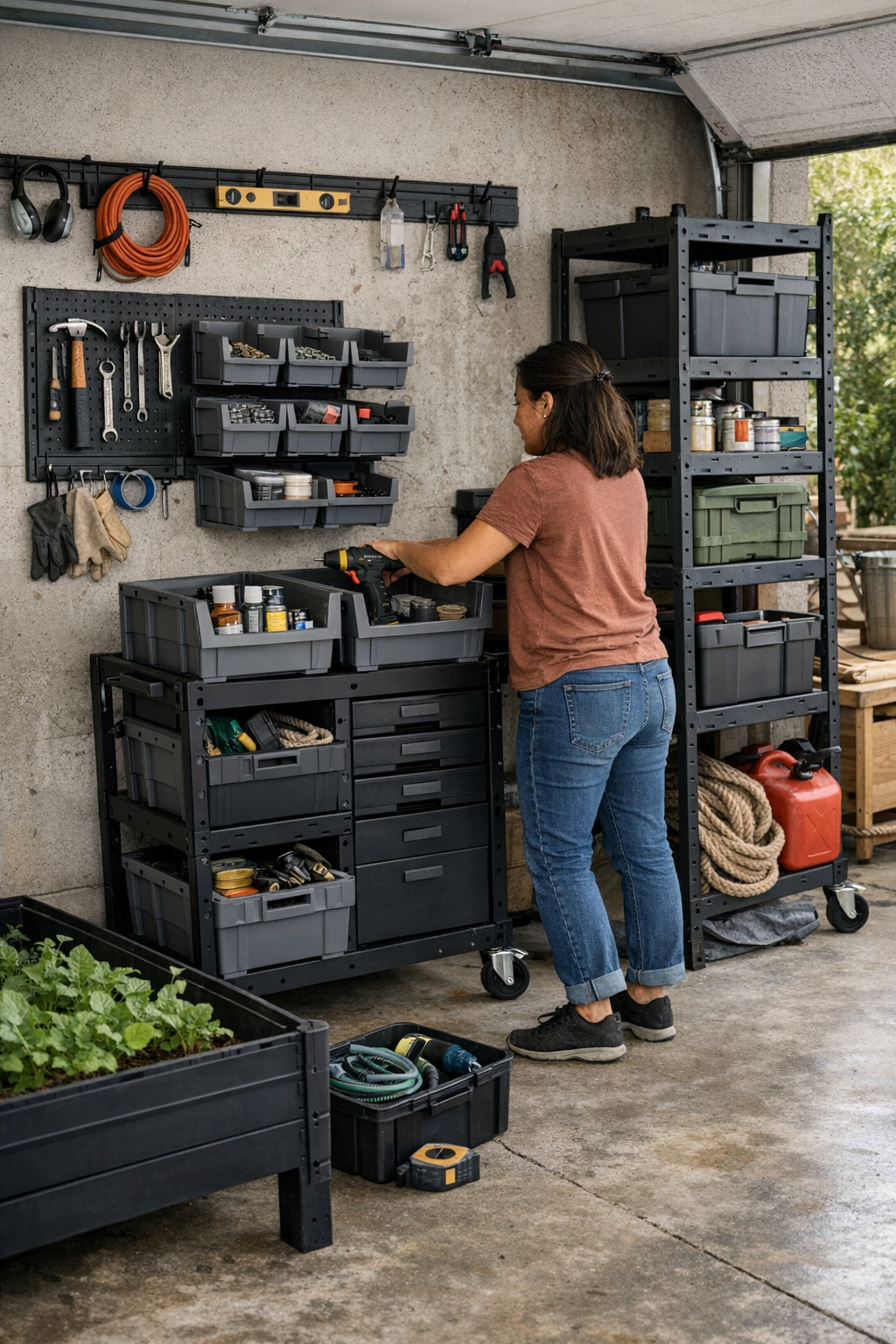
  • Why Storage Systems Fail Over Time and How to Keep Them Functional

    The first day with a new storage setup—whether it’s in the garage, garden, or workshop—always feels like a minor victory. Tools have homes. The floor is finally clear. You can see the workbench and imagine move-anywhere productivity. But the real verdict doesn’t come on setup day. It arrives in the churn of real use: when you’re pushing through errands, bouncing between tasks, and suddenly that “perfect system” starts putting bumps in your path. What started as neat and promising can quickly turn into an obstacle course, crowding your routine where it should step aside.

    How Storage Systems Start Working Against You

    Those wall racks, rolling carts, and modular bins promise to bring order. And at first, the improvement is obvious—you walk in, no piles underfoot, everything slotted in place. But as the calendar fills with half-finished projects and new supplies, reality sets in. That rolling cart you loved on day one? Now it’s blocking the aisle every time you need to drag the mower out or bring in a sack of soil. Wall racks show off your collection, but your most-used tools end up just out of reach or buried behind a row of things you use once a season.

    Friction starts small, then builds: a pair of bins blocking the drill for the third day in a row, a cart wedged in the exact spot you want to turn, a corner that never quite empties out. At first, it’s a few extra seconds. But stack these up—five nudges, three detours, the daily search for snips or a box of fasteners—and your routine slows. The “organized” area gradually fills with tools left out, overflow zones, and a creeping sense that the storage solution is just reshuffling the mess at a different angle.

    Where Storage Systems Fail the Day-to-Day

    The flaws don’t show during a careful Sunday setup—they emerge after weeks of improvising. Imagine grabbing a handful of screws in the middle of a busy Saturday, only to swerve around the same rolling cart that keeps popping back into the path. Or dropping a wrench onto a countertop, then realizing you need to unstack two bins just to put it away again. The little hassles multiply until you find yourself leaving tools out—because returning them feels like another chore.

    • Pulling three stacked bins apart just to fish out the one thing you always need.
    • Pushing the cart aside for the fifth time that morning, just to squeeze by.
    • Parking tools on a half-cleared bench, promising yourself you’ll sort them “later.”

    Most setups don’t collapse in a single dramatic event. Instead, the routine grinds down. The area built to help you work ends up breaking your stride—and all the neatness counts for little if you can’t move, grab, and put back tools in real time.

    Why “Tidy” Isn’t Always “Efficient”

    Looking organized is not the same as working efficiently. The clean rows of bins might impress at a glance, but if every trip means unstacking and tucking away awkwardly, you’re paying with time. Wall racks can clear the floor but make you stretch, reach, or shuffle sideways each time you need the gear you reach for daily.

    Consider the deep bin stack: it looks space-savvy—until you’re lifting three containers to dig out a socket set from the back. By the end of the project, an overflow pile appears “just for now”—right in the walking lane. A week later, the corner that should funnel supplies becomes a dead spot, holding whatever didn’t get put away because the process was just a bit too much hassle. Slowly, resets get ignored and the surface meant for working is reclaimed by clutter.

    Shifting from Storage to Movement

    The fix isn’t always more storage. Sometimes it’s subtraction—removing what gets in your way. After months of repeating the same detour, clearing out the overstacked bins and relocating the bulky cart changed the entire flow. Suddenly, the shortest route wasn’t blocked. Rather than three sidesteps to get across the space, it was a direct walk. The friction points—those subtle pauses and hesitations—vanished, and tools returned to their spots because it only took a second, not a reshuffle.

    Watch for repeating roadblocks: If you’re always shifting the same container or inching past the cart that almost fits, those are signals. The right move might be clearing that one high-traffic zone or reassigning where “overflow” lands. Sometimes moving a single choke point is enough to reset the area—without bringing in another organizer or gadget.

    Pinpointing Where Things Really Go Wrong

    Wall-Mounted Racks: Convenience or Compromise?

    Nothing beats cleared floor space on paper, but reality bites when racks get overloaded or hung above a comfortable reach. Instead of a grab-and-go, you’re balancing on tiptoes, reaching behind objects—or just leaving the tool on the bench for next time. Efficiency gives way to workaround: the “temporary” pile, the forgotten pair of shears, the bags that start nesting on the nearest chest instead of going up on the rack.

    Bin Systems and the Dead Corner Effect

    Storing bins side by side or front to back can look efficient, until every use means shuffling containers. Over time, the extra steps (and resistance) add up, and those “organized” bins become magnets for small piles—items stacked on top or just dropped nearby because returning them means disrupting the configuration. Dead corners aren’t truly empty; they’re the places that absorb whatever doesn’t have an easy return path. The result: slow but steady creep of clutter into what used to be clear space.

    Making Storage Work for Your Routine

    The best storage setup doesn’t just look tidy—it makes every movement smoother. When you can grab, use, and return something without sidestepping, restacking, or hesitating, the system works for you, not against you. True improvement is about reducing decisions and effort in the reset, not maximizing how much you can jam onto a rack.

    Every gadget promises a cleaner workspace, but only the system that fits your daily routine actually keeps order in play. Look where your flow is getting interrupted—those nudge points, chokepoints, and clutter-friendly corners. Don’t hesitate to tear up what isn’t working: shift containers, clear out the cart, and reclaim direct paths. The goal isn’t perfection; it’s practical motion. The best storage is the setup you hardly notice—because resetting the area is so easy, you do it without thinking, not just on clean-up day.

    Find modular systems, rolling carts, wall setups, and practical tools for working spaces at StackNest.

  • How Open Storage Solutions Prevent Countertop Clutter in Entryways

    When your entryway countertop is buried under bags, keys, and shoes, it isn’t just chaos—it’s evidence your storage setup is losing the daily battle against real routines. If you’re endlessly cycling bags from the counter to the floor, shoving shoes aside to claim six inches of bench, or lifting piles just to find today’s mail, your system isn’t broken by clutter—it’s defeated by habit friction. Most entryways don’t start with a stuff problem; they develop a bottleneck because storage is built for one controlled reset, not for the relentless, scattershot returns of ordinary life. If an open surface is the fastest place to drop something, it wins. Every evening, every weekday, that’s where overflow stacks up first, turning “temporary” into a new normal with no friction to interfere.

    Why Entryway Surfaces Turn Into Catchalls

    Flat, open surfaces next to the door are magnets for anything in your hands as you cross the threshold. Say you’re juggling groceries, kids, or wet umbrellas—if there’s even a one-second delay to open a door or lift a lid, the countertop takes the hit. One bag landed “just for now” attracts the rest: shoes, mail, hats, stray gloves. The result isn’t immediate disaster—just a slow drift, with once-neat paths shrinking as items settle further from their homes. The real cost? What was meant as a pass-through becomes a blockade, and resetting feels like re-sorting a pile that never quite empties. Even determined organizers find themselves repeating the same cycle, losing the surface to new overflow midweek.

    Access Friction: The Real Source of “Random” Clutter

    The wrong storage looks tidy only when nobody’s in a hurry. Add late arrivals, arms full of sports gear, or a toddler’s scattered shoes, and small access issues snowball. Closed cabinet doors and bins with tight lids turn a simple drop into a multi-step frustration, so bags and shoes circle around to land wherever’s easiest—most often, right on display. That “temporary” shortcut doesn’t reset itself; it builds up. Soon, the entry is less a passage than a holding zone, stacked with every day’s backlog. A system that makes you reach or pause ends up never being used when it matters most.

    The Bench-Top Domino Effect

    Picture a narrow entry with just enough room for a slim bench and a wall cubby overhead. The week starts with shoes lined up and backpacks perched in order. But as the days blur, one bag left in a rush becomes two, keys multiply in the tray, and shoes spread out to the far edge. The cabinet might only be a step away, but if its door is shut on Tuesday morning, dropping mail on the bench is inevitable. By Wednesday, not only is the surface gone, but shifting anything means risking an avalanche. The storage that looked neat in a photo now interrupts your path every time you squeeze through.

    Closed Storage vs. Open Access: What Actually Works?

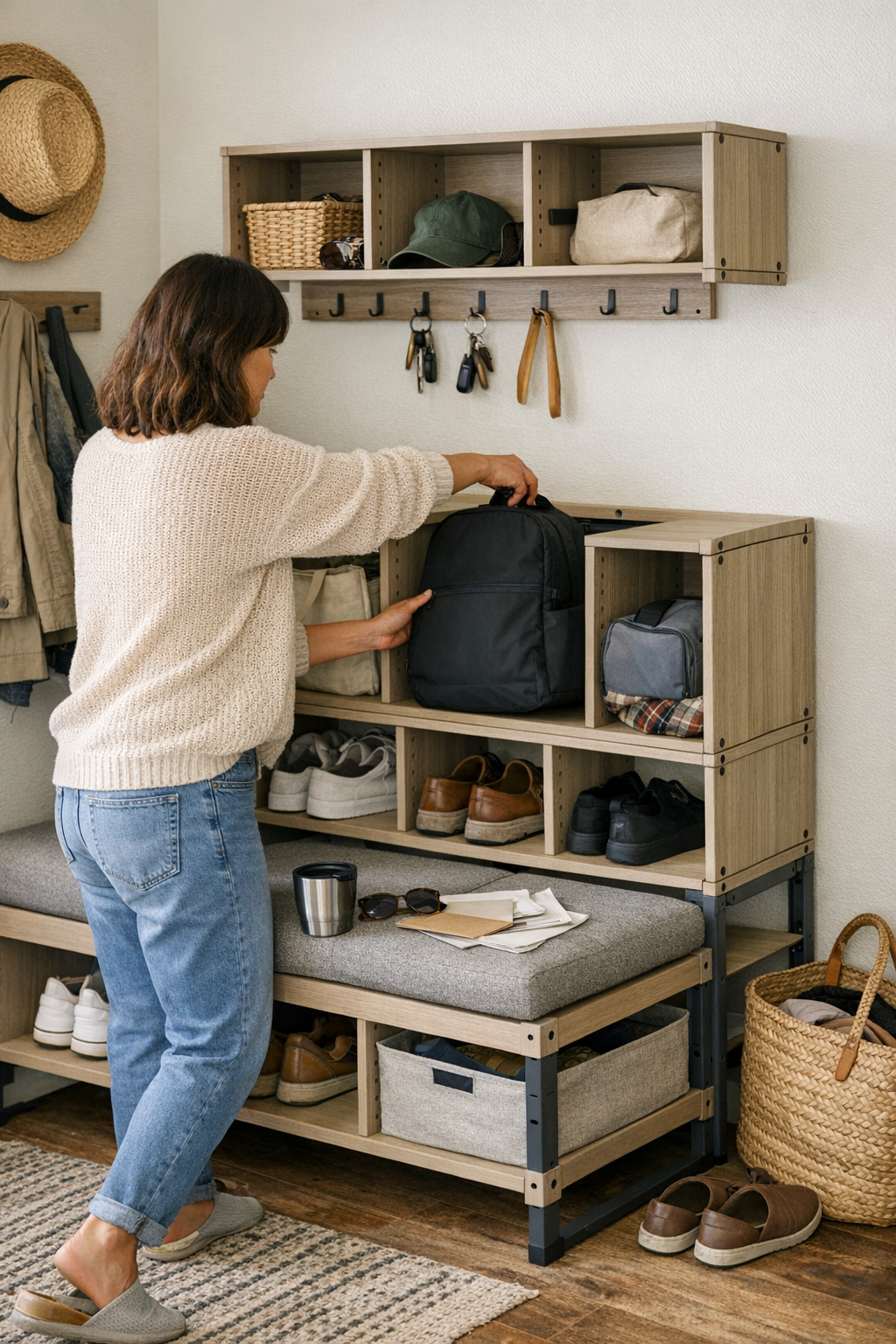
    It’s tempting to reach for closed cabinets, deep bins, or drawers to “make clutter invisible.” But for high-traffic thresholds, every handle or lid adds a speed bump. The best setups strip away barriers for what actually lands multiple times a day: shoes, bags, mail, keys, jackets. Open racks, cubbies, and wall hooks invite instant drop-and-go—no balancing act, no shifting stacks, no two-handed lid wrestling. Instead of overflow migrating, these units become the first-choice landing, not the fallback. Open storage can’t hide everything, but it channels the daily mess to a defined zone, instead of spreading piles to every available edge.

    Testing the Alternatives in Real Life

    Swap lidded bins for open cubbies and the rhythm of entry changes. Pre-switch, storing gear meant pausing, opening a lid, moving other things, and—more often than not—abandoning the process halfway. Shoes and bags hovered on the closest surface, bench tops jammed up, and reset was a major event. After switching in open-front racks, “drop and move on” finally worked: shoes landed in their zone, bags got real parking spots, and the need to clear and restart dropped sharply. By midweek, the signal was obvious—the overflow edge stopped creeping outward, bench surfaces remained open, and rushed mornings no longer triggered a full entryway reset. Not perfect, not perfectly hidden, but the critical friction point was gone.

    Real-World Entryway Friction: Recognizing the Patterns

    Repeated inconvenience always finds a new surface to claim. Classic signs your setup is introducing friction:

    • One bag dropped breaks the no-clutter streak for days. That first item is always a magnet for the pile-up that follows.
    • Neatly lined shoes stretch farther each day. If it’s work to return them, they migrate—often ending mid-hallway by Friday.
    • The bench transforms into overflow parking. What’s meant for sitting becomes the backup zone for anything without a fast home.
    • Returning one item partially blocks the path. Awkward placement or oversized bins can jam up entry for everyone.
    • Wall-mounted storage does part of the job—but only if it’s in the flow path. Bad placement leads to items drifting back to counters or floors instead.

    Fine-Tuning for High-Frequency Use

    No two homes share the same entry layout, but friction shows up the same way: routine items resist reset unless it’s easier than leaving them out. Lasting setups are built for repeat motions: priority items land in open, reach-first spots—no lid, handle, or deep bend required. Spaces that only look organized after a full sweep break down by Tuesday. Instead, open cubbies and racks let you toss, grab, and go. Wall units clear the floor, shrinking pinch points in tight halls. Floor units with open faces tackle bags and heavy gear that need ground-level access, without turning every morning into puzzle time.

    Quick Tips for Fewer Clutter Rebounds

    • Organize “by reach,” not by storage size. What you touch most should never require an extra step—items that do will migrate to the nearest open spot.
    • Time your resets to busy stretches—after work, post-activities, or weekends—so your setup supports traffic, not just empty-house order.

    The Difference Between Looking Tidy and Functioning Smoothly

    An entryway that looks organized at noon and collapses by Wednesday isn’t short on storage; it’s missing the match between habits and setup. When shoes click into place fast and bags find open bays—without shifting a stack—surfaces stay clear for the unexpected and returns lose their drag. The payoff is in the threshold: easier passage, fewer blockages, and a zone that stays as open on a Friday as it felt on Sunday. Real order survives the week because the setup fits how you actually move—not just how you want things to look at reset.

    For carefully designed storage built for busy entryways, drop zones, and real-world routines, visit Betweenry.

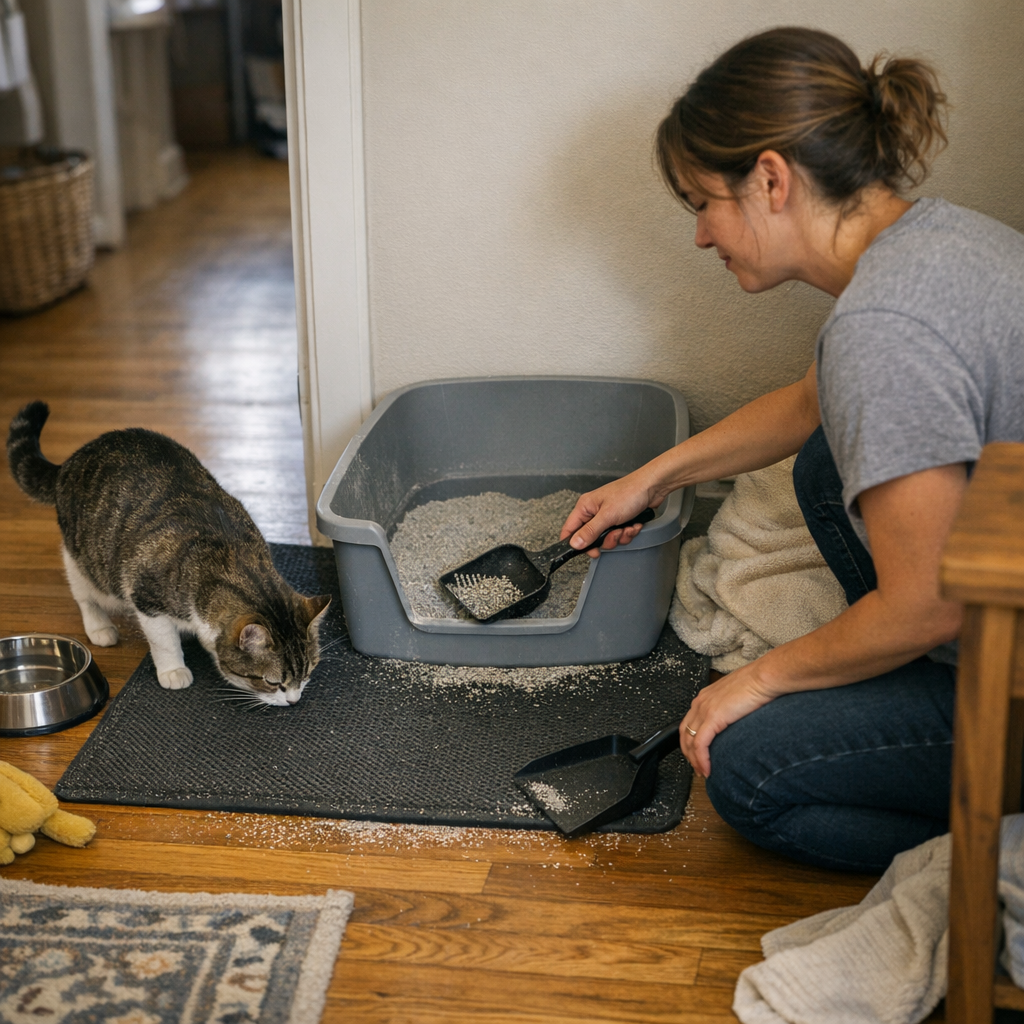
  • Daily Litter Box Scooping Transforms Home Cleanliness and Routine

    Most hidden litter box “solutions” get exposed within days—not by cats, but by repeat use. A setup that feels neat on day one—tucked away, mat flush, box out of sight—quietly unravels under routine. After a couple of days, you notice a fine line of litter sneaking beyond the mat, a dusty trail that didn’t exist when you first set up the corner. Now you’re crossing the same patch of floor, bare feet catching stray grit you thought would stay contained. Even if the box looks invisible, the real test is how much it interrupts you every time you walk, reset, or clean. In the StillWhisker world, every arrangement has to survive more than its first impression.

    Orderly Looks vs. Friction Underfoot

    Placing the litter box in a remote corner, out of traffic and away from guests, seems like the obvious answer. On day one, it holds—a backdrop of calm, mat squared up, all visual noise hidden. But by week’s end, the illusion fades. “Looks tidy” only gets you so far when your routines rub against it. Suddenly, every crossing leaves a trace: a granule skating off the mat, a faint, repeated streak where paws and feet overlap. What seemed organized starts generating its own friction—a low-level irritation as you realize you’re chasing crumbs into other rooms or doubling back to sweep corners you thought were “solved.” No guest ever sees it, but your socks and floors do.

    The Daily Reset: Where Theory Meets Reality

    Small misses add up fast in a real home. Hiding the box doesn’t reduce upkeep—it just delays your response. Every cat visit, every escape route after a mad dash, sheds another sprinkle you don’t see until later. Miss a reset, and the edge of the mat becomes a border zone—this is where “contained” turns into “spreading.” Litter lurks under the kitchen table, the trail shows up under shelves, or you spot a new dust patch sliding toward the hallway. The out-of-sight setup seems clean, but it’s only building up backlog—small messes multiplying, tension rising until your next reluctant big clean.

    The more the box drops out of your line of sight, the easier it is to let debris linger. Hidden corners aren’t protected from mess—they’re protected from your attention until it’s too late.

    A Familiar Mess: How Small Problems Travel

    The spill always starts inside cat space, but it only takes one toy dragged across the mat, or one rushed scoop when you’re distracted, for the line to shift outward. “Just this once” skipped cleanup? Now that’s a recurring patch of odor and debris, traveling wherever you do chores, fold laundry, or try to relax. Even cats that usually keep it tidy will outpace a good mat by the third unaddressed spill. Containment quickly becomes catch-up, and the frustration accumulates in little, visible signals: a pile under a side table, crunches where you walk barefoot, mat edges pushed askew.

    Timelines That Actually Work: Anchoring the Routine

    What separates a maintainable setup from a recurring annoyance isn’t clever hiding—it’s a daily checkpoint that fits your real movement through the home. Choose a fixed, visible moment: late afternoon before the kitchen gets busy, or at the transition to evening routines. Forced consistency—anchoring scooping and reset to a predictable time—keeps the load small and visible. Skip it, and the space quietly fills up; stick with it, and you never have to chase the problem through the house.

    If the litter box sits just far enough from your normal path that you have to detour or mentally bookmark “go clean up later,” you’ll postpone. The space starts to betray you: mat off its mark, litter at the threshold, a faint hint at the doorway. Bringing it into semi-view—within your daily field but not crowding every step—means you spot and control mess fast, not react days later.

    How Small Tweaks Shift the Cycle

    Two practical shifts drive the biggest difference in routine:

    • Choose a spot visible enough to monitor, but not in the direct way— when you see a misstep or spill in real time, grabbing a broom or wipe for three seconds is manageable. Left unseen, a mess sprawls out until weekend effort is inevitable.
    • Anchor the daily scoop and sweep— make it a lock-in with some other task you already do. Don’t leave cleanup to “when I notice,” or you’ll always be a day behind your cat’s best scattering effort.

    Over a few cycles, the space stops pulling you out of routine and merges with it. Instead of being a zone you resent or scramble to hide, it becomes just one more reset in your ordinary path.

    When a Setup Looks Clean But Feels Slow

    The most misleading setups pass a visual check but fail every actual use. That clever box behind a chair, mat flared just-so, supplies tucked away—it’s a visual win. But the moment every sweep or scoop interrupts two other tasks, or a cleaning tool is just far enough out of reach to make you mutter, the system burns time instead of saving it. An “invisible” box that sends litter into living spaces or forces you to twist awkwardly for each reset exposes its real weakness: it doesn’t fit your flow, so you keep working around it instead of through it. “Organized” can still mean “always one step slower.”

    Repeated small barriers become patterns. You reach for a scoop hidden in the wrong bin, nudge supplies out from behind a planter, or edge around a scramble zone to avoid tracking more grit further. Everything is where it “should be” but still not where you need it in the second mess happens. Like a kitchen drawer you never actually use, the setup works on paper but grates in practice.

    Shared Space, Shared Stress

    Indoor-cat items leak—blankets, mats, scratch posts—creeping into shared rooms and high-traffic lanes. A box that looks camouflaged to guests is irrelevant when you’re the one stepping around micro-crunches, repositioning mats that always drift, or picking out litter-flecked toys from under the couch. Over time, these small, repeated interruptions add a background pressure—one more thing to adjust each day, pushing the area from “neat enough” to “never quite in sync.”

    Practical Fixes That Change the Outcome

    No arrangement escapes all mess, but routines reward a few key upgrades:

    • Pick a mat at least several inches larger than the box opening. A tight fit looks sharp, but a few extra inches on every side catch surprise landings and daily scatter. Go wider—early, not after the first missed cleanup.
    • Make wipe-down and sweep tools truly at hand. Keep them within literal arm’s reach of the box and mat—not tucked in a closet—so extra friction never delays a quick reset. Cleanup inertia vanishes when the gear stays parked right where micro-messes happen.
    • Reposition for fast visual checks, not only for aesthetics. If the first signal of trouble is litter in the next room, the box is too hidden for your habits. Try inching it closer to the natural path through your space, then watch whether cleanup speed improves.

    What to Adjust When the Cleanup Cycle Lags

    If grit keeps cropping up late or shared areas look less clean at day’s end, don’t rely on a future “big fix.” Instead, double down on the daily pattern: move reset times earlier, keep mats wide and anchored, and make the boundary zone impossible to ignore. Payoff comes not just in a tidier corner, but in less friction across the routines you didn’t expect to get interrupted by a litter mess.

    The Repeatable Setup That Gets Out of Your Way

    The best litter setup fades into the background—because it makes quick, daily resets possible without forcing extra work or blocking your rhythm. Once scooping and sweeping cue off your home’s real flow, stress drops: mats quit migrating, debris stays boxed in, and your living spaces stop accumulating micro-cleanups you never signed up for.

    Small flaws still surface, but easy access and clear lines beat any hidden arrangement that lets messes linger unseen. Build your setup to fit your routine as it actually happens, not just as it looks ideal, and the recurrent hassle finally slips out of daily life.

    For more indoor-cat setups that work in real homes, visit StillWhisker.