
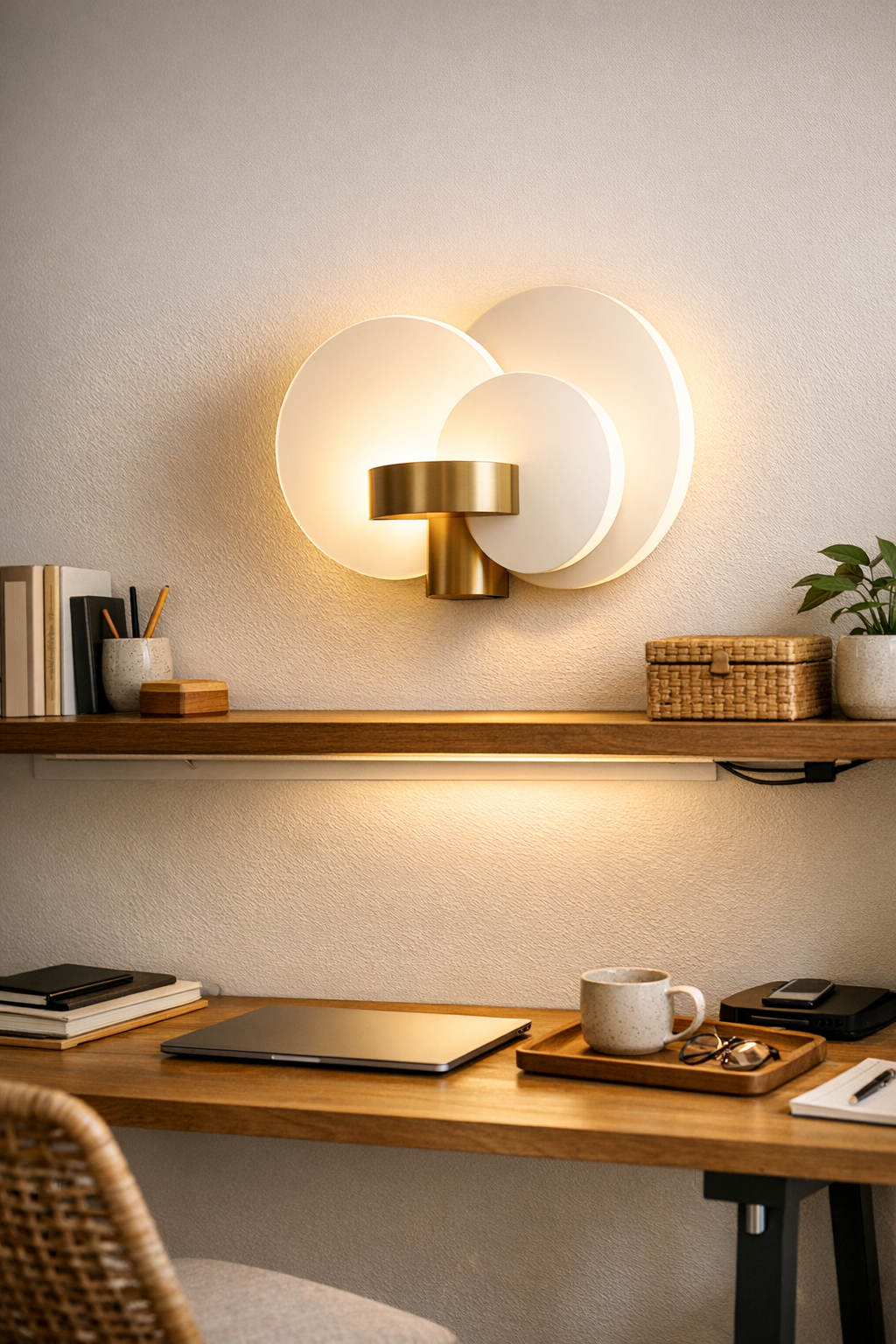
Your shelf or desk can look surgically clean with slim LED strips, hidden cables, and “invisible” mounts—until real use exposes the cracks. What seems minimal on install day often unravels: glare lines appear, cables droop where your hand lands, and the outer desk edge stays dim no matter how much you nudge the fixture. The difference between a lighting setup that quietly does its job and one that sabotages your routine lies entirely in the support details: the routes, anchors, and brackets most people skip right past.
Where Friction Creeps In: The Problem with Quick Fixes
That tidy light bar under the shelf or plug-in edge panel looks like a solved problem—until the second or third day of use. The cable you meant to hide starts poking out between books. By the end of the week, you’re shifting your chair to dodge an unexpected glare angle, or finding your workspace half-lit, the front edge still in shadow.
Loose cables, soft mounting, and ignored fixture alignment never look urgent at first. But in any setup that sees traffic—actual work, cluttered surfaces, or just repeated arm sweeps—these small gaps turn into constant irritants. Shared desks, hallway shelves, or kids’ zones especially expose how quickly “clean” lighting degrades into visual mess or daily hassle.
Why Low-Profile Lighting Needs High-Attention Support
Blending a fixture into the background only works if its support disappears just as well. The three fast ways a minimal lighting plan breaks down:
- Dangling or drifting cords: Unanchored cables slowly work loose, get caught on objects, or become the thing you notice first—breaking the whole minimalist illusion.
- Lighting pushed too far back: Light aimed at the wall leaves the active zone—where you write, swipe, or drop your keys—in consistent shade.
- Mounting that obstructs or interrupts: Even slim brackets, if placed wrong, snag elbows, clash with stacked books, or become dust catchers right where you reach.
These breakdowns get worse with every touch, plug-in, or quick rearrangement—making the “minimal” setup feel messier than what came before.
Real Scenes: The Difference in Day-to-Day Use
Picture two shelf lights, identical in type:
- The first stays flush against the rear wall, cable left dangling out of reach, mount clips visible where you set down your bag.
- The second routes its cable flat and hidden along the shelf’s back, with the light itself nudged forward to throw coverage directly over the day’s work zone.
Within a week, the first setup is a small minefield: books push against loose wires, glare catches your eye at odd angles, tablet cables knot themselves with lighting cords, and a persistent streak of shadow stays along the work edge. With the second setup, the light just works—no tugged wires, no frustrating dimness at the shelf’s edge, no hardware interrupting routine motion. The difference shows up not in photos, but in the absence of daily distractions or half-conscious tweaks.
This isn’t about add-ons. It’s the disciplined use of support details—tight cable runs, low-profile brackets, practical placement—that keep a clean install from collapsing into visible, lived-in disorder.
Beyond Appearance: Where Lasting Setup Stability Comes From
Most lighting stays perfect for a day or two. Then support weakness creeps in:
- Cables that migrate: If you don’t guide wires firmly along the rear or down a well-defined path, they creep forward, getting caught or becoming another source of dust and interruptions.
- Fixtures that flex or tilt: Adhesive or magnetic strips survive a few days’ use, then start sagging—the light bar doesn’t sit flat, and the “straight line” turns crooked the tenth time you open the cabinet.
- Lighting that misses target zones: Even a couple inches off with placement and the edge you work or read on turns into a lingering dark spot, obvious halfway through every use session.
Ignored, any of these can become a small but fixed annoyance—one that’s always present, even after the novelty of a new fixture vanishes.
Making “Invisible” Lighting Actually Work—For The Long Haul
Real improvement comes from small, targeted adjustments:
- Anchor cables completely flat, not just out of sight. Adhesive guides let wires stay pressed to the surface—reducing both accidental pulls and the habitual “cable in your sightline” effect.
- Shift lighting to where activity actually happens. Don’t center by habit. Shift the fixture toward the front third of a shelf, or directly above the tools or devices that get daily friction. That inch of difference pulls the shadow line off your workspace.
- Scale support to the hardware you’re using. Too-large clips create slack; overly small ones strain or pop off. When bracket and fixture fit together, the whole setup remains tight and unobtrusive over time.
What feels like a tiny improvement at install becomes the reason you forget about the lighting at all in everyday life—a sign you actually got it right.
Reality Check: Common Support Weak Points You’ll Notice Only After Living With Them
Plenty of support issues hide until a week of living with the setup loosens them:
- Magnetic fixtures on metal: Quick to install, but door vibration or even a warm day weakens the grip—until the bar sags or tilts, breaking the look and the lighting line. A near-invisible screw or secondary bracket fixes it for good, but most skip the step early on.
- Long cable paths with nothing to hold them down: The longer an unanchored cable runs along a surface, the more likely it is to creep, curl, or catch. Small, spaced anchors mean less tugging and no surprise cable clusters by week two.
The setup that “looks perfect at install” is almost always the one that drifts into distraction after a few rough days. It’s only after a few hundred quick reaches, plug swaps, or surface cleanings that the true weak points show, right at the edge, the corner, or the unsupported run you barely noticed at first.
One Good Adjustment Lasts Longer Than Ten Quick Fixes
The setups that survive—across desks, shelves, and hallway drops—aren’t the ones you tinker with every few days. One perfectly guided cable, a bracket aligned exactly where it’s needed, or a light that finally extends to the active edge buys more calm and stability than a pile of temporary workarounds. The difference, weeks or months down the line, shows in whether you actually use the whole space without pause—or catch yourself dodging, adjusting, or fixing what should have stayed invisible from the start.
No lighting fixture hides repeated-use problems by itself. But when cable paths are precise, brackets scaled right, and lighting actually hits the areas you touch, even a slim, nearly unseen setup stays friction-free long after install day. Clean lighting isn’t just a look. It’s the quiet, ongoing absence of daily interruption—and support details are the only way to get there in real rooms, not just in photos.
LightSupport: Indoor lighting and support that actually stays functional, not just tidy at install.