
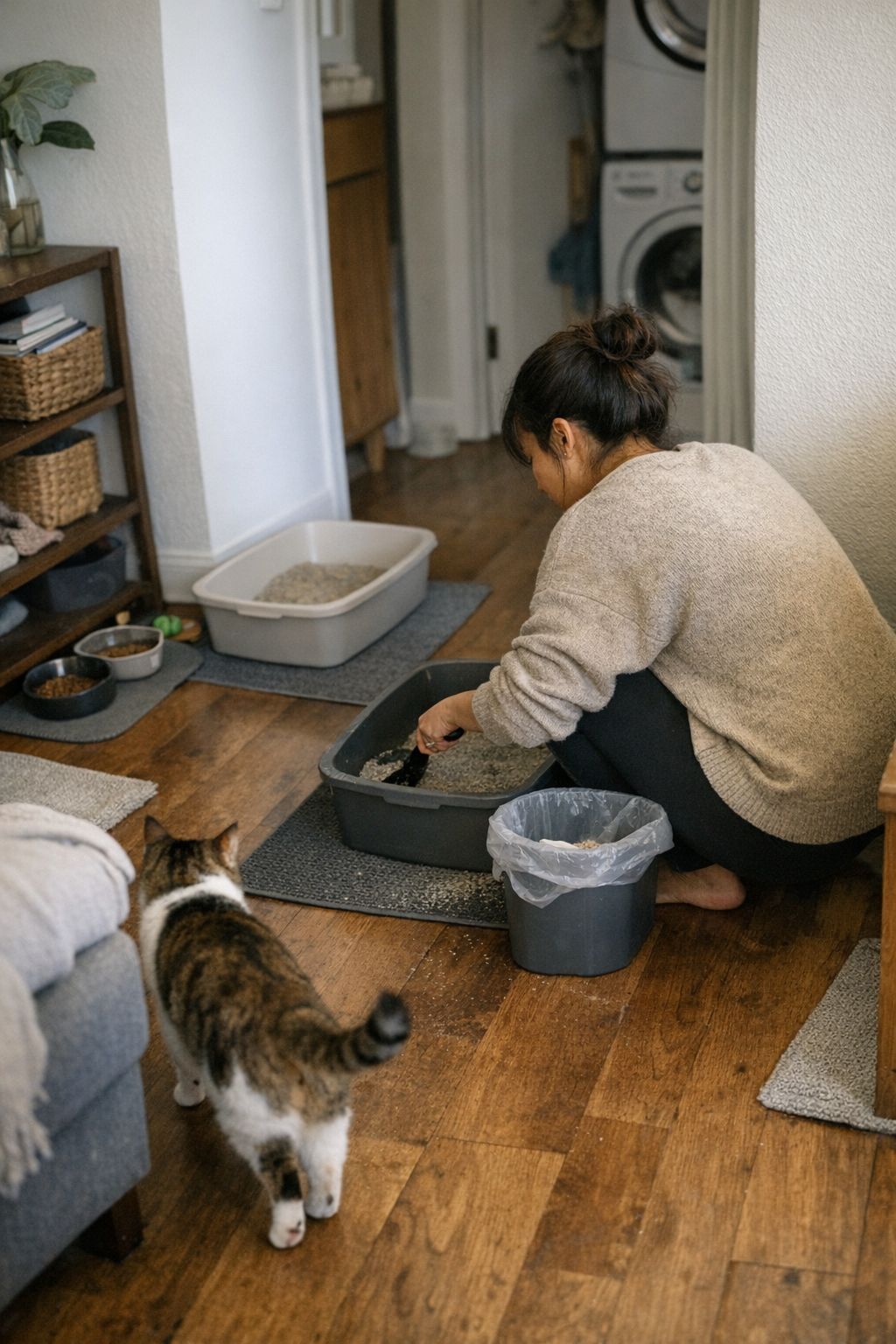
The first sign a new litter box setup isn’t working isn’t disaster—it’s slowdown. Monday looks neat: boxes lined up, cats inspecting, an “extra” for good measure, and the floor briefly calm. But by Wednesday, friction pushes in. Litter starts escaping the edges, scoops are stranded on the wrong side of a mat, and the job of a quick reset turns into backtracking: stacked boxes mean you’re wiping and sweeping the same patch twice, all for a setup that promised less work. The extra box, supposedly insurance, crowds your shared space or sits ignored—and the trap becomes clear: surface order hides inconvenient routines. StillWhisker setups exist for exactly these moments when everyday cat life reveals what looked “organized” now feels unsustainable.
Why Box Count Alone Doesn’t Solve the Indoor Cat Setup Problem
The standard advice—“one box per cat, plus one”—collapses the real struggle down to a number. In reality, the math only works in a spreadsheet. What upends the routine isn’t too few boxes, but how these boxes disrupt the tasks you repeat every single day. Wedged behind a laundry door, or forced along a tight hallway, clustered boxes mean a feed-refill-spot becomes a cleanup gauntlet: elbows jammed under shelves, mats bunched up against the wall, a scoop left balancing somewhere inconvenient. Litter you swept ten minutes ago resurfaces by the kitchen threshold. The theory of enough boxes skips the bigger issue: once boxes collide with feeding, water, or daily movement, the whole flow clogs up.
The moment a box backs up against a food station or gets buried in a joint traffic route, the effort piles on: twice the mop jobs, toy cleanup blending into bowl rinse, and a “plus one” that cats treat as invisible. The right number in the wrong spots only guarantees more mess reshuffled, not solved.
The Early Calm: Why Day One Is the Easy Part
Initial setups flatter you with calm—a lineup that looks logical, every box apparently in the right place, minimal scatter in sight. Fast-forward two days. Now, one cat claims box A, leaving box B untouched and box C a graveyard for effort: you realize, midway through scooping, that half the lids are unused. Cleaning turns into a loop—back and forth, chasing the same sandy patch that leaks just beyond the mat, moving the water bowl (again) to reach the box, picking kibble pieces out of old litter trails. What looked like a solved problem on Monday now eats minutes every morning, the “simple” zone overloading the same edge of your routine. By Friday, you’re doubling back to catch what the first pass missed, with more friction than you started with.
Where Placement Fails: Recognizing When the Setup Isn’t Working
“Enough” boxes don’t matter when placement builds new pressure points. Cats aren’t fooled by numbers—they’ll avoid boxes that spill over into high-traffic, visible, or crowded spots. You end up performing the same contortions: reaching past a cushion to dip the scoop, bumping into feeding trays just to pull a lid, or discovering that the storage bin for wipes is now buried behind stacked boxes. Suddenly, the area feels less like a setup and more like an obstacle course.
- Bottleneck cleaning: Cleaning three boxes in a cluster magnifies the mess. Litter clings to every floor seam; you double-wipe the same corner. Scooping multiplies the scatter instead of taming it. The “backup” adds nothing except another surface to clean, even when it’s routinely skipped by cats.
- Shared-space competition: Place a box near bowls, water setups, or play tunnels and you start a routine of constant interruption. The scoop handle catches on a water dish, a toy ends up half-buried in litter, and routine resets stall. You’re backtracking for the hand sanitizer, pausing mid-task just to clear a path.
These aren’t minor glitches—they’re the interruptions that change a five-minute tidy into a job you start putting off.
How Clustering Triggers a Loop of Mess and Maintenance
Cluster all your boxes in one busy area—think laundry zone, entry alcove, or tight kitchen pass-through—and you create a mess bottleneck that grows with every cycle. The cats switch boxes in quick succession right as you’re trying to handle breakfast, streaming new pawprints through your just-wiped tracks. By midday, the dust and bits stretch beyond the intended boundary; by dinner, you’re facing a second round, with supplies already scattered and fresh litter invasions visible in the shared walkway. Resetting each box only seems to unleash new drift: wipe, scoop, resweep, repeat. The routine you imagined gets tangled, forcing you to chase flaws across rooms instead of controlling a single, contained spot.
The problem isn’t too few boxes or too little cleaning—it’s the energy wasted crossing the same pointless divide. Repeated resets become repeat interruptions, undermining the whole setup’s reason for existing.
What Real-World Changes Show When a Box Moves
Moving just one box out of the cluster changes the pattern immediately. Shift a box further from the main “traffic triangle”—maybe beyond a doorway, or behind a small divider—and you cut tracking and scatter by half. The cats use both boxes, but the heavy-use one stops carrying all the burden. For you, that means one core box needs a midday check-in, while the relocated box—now away from food, water, and toys—only needs a single, less urgent scoop. The loop of scatter shrinks, the overlap with feeding or resting zones eases, and you gain actual breathing room in cleanup supplies. It’s a practical, visible improvement: fewer double-backs, less mat overlap, and one less thing in the way when you reach for a bowl or restock the scoopable. The rhythm recovers from frustrating back-and-forth to a clear, finishable reset.
- No more multi-box scatter zones that demand double mop duty.
- Scoop, check, and refill cycles can finally be split—less repeat handling, less overlap with other routines.
- Cleanup tools (bags, wipes, sanitizer) no longer sink out of reach behind stacked trays.
- Most of all, the routine feels controllable instead of trapped in a spinning cycle.
Small tweaks have visible effect—by week’s end, you might spend five minutes a day, not a quarter hour dreading the whole job for one more cycle.
Spotting When “Backup” Boxes Become Wasted Space
Adding an “extra” box gets pushed as a universal rule, but shoehorn that box into the wrong spot—a narrow alcove, next to the water fountain, behind a furniture leg—and it simply turns into wasted effort and floor space. If a box sits untouched for days but you’re still fighting tracked litter and urgent midweek cleanups at the main box, the layout needs a hard look. Unused boxes aren’t insurance—they’re a visible sign of poor placement and setup creep.
Pull that “backup” away from the crowded zone: get it out of feeding sightlines, off the edge of a shared mat, and into a calm, low-traffic corner with clear access for the cats. Even a modest move can trigger quick changes—less ignored maintenance, fewer retraced steps, and a more balanced use pattern. When cats finally split their visits, you split your labor: it’s a reset that sticks instead of a band-aid that joins the mess.
Understanding the Underlying Friction: Not Just Mess, But Lost Routine
The deeper problem rarely looks dramatic—it’s the slow leak of routine efficiency:
- Reaching for the scoop and having to shift a bed or blanket first, risking a spill in a rush.
- Finding litter in a food bowl zone you thought was protected from scatter, so cleanup collides with meal prep.
- The need for a second mop pass because a box in a choke point scattered diagonally across the hallway after one early-morning use.
- Pushing off a refill because the only path is blocked by a tucked-away box or because the scoop spot is now under a table.
These aren’t “setup failures” in the sense of chaos—but they transform mild daily upkeep into a job that’s easy to delay, resent, or rush through sloppily. Good design in cat setups isn’t about how tidy the corner looks, but how rarely you trip over an interrupting detail. The right setup feels invisible because reset, refill, and cleanup simply happen—few interruptions, no avoidable repeats.
Practical Patterns for Spacing Boxes (and Easing Your Life)
Homes and cats vary, but certain principles cut through clutter:
- Don’t cluster—spread: Give each box a distinct spot, not just a new position in the same room. Avoid side-by-side lines unless you have no other choice.
For more real-world solutions that survive daily resets—and don’t trade easy looks for harder upkeep—StillWhisker’s setups are built for indoor lives that test practical routines.