
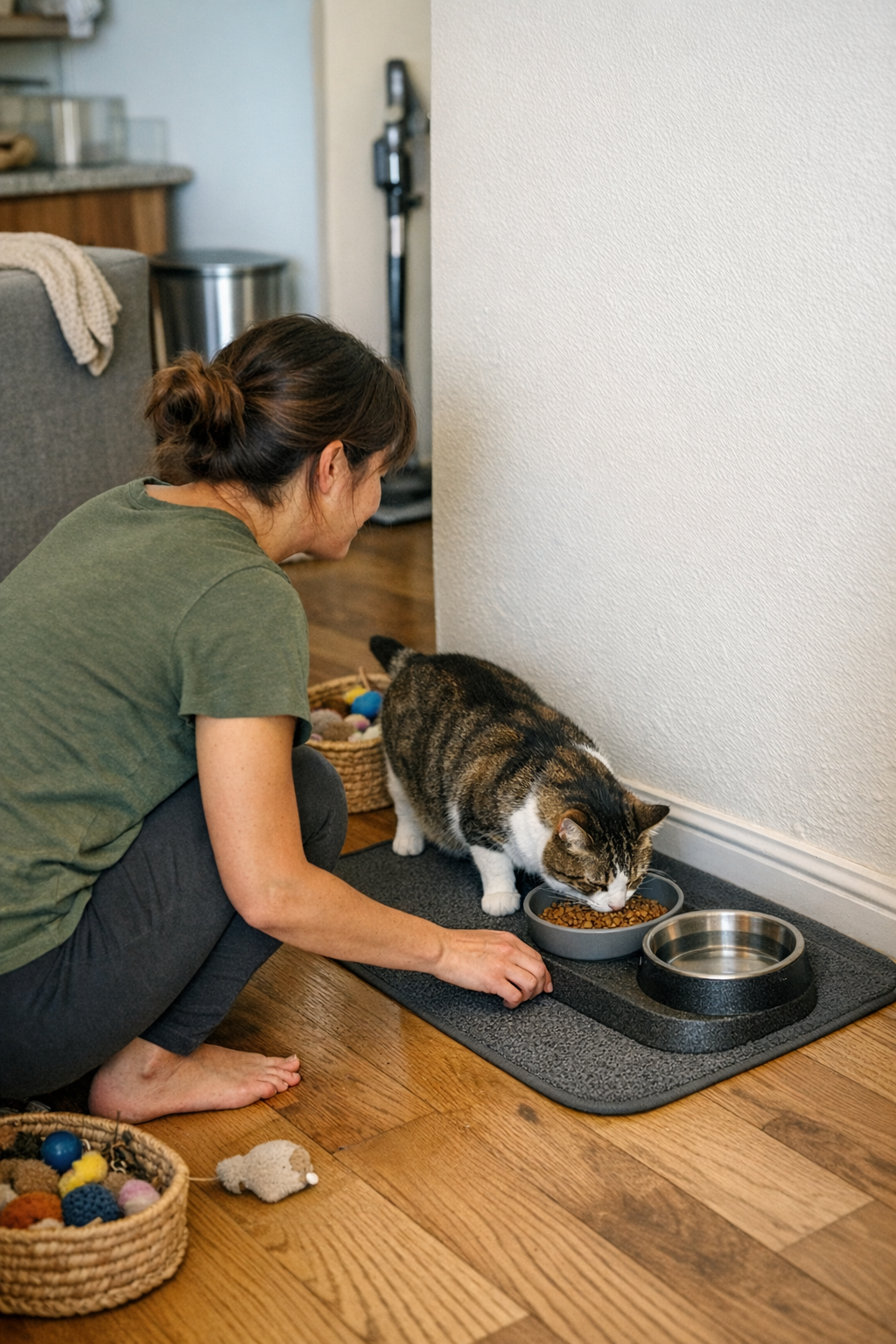
The true test of any indoor cat setup isn’t how neat it looks the day you finish arranging it—it’s what happens three days later, when your routines meet real frictions. You notice not the calm of a “settled” space, but the creeping hassle as bowls migrate out of reach, mats curl underfoot, and crumbs reappear in the far corners. Feeding, litter, or play areas that seem well-designed can still cost you time and patience as you find yourself wiping, dragging, or reshuffling the same items again and again. What feels organized at first often turns into repeat work you didn’t plan for—and those micro-failures quietly multiply each week unless the structure actually holds up to daily use. StillWhisker setups are built for this lived-through pressure—the difference is immediate when you stop pausing or rerouting for the same slip, spill, or snag.
When a Tidy Setup Quietly Invites More Work
At first, every feeding or litter corner feels “done”—until normal routines expose what slips. You refill the water bowl and find it’s finished another slow journey across the mat, half under the shelving now. Litter, neatly boxed yesterday, starts clumping around mat edges by midday, leaving a sandy trail into the hallway. Toys that started visible and reachable are already back under the same impossible-to-sweep sofa, just out of sight but always in the way. None of it feels dramatic, but each small disruption sets you up for more fixing than using.
It’s constant, low-grade resistance. A mat that unrolls itself just enough to block the broom. A bowl that inches outward every meal, leaving puddles you find only once you step in them. The annoyance isn’t the mess—it’s the repeated reset. Three sweeps in half a day chips away at any sense that the space really works for both you and your cat. The real challenge is stopping these micro-jobs from stacking up day after day.
The Real Test: Will It Hold Up to Repeated Use?
A cat zone only proves itself by how much hassle it removes from your routine, not by how beautiful it looked before the first refill. Any setup can feel fine on day one—a little less fine by midweek, when the lines between “tidy” and “reliable” get sharp. The difference is in how often you find yourself pausing, grabbing, or contorting just to keep everything in place.
Maybe it’s Tuesday and the litter mat already needs its fourth reset. Or the water bowl, glossy and light, that seemed clever at first but now slips behind the kickboard by Thursday, forcing you to clean beneath the cabinets after every enthusiastic drink. The slim feeding mat that curls after a few trips across, snagging crumbs beneath its edges and flipping up right where you walk. These are not design “features”—they’re near-daily reminders of overlooked friction that add up over time.
Repeated use exposes the weak points. A mat that flattens but never stays put just hands the stray litter right back to you. Bowls that skate or tilt force you to mop and reset, not just pour or scoop. If your cat space serves up more small jobs as the week goes on, it’s your energy—not the setup—doing the heavy lifting.
Common Friction Zones: Where Setups Start Falling Short
The Feeding Area and the Case of the Drifting Bowl
The classic: a bowl, a mat, and a patch of floor that starts simple but quickly gets awkward. Lightweight bowls drift with every meal, running from your reach the next time you pour water. That journey doesn’t just inconvenience you—each move leaves water rings or puddles creeping into kitchen paths, disrupting cleanup when you least expect it. And slim mats? After a few days of use, they curl or twist underfoot, causing more tripping, more resets, and a buildup of crumbs you never find on day one. The only setups that fade into the background are those anchored against both movement and mess—something you only realize after six consecutive meals without needing to correct anything.
Litter Edges and the Ongoing Grain Trail
Litter control looks solved after the first scoop, but every day adds pressure. Ineffective mats crumple and slide, letting litter escape just where your feet and socks can pick it up—or worse, track it out to visible walkways. Resetting these mats turns from fix to routine, but the real change comes from a shaped, grippy boundary that forces mess to stop where the zone ends, not halfway across the house.
Toy Spread: The Migration That Never Ends
Toy areas start appearing organized—until play begins. Without a clear edge or container, toys inevitably roll into the main walkways or under low furniture, blocking your vacuum and tripping tired feet on busy mornings. It’s not the cleanup that’s worst; it’s the endless hunt-and-retrieve, made harder when toys end up behind or beneath things you don’t want to move daily. A bin or basket stationed at the edge of the action breaks this cycle, making pickups as fast as the day started and letting the vacuum finally pass uninterrupted.
When the Setup Looks Right But Doesn’t Feel Right
This is the gap between staged order and real daily flow. Mats might match the room, but curl, bunch, and snag. Bowls that looked “streamlined” suddenly slip every time your cat lunges to eat. Supplies like the scoop or wipes are there—but not within easy reach, just behind a tangle of shifted bedding or wedged tight between awkward storage. The effect: you find yourself improvising every sweep, shuffle, reset—never quite out of “fix mode.”
There’s always a “looks fixed” moment, but the stress test is whether your routines get easier. Are you actually refilling without pushing mats and bowls back into line first? Can a quick sweep cover the whole area, or do you have to coax mats flat, hunt down toys, and dig the scoop from its hiding place before getting started? If daily resets become a habit, not a fallback, the setup is working against you, not with you.
The Real World: Recognizable Moments of Slowdown
Reaching for the Bowl, Finding It’s in the Way
Picture this: arms full, you reach to top up the water, but the bowl’s migrated just far enough to wedge under a low shelf. You pause, empty, and drag it back out—a three-second reroute that starts as minor, but as it repeats, it becomes a daily signal that the setup’s failing you. A bowl held by a weighted, shallow-welled mat erases this friction completely—no under-shelf rescue, just pour and move on. The difference is felt most when you don’t have to think about it anymore.
Carrying Out the Quick Sweep That Isn’t
The intent: two minutes, one sweep. The reality: hands and knees, dustpan fighting grains and crumbs that have slipped beneath an unanchored mat or too-narrow edge. It’s not just about time—it’s the constant, unwelcome extra effort added to otherwise simple jobs. Weighted, wider mats—set along the actual cat traffic paths, not just the “pretty” spot—change the reset from three times a day to once, or even less.
Returning to Find the Blanket Shifted, Again
Soft rest corners work for your cat, but not always for you. A blanket or cushion, neatly placed, ends up bunched beneath the cat or nudged across the walk path, making morning resets feel necessary even when you’re in a hurry. Heavier, low-profile mats hold position, meaning comfort for your cat without a daily reshuffling bonus for you.
The Trouble with “Invisible” Friction
Most small misalignments don’t announce themselves—they slowly eat away at your time. What starts as a quick nudge or wipe slowly becomes five, then ten interruptions per week. The mess isn’t dramatic, but the repeat labor is. If your setup keeps leading to the same detour, pause, or fix, it’s not just inconvenient—it’s a flaw in structural logic.
Solving friction takes more than moving objects—it’s rethinking the zone itself: Is the mat truly wide and heavy enough? Does the bowl resist sliding, even when attacked by an eager eater? Are containers actually within reach and out of the way, or do they drag you back to hunt-mode every few days? If you keep correcting the same miss, it’s time to upgrade the foundation.
Small Changes, Big Relief: Real Fixes That Last
- Weighted, low-lip mats and stable bowls: A denser mat that slightly overlaps daily cat paths does double duty—it blocks stray food and anchors the bowls, letting every refill happen without secondary adjustments.
- Defined, reachable edges: Storage bins and boundary containers at the true fringe of play or feeding zones halt the toy and supply migration—making retrieval as fast as routine demands.
- Arrange for flow, not only looks: Setup isn’t about the perfect catalog photo—it’s about bowls, mats, and containers sitting where you actually use them, with margin for error built in upfront so resets come less often and with less fuss.