
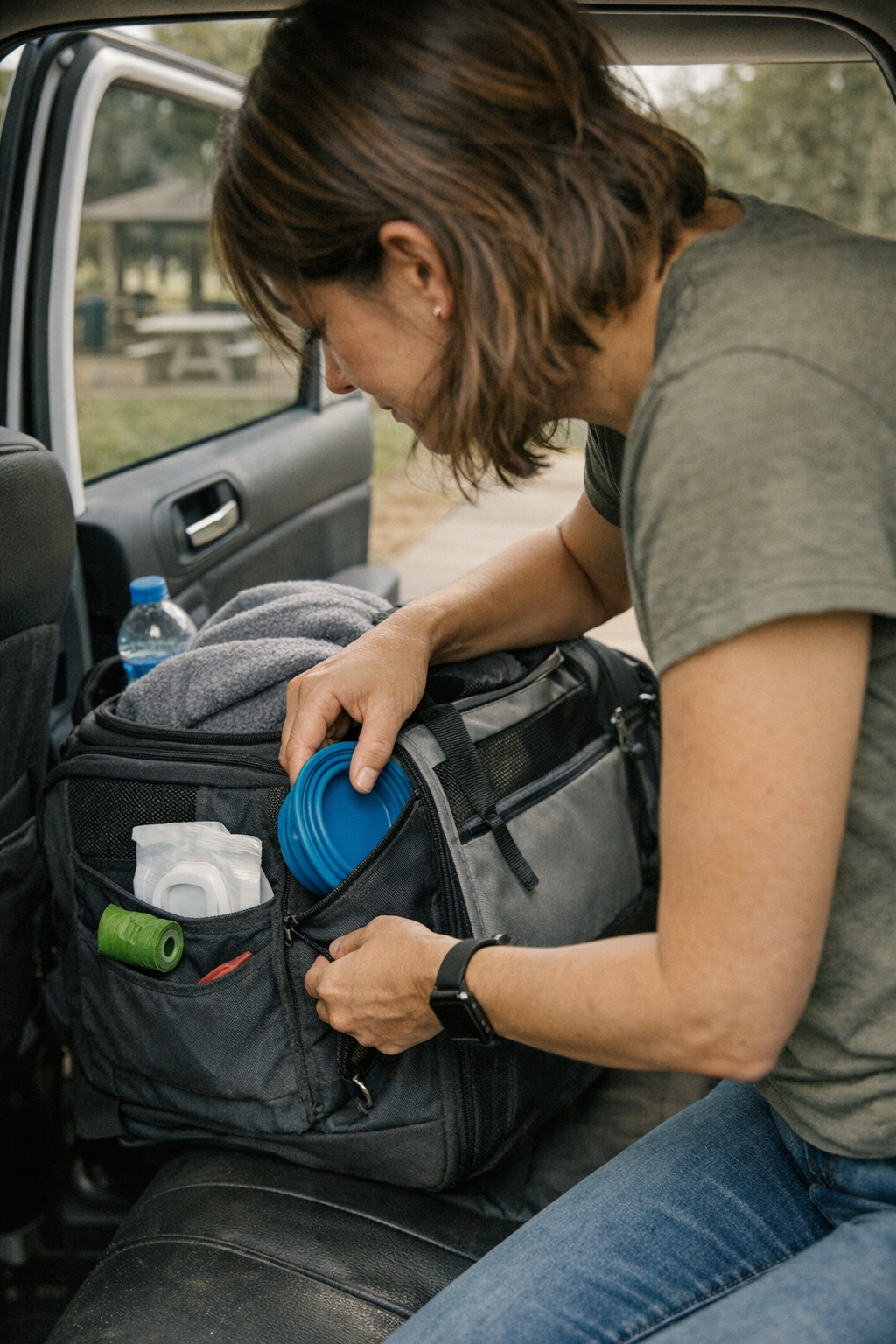
The common letdown: you load up a pet travel bag or carrier that seems perfectly organized in your entryway—until your third stop, when the real test begins. Out of the car, juggling a leash, you need fast access to wipes or a travel bowl, but now they’re buried below towels or wedged behind your dog’s squeaky toys. Supplies aren’t missing; the setup itself is working against you every time you reach in under pressure. What looked efficient at home becomes a tangle of blocked pockets, delayed cleanup, and slow restarts that kill momentum right when your pet needs calmest handling. The friction isn’t the gear; it’s the structure—and it fills your trip with small but cumulative interruptions PawGoTravel was built to outmaneuver.
What Slows You Down: Reaching, Fumbling, and Repacking
Pet owners know the pattern: you stop for a break, try to grab waste bags, but end up rooting past towels and half-zipped snacks while your pet twists or tugs at the leash. The wipes you thought were handy? Now beneath a shifting pile, or shoved behind a folded mat. Clean-up blends with comfort—they migrate or mix, so repacking just sends must-have items deeper and resets nothing. Each stop, what started organized slides closer to a slow-motion puzzle. The more you try to speed up—one-handed, eyes on your pet—the more the structure works against you.
No single moment is a crisis. But add up the wrong zippers, two-handed digging, or accidental dump of the leash to the bag’s bottom—and your “quick stop” leaves both you and your pet agitated. Even a couple missed seconds at each break stretch a trip into a string of recoveries, where you’re reshuffling gear instead of moving forward.
Order vs. Usability: Where Looks Deceive
Segmented travel bags and layered carriers look “ready”—pet snacks, cleanup gear, jacket, all in assigned spots. This feels impressive after packing, but most systems surrender to real travel conditions:
- Wipes hidden under bottles: you’re forced to unload during a mess, growing tension with every misplaced reach.
- Leash buried deep: actual retrieval means half-emptying a compartment, not a clean handoff.
- Bowl behind the blanket: every thirst stop stalls, requiring an unpacking mini-event.
Each delay chips away at calm travel flow. A bag that’s “ready” at the start slowly delivers more fumbles and fatigue—revealing the disconnect between static organization and repeated use. Organizational pride fades when every stop repeats the same small fight with your own travel kit.
Real Scenes: Ordinary Stops, Repeated Interruptions
Picture a hotel lobby: your pet alert, lobby noise rising, a bag you counted on delivering a leash that’s now blocked by a harness and half-spilled treats. It’s not just slower; it shoves you into awkward repacking, one eye on your pet, one hand on zippers. At a highway rest stop, a spilled snack creates a scramble—blankets, not wipes, surface first. The wipes? Slid out of reach again, leaving hands searching and patience wearing thin.
Now swap that with a setup that works like this: collapsible bowl positioned in an exterior pocket, waste bags fixed at the outer edge, wipes within a thumb’s reach from the side. No gear shuffle, no hesitation. You supply water or leashing in seconds, cut through to cleanup, and your pet stays settled—because the pause is as quick as you need. The difference isn’t in appearance, but in how many accidental hold-ups you sidestep at every movement.
One Small Change: Moving High-Frequency Items Outward
The small, real fix: migrate wipes, bowls, backup leashes from zipped centers to exterior side pockets or seat-edge organizers. Suddenly, the reach drops from hands-full awkwardness to a near-automatic grab. Repeat stops get smoother not because you packed more but because you now rarely have to fight the bag at all.
The effect isn’t a dramatic “transformation”—just interruptions slipping away. You pull a wipe without stopping, hand water calmly, leash up before the dog gets overexcited. Travel becomes less about pausing for your bag and more about keeping your pet moving and soothed. Even if the system doesn’t look “interior-decorator neat,” it finally tracks with your stop-and-go reality—helping you recover flow instead of draining it each round.
Hidden Friction: How Organized Setups Still Create Slowdowns
Even highly organized bags break down in the field when owner and pet gear blend: that means keys, treats, or waste bags overlap so one tangle starts another. The biggest repeat mistake is packing comfort items—blankets or chews—over or with essentials, so a single grab triggers a full reshuffle. The neat solution, under motion, becomes a source of low-level stress and lost time.
Over-segmentation isn’t a bonus, either. Too many pockets force you to mentally map where each piece is—or worse, check multiple doors, finding nothing first try. It’s not overload—it’s just an artificial sense of readiness that doesn’t hold up when the clock is ticking and your pet needs you to keep momentum.
Shaping a Setup That Feels Reliable During Real Travel
The best pet travel arrangement isn’t about picture-perfect packing—it’s about repeated, seamless reach for just-used items with zero lag or confusion, despite how many stops you make. How does that happen?
- High-use supplies immediately at hand: Outer pockets, edge slots, or snap closures. No multi-zipper detour.
- Separate cleanup and comfort zones: No chew or blanket between you and crisis wipes—ever.
- Owner and pet items never mixed: You know where your keys live; treats and leashes don’t invade.
- Tested for restart: Structure survives several refits without slowdowns. Packing once isn’t enough—the system must recover itself between moves, not degrade.
If you’ve tested your own structure and still hit the same block at every stop, the next win isn’t just a neater look—it’s the certainty you’ll grab what you need, when you need it, at any routine interruption. Fewer fumbles, calmer transitions, less wasted motion: that’s travel flow designed not for first impressions, but for the way repeated real use always exposes weak points.
Find more practical travel setups at PawGoTravel.