
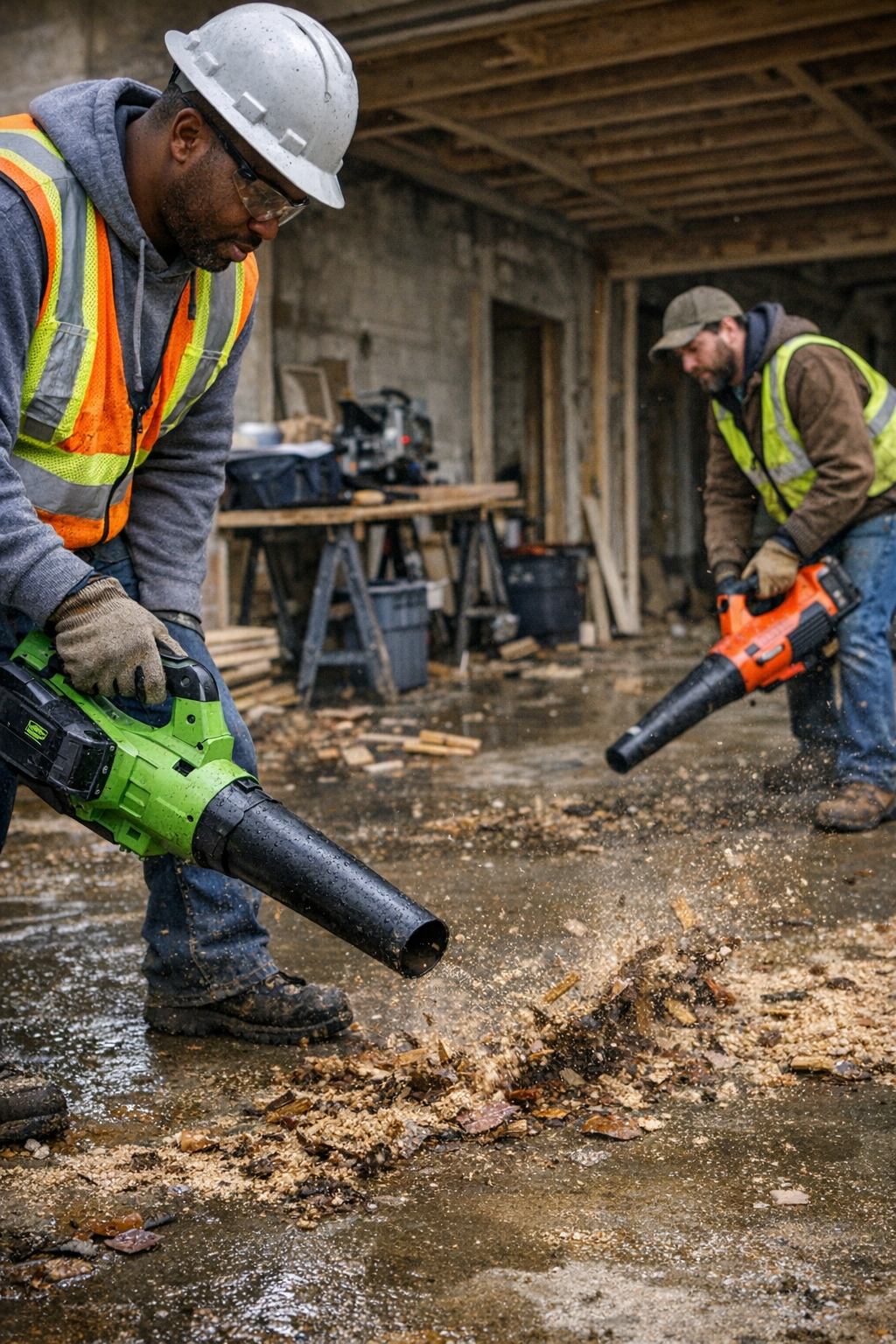
If you’ve ever tried to clear out stubborn, damp debris from a cluttered garage or jobsite—long past quitting time, knees in the grit—you know this: on real jobs, battery blowers separate themselves only under pressure. The slick numbers on each box might be similar, but it’s the way a pack holds up in the grind, not on a spotless showroom floor, that makes or breaks your day. When cleanup isn’t just another chore but your last barrier to finally heading home, every dip in power, every scramble for a backup battery, turns into lost time you’ll never get back.
What Specs Get Wrong
It’s tempting to grab the blower boasting the highest voltages or biggest amp-hours. Who wouldn’t? But those easy-to-compare specs lose their meaning the first time you force sawdust out from under heavy tool benches or try to blast wet leaves glued to concrete. Set two blowers side by side—numbers matching, reputation solid—and you’ll still see one start faltering when dirt piles up. Pressure drops, the motor tone changes, and suddenly you’re stuck weighing whether to gut it out or start the awkward shuffle of battery swaps. If you even remembered to charge the backup after yesterday’s job, that is.
Where Weak Batteries Show Their True Colors
The top layer of dust on an indoor floor—any blower can breeze through that. But once you’re pushing into corners choked with dense debris, or wrestling with wood shavings packed tight by a rainy morning? That’s when batteries that seemed equal start peeling apart. Lesser packs lose torque fast. Airflow sags unexpectedly. Handles vibrate as the tool strains, leaving behind ragged debris trails you’ll need to hit again. By contrast, a strong, steady battery keeps your pace—not just at the start, but every pass, even when the mess gets real. Instead of fighting the tool, you stay focused on clearing what matters.
Jobsite Reality: The Breakdown Begins in the Details
Picture this: remodeling midweek after a storm, with muddy sawdust pressed flat along the walls. You send out two blowers. Both look fine, but by the third stretch, one chokes out—a taunting blink from the battery light. Now you’re detangling battery packs, grabbing half-charged spares, trying to remember which bits of floor you’ve already done. Meanwhile, work rhythm collapses. Missed corners stack up, tools go missing under shavings, and by the time you finish, a fast end-of-day sweep has ballooned into an extra half hour lost. It doesn’t take many days like this before you notice how much those pauses and misfires drain away, both time and patience.
The Value of Power That Doesn’t Fade
Switch to a battery built to hold at least 80% power through heavy runs—say, half an hour or more—and the change is immediate. You make each pass without second-guessing whether the juice will last. No sluggish dropoff, no mad hunt for an extension cord, no hesitating at the trigger just to ration output. Suddenly, end-of-day cleanups run as expected: not perfect, but predictable. You finish the run, not wishing you’d brought a third battery just in case, but knowing the corners you cleaned will stay cleared until the next job rolls around.
Recognizing Battery Fade—And the Price It Extracts
If your blower’s force starts dwindling—if sound, pressure, or vibration shift before you’ve managed a real dent in the mess—that’s more than a nuisance. Uneven power flow is a red flag for real-world inefficiency. Anyone who’s drilled lag screws into dense studs, run a sander longer than planned, or cut through knotty framing knows this feeling: tools seem identical until they’re pushed. Productivity rises or falls not on big claims, but on quiet, steady output under strain.
The Everyday Variables That Wreck Run-Time
Factors the product packaging won’t warn you about: early-morning cold, a jobsite under shade, or Friday’s leftover rain soaking everything you meant to clear. Suddenly your 25-minute battery pack limps through only 18, if that. Older packs fade even quicker, especially in low temps. Real-world performance can shift not by “up to” percentages but by full tool cycles—meaning you’re cutting tasks or switching tools mid-job just to get through cleanup. You won’t find this number on the box: you’ll spot it when your team’s rhythm falls apart on the fourth battery change before noon.
Equal Specs, Not Equal Results
Don’t buy the illusion that “identical” means identical. Two 18V, 5Ah batteries—even from the same brand—can deliver totally different days depending on chemistry, cell matching, and how well they manage heat when pushed. By the end of a long cut, or a slow grind through damp sawdust, one battery will still be running at near-full tilt; the other will leave you scrambling for a charger while the jobsite gets messier. It’s these internal differences, invisible at retail, that separate tools you trust from tools that throw off your whole pace.
Workflow Lives or Dies on Run Consistency
Jobsite frustration rarely comes from a single big letdown. It’s the steady drip of pausing for underpowered batteries, circling back to re-blow edges, or having to fetch a corded backup in the middle of a rhythm. If a battery’s output stumbles halfway through, you lose not just minutes but momentum and mental focus—sometimes the most difficult thing to recover after a long shift.
Reliable runtime is more than a convenience—it’s a real skill multiplier in shop routines and daily sweeps. Steady, powerful output lets you stay on task, finish right, and walk off without worrying about tomorrow’s backlog of patches and redo passes. Every time a battery holds its strength, your body gets a break from awkward, repeated effort. The buildup of little wins becomes the real performance edge.
Put Your Batteries Through the Tough Stuff
Don’t trust a label or demo video. Try this: whenever you get a new battery or tool, throw it straight at the hard work. Take on a patch of stuck leaves after rain, or clear a mix of sawdust and scraps under a table saw. Watch for not just the initial power surge, but how long force and control stay consistent deep into the job. Those that start sagging early or struggle with heavier resistance aren’t the ones that’ll help you when deadlines mount. Real efficiency is built from tools that run hard and stay steady, not tools that only look good fresh off the charger.
For real-world gear built for daily grind—not just for glossy specs—visit Gumboll.