
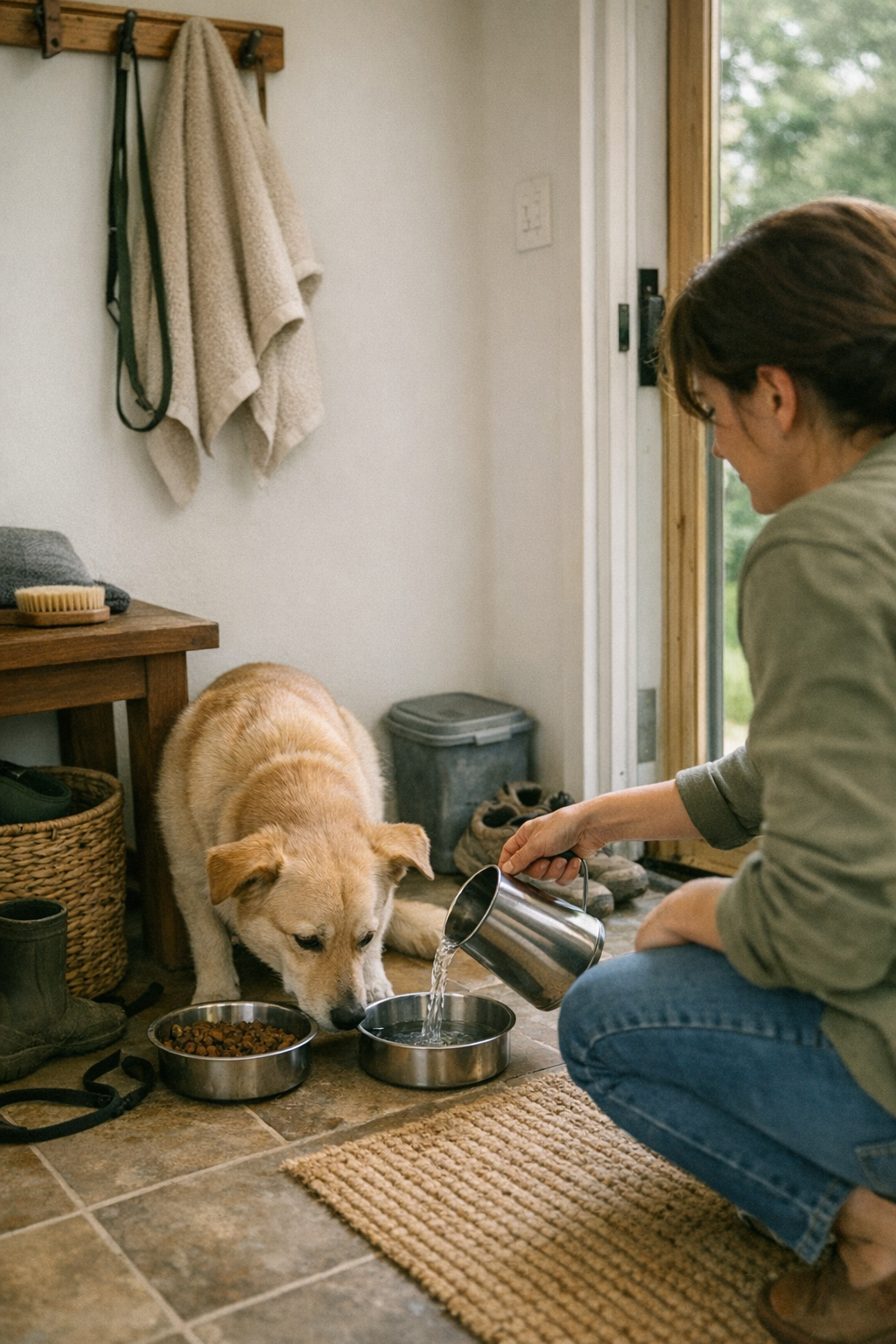
How Small Disruptions Turn Daily Pet Care into a Chore
Daily pet care routines break down fast when basic tools drift out of place. Reaching for a dog bowl at feeding time and finding only an empty spot—or grabbing for a towel after a muddy walk and realizing it got left in the laundry—costs momentum you don’t get back. Each missing piece turns an ordinary step into a pause, forcing search, reshuffling, or last-minute substitution. The result isn’t just one lost minute; it’s a routine that takes more effort, with small annoyances stacking up until daily care feels like a string of minor setbacks rather than a smooth, ordinary reset. Even when a space looks tidy, these gaps keep calm out of reach.
Unlike an obvious mess that motivates a full clean, small disruptions stay hidden and keep repeating. You tidy the kitchen or corral dog gear with the right intent, but if the water bowl gets left to air-dry on the counter, or if wipes are buried behind other supplies, you’re running an obstacle course every time. The friction isn’t just about one missing item. It’s the way routines stretch, resetting in slow motion as you track down basics, repeat trips, and get interrupted by your own system.
Everyday Scenarios Where Pet Care Slows Down
Most routine drag shows up during basic transitions. After a walk, with leash and keys in one hand and your dog halfway through the door, the search for a towel adds visible stress. Do you drop everything and go looking, or let muddy paws trail across the floor? The same scramble happens during feeding if the bowl’s not back in its slot—meal prep stalls, and the easy automatic loop turns into a stop-and-start shuffle. The intention might be order, but if your storage habit means clean wipes are always in the third drawer or a grooming brush is blocked by yesterday’s shoes, “organized” isn’t much help.
Even small layout flaws repeat their cost. A wipe packet just out of arm’s reach, a brush stored for looks instead of reach, or hooks so high you have to stretch every evening—these all slow you down, forcing small workarounds you start to dread. Over time, the daily reset turns from a two-minute check to a five-minute wander, with friction hiding inside ordinary moments.
Hidden Delays Add Up Over the Week
One lost towel or bowl feels forgettable—until you realize the same snag returns nearly every day. After walks, late-night water top-offs, or a quick brush before guests, the same gaps delay you. Each time, you make a mental “fix it later” note, but the fix rarely sticks if the system doesn’t change. As days stack up, these little inefficiencies grow, weighing down the routine you meant to keep simple and quick.
Shared spaces make drift worse. Pet gear wanders between the entryway, kitchen, and living room as everyone moves things for convenience, but no one locks in a true anchor point. Soon, it looks tidy but functions slow: a towel always needing rescue, a bowl never on standby, a grooming tool that ends up everywhere except where it’s needed first.
Why Tidy Doesn’t Always Mean Efficient
A neat space can hide a cumbersome routine. Folded towels inside a closet look orderly but stall every walk with an extra trip. Bowls stacked by the sink look clean but force a detour before every meal if not proactively returned. What seems like calm is often just delay in disguise. In pet care setups, a system that “looks good” but breaks at the core action—the grab, the refill, the wipe—is a slow routine in disguise.
Making Routines Resilient with Simple Resets
The strongest setups let action flow, not just the look of order. Anchoring a towel by the door, not tucked away, means muddy paw problems get solved instantly and don’t trail through the house. A bowl returned to its counter spot right after washing means meal prep never starts with an empty search. Essential tools earn a daily-use place—in reach, at transition points. Even a basic reset at night, checking that towel, bowl, and wipes are realigned for tomorrow, prevents most friction from repeating.
A five-minute reset at logical pauses—after the last walk or before bed—closes the loop, so the following return feels ready, not chaotic. That’s the difference between pet care feeling manageable and pet care feeling like another round of catch-up.
Consistent Placement = Consistent Calm
Consistency, not just tidiness, is what lifts hidden pressure from daily care. When a hook always has its towel, when basics always return to anchor points—not just wherever there’s a gap—interruptions dissolve. Over the week, steady return wins out over appearances. Real calm shows up not when the mess is hidden from sight, but when a routine delivers without last-minute improvisation or unintended scavenger hunts.
In everyday pet care, it’s the steady rhythm—not the one-off deep clean—that makes homes easier to live in. Each time a basic reset lands a tool or bowl back in place, it cancels tomorrow’s friction and keeps the system working. The payoff isn’t just control, but a lighter, more workable daily flow that doesn’t fall apart when life runs busy.
Learn more about simplifying pet care at CalmPetSupply.