
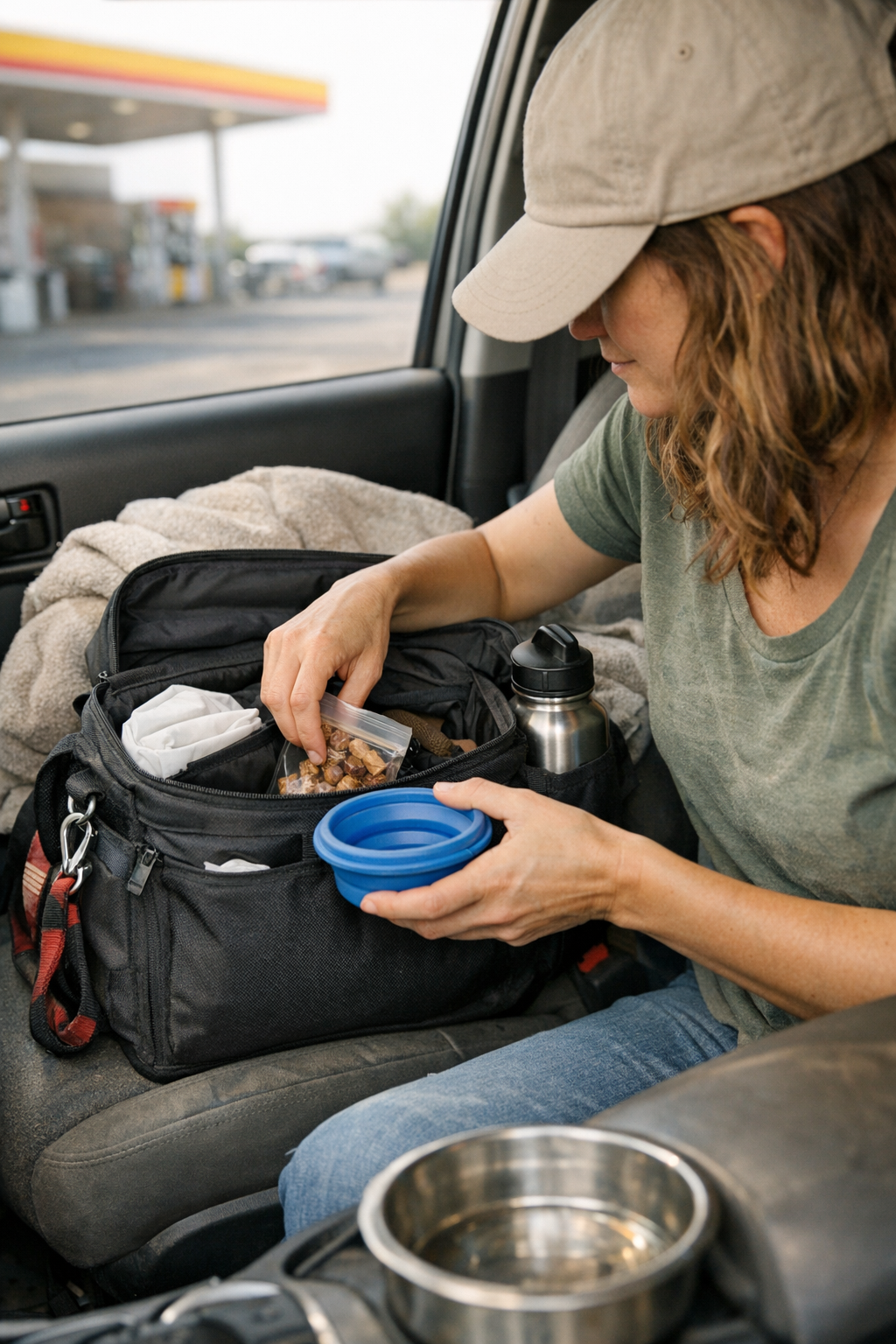
Your pet travel bag may look prepared when you leave, but the first real stop usually exposes the flaws. In the driveway, everything seems “set”: leash coiled, treats zipped, wipes and water bowl wedged into assigned spots. Fast forward to the first parking lot break—suddenly, the leash is snagged under a shifted water bottle, the treats are buried beneath wipes you just used, and you’re fumbling through mesh pockets with one hand while steadying your pet with the other. What started out as “organized” quickly turns into a routine of digging, untangling, and reshuffling. If your pet setup makes you hunt or disrupt the bag after every minor stop, those frictions keep stacking up, dragging down even short trips and making quick restarts more stressful on both you and your pet. This is the split between what looks tidy and what actually holds up—an everyday fail point that signals why structure matters more than a clean-zip start.
Why “Neat and Ready” Isn’t Always Enough
A travel bag that looks sorted is rarely ready for repeated use. After the first or second stop, the gaps in your system surface: a leash hidden under bedding, a half-collapsed bowl locked in by a seat, wipes shoved deeper after a rushed cleanup. A setup that takes even ten extra seconds to access adds up fast—each interruption throws off your flow, your focus, and your pet’s calm. By the third shuffle, the “organized” feeling is gone, replaced by a low-level annoyance that leaves both hands busier than they should be.
Packed doesn’t mean functional. Neat cubes, zipped pouches, and matched sets can stall when you actually need a single piece in a hurry. Under pressure, the flaws in organization become obvious—especially when each stop looks simple, but the restart routine keeps growing messier with every round.
Real Friction: Where the Setup Stumbles
Access Delays Creep In
The first stop tests your plan. Maybe you reach the treats or wipes with no effort. But by the next use, small changes derail the system: the leash falls deeper into a bag corner, the wipes slide out of view, essentials are pinched between blankets or crowded by your own items. Good organization breaks down not with dramatic accidents, but with repeat access—turning brief pauses into knotted searches and awkward, one-handed contortions while your pet circles and waits.
Blocked Quick Access in Real Use
Consider that water bowl you stashed in a side mesh pocket—fine at home, but now wedged against the center console, impossible to reach without pulling half the bag out of its place. Or treats intended for quick rewards buried two compartments deep, so every stop means one hand rummaging while the other holds a leash. It’s not mess, but misplacement—pockets and sections that seem clever until repeated shuffling turns the bag into a slow-motion puzzle.
The Hidden Cost of Overlapping Items
Most “sorted” setups hide a problem: owner and pet items overlap, forcing constant reshuffling. A leash sits under wipes, treats migrate behind your wallet, your phone sits next to the waste bags. Every time you open the bag, you’re greeted by a previous move, now out of place. Rather than one-time inconvenience, it’s a cycle—repacking the same section after every routine action. What was “in its place” now feels like a restless tray, always being rearranged instead of ready to move.
Compounded Strain Across Multiple Stops
The pain point grows with each restart. You plan for a quick leash clip and wipe grab—then find the leash migrated under your jacket, the treats are deep in a pouch, and you’re juggling bag, bowl, and impatient pet while trying not to spill your own stuff. Rarely is the strain visible from outside; you just feel focus draining and the routine stretching, with your pet reading every second of delay. That’s when a “neat” bag finally unravels: it’s not the storage that breaks down, but the ability to keep your hands moving smoothly from stop to restart, again and again.
By stop five, you know: nice arrangement didn’t make up for slow access. The moment requires more work, more handling, more micro-adjustments. The bag is not a mess, but you’re still fighting it—and so is your pet, who now reacts to every extra step you didn’t expect.
What Actually Fixes the Routine
The difference isn’t better packing—it’s setup that keeps essentials isolated and instantly reachable, even on repeat. Moving wipes and treats out of mesh pockets and into a dedicated, top-access compartment ends the multi-step dig. Swapping hidden leash rings for a genuine exterior loop lets you grab and attach or detach on the fly, without shifting the whole carrier. The trick: single-move grab zones for whatever you touch most, structured outside the main jam of shared space. Clean-up, comfort, and control each get their own spot—so you don’t have to hunt.
This is not about achieving a perfect look, but about a system that stays fast and stable by the fourth stop as well as the first. It’s a small but real reduction in handling time: less grasping, fewer resets, and a routine that favors one-step movement, not repeated fidgeting. What holds up isn’t tidiness, but return-to-motion speed—even when the car is packed, your pet is restless, or the pit stop cuts into your planned timing.
Seeing the Difference: Real-World Examples
Scenario: Pulling Over for a Fast Cleanup
You hear the scrape of a tipped water bowl. Wipes are somewhere—are they under the blanket or next to the carrier wall? If their pouch is hidden, you’re halfway through the bag, waving your pet aside and dragging out blankets, losing the window for a calm reset. But with a single-exposure pocket right up top, the wipes are out in seconds, mess is handled, and you’re back in motion before your dog gets jumpy or your own patience wears thin.
Scenario: Repeated Reach for the Same Item
Each time you stop to reward your dog, treats are harder to reach. First time, easy grab. By stop three, they’re blocked by a sliding bowl or pressed under owner gear. Constant rummaging distracts you and interrupts the reward. Shift those treats forward—into a solo grab-and-go section instead of a crowded mesh or combo area—and the rhythm changes. You get to reward, reset, and move without friction, and your dog quickly recognizes new stops as reliable, not uncertain.
Small Adjustments, Big Returns Over Time
The setups that work aren’t just tidy—they’re built for constant, friction-free repetition. When quick-use items are on their own turf and flows match real routines (open, grab, clean, restart), even minor stops feel controlled. You minimize the overlap between your things and your pet’s—so there’s less backtracking and fewer mistakes every round. The change isn’t in a visual upgrade, but in movement: fewer hands lost to sorting, less pet restlessness, and less second-guessing at every stop.
By your tenth trip, a setup designed for repeat reach and one-handed control beats appearance every time—especially when each stop can either grind or glide, depending on what your bag actually lets you do. Mess can be managed anywhere; access and flow decide if travel is really easier on you and your animal.
Find travel setups that handle real movement at PawGoTravel.