
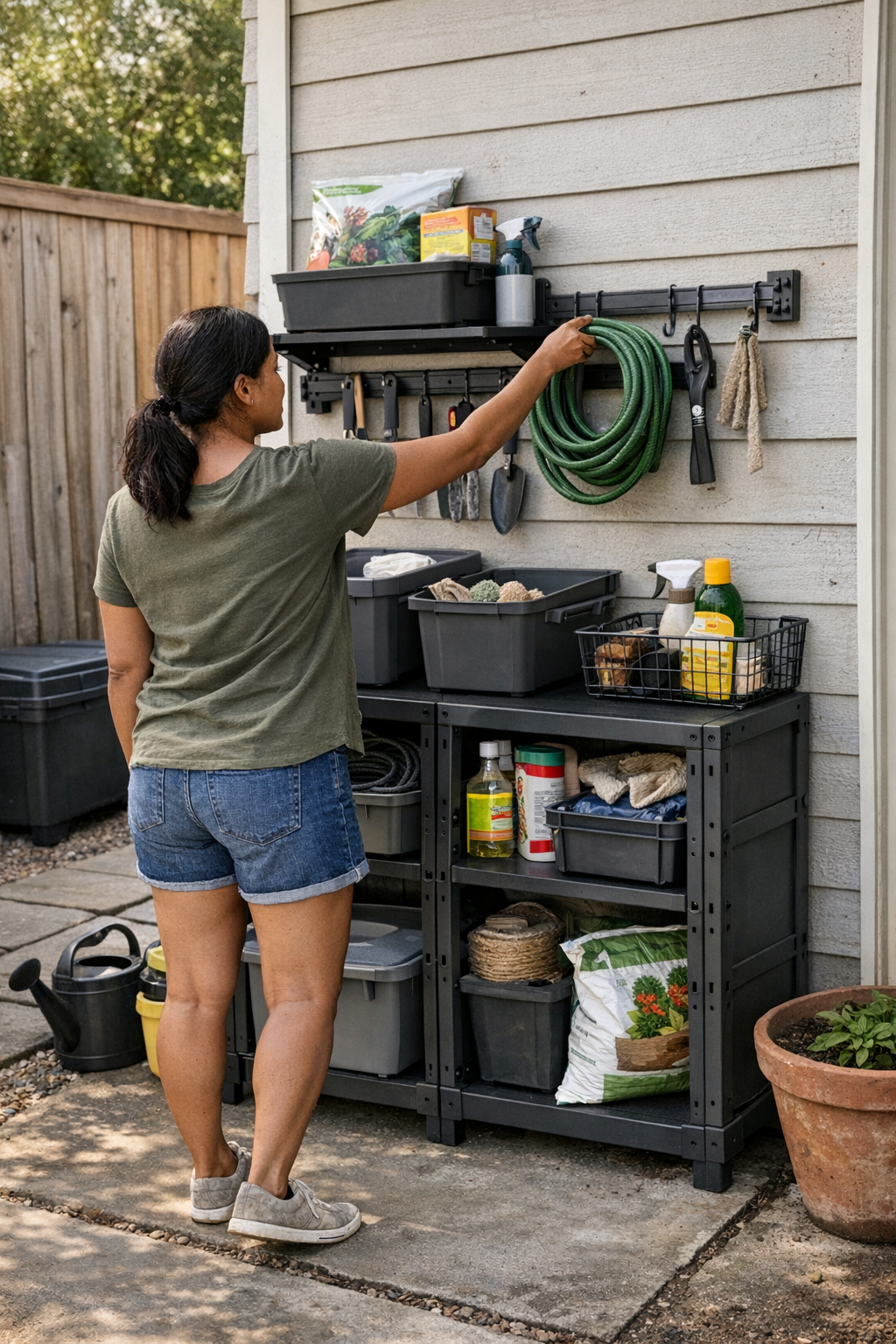
In a cramped yard or along a busy patio edge, even the smallest setup flaw gets loud—fast. Walk any side-yard, narrow utility strip, or multi-use corner and you’ll spot it: storage sits just out of reach, a handful of steps too far from where things actually happen. And that gap—barely noticeable at first—repeats on every reset. A so-called “organized” space quietly turns into a pile zone: tools dumped beside bins, garden bags stacked where people cut through, one floor patch that fills up no matter how many times you clear it. By the end of the first week, the storage isn’t helping the flow—it’s quietly making routine work harder.
Small Setup Choices, Persistent Friction
The first day, everything looks contained. Maybe you placed a deck box along the fence or a couple of modular cubes by the back gate. Technically, the gear fits. But after a few rounds of real use—a gardening session, hauling out bikes, prepping for guests—you notice the cracks.
Picture the scene: you’re carrying fertilizer to the shed, someone shoves past with a wheelbarrow, the kids are hunting for gloves before soccer practice. The box you set up is two feet off the main path, so tools land on its lid, not inside. “Just now” becomes later. Before long, the lid’s blocked, spillover piles up, and every return means juggling: move a rake to reach the pads, slide a cooler aside to shut the gate, unjam a hose because someone wedged a broom behind it last time.
Where Floor Storage Eats Space—And Movement
Floor storage claims more of your yard than you think—and eats it at the worst times. A low bin or storage bench tucked along the patio edge might feel out of the way, but when a project’s on or guests show up, that few inches stolen from the walkway becomes the reason for jams. Shuffling items to open the lid, double-stacking stuff that blocks the tools you actually need, making extra trips because the return flow never lines up—this isn’t rare. It’s the everyday reality when floor space fills before the workday ends. One “overflow” corner always seems to reappear, hosting half-used bags or lost toys you just relocated.
Distance Defeats the Best Setup—Every Time
The gap between “it fits” and “it works” becomes visible over a few daily resets. An outdoor cupboard at the yard’s edge makes sense for overflow—but once it needs an extra detour, stuff gets left by the door. It takes one awkward armload or a muddy afternoon before return trips start getting skipped. Layer by layer, the perimeter fills up: buckets left near the step, hedge clippers on the chair, hoses coiled one fence section short of where they actually belong. The official storage stays technically empty while clutter creeps back into the main walkways.
Turning the Setup Around—Matching Storage to Movement
Everything shifts when storage catches you mid-flow instead of waiting for you at the fringe. Install a low wall rack just inside the most-used door, or a slim hook system at the fence opening. Now, returning gloves or hanging up a hand trowel takes zero thought—you pass, you hang, you go. Any overflow is instantly visible, not buried in a box or behind the swing. Cleanup gets stitched into movement, so “I’ll get to it later” happens by default, not by exception. Reset stops being a chore—it becomes automatic, even if your hands are full.
This isn’t theory. Try mounting a bar or peg strip at standing height, right where your routine turns from one area into the next. Suddenly, the spot that used to collect pileups becomes a checkpoint—gear gets returned before you lose momentum. Spaces with regular traffic (kids, guests, garden equipment) stay open because the buffer between “used” and “stored” just shrank to seconds, not minutes. Less shuffling, less time negotiating for elbow room, more clarity about what belongs where.
Modular Storage: Flexible, or Just More to Move?
It’s easy to believe a reconfigurable system will solve everything. But in tight or shared spots, flexibility without matching the real flow just means rearranging clutter again and again. You set up shelves that slide together, only to discover that the spot for buckets is still a few steps off route, and the stuff you use most ends up on the floor. The real test isn’t day one—it’s week three, when you’re still moving bins to reach a rake, or wishing you’d put the rack right by the door instead of near the back fence.
Adjustment is the rule, not the exception. Before adding another piece, try swapping positions seasonally. Move a rack into the main pass-through for a week. Notice if things pile less and resets stay quick. The sweet spot is always where your hands pause naturally—where return flow is met, not forced. Forget maximizing volume or counting lids: make sure storage captures motion where it actually happens if you want routine friction to drop.
Where Setup Breaks Down—And Where It Works
Side-yard shortcuts: Every narrow access strip has a trap: the storage bin parked just beyond arm’s reach becomes a backlog point. Full hands make for great intentions—until the extra steps add up. “Temporary” becomes standard. Loops of hoses and garden shoes collect at the halfway mark. Eventually, the main walkway turns into a slalom with tools blocking the route and nothing where it should return.
Patio-edge practicality: Mount storage beside the back door, and cushions or grilling tongs fall easily into place on the way inside. But if the area clogs with a swing or spare cart, even smart wall storage stops working—people start dropping items on benches again. When setup matches real movement instead of just filling blank space, you get clear floor, cleaner returns, and less end-of-day sorting.
Dead zones: perpetual overflow: Not every nook needs filling. Watch which patch attracts castoffs week after week. If three categories (spare shoes, gloves, small tools) always land there, don’t drag them across the yard—set up a simple rack or hook where the overflow happens. Stop pretending that more bins will fix a zone that needs a smarter intercept, not more volume.
Everyday Fixes, Real Routine Differences
The win isn’t downsizing gear. It’s setting up the space so you aren’t moving things twice just to put them away. Storage within the lived flow—never more than two or three steps off your real path—unlocks time you used to spend retracing, reorganizing, or clearing way for someone else. Instead of collecting new clutter, the area returns to clear with each pass, not just at the weekend reset.
That’s the shift most setups miss: the invisible friction between “looks structured” and “actually keeps up with life.” When the whole family or crew moves through a changing yard, storage needs to meet them mid-motion—not wait for the perfect cleanup moment. The right layout adapts as living patterns shift, keeping frustration low and the routine smooth—even as the season, activity, or users change in real time.
Find practical outdoor storage tailored for real movement and real spaces at TidyYard.