
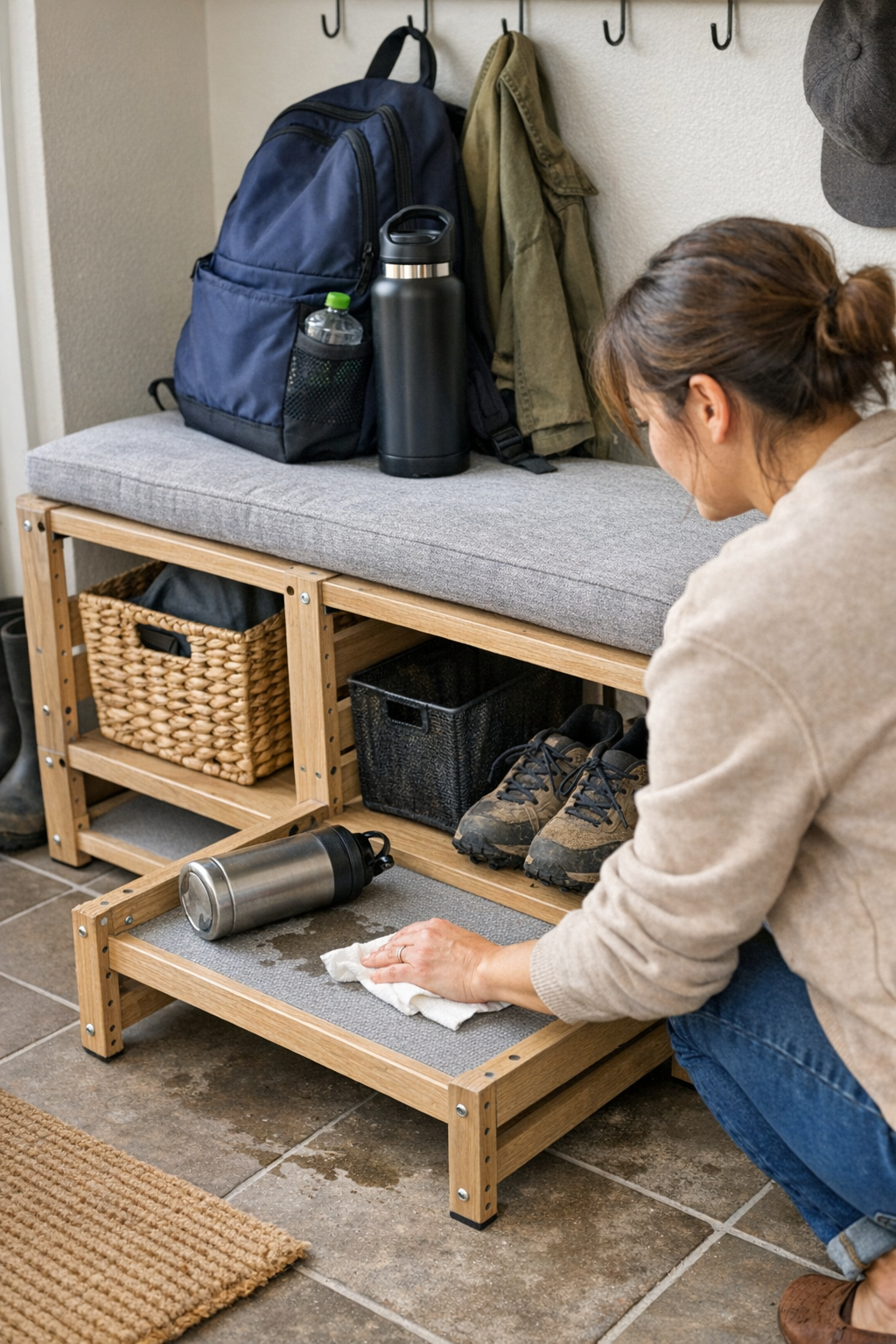
No entryway setup stays manageable for long—especially when real life rushes through it. The baskets may sit straight and the bench may look clear after a weekend reset, but the order slips the moment someone crosses the threshold with rain-soaked shoes, a runaway water bottle, or an armful of gear. One muddy drop or missed spill is enough to shift your storage from “reset-ready” to “clogged and stained”—with dirt pressed into paint, seams swelling under leaks, and sticky patches you dread tackling. The illusion of control fades fast. If your entry zone isn’t built to withstand daily friction, every cleanup slows down, and each pass-through leaves the space less usable the next time.
Mistakes That Don’t Show Up Until You’re Rushing Out the Door
Most so-called smart storage plans seem fine at first—but they rarely keep up with real, repeated use. The difference becomes obvious only after routines collide day after day. A bench that once fit three pairs of shoes is now ringed by double that number—mud trailing off the soles, extra pairs crowding the path. Baskets underneath fill with umbrellas and backpacks, but one slow leak from a forgotten bottle stains the bottom and starts a chain of delayed resets. Soon, what was meant to speed your mornings just blocks the route out. Order that looked “set” begins to resist maintenance—reset times climb, and the urge to ignore messes grows stronger.
Where Shelf Liners Change the Game
The real test of an entryway isn’t how neat it looks right after a reset—it’s how quickly you can undo the mess when a spill or splash strikes. Shelf liners draw a hard line between daily mess and permanent damage, turning a messy drop zone into a manageable, wipe-and-go surface. When someone drops a dripping raincoat, or a yogurt tube leaks inside a bag, a liner means a fast cleanup—no basket-pulling, no scrubbing. The threat of water stains creeping under storage or dirt biting into painted wood simply disappears.
Skip liners, and every reset multiplies in effort. Stains get worked into seams, sticky zones demand a full scrub, and “just a wipe” turns into a full job. You start letting cleanup slide. Over time, a small mess grows into a larger, more permanent obstacle—and even a quick reset feels out of reach.
Real-Life Reset: A Scene from the Side Entry Zone
The reality of any in-use entry is pressure at the busiest moments—bags dropped on the seat, shoes overflowing onto the floor, and a bottle tumbling until its cap pops free. At that critical moment, your storage either holds up or becomes a bottleneck.
- With liners: You notice the spill, grab a towel, do one pass, done—no checking for water pooled under baskets or damage at the seams.
- Without liners: Moisture seeps into corners, sticky patches turn into stubborn stains, and resets drag out as you dig out baskets, hoping the swelling hasn’t already started.
The real friction isn’t the mess itself—it’s the added reset burden that compounds. Eventually, anyone in a hurry sidesteps the whole area, and the original flow of bags, shoes, and people is blocked at the threshold. The supposed “system” quietly shifts from help to hassle.
How Liners Shorten Cleanup and Save the Setup
The difference a liner makes is lived, not imagined—especially during the peak moments after storms or on heavy-use weeks. Each minute you save on cleanup is a minute the storage actually works under pressure. In direct use, swapping to removable, slightly textured liners cut one family’s muddy shelf reset from ten minutes down to two on a 32” shelf. That payoff matters—not just for neatness, but for reclaiming the entry as a through-zone, not a work zone, even with crowding and back-to-back arrivals.
Instead of dreading the stubborn gray line at the shelf edge, you clean once and move on. Drips and pools no longer set the timer on long-term damage. The real win: you keep up daily, so the mess never builds high enough to reshape routines around it.
Where Liners Help—And Where They Don’t
Liners solve the mess—not the overflow. They defend against mud, salt, and routine leaks, essentially giving your entry shelf an armor against repeat abuse. If your threshold is hit daily with wet boots, open lunch boxes, or sandy gear, liners keep the reset simple and keep the underlying surface ready for another round without a full teardown.
But liners don’t control accumulation or flow. They can’t make kids put boots on racks or stop bags from taking over the bench. System drift—where temporary drops become permanent piles—still happens if the structure doesn’t match your actual use. Liners just keep a small mess from turning into a job you start avoiding.
Tips for a Smoother Threshold Flow
- Pick removable liners: Quick to shake out or swap—even after a season of mud and grit.
- Get texture with restraint: Enough to grip gear but not so much it holds grit beneath surface wipes.
- Cover seams and corners: The first places water creeps and grit eats through paint—skip these and resets get longer, fast.
The Practical Payoff: Reset That Matches Reality
Shelf liners in transition spaces won’t impress guests—they’re there to defend the zone you actually use. The setups that last are always the ones that make resets short, storage accessible, and friction invisible. If you can clear soaked sand, salt, and spilled drinks in seconds—not minutes—the path stays open, routines keep moving, and the “system” stays a tool, not a time sink. The real advantage comes not in show, but in reclaiming the entryway as a true transition space—one you reset easily, so blockages and workarounds never become a permanent feature.
Find practical entryway and threshold storage solutions at Betweenry.