
When towels feel damp or carry a faint sourness straight from storage—regardless of how freshly washed they are—the problem usually isn’t your laundry routine, but how your shelves breathe (or don’t). Cabinets and closed shelving systems trap moisture deep between folds. Behind the neat fronts, air barely circulates. Even a “sorted” stack can turn into a holding pen for residual wetness. Open a cabinet midweek, and what looked calm from the outside hits you with heavy, chilled fabric and an unmistakable hint that something got quietly stale—or worse, infected all your towels at once.
Why Sealed Shelves Stall Freshness
Closed towel cabinets seem to promise order and shield against dust, but friction shows up almost immediately in real use. Stack a new load of towels on top of half-dried ones and shut the door: evaporation grinds to a halt. The next grab, instead of clean-dry comfort, delivers something cold or clinging to yesterday’s humidity. The issue isn’t visible until it’s too late—every towel slowly catches the problem, even if the front row stays crisp, and the stack is never truly reset. On the surface, the area looks contained; underneath, freshness is leaking away with every closed door.
High-use bathrooms magnify every flaw. When towels move through hands all day—roommates grabbing at odd times, new loads stacking over old—airflow drops, and the cabinet turns into a moisture trap. Emptying it and restocking doesn’t erase the pattern: the cycle just reloads stale air into a fresh lineup. Towels that should feel like a reward for keeping order become part of the background clutter, indistinguishable from the ones overdue for laundry.
Ventilated Shelving: Letting Air Do the Work
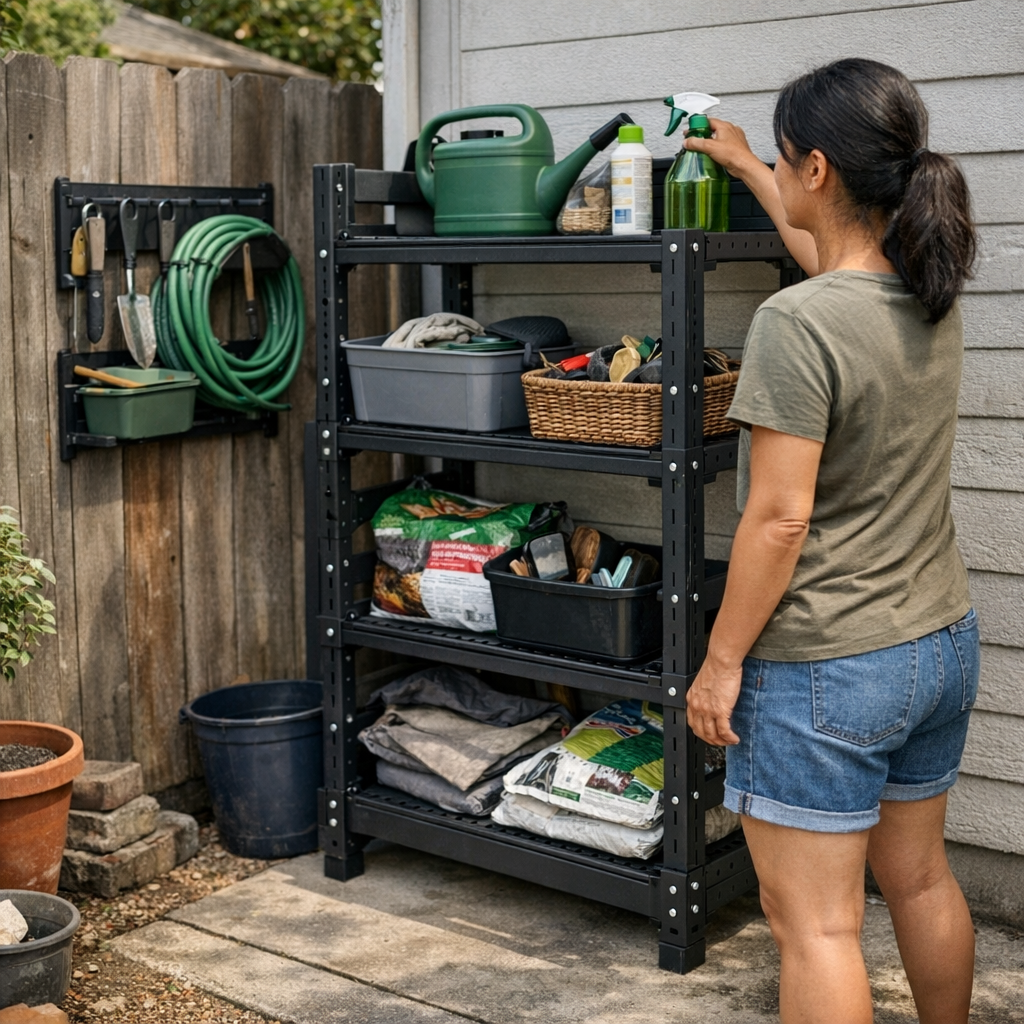
Switch to ventilated towel storage—slatted or open-grid shelving—and the whole room’s rhythm shifts. Air slips between each towel. Moisture has somewhere to escape instead of tunneling deeper into the pile. No, ventilated shelves don’t deliver magazine-perfect rows. Edges end up staggered, stacks are rarely uniform. But within a week, the repeated cost of hidden dampness vanishes: towels dry the right way, odor doesn’t sneak back, and the “will this one be dry?” test all but disappears. The trade is obvious every time—less sculpted visualization on the shelf in exchange for towels that actually perform day after day.
In Daily Practice: Fewer Surprises, Faster Resets
Real use always exposes the weak link. Morning rush: a fresh towel needs to go somewhere, hands reach for what’s visible, and the whole system shifts. Closed cabinets magnify friction—bottom towels never catch up, and each retrieval means digging through layers that still feel yesterday-wet. A ventilated setup changes the reset cycle entirely. Even if you cram two loads into a single week’s rotation, open sides and grid undersides strip out residual dampness between uses. Grabbing or returning a towel becomes a one-move routine rather than a cautious sift or a hunt for the “least iffy” option. No more double-washing just to kill mystery odors.
The Subtle Friction of “Looks Right, Feels Wrong”
There’s a disconnect when a setup maintains just the appearance of order. Cabinets look zipped-up and serene, but inside you create tiny judgment calls—a quick sniff test, a search for the towel that might actually be dry. The routine starts to tiptoe around the storage, instead of flowing through it. Closed systems conceal their own recurring maintenance: you restack, reorganize, and end up hesitating anyway. That pause before use isn’t style—it’s your routine quietly announcing something’s off. True working order means towels you reach for without thinking, not ones you second-guess every other morning.
Crowded Bathrooms Put Storage Choices to the Test
Shared or compact bathrooms strip the theory away and force real trade-offs. Closed shelves absorb the burden, but their design flaws turn urgent quickly:
- Clashing routines: Multiple users wedge partially used towels into place. One damp towel gets sandwiched, never fully dries, and begins tainting those loaded in after it. The problem compounds behind closed fronts.
- Retrieval friction: Need a towel fast? Closed storage forces you to disturb the stack, fingers sinking past damp layers, floors at risk for a stray drop or two. The retrieval action itself broadcasts what isn’t drying out between cycles.
- Overflow pressure: When laundry slips a day, closed cabinets are magnets for every straggler. Piles compress air out of the zone—what started as “neat” storage becomes a musty backlog, hastening the need for a full cabinet overhaul.
Open-sided, ventilated shelving strips away the guessing. Moisture leaves freely, so even with imperfect laundry timing, stacks recover. The mental load of “which of these is safe?” is gone. Zone boundaries become visible rather than speculative, and resets don’t require unpacking the entire zone after high-traffic days.
Small Storage Tweaks, Not Just Big Changes
Sometimes all it takes is swapping out a single piece. Mesh shelf liners over open grids keep even the smallest washcloths in place without choking airflow. Capping towel stacks at three ensures thick towels actually dry fully—beyond that, you’re back to enabling moisture traps. These micro-adjustments don’t read as upgrades, but daily, they cut down on lost time and unplanned side quests just to find a dry piece of fabric.
What Actually Improves after Switching?
Reset speed accelerates. Ventilated zones stop turning into secret backlogs. The week’s laundry in, old towels out, with no hidden problems festering at the back. Zero ghost odors midweek; zero weekend deep-cleans “just in case” a single missed towel contaminated the lineup. Any towel can be grabbed with confidence—the friction has shifted from invisible to irrelevant.
Space stays in play—not simply filled. Ventilated storage puts use flow above sealed neatness. The improvement doesn’t unfold minutes after restacking, but on the fifth or sixth day when the real clutter test hits. Stack boundaries are fixed by airflow, not by how tightly you can cram a door shut. Repeated use doesn’t break the system; it resets itself with minimal manual effort.
Real-World Reminder: “Good Enough” Usually Isn’t for Long
Perfect cabinet lines might signal completion, but lived-in bathrooms tell the truth. Watch for the small, stubborn signals: a towel pulled and immediately returned, that hesitation to grab low in the pile, the need to reshuffle after a busy day. There’s nearly always a simple airflow fix lurking in the background. Ventilated towel shelves don’t win style points, but over weeks, they erase the waste—less time, fewer “hold your nose” moments, and almost no reason to start over each weekend. Eventually, the towels stay fresh; the space holds its shape; and maintenance actually shrinks instead of piling up with every cycle.
See practical storage solutions for every indoor area at Gridry.