
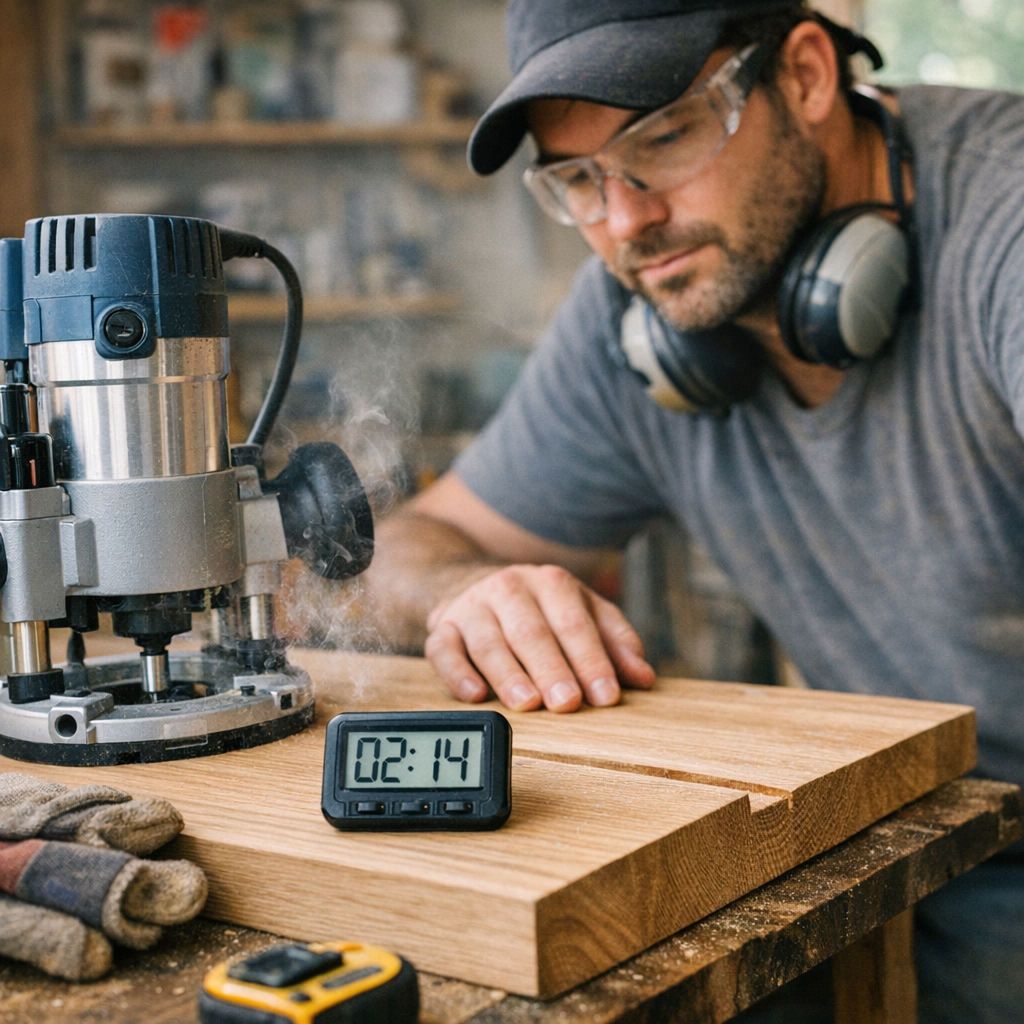
The unspoken threat of overheating router bits: If you’ve ever lined up a dozen hardwood edges for cleanup, you know the moment—router running, everything’s humming, then a thin whiff of burnt wood flips the mood. Your early passes felt crisp, almost easy. But as the stack shrinks, coasting turns into fighting: the motor growls, the cuts drag, and those last few boards each reveal ugly scorched edges and new dings that weren’t there before. This isn’t just about sharpening or shifting technique. It’s heat—slowly, quietly robbing the tool’s bite and turning precision work into salvage.
Heat builds, and workflow breaks down
Anyone making repeated cuts through hardwood gets a front-row seat to the issue. Heat stacks up quickly. You might start at full control, shaving oak or maple edges like they’re butter. But after a couple of grooves, suddenly you’re muscling the router, feeling extra vibration, and chasing a cut that keeps veering off mark. The bit, now hot, loses its edge. Performance sags. And every subsequent board takes a little longer and leaves the bench messier than the last.
When skipping cooldowns snowballs into wasted time
Chasing efficiency by skipping cooldowns seems tempting in the moment. Early warning signs are easy to dismiss—faint burn odor, slightly stiffer push, a telltale haze across the grain. But push further, and it spirals: straight lines pick up ragged edges, scoring and chips spread, dark char marks coat whole runs. You go from needing a light sanding to spending ten or fifteen minutes wrestling with scorched tracks and chipped profiles. All that “saved” time is lost to repairs—and then some.
Invisible friction that creeps into every job
Heat buildup doesn’t just threaten finish quality; it quietly saps your whole workflow. Batch-routing shelves or dado slots? As each pass heats the bit more, not only does the cut suffer—your router’s motor strains and your arms burn out faster countering new resistance. By the time the collet grows warm to the touch, you’re risking both safety and an expensive repair, all in pursuit of getting “just one more” cut before stopping.
Lost momentum, more cleanup—the real financial cost
If you’ve run a production line or just managed a longer project, the math gets grim. Five minutes here blending burn marks, ten minutes there patching blowouts—suddenly, your afternoon is lost to double-work that never made it onto the schedule. There’s no fighting the physics; hot tools only slow everything in the end. Try to power through, and you’ll pay for it later with both time and materials.
Reading the signs: When tools ask for a break
No beeping indicator tells you when a bit’s overheated. It’s all in the feedback: a router that used to glide now pushes back, edges that once felt like glass suddenly turn sticky, clean shavings switch to dust. Catch it early, take a pause, and those telltale marks stay temporary. Ignore it, and you’ll reach the ‘smoke and scorch’ phase—the kind of shop smell that lingers and takes elbow grease to erase.
Shop-built efficiency: The two-minute reset
No fancy accessory needed—just build in a deliberate 2–3 minute rest after every two or three passes. It’s less interruption, more routine: finish a pair of cuts, power off, slide boards aside, clear dust, check your lines. That pause lets the bit drop back to a workable temp, keeping edges sharp and the next pass gliding clean. The difference? Less edge crumbling, fewer burn streaks, and post-cut sanding that’s a matter of seconds—not a gritty grind.
On a real-world run—thirteen oak shelves, two passes each—sticking with a short pause after every pair kept the cuts consistent all the way. Sanding off the router marks became a three-minute job, not a drawn-out rescue mission. The bit held its edge the entire batch, and cleanup was as quick as promised.
Tune as you go: Material and workload matter
Not every wood or job tolerates the same tempo. Pine boards, low-resin softwoods—they buy you extra time per run. Dense maple or tricky hickory? Heat sneaks in fast. If you notice the router straining or a faint singe at the edge, that’s your warning: give it a breather or you’ll pay for skipping it. The fastest hands sometimes know when to slow down.
Hands-on tweak: If you’re working with especially dense or resin-rich woods, bring in a small fan to keep airflow on the bit or notch your router speed down a setting. It’s less about overhauling your workflow, more about tweaking for the session at hand.
More than bits—heat travels through the whole rig
Don’t overlook the rest of your kit. After a batch of heavy routing, check the base and collet—if either is heating up, that’s a sign heat is moving where it shouldn’t. Extended sessions without pauses don’t just dull bits; they cook motors, strain bearings, and eventually turn a trusty router into a “fix me” project. Cooldown isn’t just for edge quality; it’s tool insurance.
Work smarter: Make cooling pauses routine
Speed is nothing if you’re making extra work for yourself. Instead of sprinting until things go wrong, layer cooling pauses into your regular workflow—prep the next board, clear off shavings, check for chip buildup, grab a drink. Those brief stops more than make up for themselves: fewer burnt repairs, sharper results, less exhaustion, and tools that stay in the rotation longer.
The real win: Making bit cooling part of your process isn’t wasted time. It’s the fix that leaves your work sharp, your sanding minimal, and your shop free of that burnt-wood frustration. On jobs big or small, it’s one of those nearly invisible tweaks that keeps your results clean and your bench moving forward.