
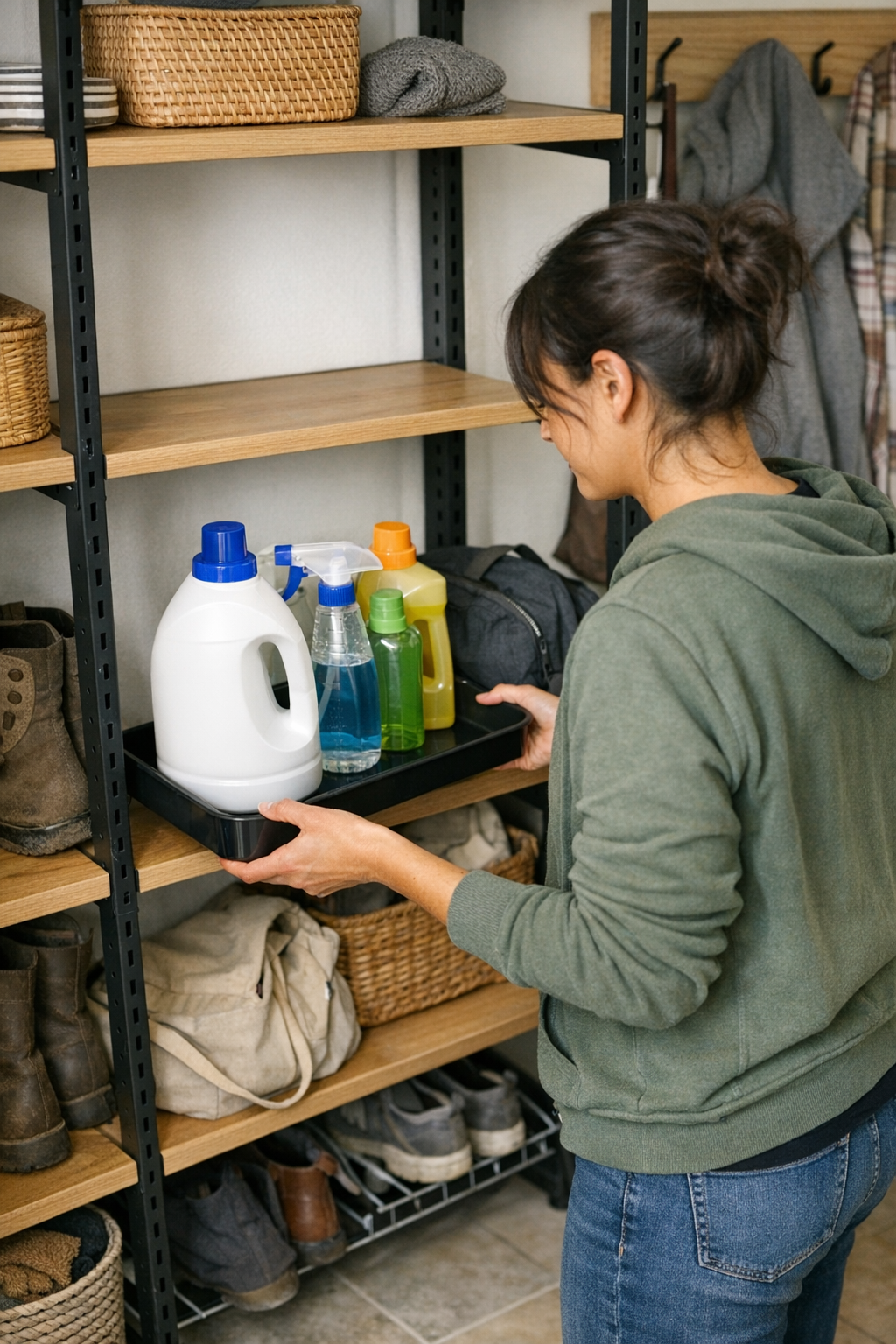
A single missed drip in your entryway cabinet is all it takes for a clean zone to unravel fast. You’ve done the reset—the bottles are lined up, the shelf wiped down, everything looks ready to handle the daily shuffle. But entry and drop zones are built for repeated crossings, not just looking controlled after a big clean. Without a drip tray, every detergent bottle, spray, or muddy container leaves you playing catch-up: thin films, crusted residue, and sticky edges start spreading almost invisibly along the spots you touch and pass through the most. The setup might pass for organized, but under steady use, even a tight routine breaks down—one leaky cap or missed wipe is all it takes for the mess to mark a return path through your threshold space.
A Hidden Mess That Builds Up Fast
At a glance, the problem doesn’t even look like a problem. The shelf is spotless on Monday; by the next Saturday, after shoes grind past, bags jostle bottles, and someone tosses in gloves, a dull film quietly inches across the surface. Every time a bottle’s not capped straight, drips trail outward. Shoelaces snag at the edge, cuffs drag through unseen stickiness, and backpacks travel through the “clean” zone only to pick up a stripe of grit. The moment you sling a bag, hear it thud, and later notice it carried out the smear—that’s when you know the reset didn’t hold.
When Resetting Becomes Real Chore Work
Ignore the slow leaks, and cleanup turns from a quick swipe into real scrubbing—hardened lines that claw onto anything brushing past. The cabinet looks composed from a distance, but up close, every detail reminds you what got missed. Resetting stalls out as you pick at streaks and run down gray build-up, the original order fading far sooner than you planned. This isn’t a fix-and-forget zone; it’s a stress loop—mess returns because movement through the space never really stops.
How a Simple Drip Tray Shifts the Routine
Positioning a drip tray right under bottles and detergents forces the zone to behave differently. The tray doesn’t just catch big spills. It quietly absorbs those slow, creeping leaks that always seem to beat the wipe-down. Suddenly, after a week or two, the surface around your storage stays dry to the touch—no more sticky shelf edge, no more crusted smears at the seam. Cleanup resets shrink: grab the tray, rinse it, put it back. Instead of dragging out the reset, the process collapses into a simple lift-and-wash–no scouring along awkward seams or chasing stains under bottles that never really get moved in daily use.
The Real-World Difference After Repeated Use
Set two entry setups side by side: a tall cabinet clustering bottles low, or a bench drop spot crowded with wipes and gear. Both reset fine, but after a few days, the setup without a drip tray shows its weakness: sticky ridges fan outward, finger-width and hard to spot until a shoe edge finds them. Bottles set back crooked, containers jostled out of line—all it takes is normal movement to start mess creeping past the intended boundary. Neighbors get marked; gloves, bags, and sleeves show stripes you didn’t notice leaving. The tray version contains all that behind a single edge, holding back spread, and making the mess simple to intercept before it becomes routine cleanup drama.
Entryway Scenes: How Mess Moves Without a Tray
It’s raining, boots come off, coats pile on hooks, and someone tosses a half-closed cleaner bottle onto a shelf edge. By morning, a ghostly ring has formed—a visual cue right where you grab for the next item. The ring thickens as bags, sleeves, and hands graze it. The mess goes mobile: a bag corner absorbs the residue and carries it to the next room. That dirt isn’t just limited to the shelf—it spreads to the bag, the jacket, the hallway floor. Cleaning up now means extra steps, chasing tracks away from the entry instead of wrapping up at the source. Every missed intercept expands the reset chore past the transition space.
Working Against the Daily Drift
Transition zones either reinforce your routine or break it down. Without real containment, clutter and mess expand faster than you notice. Drop a glove, rush a bottle back at a slant, and the cycle begins again. In a high-use entryway without a tray, quick fixes pile up: extra mats that slide, wipes that bunch and clog, shelves doubled up and reshuffled until the original reset is buried under patches. None of these actually holds the line against the drift—they just delay the next full reset.
Replacing Shelf Mats with a Shaped Drip Tray
Mats seem practical, but flat mats migrate, fold, or bleed moisture over the very edges they’re meant to protect. Over time, drips sneak underneath or around, forcing you to clean what’s supposed to be covered. A real tray—shaped slightly wider than the bottles, with a subtle raised lip—blocks those leaks from ever getting to the wood or metal beneath. With enough room for a quick lift, you’re not wrestling the tray out or spilling its load back into the cabinet. Reset time drops from a tedious ten-minute wipe-and-scrape to a two-minute rinse—no hunting in corners, no old spots under forgotten bottles.
What to Look for When Choosing a Tray
For high-turnover storage, the ideal tray is shallow but firm, edged just enough for containment, and sized to slide in and out without pinching. Too deep, and you jam every reset; too shallow, and seepage wins. Most entry setups only need a weekly rinse—unless you’re deep in gardening season or cycling heavy outdoor gear, in which case, quick lifts catch the worst before it hardens. One everyday test: if grabbing the tray feels awkward or blocks item flow, it’s wrong for the spot. Fast resets and open movement matter as much as leak control.
Beyond Bottles: Trays for Planters, Boots, and Mixed-Use Corners
Drip trays aren’t only for cleaners. Under a watering can, beside sprays, or at the base of a bench where boots drip and plant gear rests, a fitted tray prevents pooling water or streaked soil from creeping outward. In zones meant for both indoor and outdoor traffic, anything set down wet or muddy becomes a candidate for containment. The trick is making the tray flush and free-moving—any delay or friction and the tray becomes a setup you avoid, which means the leaks return and the cycle restarts.
From Stubborn Stains to Simple Resets
Boil it down: a drip tray transforms the reset into a single action. No more scrubbing layered residue, no more guessing what’s growing under a bottle pushed to the side. The edge stays cleaner, clutter stops jumping zones, and your threshold isn’t a hidden mess waiting to appear next week. Not every drop-spot leaks equally, but the difference between an exposed shelf and a removable tray is felt after a few cycles. Each re-entry takes less effort, and the area works for your routine—instead of you working around its weak point.