
If your home always seems to hover somewhere between “almost clean” and “almost chaos,” there’s a silent culprit: the way your storage is set up. It’s not that you’re lazy or messy—your shelves, bins, and baskets might actually be working against you. Sound familiar? You open the linen closet and instantly sigh. You reach for a flashlight, but end up digging beneath batteries and tangled cords. Entryway benches collect stray gloves, mail, and yesterday’s scarf. And every “quick” reset ends with a half-hearted shove somewhere out of sight. A space can look perfectly organized on day one, but after a handful of rushes and drop-offs, the fault lines in your storage system show fast. A setup that only looks neat can’t keep up with real daily use.
How Storage Friction Builds—And Why Resets Start Dragging
It’s easy to blame yourself for slow cleanups or crowded surfaces. But most of the time, storage that just holds things—without clarity or access—makes every put-back harder than it needs to be. These small frictions pile up day after day, quietly draining your time and energy.
Where the system breaks down most:
- Shelf edges fill with half-stacked, leaning items that block your view of what belongs where.
- Bins that started out “organized” become mixed: today’s cleaning spray lands on batteries, tomorrow’s light bulbs beside doodads you forgot you owned.
- Folded towels collapse into slopes, so you dig for face cloths buried underneath—every stack losing shape by midweek.
- The front of every shelf or bin turns into a blockade; you can’t grab one thing without displacing three others.
When life gets busy, every quick return means more hunting, unstacking, and reshuffling. Instead of putting something away in one motion, you’re double-checking piles and still never seeing the whole shelf clear at once.
Staged for Show—But Not for Everyday Life
The appeal of a visually tidy storage upgrade is undeniable. High shelves, deep baskets, broad bins: at first glance, it all looks calm and contained. Yet the trouble starts the minute you reach for something that’s not right at the front.
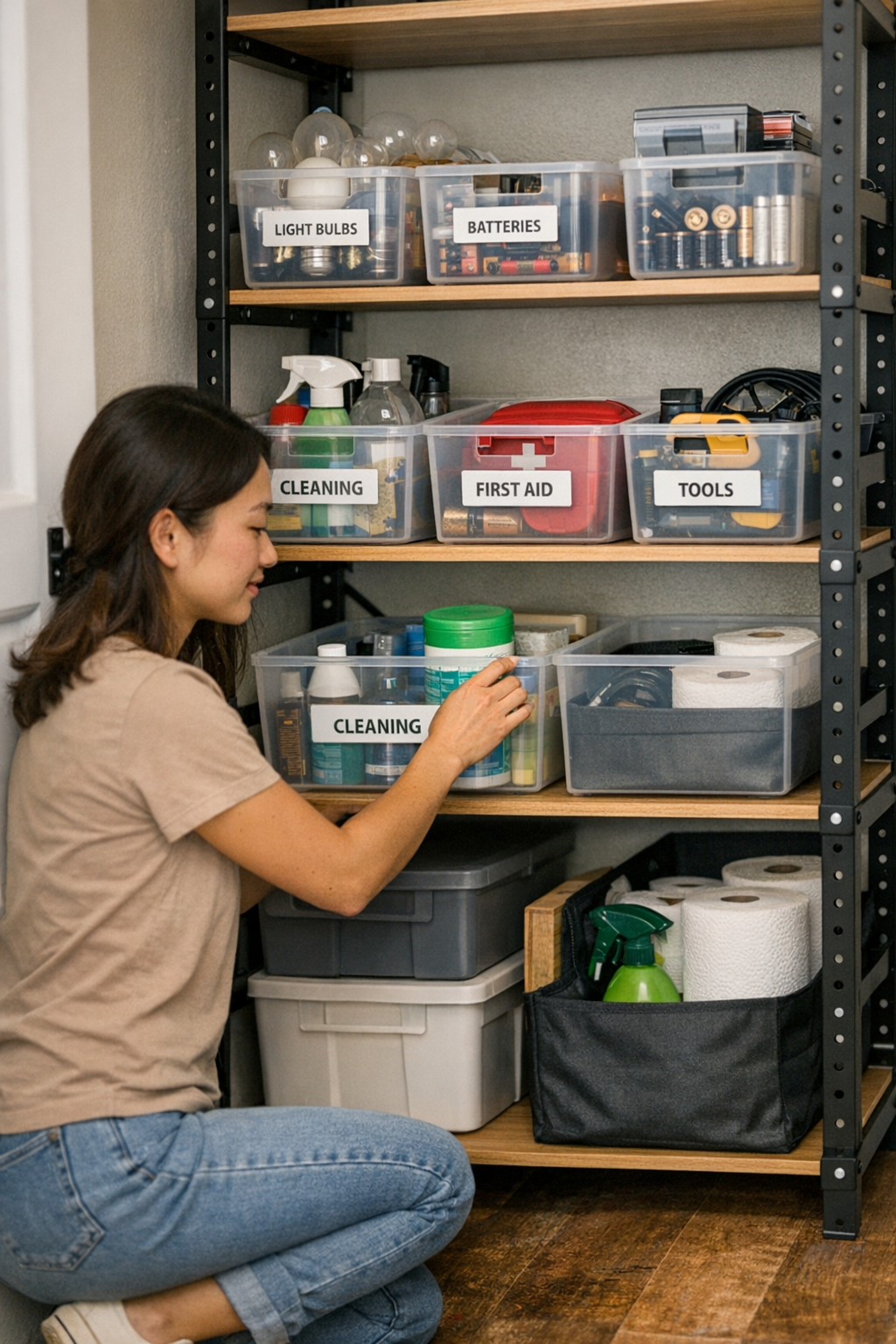
Picture your hallway utility closet: Two big baskets—one for cleaning, one for home stuff. The system works for a week, maybe two. Then you try to return a pack of batteries and find yourself up to the elbows in a pile of extension cords, old tape, and four types of light bulbs. Tools have wandered across the aisle. The neat separation fades, things migrate forward, and eventually, you’re scooting stuff aside just to slide in a can of polish. That five-minute “straighten up” turns into a hunt-for-space event, every time.
Maintaining Clarity: How Category Boundaries Make Real Order
The organizing setups that actually work long-term make two things obvious: what you have and where it goes. Shelves with distinct zones, slim bins dedicated to single item types, and clear labels aren’t about being fussy—they let you grab, return, and move on, even with one hand full. No second-guessing, no balancing stacks, no rummaging behind last week’s purchase just to get what you use every day.
A Real Fix: Swapping the “Catch-All” for Slim Dividers
Go back to that overstuffed closet. Instead of a single catch-all basket (where everything collects and nothing quite belongs), split the space with four narrow, clearly labeled bins: sprays, bulbs, batteries, tools. Now, each item slides into its lane. Bulbs don’t topple into wipes, a screwdriver doesn’t hide under a rag, and you’re no longer rearranging the pile just to put something away. Return an item in one move, walk away—the boundaries hold, even during the busiest week.
Daily Red Flags: Is Your Storage Slowing Everything Down?
How do you know your storage is underperforming? The warning signs are in the little annoyances:
- To put one thing away, you first have to lift, shift, or dig through other stuff—sometimes every single time.
- Categories blend together: phone chargers end up with garden gloves, mystery hardware migrates into the laundry shelf.
- Flat surfaces quietly turn into unofficial dumping grounds, squeezing out their original purpose.
- Each tidy-up feels close to finished, but never quite done—instead of “place for everything,” you settle for “good enough for now.”
Contrast that with storage where every item can go right back—no shuffling, no guessing, no hesitating. If your hand doesn’t need to clear the field for every return, your reset speed improves immediately (and it actually lasts).
Basket, Bin, or Shelf? Why the Form Matters on Busy Days
How you store things shapes how your space feels—and how long it takes you to get out the door. Oversized baskets and deep bins are great for concealment but almost always become black holes for related (and unrelated) items. The difference is clear: an entryway bench with one big “catch-all” gobbles up keys, sunglasses, and mail into a single heap by Thursday afternoon. A shelf with compact dividers and tidy labels? You can grab your gloves or dog leash without the morning scramble—no more sliding shoes aside to find the umbrella.
Master closets see the same story play out. An extra-large drawer looks serene for a while, but soon one sweater is wedged beneath three others, and bags start swapping spots during every weekly reset. With shelf dividers or adjustable racks, everything holds its place—sweaters aren’t lost, purses have a predictable home, and each return steps takes seconds, not minutes.
Simple Upgrade: Make Access as Easy as Use
If you grab something weekly or daily, its home should never be hidden behind, under, or inside something else. Add slim dividers to wide shelves so a single category gets each compartment. Use adjustable inserts to split large bins, or break up a deep drawer with upright organizers. Even just a couple clear labels fend off the slow creep of a “miscellaneous” pile.
When “Organized” Isn’t Actually Efficient
Lots of storage systems look magazine-ready. That’s not the same as being functional in real life. Overlapping bins, undivided drawers, and one-size-fits-all shelves stay photo-worthy only until the third or fourth real use. Then you’re right back where you started—resetting more often, reshuffling more items, and losing the speed and clarity the system promised.
A storage system works if it keeps up with living—not just with arranging. The homes that reset fast have clear, uncrowded shelf edges, visible category lines, and a return routine that ends in one step, not five. They aren’t perfect, but they make every cleanup feel like progress—not defeat.
Small Changes, Real Results
You don’t need a total overhaul to notice the difference. Trade an overflowing bin for two targeted containers. Add dividers to a shelf that always becomes a “drop zone.” Stick a few labels on containers that keep swapping contents. A little more structure equals a lot less hunting, stacking, and re-doing—week after week, the minutes add up and the clutter stays at bay.
Storage isn’t about hiding mess. It’s about supporting daily life—making it easier to grab, put back, and move ahead without the endless side quest of straightening. If your system works hard, your space will finally keep up.
For more practical storage solutions designed for daily life, visit ClosetWorks.